Software
Houzz Logo Print
johniferous

White Pine - why not two leaders?

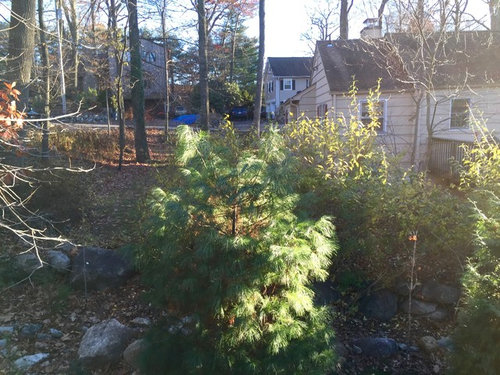
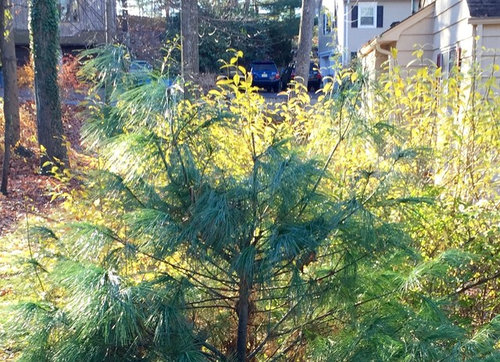
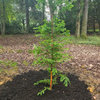
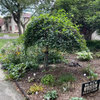
I know there are strong opinions on here that come from experience. One of them seems to be heavy emphasis on single leader trees. But take a look at the pictures. I planted this 7-8ft white pine two years ago (before I knew what I was doing) and the garden center had snipped off the central leader bud. Anyway, as you can see, there are two side leaders coming from left and right, and the central leader is just starting to send up a few inches of growth from a side bud.

I took this pic from my deck. As you can see, having two leaders would give the tree a better horizontal spread and give me much needed privacy.


So why not two (maybe even 3) leaders? White pines are bendy...will I inevitably lose one in heavy snow load and then end up with an ugly tree? I'm not religious about this stuff and want the privacy. Any thoughts or recommendations are greatly appreciated!


FYI - I plan on doing zero pruning/sheering. Planted part sun, Zone 6b, northern NJ.

Comments (25)

  • 10 years ago

    In my experience, white pine will sort itself out. As long as there is sunlight from above, it will develop a dominant leader. I only see odd multiple leaders when they get overtopped. Is there a fair bit of sun back there?

    As far as snow goes, they seem perfectly happy with it. I live in MN and I rarely see broken white pine, but then, you probably have more ice storms than we do :)

  • 10 years ago

    As you can see from the pic if you follow the leader up they topped it several times...do you mean worse than that?

    Such a bummer, I really wish I knew better at the time. Didn't even check the top for fresh healthy buds. Oh well, live and learn. Now I plant 2 footers!

  • 10 years ago

    I'd avoid that nursery if they use that practice.


    .02

  • 10 years ago

    White Pine trees are so beautiful, and can grow up to 80ft. I would never want a tree though, that tall, close to my house.

  • 10 years ago
    last modified: 10 years ago

    Dan - I stopped going there almost immediately after buying this tree, along with two others, that had no central leader buds. That led me to this forum to learn more about this stuff...and here we are two years later.

    ilovemytrees - Look around the picture. Those are 80-100ft oaks, maples and ashes. My neighbors and I understand the risk but we don't mind. I love white pines too and based on my property situation, this placement is ideal for privacy. Also, wouldn't having two or three leaders lessen its eventual height? It would grow slower vertically correct?

  • 10 years ago

    if you have a heavy wet snow .... it will collect in the crotch.. and may fail ...


    i dont recall ... how many hours of sun this FULL SUN plant gets.. if you told us prior ...


    i learned most my stuff thru experimenting ... especially .. when to cut things down and kill them.. after my nefarious idea failed... lol ...


    i bought mine .. back in the day ... in a one gallon pot of sand from wallyworld ...


    within 2 years... they were doing 3 to 5 feet per year .... in sand.. with no water after the year of planting ... i was sure to cut them down.. hours before i would have had to pay someone to do it .... keep that in mind ...


    i had 6 surrounding a patio ... gift of the prior owner ... one ice storm ... the leaders.. at 20 feet.. all broke off .... not to mention they were 15 feet wide... and planted 3 feet from the deck ... what a nightmare .... $500 to have those taken down ... i did all the clearing ... i was young and stupid back then ... sooo... they are bendy.. but there is a limit to such ...


    ken

  • 10 years ago

    The white pines on my land were/are also subject to white pine shoot tip moth, just as NHBabs reports and show us. I've got lots of trees that look just like that. I find it annoying but many of mine with double leaders are quite a bit larger than that and beyond the degree of effort I'm going to put into them to do any corrective work, a la Spruceman and his liquid copper fungicide-to this day still the most ambitious man I've ever heard of in caring for his trees. But I digress. So, on young trees, I do indeed go around every couple years with my pole loppers and remove doubles or what have you. Easy enough to do, each tree just takes a snip or so. Growth will be better, and while I'm not expressly growing my trees for ultimate commodity value, I still nevertheless prefer the more majestic growth and greater capture of overall genetic potential that a single-trunked pine offers. But like I say, shoot tip moth or something got into the legacy white pines, decades before I owned the land, and for those misshapen trees, so be it. They certainly do present an increased risk of catastrophic failure. One half of an 80-foot white pine is a lot of tree to come crashing down. Where most of mine like that are, there is essentially no target to be struck, save other trees. No, I don't like a good young tree to be destroyed or damaged by a big hunk of a pine like that, but the woods can take it, there being just shy of ten thousand other such saplings to take the place of the squished one!

    +oM

  • 10 years ago

    Thanks for the help!


    So if I try to make this a single leader tree, what should I do based on the pictures? Should I let another growing season start first, or should I go in a remove all but one? If so, won't the trunk have a weird crooked shape to it?

  • 10 years ago

    I'd let it grow for a year or two and see if it is able to make any sense out of the situation. Then, I might help things along by cutting off or shortening up a competing leader or two. Just depends on what the tree gives you. But in any case, the problems with the tree are all the result of people not leaving the thing alone, and i wouldn't expect lots of intervention right now to be helpful.

    +oM

  • 10 years ago
    last modified: 10 years ago

    Excellent point, I agree. Thanks! Is human intervention acceptable if I remove those lower branches that barely get sun and are so thinned out that they're almost dead? Theres only a few way down low, can't see them in the picture,

  • 10 years ago

    Yeah, but even there, what's the rush? White pine sloughs off lower, no-longer-effective branches all on its own.


    +oM

  • 10 years ago
    last modified: 10 years ago

    Most open grown WPs around here have multiple leaders. Not saying training while young wouldn't do good, just that the multiple-leaders are common, w/the exception of trees grown in crowded forest conditions. Actually Norway spruce is much better at growing single leaders in open conditions.

  • 10 years ago

    Beng, Spruceman and myself had numerous convos about the origin of all these multi-leadered white pines. I agree, it's quite common, but not at all desirable. It is almost without exception the result of some damaging agent having destroyed the plants' original main leader, which on any pine family member has supreme apical dominance. Once that's gone, all hell breaks lose, so to speak. None of which is to say such a tree cannot stand for considerable amount of time and do its thing. just saying, given the choice, I'd have not had that happen, lol!

    +om

  • 10 years ago

    Here it is almost entirely the open grown pines that are susceptible to the damage from white pine shoot tip moth and so end up multi-trunked, so mostly it is the oldest trees in any stand here that were multi-trunked since they grew up under open conditions. I see the shoot damage in young pines growing up in sunny areas and if I happen to have pruners with me, will trim to one leader, but the ones in shadier areas don't have the same problems.

  • 10 years ago

    That's exactly the case here too, NH. So, the wooded part of my land apparently burned in the 1930s. These trees would date since then. While they are surrounded by thick forest now, at that time, the scene would have been much different, I surmise. Also of interest, to me at at least, is those same fires evidently got the ultra-thick stands of N. white cedar started. I never associated that tree with burns, but I get it now. The ashen, dark soil, relieved of its duff layer, was just right for the tiny seeds to land and make good contact with actual mineral soil, something that just can't happen otherwise. It all makes sense now! do you have groves of Thuja o. in your area? Kind of a denizen of the "near north" here in Wisconsin. It is present in the true north, with the sandier, acidic soils, but does better in more southerly areas of this state, and especially, the eastern strip, where dolomite is the bedrock, and where that rock is quite near the surface.

    +oM

  • 10 years ago

    what idiots cut off the leader branches?? your tree should be fine

  • 10 years ago

    Tom, I don't know personally of any Thuja occidentalis groves in this area though there are some in ME. I also don't know of any major fires in my part of NH that would have gotten them started. Most (though not the one in the photo) of my multi leader pines date from the time period when this stopped being an active dairy farm in the mid-40's and so the pastures grew up. White pines are one of our early succession trees.

  • 10 years ago

    Yup-white pine, red pine, Thuja o....nearly all can be both pioneers and "long-term seral stage" species, the latter being species which can exist on a site long enough-we're likely talking centuries-to seem as if climax vegetation. In fact, most of those sites would, barring major disturbance, then go on to yet another stage, likely northern hardwood or hardwood/mixed forest, both of which types can and often do still feature white pines and hemlocks. Of course, happenstance rules the outcome at any given point, so a setback can occur to return things to zero. I know Maine's got a lot of the "cedar", as does Vermont. It is a fairly specialized forest type and as I've said right around a million times by now, lol, one of rare interest and beauty.

    Where my cedar groves are up on my land, there are springs, flowing water all through the winter... a slow-motion flow of water across the land, not stagnant, but mineral-rich and moving slowly.

    +oM

  • 10 years ago
    last modified: 10 years ago

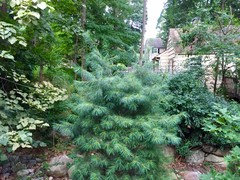
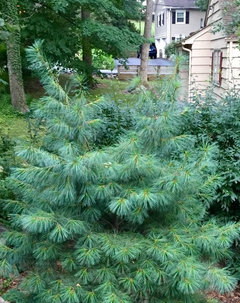
    Ok, so I took the collective advice on here and left it alone through this growing season. It threw up two strong leaders, the one on the right being a little bigger and strong looking. I currently want to cut off the smaller one on the right, down to the trunk. Then I want to tie the one on the left so its centered on the tree. I know there was advice in this thread saying it will figure itself out, but please understand that this view is from my deck and the idea here is beauty and privacy. If I have the option of making it straighter now, I'd like to try.

    Any tips/thoughts/advice? I'll do the surgery and tying this fall/winter. I know ken suggested tying the chosen leader with...panty hose? and a bamboo stick?

  • 10 years ago

    In principle the problem with multiple leaders is dead leaves, water, and snow build up in the fork.

  • 10 years ago

    We have 2 really tall WP and once they get that tall I doubt you'll really even care by then, 35-40 years. My parents planted ours when I was in grade school. Unfortunately they planted them too close to the electrical wires and the utility companies cut them crappily when they get too close. But thus the trees are still doing fine, and quite impressive. Your WP will likely do great especially if you aren't near utilities. This early in their lives I would wait a long time before I worried much about them. I do understand about trying to maintain a single leader for a while, but, once they get past a certain height nature will end up shaping it. If you get wet snow as mentioned, nature will take over. I hope I interpreted what the op was saying right. If not Edlincoln said it all with the above post.

  • 10 years ago

    John, if you really want to cut one out completely, just do it. Subordination techniques, ie. shortening up the less desired one as opposed to completely eliminating it-is the other option, but either will work on so small a tree.

  • 6 years ago

    Late comment but how did your tree turn out. ime wp with multiple leaders will grow branches into each other rub against one another and get disease and be sick. My Question is why do they do that in the first place. Is it because one of the leaders are sick and the tree is growing a healthier one? Any thoughts?


  • 6 years ago

    HU-738...., I am copying my answer from 4 years ago in this thread:

    “Here it is almost entirely the open grown pines that are susceptible to the damage from white pine shoot tip moth and so end up multi-trunked, so mostly it is the oldest trees in any stand here that were multi-trunked since they grew up under open conditions. I see the shoot damage in young pines growing up in sunny areas and if I happen to have pruners with me, will trim to one leader, but the ones in shadier areas don't have the same problems.”

    Normally hormones called auxins are created by the main growth point in a single stem, and those hormones prevent other top stems from growing. If that stem gets killed, there aren’t the hormones to prevent multiple stems from starting to replace the missing one, so it typically will send out more than one new main stem. When the shoot tip moth kills the main shoot, then two or more stems grow to replace the old one that is dead.