Software
Houzz Logo Print
kitasei

Improving an old conifer screen

10 years ago
last modified: 10 years ago

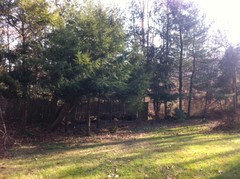
After pulling down the wisteria, grapevine and ivy from the trees along the border of one side of my property, I find the bare trees less than satisfactory as a screen. They are wonderful trees-- hemlock,spruce, yew, and white pine-- but they were planted too closely and left to be strangled. One section is a row of 20 foot tall privet with another row of arborvitae in front, all but the tops eaten by deer. I am reluctant to remove anything because what green there is is important. I hope you can offer a plan for thickening up what's there and planting shrubs in front (and back? there is room) to fill out a thick screen. Sun is limited by dogwoods and ornamental maples in front. Thank you!

Comments (10)

  • 10 years ago

    A picture would help me visualize. What I am imagining is the conifers lost their lower branches and you can see through the screen?

    Shrubs are an answer. If this is the north side of your screen it will be a bit shady so plant accordingly. I would say mix up what you plant and go for it.

  • 10 years ago

    Overwhelmingly, the issue is too many plants, not too few. So, you've removed vines that were blocking sunlight. That alone should help, but not overnight! And then there's junk like privet (IMO) and other stuff still competing with the conifers for sunlight. How can this work? If you want full, dense conifers, they must get adequate sunlight. And while yes, a pic would help, I suspect there's likely some lost causes in this screen, some plants that, should they be removed, this would actually end up enhancing the continued growth of the remaining plants.

    I'm reminded of a little row of spruce where we once had to remove a few trees for some right-of-away project. They were very crowded. Heh, this person insisted on the city providing replacement trees for those few that were lost. There were already too many trees stuffed into this small row. Of course, the new arrivals didn't do well and added nothing to the overall screen.

    +oM

  • 10 years ago

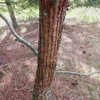
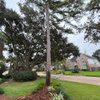
    This is one section of the screen, part of which has a stockade fence behind the bare legs of the trees. I'll try to get a shot of the arborvitae backed by privet section, but can describe the problem that if I get rid of the privet behind it, the towering arb lolly pops still won't recover. One problem is that the boundary line is like a trench and it will be hard to grow anything tall enough to screen the neighboring pool.

  • 10 years ago

    google REJUVENATION PRUNING OF SHRUBS


    on how to rejuvenate the privet ..


    you have plenty of space.. to move out into the lawn ... to plant new lower stuff to create the site block you wish ....


    you can not make the spruce and pine.. regenerate low down ... they have no dormant buds from which such would sprout ...


    ken

  • 10 years ago

    So! On this balmy December day, I took down three of the most straggly trees (including Ken's leaner - keen eye). My order of operations for spring will be to rejuvenate the privet so at least it's an effective hedge, lower a lot of the winged euonymus so they don't compete for light with the spruces that still have skirts... Maybe I should remove a few of the arbovitae on the principle that at least they won't be a row of lollypops..

  • 10 years ago

    Even blown up, I can't really see those guys too clearly-are they globe-style cultivars? Anyway, sounds like you're on the right track.

    +oM

    kitasei thanked wisconsitom
  • 10 years ago

    oh no, not globes! They are narrow soldiers, about 12 feet high, eaten bare for lower six. Multi-leader, so perhaps I should tie them with twine to prevent splitting? And would it help their chances of recovery (and protection from deer if they breach our defenses this winter) to wrap the bottoms with burlap?

    I have a new question about the hemlocks. I have had them sprayed with dormant oil and there seemed to be no sign of wooly adelgid. But now that I was able to get around to the other side, where the sprayers probably never reached, I did see a significant infestation. Does wooly adelgid kill specific branches (eventually kiling the whole tree) or is the damage systemic? How important is it to access the inaccessible?

    This endless autumn here in the northeast has been such a gift. Never have I had the time to lavish such tender attention on the plants when they are so visible without their leaves. In past years by now I would be focused on snow, fire wood, sealing leaks and drafts. The spring crush has too much else to think about. This year has been a slow, careful good night. The biggest problem is resisting the urge to prune...

  • 10 years ago

    i missed the invasive fire bushes... winged euonymus

    GET RID OF THEM ... period ..


    keep culling


    ken

  • 10 years ago

    Kit, if you search around here long enough, you'll somewhere find a post where my brain explodes at A) Multi-stemmed arbs, B) Wrapping burlap around arbs, and C) Anything else that further bastardizes this fine species of tree, lol. Yes, I'm a bit fanatic here and there. But no, I sure wouldn't do any of that stuff, and hearing now what my eyes can't make out in the pic, they'd be gone from the scene if it were mine. Maybe that didn't make sense, but basically, I love the actual forest tree that is Thuja occidentalis, and really can't stand some of the landscape cultivars.

    As to adelgid treatment, I'll leave that to somebody with experience there. Though we have many hemlocks around here, so far that insect has not made it here, at least in numbers sufficient for anybody to find yet. Fingers are crossed.

    +oM

Sponsored
Haus Studio
Average rating: 4.8 out of 5 stars28 Reviews
Franklin County's Preferred Custom Cabinetry & Design Studio