Software
Houzz Logo Print
dick_baker

3 plants with problems, all at once?

10 years ago

I have a couple of other threads going with plant problems with a majesty palm I have, as well as with a pothos. I just wonder about the three plants having problems all at once.

The majesty palm got mealy bugs in a big way before I noticed. I think I've killed them all, but what was a perfect specimen of a plant now is damaged quite a bit.

The pothos has had some brown spots and brown semi-circular crispy brown spots on the edges of the leaves. This has been going on for a couple of weeks.

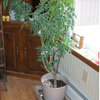
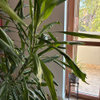
Something else that's been going on for a couple of weeks is my gold dust aucuba getting yellow leaves. This has happened in the past, usually in winter because of the dry air and the furnace running. Every time I've had the problem, I've wiped the leaves with rubbing alcohol using paper towelling, and that's taken care of the problem.

I've sprayed the majesty palm with a mix of water, alcohol and dish soap. I've wiped the leaves of the aucuba with alcohol. I've sprayed all three every other day with Bayer Natria Insecticide Soap. The majesty palm leaves are getting worse. I'm still getting 3-5 yellow leaves a day on the aucuba, and the pothos is still giving me one or two new brown spots every day, even though they're usually very small.

The newest plant I have is another majesty palm that shows no problems or signs of any insects. The pothos is the next newest plant, but it's far away from any other plants.

Is there anything you can think of that would be causing these problems. The aucuba problem is particularly vexing, as it's always responded to being wiped down with alcohol.

Comments (13)

  • 10 years ago

    You're the first source I've read who's said not to use detergent. That may be what's harming the leaves on the majesty palm. I still don' understand why the aucuba isn't responding to the usual alcohol wipe.

  • 10 years ago

    My intent was to get you to review your basic practices with an eye to what improvements might be made to increase your plant's vitality level. Vitality and metabolic rate are your plant's first line of defense against disease and insect infestation, and of course, they have significant sway in what plants look like.

    If you're using straight alcohol, even at 70%/ 140 proof, it's too strong and WILL dissolve cuticular waxes, leaving the foliage vulnerable to a list of problems.

    FWIW - in an extremely high % of cases, yellowing leaves are related to over-watering or a high level of salts in the soil solution, but no one can speak in any other manner than broadly, given the info supplied.

    Especially for newish growers, getting plants into a soil they can water correctly w/o having to suffer soggy soil repercussions asap advances their ability to maintain plants in good health very significantly; this, because it takes a number of limiting issues completely off the table (as long as common sense prevails insofar as other cultural factors affect the plant).

    EXPERIENCE is a very slow way to learn - especially when you're trying to grow plants. Learning from experience means you learn from mistakes, and if you had the ability to properly evaluate what the mistakes were, you wouldn't have made them in the first place. To break that cycle, you either pay and pay over the tears at the knee of experience, or make the effort to learn how NOT to get bit on the butt by mistakes. People who actually take control over their growing experience by learning to avoid limitations will, every time, see those who choose experience as their teacher standing in their slipstream as they whoosh past.

    Al

  • 10 years ago

    Thanks. I know I'm not overwatering any of my plants. Been there, done that, as the cliche goes.

    The leaves on the majesty palm aren't turning yellow, they're getting browned, crispy and shriveled on the ends. I thought I'd gotten rid of the mealy bugs after four treatments with the Bayer Natria soap, but they're back again today. I think I should just toss the plant out rather than risk infecting others.

    The aucuba has always responded well to having its leaves wiped with alcohol. The yellowing leaves don't follow the usual pattern for overwatering, with the lower leaves turning yellow. The plant looks very healthy other than these 3-4 leaves a day turning yellow-ish (I pull them when they're pale yellow-green, but before they've turned actual yellow).

  • 10 years ago

    The yellowing of the aucuba may have nothing to do with any pests. Or diseases. It may simply be just a reaction to warm, dry indoor temperatures. While I know sometime aucuba IS grown as a houseplant, it's really not - it's a broadleaved evergreen shrub that grows happily (and preferably) outdoors in mild winter climates (Z6 and above). Just like it is very challenging to grow other temperate climate plants indoors (azaleas, hydrangeas, gardenias, roses - often sold as flowering gift houseplants) or even attempting to overwinter herbs indoors, the indoor conditions are not really to its liking. I would place it in a very cool location well away from any heat sources and bump up the humidity by placing a full glass of water nearby or by resting the pot on a deep saucer filled with pebbles and water, keeping the water from touching/covering the base of the pot and its drainage holes.

    It will also tolerate low light but brighter, indirect light is preferred.

  • 10 years ago

    It's been in the same spot for over five years, and has been doing great. Last year I had a spider mite problem, but got rid of them with alcohol. It's really grown quite a bit. It's about four feet from a large north-facing window. I live in Alabama, so it's never really dry, even when the heat is on.


  • 10 years ago
    last modified: 10 years ago

    Sounds like you have all the bases covered. Best luck to you.

    Al

  • 10 years ago
    last modified: 10 years ago

    Dick simply put, if you were using a mix that allowed you to water freely and allowed the salt toxicity from your tap water and fertilizers to by pass the mix instead of accumulating in there, your plants probably would not even have the bug issues you get every year nor marred leaves and chronic conditions, by winter..Remember the more work any plant has to do to rebuild damaged roots from a less than ideal mix, the more susceptible it is to pests and other issues above the soil line. Your leaves are telling you a story you are ignoring year after year) Good luck..

    Long summer days and extra light will support, help along better growth than in the winter, but once those long warm, days are gone, your only hope is a healthy root system which most people are not even aware of..

  • 10 years ago

    When you say "a mix", are you talking about potting soil? I'm using Milorganite potting soil for the two majesty palms. The pothos and the aucuba are in whatever soil my ex used.

    We have hard water here, and I've often thought that the brown leaf tips I get on palms is due to that. I keep promising I'll collect rainwater, but never do. I suppose I could buy distilled water.

    It just seems like something happened, as three plants started getting funky all about the same time. That majesty palm was an almost perfect plant, with only a couple of blemishes. The best I've ever seen. Makes me sick.


  • 10 years ago

    If you live in Alabama, I'd plant that aucuba outdoors!! It will be much happier there without ANY issues of pests or diseases (aucubas are seldom bothered by these issues in the landscape) than it could possibly be inside. Truly, there are much better choices for a houseplant than aucuba, especially in areas where it is fully outdoor hardy.

  • 10 years ago

    I'm not putting it outside. I've been pulling plants and weeds from areas of my yard where my ex had planted, putting down weed barrier and stone, and then putting in a few fake flowers. I just don't have the time to deal with all of this. By the time I'm done in a few years, all of my outdoor "foliage" will be plastic. ;)


  • 10 years ago

    If yellowing or otherwise damaged leafs are caused by pests a close inspection should reveal the pest, and then you can choose your treatment. While some pests can be tiny, if they are numerous enough to cause your plant visible harm, you should be able to find them.

    Otherwise, I think your potting soil and/or overwatering are likely to blame - in some quick searches I can only find fertilizer made by milorganite but perhaps they make soil too - in any case, it is difficult to get watering right, especially indoors in non-greenhouse environments, with most bagged soils.

    It sounds like you've rejected this as a cause, so perhaps I'm wrong. If your tap water has a high TDS ("is hard"), this combined with water retentive soil could easily cause what you are describing. A "faster" soil helps reduce the impact of hard water by making it much easier to flush the salts (hardness) down the drain.

    Obtain your local water quality report (often available online) and see what it says, and/or buy a cheap EC/TDS meter (<$20) and see what it says.

    Or, buy gallons of distilled water, use it exclusively for a few weeks, and observe new growth carefully. Even if this fixes it - it would point to an issue with your soil as much as your water.


  • 10 years ago

    Thanks for the reply. I've looked at the leaves with a 10X magnifier. I see very tiny specks on the leaves of the aucubus, just as I did last year. Last year there was also a fine white powder I don't see now on those leaves.

    I've long suspected that our tap water is hurting the plants. I get all sorts of mineral buildup in sinks, toilets,, showers, etc.. I'll try the distilled water and see what happens.

    There's nowhere to isolate mealy bug-eaten majesty palm that has enough light. I think I should just chuck it so it doesn't affect other plants.

    I don't understand the aucubus problem, though. As I said before, that plant has been here a long time.