Software
Houzz Logo Print
jenowack

WILL THIS TREE MAKE IT??

10 years ago
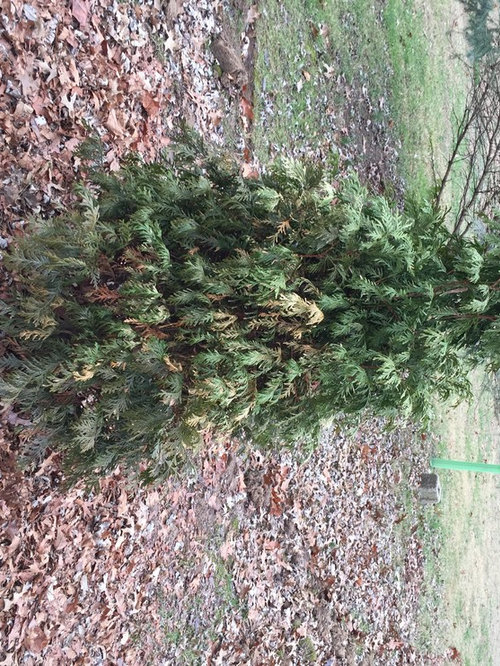
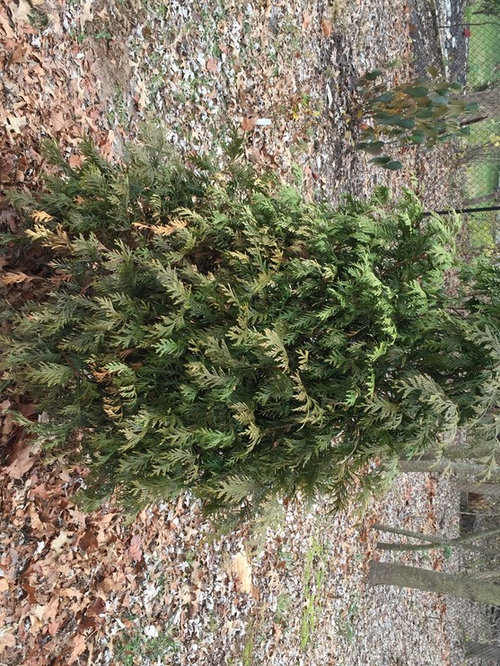
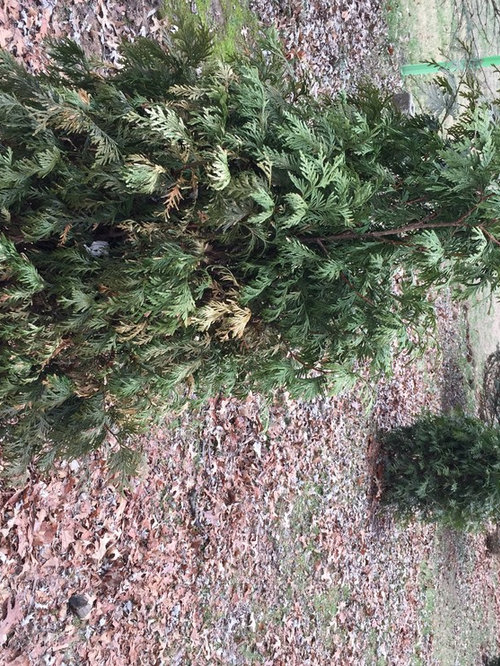
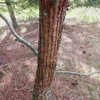
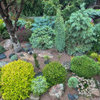
Hello everyone. I have a green giant (T. plicata x T. standishii) that I had planted 1.5 years ago (where you will see the leatherleaf viburnum in the picture). At the time of planting is was questionably shady. Once we cut down the 3 bradford pears, I thought it would be even happier BUT it became droopy as the soil became waterlogged with the bradford pears gone. I moved it to it's current position, with more sun and better draining soil but it still looks very sad. Can the tree be saved? I know that I will likely have to just be patient and wait until spring to really see, but wanted any advice. I don't know if the leatherleaf will like that spot either, but I thought I would give it a shot. Thanks in advance!

-Jeni,


Saint Louis, MO


P.S. I thought I had edited these photos to show correctly, sorry about that. :(

Comments (14)

  • 10 years ago

    +oM,

    Thanks for your opinion, I am keeping my fingers crossed that it makes it and you are right. The blue spruce in front of it is a goner as it lost all of the needles in the middle. The blue spruce provided screening and I am REALLY hoping the arb (that I already paid for....) works out. Our neighbors probably think we are nuts cutting down all the trees, but all we did was get rid of honeysuckle, poison ivy, and the bradford pears. I am hoping to somewhat naturalize the area.

  • 10 years ago

    In wet ground I plant high and then build up the 'shoulders' with the surround soil for the roots to grow into. The excavated soil around the shoulders helps with drainage. Controlling seepage in wet ground is of the utmost importance. By lowering the winter water table you enable the roots to go deeper for better anchorage so the trees don't blow over as easy, ......even trees that like it on the wet side.

    Mike

    jenowack thanked Mike McGarvey
  • 10 years ago

    planted 1.5 years ago ... and then i think you said you moved it... if so.. when???


    as long as it stays green... thru next spring.. there is nothing to do but wait ...


    drooping doesnt impress me ... especially when you give a history of too wet ...


    one thing for sure.. its not hungry ... and beyond fert.. whats to do???? [... and the answer is never fert.. imho]


    looks kinda weird for a GG .... heavily sheared for sale ... nothing wrong with that ...


    ken

    jenowack thanked ken_adrian Adrian MI cold Z5
  • 10 years ago

    Ken, it does look weird, doesn't it? It was bizarre that after I cut the Bradford pears down, it became so unhappy. I moved it in Nov (please don't kill me for moving it so late in the season), after I removed the Bradford pears -- the drooping was almost immediate and I thought it would be happier with MORE sunlight, not so. Either way, I had read somewhere that it would be alright to move and I took a chance since I was more worried about losing it where it was. I don't fertilize my trees...or much of anything really, so I know it's not that. The GG's in the background were planted originally at the same time and are very happy, yay.

  • 10 years ago

    Usually when a conifer looks like this the next thing is it goes entirely brown.

    jenowack thanked Embothrium
  • 10 years ago

    Awwww...those Bradford's were it's friends, and it misses them.

  • 10 years ago

    why has no one addressed the fact that it looks more like a t. o. pendula.... rather than a GG???


    if it is .... then it looks green .. healthy.. and normal ... considering what it had been thru ...


    ken

  • 10 years ago

    I didn't address that because I don't think that's what this tree is. As far as whether or not the tree wanted more sunlight, that's not a mystery. For sure they do better in full sun. They have shade tolerance, not shade preference. Keep things straight here-it was the move that did the damage, not some silly friendship between this tree and the former pears, nor is it the result of too much sun. Transplant shock of an especially severe form. It is only the relative healthy appearance of the tops that offers hope for recovery.

    +oM

  • 10 years ago

    Easy tom , of course ed was being silly

  • 10 years ago

    Check soil pH. Ideal for evergreens is about 5.0-5.5 pH. If the soil is alkaline (such as clay soil) the tree needs an acidifier soil treatment.
    Try not to water a distressed conifer with city water if you live in a hard-water region. Instead, collect rain water from your gutter spout and use it during dry spells.

  • 10 years ago

    I would seriously caution about making broad generalities about pH preferences. "Ideal for evergreens is about 5.0-5.5 pH" is not at all accurate across the broad spectrum of conifers. Even different conifer species in the same genus may have quite differing pH preferences. Most conifers will tolerate a soil pH of slightly acidic (around 6.0) to slightly alkaline (7.5) but right around neutral (6.5-7.0) should suit the vast majority, as it does for just about any other plant species. Cedrus species, some pines, some junipers and Thuja occidentalis are very tolerant of moderately alkaline soils.

  • 10 years ago
    last modified: 10 years ago

    Arbor vitae and juniper will tolerate alkaline soil better than most evergreens, but that does not mean they prefer this higher pH. While it is true that not all conifers prefer highly-acidic soils, most will not tolerate alkaline soils well. They can survive and grow, but they will not be at their optimum condition of growth and ability to fend off disease.

    Last spring, I planted 50 Austrian pine seeds indoors. 35 sprouted, but most keeled over dead. Why I thought? Turns out that it was the water I was using — bottled spring water — which measured at a whopping 8.5 pH ! No wonder they were dying! So I started them on a regimen of Iron Sulfate solution mixed from rain or distilled water (about 1 g/L pH = 5.0) This brought the soil pH down to well below 6. Over a period of three months, the remaining eleven seedlings recovered and are now absolutely thriving!

    A tree seedling, of course, is much more vulnerable to an improper pH than is a mature tree. So I am firmly convinced that acidic soil pH (<6) is equally vital for conifers, especially pine, as it is for azalea, rhododendron, holly, etc.

    Here is an excerpt from a published paper from Michigan State University:

    "Soil pH. With a few exceptions, conifers grow best on soils that are more acidic than optimum soil pH for deciduous trees. For example, Fraser fir is native to sites in North Carolina with soil pH as low as 3.5. The optimum pH for most conifers is around 5.5; most broad-leaved trees grow best a pH 6.5.
    This phenomenon is due largely to reduced ability of conifers to take up nutrients as pH increases...The overriding effect of soil pH on conifer nutrition is difficult to overstate. Anytime a nutrient problem is suspected in conifers, soil pH heads the list of factors to investigate. If soil pH is higher than 5.5–6, consider applying elemental sulfur or fertilizing with ammonium sulfate to reduce soil pH."

    source
    http://www.hrt.msu.edu/assets/Faculty-Photos/Cregg_Bert/conifernutrition.pdf

  • 10 years ago

    With all of the rain and flooding we received in STL the last couple of weeks, this tree is looking even worse. Will keep this updated as spring rolls around to see if it, in fact, does make it. : /