

Appreciation from all angles.
I'm reading Sarah Susanka's book home by design and was struck by one paragraph which I think sums up a lot of what many of us keep harping on, which is the need to hire an architect to design your house and not leave it up to a CAD program and yourself if you do not have a design background. I feel the following sums up why the best.
"Every wall surface you look at has been carefully designed to look balanced from the exterior while simultaneously providing light and view at the appropriate places on the inside. This is one of the secrets of any type of three-dimensional design. The architect or designer doesn't simply compose a shape or a surface for appreciation from one angle alone. Every possible perspective is considered, and he or she adjusts the composition to make it look just right from whatever direction it is viewed."
Comments (36)
 10 years ago
Maybe some -- maybe *most* -- architects do this, but often an interior designer will 'see' better how to arrange a room. I'd spend $1K to have such an 'eye' run over my plans. (CP has her own 'eye'!)
cpartist thanked chisuecpartist
Original Author10 years agoMaybe some -- maybe *most* -- architects do this, but often an interior designer will 'see' better how to arrange a room. I'd spend $1K to have such an 'eye' run over my plans.
I agree about arranging a room, but before a room can be arranged, it needs to be a room and an architect would most likely (not all the time) be the one to be able to pull together the interior and exterior elements. And frankly if an architect can't see it, then he's not worth the stamp he puts on his plans.
So as an example, the light bathes the interiors with just the right amount of light while not looking like an afterthought on the exterior, or the doorways become a part of the look of the house both inside and outside. These are just two examples, but there are more.
(CP has her own 'eye'!)
Thank you.
Related Professionals
Bainbridge Architects & Building Designers · Westminster Architects & Building Designers · Kansas City Architects & Building Designers · Starkville Architects & Building Designers · Marinette Architects & Building Designers · Panama City Design-Build Firms · Fayetteville Design-Build Firms · Dallas Design-Build Firms · Frisco Design-Build Firms · South Bend Design-Build Firms · Greenfield Design-Build Firms · Cleveland Design-Build Firms · Riverside Design-Build Firms · Medford Design-Build Firms · Nashua Home Builders- 10 years ago
Yes, this concept is quite visible in her plans! It's all about sight lines, door placement, window placement.
cpartist thanked mrspete cpartist
Original Author10 years agoExactly mrspete and that is really what is so important to the overall feel of the house. Last night I spent some time looking at a local architect's homes. His style is very contemporary, not what I would want for my house but I had to marvel at his use of sight lines and light. It really is masterful.
 10 years ago
If anyone wants to check out Susanka's plans, they are available online at the houseplans.com website. They are quite interesting.
cpartist thanked omelet- 10 years ago
I hate to start a fight here, yet I want to stick up for the other side. I hate her houses, I mean passionately hate them. This is not to say that I don't respect her work because I do, I think she is brilliant, but she also embodies a lot of things I don't like. I am just so tired of people telling me what I should like, or how I should think. I looked through two of her books, they are OK if you like her stuff. While many people may see them as brilliant works to guide their life, to me they are just someone saying, if you give this a chance you will learn to love it.
I don't want sight lines through the house, the biggest problem that I have with my current plan is the sight line from the front. I want a formal dining room and office or living room near the front, so I can keep a few rooms clean and let the rest of my house look messy as hell.
I have an architect, and I am not sure I need one but our HOA requires it. I could point to half a dozen houses that I want. You could photo copy them and throw them on my property and I would be happy for the rest of my life. I do need to keep it marketable but only reasonably so.
I don't want original. I am a 40 something year old man who enjoys punk music, skateboarding, weight training, expensive suits, who also spent many years as an expat...I got original covered pretty solidly. I prefer grounded in tradition for my home.
cpartist thanked bry911  10 years agolast modified: 10 years ago
You could photo copy them and throw them on my property and I would be happy for the rest of my life.
I agree, as long as it is all done correctly :) As far as spending years planning a perfect house and every element, it is not worth it IMO. Obviously planning is important but at some point you need to just stick with what you have.
It doesn't take a genius to locate where a good place for a window would be in a room. I place more value in the person that is installing that window, that they do it correctly.
cpartist thanked Vith- 10 years agolast modified: 10 years ago
On an outside note, I predict that huge open spaces with lots of sight lines will be gone in 20 years. Well, they will be there but no one will want them. People will buy open floor plans and cut them up into smaller rooms. Unless you work with young adults a lot it is very hard to grasp the fundamental changes in sociological behavior that have happened in the last 10 years.
My kids no longer pick their social groups from the immediate areas, they are more socially active with friends hundreds or thousands of miles away than they are with the neighbors. I am not claiming this is either a good or a bad change, but it is a change. My completely unscientific opinion is that we will see houses move to separated common spaces that are near each other - den, living room, hearth room, office that are all connected but separate...
I absolutely could be wrong, there is no science behind this, just my observations.
bry's great room of the future.
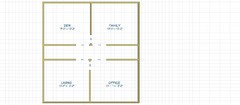 cpartist thanked bry911
- 10 years ago
This is why houses aren't all the same -- because people aren't.
I think "providing light and view at the appropriate places on the inside" also encompasses providing no view where none is wanted.
bry911, not sure I understand the "change" you mention -- I am closer to friends hundreds or thousands of miles away than I am with the neighbors, and I am neither a kid nor a young adult. :-)
cpartist thanked Oaktown - 10 years ago
It is hard for me to describe but when my kids spend time together they are rarely in the same room. They spend many hours a week watching movies, playing games, or just generally hanging out with their friends, few of whom are even in the same state.
I believe that floor plans mirror us socially in some ways. Clearly defined and isolated spaces gave way to open floor plans as clearly defined gender and social roles also gave way to more open roles. The walls in our houses came down to remove the separation between areas of the house as we moved from a society of rigid rules and roles to a more flexible and casual view. However, now the opposite is starting to be true. We no longer need physical closeness for social groups, and, in fact, physical closeness may start impeding social groups.
I changed the word "close" above because I am not talking about strength of relationships, I am talking about social groups. Socialization in the family, among friends, etc. Not how dear they are to you, but how you interact with them daily.
cpartist thanked bry911 cpartist
Original Author10 years agoI hate to start a fight here, yet I want to stick up for the other side.
Oh come on bry, you love a good "discussion".
I hate her houses, I mean passionately hate them. This is not to say that I don't respect her work because I do, I think she is brilliant, but she also embodies a lot of things I don't like.
So how do you really feel about her houses?
I am just so tired of people telling me what I should like, or how I should think.
She's not telling you how to think. What's she talks about is thinking through all your decisions when designing a house since just putting rooms for the sake of rooms doesn't really work for most people anymore. She talks about how people build larger and larger homes but they still feel like they don't have enough room. She discusses how the reason for this is usually because how the spaces are arranged ad designed.
I looked through two of her books, they are OK if you like her stuff. While many people may see them as brilliant works to guide their life, to me they are just someone saying, if you give this a chance you will learn to love it.
No.
I don't want sight lines through the house, the biggest problem that I have with my current plan is the sight line from the front. I want a formal dining room and office or living room near the front, so I can keep a few rooms clean and let the rest of my house look messy as hell.
Even homes with separate rooms that aren't "open" have sight lines and if you actually read her books you'd realize that is what she's explaining. It's all about how a house flows and how you are led through a house.
I don't want original. I am a 40 something year old man who enjoys punk music, skateboarding, weight training, expensive suits, who also spent many years as an expat...I got original covered pretty solidly. I prefer grounded in tradition for my home.
Then why are you building and not finding something that is there already? Sell the land and buy from someone who already built.
cpartist
Original Author10 years agoI agree, as long as it is all done correctly :) As far as spending years planning a perfect house and every element, it is not worth it IMO. Obviously planning is important but at some point you need to just stick with what you have.
It doesn't take a genius to locate where a good place for a window would be in a room. I place more value in the person that is installing that window, that they do it correctly.
No it doesn't take a genius but apparently from all the really poor designs we see here, it does take some idea of design and an ability to visualize.
cpartist
Original Author10 years agoI absolutely could be wrong, there is no science behind this, just my observations.
bry's great room of the future.
Actually I disagree. I think if anything we'll need more opportunities to come together for just the reason you stated. While we may all still be on our smart devices, the idea that there's a warm body sitting across from us, will be even more important than it was in the past.
cpartist
Original Author10 years agoThis is why houses aren't all the same -- because people aren't.
I think "providing light and view at the appropriate places on the inside" also encompasses providing no view where none is wanted.
Exactly, Oaktown!
- 10 years ago
Leonardo da Vinci is one of our heroes, so hubby and I designed our own house. We're not architects, we're 'artsy engineer types'. We did read a few of the 'get your house right' books, but overall we created our vision (interior, exterior, room flow) and went full tilt at it. We've anguished over paint colors at the same time as room dimensions, lighting, window locations, future uses of space(s), accessibility...it' s been an all-encompassing job for the better part of 2 years, but I'd still rather do it myself than hire an architect. We did hire 'experts' for the structural side of things to make sure the house is constructable though. ;)
As for the future - who knows? I'm definitely someone with close friends all over the continent - Skype is a huge thing for me, and I suspect will grow even more useful as I age. Physical comfort is always welcome though, so I do think we'll need at least one companion in our residence(s) as we age. Still hoping for a teleporter to fix that problem, heh!
Susanka's ideas might work, but her homes on that website look 'clunky' to me. Specifically for that 2005 showhome vid: Too many rooms jutting out from the main mass, banquettes just scream 'difficult to get up/down from as you age', a shot of a hall that is nothing but doors, and she seems to put bookshelves EVERYWHERE in an attempt to control clutter. I like 'things', but that home felt cramped to me.
cpartist thanked lookintomyeyes83 - 10 years ago
lookintomyeyes83, I also found it interesting looking at Susanka's plans that she has features and attributes that are regularly viewed on GW as indicative of poor design, such as angled walls and garages that are quite far from the kitchen. I think that if one of her plans were posted without attribution, there would be many comments on how the plans needed to be changed (and maybe even a comment to "get an architect"). I don't mean this as a negative, I think it helps demonstrate that there is not one right answer.
I don't know where you are in your process but I think whatever an "artsy engineer" team comes up with should be really interesting.
cpartist thanked omelet cpartist
Original Author10 years agoToo many rooms jutting out from the main mass, banquettes just scream 'difficult to get up/down from as you age', a shot of a hall that is nothing but doors, and she seems to put bookshelves EVERYWHERE in an attempt to control clutter. I like 'things', but that home felt cramped to me.
I agree with you about the banquets and also different levels which she also uses in some of her homes. She has more than one floor plan and while I would not want to necessarily live in her homes (she's also an advocate of 8' ceilings and 8' ceilings feel positively claustrophobic to me), she has good thoughts on how to design for your needs.
I also found it interesting looking at Susanka's plans that she has features and attributes that are regularly viewed on GW as indicative of poor design, such as angled walls and garages that are quite far from the kitchen.
Agreed. Although one also has to remember that like with most architects designing homes, she was designing for specific clients.
I think that if one of her plans were posted without attribution, there would be many comments on how the plans needed to be changed (and maybe even a comment to "get an architect"). I don't mean this as a negative, I think it helps demonstrate that there is not one right answer.
Agree again. I really think the reason to keep saying get an architect is so that each house can be designed for the people who will actually live in the house. Our needs are not the same as a young family with two children under 5 years old where the mother works from home and Dad is a weekend musician, or a single mother with 3 teens who wants her kids to have a room to play video games, while keeping a small footprint on a tiny lot, or even the single young man who posted who is into winter sports in the mountains and is moving his parents into his home with him.
Each of us would have totally different needs and wants. Not only does an architect have to take the family dynamics into mind, but also the lot, the location, etc. Too many people (and too many builders I might add) plop generic homes down without any thought to everything that needs to be taken into account.
- 10 years agolast modified: 10 years ago
@cpartist - Please understand, I like her book, it is a neat way of thinking, I just don't like her finished product. However, it is not the only way of thinking, and I think it gets oversold. I believe the whole idea of building a house around your life is an exercise futility. I am a completely different person than I was 8 years ago, those changes have fundamentally affected how I live and what I desire in a home. The more I make my house for me, the less room there is for a different me. Maybe other people don't live like this. Nor am I saying that I am right or others are wrong. I am just talking about my wants and needs.
She talks about how people build larger and larger homes but they still feel like they don't have enough room. She discusses how the reason for this is usually because how the spaces are arranged and designed.
While her theory is interesting, I don't think it fits reality. People never seem to be satisfied with the size of their house, according to her, it is because the house isn't designed well. But we see the same human behavior in salaries, cars, schools, clothes, sports, even kids and the list just goes on. I think it is far more likely that people are just really really bad at knowing what makes them happy. We can even see this in things like home staging for sales, we too often attempt to buy into other peoples' lives.
When she is on the same page as her clients, I suspect it isn't the design that makes them so happy, it is the perspective change that she introduces. I also believe sincerely that a good architect given a good budget and enough freedom can create something that shifts people out of the, "my house is bigger than your house," mentality and into the, "your house is big but mine is lovely and unique."
I teach this lesson in my class, I ask students when you have a great job, what kind of car do you want to get. They almost always pick some expensive car. We look up the payment and insurance difference between the expensive and an economical car. I then take that difference and turn it into 5 years of amazing vacations that they could have afforded had they not been paying so much extra for a car. Then I ask them which do you think will make you happier when you are getting ready to retire and looking back on your life.
cpartist thanked bry911 - 10 years ago
bry911, I think your students likely are unrepresentative of people having houses built :-)
"The more I make my house for me, the less room there is for a different me." It sounds as though you might be a better candidate for renting? Or let the preferences of others in your household take precedence? But I understand the sentiment. Have you read "How Buildings Learn"?
I agree with the notion that "people are really really bad at knowing what makes them happy" but I think that is separate from whether or not a house is designed well.
As an aside, while I personally don't like the Susanka houses I have seen, I would guess she is quite capable of designing something I would like.
cpartist thanked Oaktown - 10 years ago
I think your students likely are unrepresentative of people having houses built -
I think they are fairly representative of most other people. There is also pretty compelling research that backs this up. Since students are the most commonly used subjects in experimental research studies, there has been a lot of work done to show that students are actually representative of the general population.
It sounds as though you might be a better candidate for renting? -
Renting vs. buying vs. building is a financial, geographic and personal decision. We tried to buy rather than build, after years of looking we gave up, in this area building is much cheaper, and renting doesn't really exist. But I think you might be on to something, for my wife, my kids and I, there is no deep connection with our home. It is simply a place where my life happens, when well designed it should not impede too much on that.
As I look back on my life and the relationship to homes, my favorites were a tiny Parisian apartment that was far too small for a married couple with an infant, a large barely furnished flat in Abu Dhabi where the sun attacked every day at 5:30am, and my first home, bought 2 weeks after I turned 18 and cared nothing about school districts or drive times. Amazing things happened in those awful homes, both fun and terrible.
I may be different from the average home builder, but I personally think I am typical of the average home builder, just not the average gardenweb home builder.
cpartist thanked bry911  10 years ago
I read somewhere that presuming basic needs are met (food, clothing, shelter), no matter how much you make/have, it is human nature to think that you will be "happy" if you could just have 20% more....
cpartist thanked alley2007- 10 years agolast modified: 10 years ago
bry911, students generally, maybe, but your students will self select (finance, right?). I recently spoke to a university "Entrepreneurship" class, and based on demographics alone the students were markedly different from those in the school's student body as well as the general population.
Not sure how you define average home builder, pretty sure I'm not it, but I think folks can benefit from Susanka's ideas and these kinds of posts. I also appreciate hearing other perspectives such as yours. That's part of what makes things interesting. In real life, I don't think I know very many folks with the attributes you describe? But I don't interact with many 20-somethings these days; it's pretty much people over 30 or under 18.
Will your great room of the future have windows or exterior doors?
cpartist thanked Oaktown - 10 years ago
alley2007, that is interesting. Would you please see if you can find and share? I read somewhere that after a certain income level additional income does not significantly boost happiness -- I will try to track that down and post.
cpartist thanked Oaktown - 10 years agolast modified: 10 years ago
My effort to steer students away from a well known sociological pit, wasn't meant to be proof of the problem. I was just talking about the relationship between the pursuit of stuff and the pursuit of happiness. This is a well documented and studied phenomenon, it is most often cited as the reason for US household consumer debt. Something that I think we can agree is a significant trait among even non-students.
Also, I mostly teach two types of classes, Accounting 1, which are not only finance and accounting students but is a requirement for many programs at my school including nursing, engineering, all business majors and many others. Additionally, I teach grad school which are MBA and PhD students, I would assume the average age of those students is somewhere between 28 and 35.
cpartist thanked bry911 - 10 years agolast modified: 10 years ago
I read somewhere that presuming basic needs are met (food, clothing, shelter), no matter how much you make/have, it is human nature to think that you will be "happy" if you could just have 20% more.
and
I read somewhere that after a certain income level additional income does not significantly boost happiness.
Understand that both of these things are probably true. I would have to check out the specific facts but they are exactly what I have been saying and very close to what research tells us. We are very bad at knowing what makes us happy. We think if we could just have a bit bigger and a bit more we will be happier but in reality we are not.
As a thought experiment (this will not work with everyone) think if there is something you could buy or pay off that would make you happy. Now think of the financial situation or free time or whatever that you would be in, if you had that.
Now look back on your life and think of the times that you were happiest (the best times)...Were you in a similar situation to the one you just put yourself in above?
cpartist thanked bry911 cpartist
Original Author10 years agolast modified: 10 years agoI read somewhere that presuming basic needs are met (food, clothing, shelter), no matter how much you make/have, it is human nature to think that you will be "happy" if you could just have 20% more....
alley2007, that is interesting. Would you please see if you can find and share? I read somewhere that after a certain income level additional income does not significantly boost happiness -- I will try to track that down and post.
I must be atypical or more typical of the "certain income level" then as I'm happy just where I am with what I have. I don't need another 20% more. I have all and more than I could want. I get to do what I love to do every single day (draw), I live in a beautiful condo and we are building a house (the house will be a lateral move in terms of square footage and price, but is in a quieter area of the city), we travel, have wonderful family and friends and we (DH and I) have one another. In the summer we live in the NY area where we rent a nice apartment. If I had 20% more, I couldn't imagine my life changing any as I certainly don't want or need a larger house, more clothes, or more things.
- 10 years ago
Sometimes I am still amazed by Google. I typed in "always want 20% more" and the blog where I read that came up on the first page of search results. Here is a link to the blog and a cut and paste of the paragraph that I had remembered from it.
Richard Easterlin, professor of economics at University of Southern California says previous generations have proven that our desires adjust to our income. “At all levels of income, the typical response is that one needs 20% more to be happy.” Once you have basic needs met, the axiom is true: more money does not make more happiness.
cpartist thanked alley2007 - 10 years agolast modified: 10 years ago
Re wealth and happiness, I believe I was thinking of a 2010 Princeton study (Kahneman and Deaton). Here are links to a couple of articles generally:
More sources listed at bottom here
bry911 yes I understand both what I remembered and what alley2007 remembered can be true; that's why I would like to see the article to which he/she refers. I would not put things together the same way that you seem to, but I think that is fascinating not in a bad way. For example, I had a friend who would say her typical state of being was "dissatisfied" and that she didn't even have aspirations on happy, she thought "content" would be great. On the other hand, I would say my typical state of being is content/happy, I think being "super happy" a lot probably would be exhausting? Now, what about those windows? :-)
cpartist thanked Oaktown - 10 years ago
@cpartist - It is great that you have it beat. Personally I don't. Mine doesn't manifest itself in a bigger house, better pay or nicer car. I need to find better places (and more college degrees but lets not get into that one pretty please...). My current house is the longest I have lived in one house, or even one country, since I left high school. Every time I visit somewhere else I want to move there. I know that my life will be about the same there as here and maybe worse but I can't get myself to stop picturing myself living in L.A.(again), Chicago, New York, Tokyo, Seoul, Hong Kong, the list goes on.
cpartist thanked bry911 - 10 years ago
As far as sightlines through a house, one of the more interesting MCM (and passive solar) houses that I've been in, (and coveted) had a pretty tiny foyer, so you felt compelled to keep moving through it. The view upon entering was a giant wall of interesting patterned brickwork, with a planter full of sanseveria at the base. It was the rear of the fireplace that served as a huge thermal mass for the home. Not your traditional ''vista'', but an attractive view. It provided significant privacy to the occupants from the street, and when you did round the corner to go into the great room, and then got a glimpse of the patio, and landscaping at the rear, that also compelled you to move forward with that view. Sightlines are not always about windows or doors. A niche at the end of a hall with the perfect console table and mirror is also a sightline.cpartist thanked User  PRO10 years ago
The discussion about the value of sightlines is very interesting. Ask a subdivision or tract home builder about the sightlines in their designs and see what sort of response one may get! As bry911 has demonstrated, we are all different and that's why a tract house or Sunset plan may or may not work for each person.
cpartist thanked Virgil Carter Fine Artcpartist
Original Author10 years agoA niche at the end of a hall with the perfect console table and mirror is also a sightline.
Exactly!
The discussion about the value of sightlines is very interesting. Ask a subdivision or tract home builder about the sightlines in their designs and see what sort of response one may get!
I have a feeling they'd look at you with a puzzled expression and yes, I'm being kind.
cpartist
Original Author10 years agolast modified: 10 years ago@cpartist - It is great that you have it beat. Personally I don't. Mine doesn't manifest itself in a bigger house, better pay or nicer car. I need to find better places (and more college degrees but lets not get into that one pretty please...). My current house is the longest I have lived in one house, or even one country, since I left high school. Every time I visit somewhere else I want to move there. I know that my life will be about the same there as here and maybe worse but I can't get myself to stop picturing myself living in L.A.(again), Chicago, New York, Tokyo, Seoul, Hong Kong, the list goes on.
I wouldn't say I have it beat. I have figured out what makes me tick and I work within that. It's taken me most of my life to realize that what's important can't be bought or found in the next location. It sounds trite but it really does need to be found within yourself and I think too many of us spend too much time chasing the external and refuse to look internally to themselves and what makes themselves tick.
cpartist
Original Author10 years agoI think you said it beautifully mushcreek. I think if we all lived with your philosophy, we'd all be a lot happier.
- 10 years ago
Mushcreek, I think there are a lot of "untrained housewives" who could do a splendid job designing a house---for themselves---if they really think it through carefully. They have had plenty of experience knowing what works and doesn't work in previous homes and what would be practical, comfortable, and attractive for them. Of course, many would need some practical advice for allowing for the necessary mechanics of the home, as well.
We also put together our own plans, but then had the sense to meet with an architect and our builder to discuss the practicalities. He suggested a couple minor changes, to which we agreed. DH is an engineer, but also has always worked with his hands, as a boy on a farm, then maintaining our autos and house, and also hands-on building our current home, so his life and work experience has helped us to understand the process and move ahead. I can come up with the ideas, but without him it would be difficult to implement them.
I enjoyed your entire post, but especially the last paragraph. I especially endorse "to each his own." I must admit that I am somewhat put off when people put their plans up for review and a few people rather harshly (IMHO) tear it apart and make blanket statements that certain things must ALWAYS be done a particular way. I do believe most are trying to be helpful, but there needs to be some allowance for personal choice. For example, I love my large, single bowl kitchen sink---I once had to put up with a double sink for a while in a kitchen and it just confirmed how much I hate double sinks and love the large single ones. However, I would never presume to tell someone else that they will be sorry if they put in a double sink, because I know that there are many people who believe that the double sink is the best possible choice just as passionately as I believe in a single sink. So, yes, I will say how much I love my single sink, but never try to tell someone else that they should believe as I believe.
OTOH, what a wonderful resource to point out that someone may want to consider how certain design choices would affect flow through the house or the fact that they may tire of having the kitchen on the opposite side of the house from the garage. Or there are other practicalities that render the layout of the house problematic that certainly need to be addressed. Reading posts here has certainly helped me to solidify in my mind some of the layout and design choices we have made, and I'm grateful that others are willing to contribute their expertise here.
cpartist thanked sail_away







mushcreek