Software
Houzz Logo Print
zephyrgal

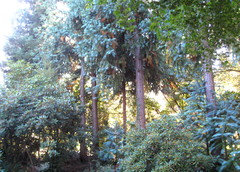
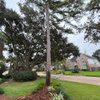
Phillocladus pics

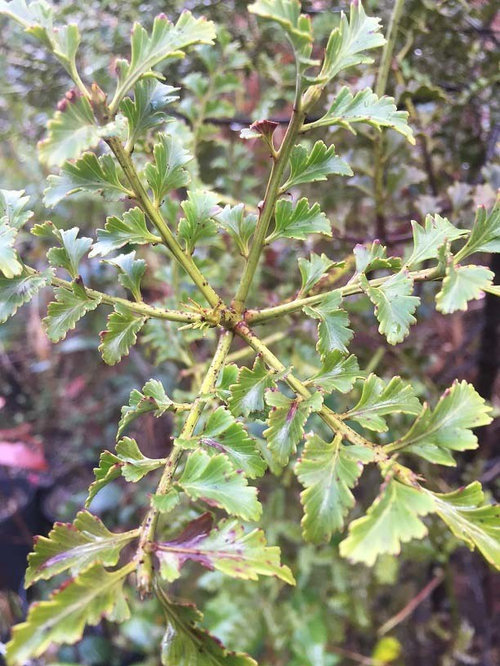
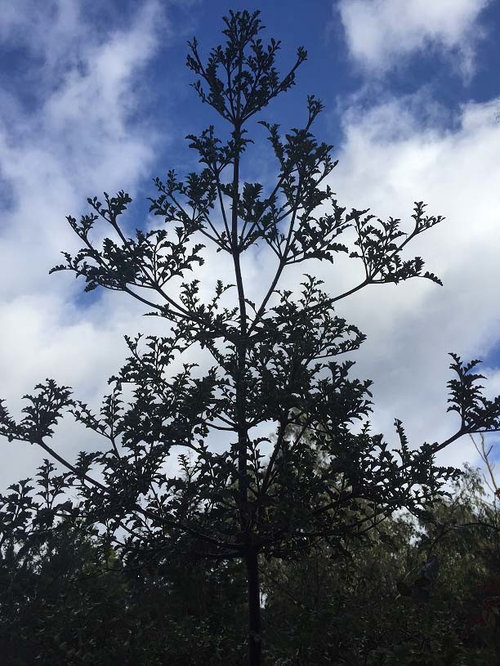
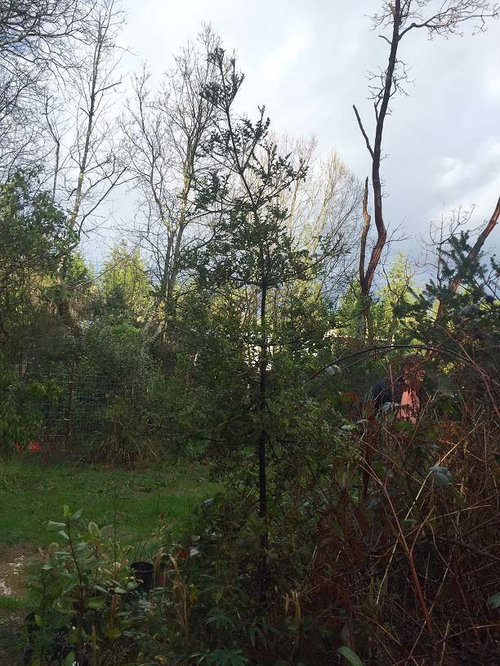
George in Bandon Oregon kindly sent his photos of Phillocladus from his garden. I had never heard of this conifer and find it most interesting. The conifer world never ceases to amaze me. Thanks George!


Comments (12)

  • 10 years ago
    last modified: 10 years ago

    It's spelled Phyllocladus, of course. As with Athrotaxis this has actually been a garden center - even hardware store plant department - item in this region during recent years thanks again to wholesale conifer growers in Oregon generating and dispersing such plants.

    The Seattle arboretum has multiple accessions of 2 species in the genus. The Hoyt Arboretum web site is showing one location for P. alpinus.

    http://hoytarboretum.gardenexplorer.org/taxon-3667.aspx

    zephyrgal pacific nw thanked Embothrium
  • 10 years ago

    Thank you for sharing zephyrgal and George Guthrie; very unique and amazing, especially in a home garden. Would love to hear more of your observations and experience in your home garden in Bandon, OR George. Cheers,

  • 10 years ago
    last modified: 10 years ago

    along with the phyllocladus grow a number of oddball conifers---widdringtonia, fitzroya, dacrydium, cunninghamia, several Mexican pines (montezumae, pseudostrobus, patula, durangensis, englemannii, and thanks to the great "kindness of (plant-loving) strangers" p. lumholtzii and also the rare California endemic fir abies bracteata!!!) and various podocarpus and Mexican cupressus. this (partial) list is only those actually growing the ground----there are other trees in containers outside waiting for a "forever home".

    my principal interest is with evergreen broadleaf trees like the Mexican oaks (roughly 20 species) and the Australian eucalypts (about the same number), plus various magnolias, "true" laurels (persea, cinnamomum, lindera), and sorts of other weird stuff that grabs my interest and will tolerate my conditions of dry, cool summers and wet, cool summers.

  • 10 years ago

    WOW; what a collection George, hope to see more pics of these other species and cultivars. zephyrgal told me that you had quite a collection or the rare and unique; but to make it grow in Oregon is rather impressive, I really love cunninghamia but have difficulty to get it to thrive here in Seattle home garden (gets temperamental on me) --- successful with lots of eucalypts. They got too big for our Seattle home garden; so donated to the Zoo here in Seattle, WA and Tacoma, WA, love and miss them thou. Friends and old colleagues in New Zealand and Australia really got me really excited to grow allot of different plants from there. Thank you for sharing -- look forward to seeing and learning more of your successes. Cheers,

  • 10 years ago
    last modified: 10 years ago

    "m.s.d." thanks for the kind words. many of the plants conifers and otherwise I mentioned have been grown in other parts of the PNW and many of them were originally obtained from regional sources. I do NOT look for tender plants to plant but instead plants that have a reasonable chance of surviving our typical winters and summers without extraordinary measures. I have been especially happy with the growth of araucaria angustifolia/parana "pine" from brazil. FWIW, a number of the plants I grow have been successfully grown in the u.k. under conditions not that different from our own.

    have seen good size trees of cunninghamia in Eugene and Medford neither of which are especial "banana belts" compared to other parts of our region. think the "secret" to growing this plant is good deep soil and a fair amount of summer water---so lawn planting might be a good option for this plant in interior locations around here especially. that said, similar cultural considerations work equally well for the native coast redwood here as well.

    yes, many eucalyptus are potentially too big for the typical suburban lot but luckily I have 10 acres to potentially play around with so that's not a problem for me. not sure about posting many pictures here myself as i tried to post pictures of phyllocladus yesterday but for some reason I couldn't so my friend "zephyrgal" kindly did it for me.

    I could possibly send you pictures of some other plants by email---you can contact me at "dismalvista(at)yahoo(dot)com" if interested.

  • 10 years ago

    Thank you George will e-mail you and send you my e-mail address; zephyrgal has my all my contact info. I'm going down to Oregon and we are going to the Oregon Garden Resort (garden tour their 80 acres garden) and going to different nurseries in Silverton, OR this late Feb. or early Mar.; after I take care of some business down in Oregon, depending on road conditions being cleaned up and repaired from recent weather destructions (just combining business and well needed break).

    Cheers, p.s.: very interested to see pics and learn more from you regarding these different species and what mistakes I did in the past. Congrats on your 10 acres to spread your passion on.

  • 10 years ago

    M.S.D., I have plenty of Cunninghamias that I started from cuttings years ago and have had no trouble growing them. Deep soil, and summer water is what they like.

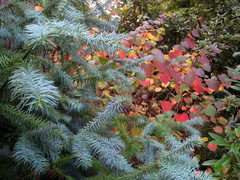
    Here's one with a Disanthus cercidifolious

    And a few up by the driveway.

    Mike

  • 10 years ago
    last modified: 10 years ago

    Mike, your plants (which appear to be the cultivar "glauca") look very nice and make a very cool contrast to the equally pretty fall color of the disanthus. so we are agreed about the deep soil and summer water "secret" for growing cunninghamia. of course these same conditions would likely also work on a number of plants from the "monsoonal"/summer wet climates of east asia from many of the Japanese maples to the "big leaf" rhododendrons. pretty much similar situations would be beneficial for many of the plants from southern and eastern north America AND again some of our native plants like coast redwood as well.

  • 10 years ago

    Hi Mike; the "Disanthus cercidifolious" was one of the one I tried; had it for 5 years, loved it (double in sizes in that 5 years). Then we had this winter a few years back (I think 5 years ago); where we lost power for 2 weeks, I remember it was that year (lots of power outages all over Washington that winter --- late spring after that winter was when I lost it. I have been spending the last 3 years trying to decide whether I should try again.

    Yours is gorgeous; that was how mine was for 5 years, then it up and croaked on me (no changes of care for it than 5 years of taking care of it). Thank you; I might try again when I can find another one in #1, I had started with a #3 the first time. Maybe I should try to locate it in more of a protected area from high winds? You know where I live at and I think it was the high winter winds. You and George convinced me; and with both of you mentoring, I might make a success this time. Cheers,

  • 10 years ago

    China fir is common in Seattle, where multiple examples over 80 ft. tall are known.

  • 10 years ago

    and even after all the cultivation over the years and the various mature trees in Seattle and in other places a surprising number of PNW gardeners are still not aware of it as a possible garden tree for our area. that said, it has some considerations and caveats---it's needles can be very spiny and sharp (almost as bad as "monkey puzzle"/araucaria) and as a mature tree (especially if it's stressed) it can retain lots of old dead brown foliage that can look rather ratty and definitely remains prickly to the touch---though there are some forms with "softer" needles than others.

0
Sponsored
Custom Home Works
Average rating: 4.6 out of 5 stars10 Reviews
Franklin County's Award-Winning Design, Build and Remodeling Expert