Software
Houzz Logo Print
twowire70

Question on polyembryonic mango sprouting

10 years ago
last modified: 10 years ago

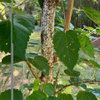
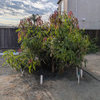
I planted a few mango seeds last summer (around August time) and one of the seeds produced two shoots. During the last five months, the first one that came out has grown taller (about 14 inches), the second one that came out is very small (6 inches) in comparison to the first one.

Based on the different postings I have read about which of these two sprouts can be the ( true to type or clone ) and which one ( off type or zygotic ), I am very confused. I like to request all the experts out there to guide me what to do.

1- Which of the two seedling I should keep, the first (taller one) or the second (smaller one)?

2- What if I keep both and nurture it to grow? Is it going to badly effect one seedling or the other?

In advance, thank you so so much for any help you guys can provide me.

Regards,
Tamr

Comments (2)

  • 10 years ago


    my understading is the zygote is (normally) the smaller one, and the others would be the clones.

    although i dont think this is set in stone, and , i have heard competing theories, but , i think this one comes up more often and seems to have more weight....


    here is some stuff from my files...


    ==============================

    The use of nucellar seedlings can increase the availability

    of rootstocks unlike zygotic seedlings. The polyembryonic

    seeds produce numerous nucellar seedlings,

    although distinguishing nucellar from zygotic seedlings

    has been a setback. At Pedro Sanchez (Snr) research

    nursery of the World Agroforestry Centre (ICRAF) in

    Makoka nursery, remarkable differences in mango seedling

    emergence and growth has been observed. The first

    or early seedling to emerge per seed has been taller and

    thicker than late emerging seedlings. It was assumed that

    most of the late emerging seedlings were nucellar since

    they were numerous. It is unlikely that a polyembryonic

    mango seed can produce as many zygotic seedlings as

    nucellar ones. According to Bally (2006), only twin or

    triplet zygotic seedlings can be produced from a single

    mango seed in rare cases.

    http://www.ajol.info/index.php/ajb/article/viewFile/78297/68664

    ----------

    The exact criterion for distinguishing a nucellar seedling from a gametic seedling in

    polyembronic varieties of mango is not yet well established. However, Sacgar and Chopra (1957) reported that in polyembryonic seed-stone the zygote usually gets degenerated and the seedling emerges from nucellar embryos alone. Thus there are chances of the sexual embryo development being crowded out by asexual ones in the early stages of embryo development.


    In that case the seedlings emerging will be all nucellar. However, this may not hold good for all varieties. Juliano (1937) reported that in ‘Pico’ both the types of embryo develop approximately at the same time and at the same speed. But in ‘Olour’, ‘Carabao’ and ‘Cambidiana’ the egg degenerates and all the embryos in a mature seed are adventive.


    Uniformity in the color of the emerging leaves of the seedlings may, however, be a a fair indication of their nuclear origin (Singh 1967).


    It has been observed that some of the monoembryonic varieties may revert to polyembryony when grown under different sets of soil and climatic conditions. Wester (1924) reported that some of the Indian varieties which were mostly monoembryonic produced more than one seedling in the Philippines.


    A similar condition was observed with some Indian varieties when grown under Puerto Rico conditions. This may be due to natural crossing of the monoembryonic with the polyembryonic varieties commonly grown in these regions.


    Sturrock (1951) reported that the hybrids of polyembryonic and monoembryonic types are polyembryonic under Florida (USA) conditions. However, further breeding studies are needed to ascertain the nature of inheritance of polyembryony in mango.

    Sometimes, seedlings with multiple shoots forming lateral branches arising in the axil of the cotyledonary leaves are mistaken for polyembryonic types.

    However, these can easily be distinguished as monoembryonic or polyembryonic on the basis of the number of tap roots.


    Single tap root will be a fair indication that it is monoembryonic, whereas more than one tap root with equal number of shoots will mean that the variety is polyembryonic (Singh 1960


    http://shodhganga.inflibnet.ac.in:8080/jspui/bitstream/10603/56178/5/05_chapter%201.pdf

    ---------------------------------------------


    Polyembryonic seeds contain more than one embryo and most of the embryos are genetically identical to the mother tree.

    https://edis.ifas.ufl.edu/mg216

    -----------------

    Poly-embryonic seeds produce a number of shoots, one of which originates from fertilisation. The fertilised seedling is often weak and stunted and should be discarded. The other seedlings are clones of the mother tree.

    https://www.agric.wa.gov.au/mangoes/propagating-mangoes

    -------------------

    The True Polyembryonic answer.

    http://forums.gardenweb.com/discussions/2192518/the-true-polyembryonic-answer


    twowire70 thanked greenman62
  • 10 years ago

    Dear greenman62, Thank you so much for answering and all the information you included in your reply. I am afraid I might get rid of the good one. And out of this fear, I just don't want to kill one or the other. Would you please answer my second question:

    2- What if I keep both the seedlings and nurture it to grow? Is it going to badly effect one seedling or the other? What effect it would have on both the seedlings...good or bad?

    Thanks so much.

Sponsored
Bella Casa LLC
Average rating: 5 out of 5 stars17 Reviews
The Leading Interior Design Studio in Franklin County