Software
Houzz Logo Print
bexnews

Patchy lawn mulched enough?

10 years ago

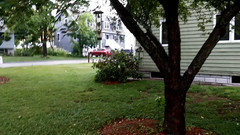
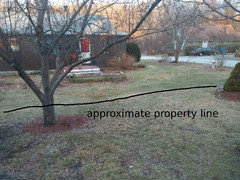
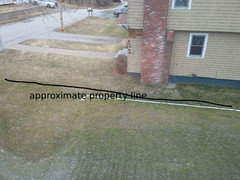
I recently got a Greenworks electric mower that claims to be able to mulch grass clippings. I mowed 2-3 times over a 2 month time frame and then took the below photo in December. The grass was probably about 3" when I started and I had the setting I think to to 2" but don't quote my newbie-ness on the subject. My lawn is in the foreground - mulched. The neighbor's in the background where they simply removed the leaves and mowed with their gas mower. I am concerned by my lawn's patchiness. Is this normal for leaving the mulchings or did it not cut the clippings small enough? We live in MA. Not sure if I should do something if anything to fix. My preference is to do less and let nature take course even if I sacrifice some aesthetic value (the organic approach) but at the same time I don't want to cause the whole lawn to disappear!


Comments (14)

  • 10 years ago

    Or it could be the trees are getting bigger and denser putting more shade on the ground. If you had any Kentucky bluegrass that would all die out in the shade. Then if you had fescue, which will grow in some shade, that type of grass needs to be reseeded when it gets thin like that. Fall is, by far, the best time to put fescue seed down.

    Mulch mowing just means that you don't pick up the clippings. Recycling the clippings, besides being a huge time savings, is good for the grass, because it improves the health of the soil-borne microbes.

    Generally our approach to organic lawn care includes fertilizing with animal feed like soybean meal, alfalfa pellets, cottonseed meal, corn meal, or corn gluten meal. Pick something that you can find at your price point in any feed store. Be sure it's ground up seeds or you'll end up with a crop of whatever's in the bag. Cracked corn is fine, but you'll get a few corn plants. The first time you mow they'll die. The application rate for these types of organic fertilizers is 15 to 20 pounds per 1,000 square feet. Apply by hand or with a spreader.

    Here's a newby guide I put together...

    Basics of Lawn Care

    After reading numerous books and magazines on lawn care, caring for lawns at seven houses in my life, and reading numerous forums where real people write in to discuss their successes and failures, I have decided to side with the real people and dispense with the book and magazine authors. I don't know what star their planet rotates around but it's not mine. With that in mind, here is the collected wisdom of the Internet savvy homeowners and lawn care professionals summarized in a few words. If you follow the advice here you will have conquered at least 50% of all lawn problems. Once you have these three elements mastered, then you can worry about weeds (if you have any), dog spots, and striping your lawn. But if you are not doing these three things, they will be the first three things suggested for you to correct.

    1. Watering
    Water deeply and infrequently. Deeply means at least an inch in every zone, all at once. Infrequently means monthly during the cool months and no more than weekly during the hottest part of summer. Do not spread this out and water for 10 minutes every day. If your grass looks dry before the month/week is up, water longer next time. If that does not work, then you might have to water more than once per week during the summer's hottest period. Deep watering grows deep, drought resistant roots. Infrequent watering allows the top layer of soil to dry completely which kills off many shallow rooted weeds.

    You will have to learn to judge when to water your own lawn. If you live in El Paso your watering will be different than if you live in Vermont. Adjust your watering to your type of grass, temperature, humidity, wind, and soil type. It is worth noting that this technique is used successfully by professionals in Phoenix, so...just sayin.' The other factors make a difference. If you normally water 1 inch per week and you get 1/2 inch of rain, then adjust and water only 1/2 inch that week.

    2. Mowing
    Every week mulch mow at the highest setting on your mower. Most grasses are the most dense when mowed tall. However, bermuda, centipede, and bent grasses will become the most dense when they are mowed at the lowest setting on your mower. In fact there are special mowers that can mow these grasses down to 1/16 inch. Dense grass shades out weeds, keeps the soil cooler, and uses less water than thin grass. Tall grass can feed the deep roots you developed in #1 above. Tall grass does not grow faster than short grass nor does it look shaggy sooner. Once all your grass is at the same height, tall grass just looks plush.

    3. Fertilizing
    Fertilize regularly. I fertilize 5 times per year using organic fertilizer. Which fertilizer you use is much less important than numbers 1 and 2 above. Follow the directions on the bag and do not overdo it (unless you use organics in which case you may overdo it without fear of hurting anything).

    At this point you do not have to worry about weed and feed products - remember at this point you are just trying to grow grass, not perfect it. Besides once you are doing these three things correctly, your weed problems should go away without herbicide.


    A B thanked dchall_san_antonio
  • 10 years ago
    last modified: 10 years ago

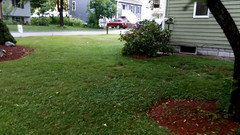
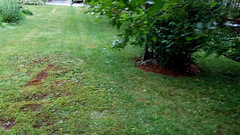
    Sorry - I am brain dead - this is supposedly a mulching mower but what I suspect the culprit is here is from mulching leaves in the fall not just grass! Though I read several sources that claim mulching leaves and leaving them in the soil also helps the soil health. So the picture in the OP was taken in December. I did my mowing, mulching leaves, in Sept-Oct timeframe. I took some video in June, some months before mowing and grabbed some screenshots here. It still does look still patchy but I almost feel it looks worse after the mulching? This seems to be consistent across the lawn, not just under trees. I assume the bigger mulched leave clumpings may be forming in the already bald spots and killing the nearby grass? by blocking sunlight?

  • 10 years ago

    It looks like a lot of weeds that just died during winter, your lawn is very sparse. It could be from shade, tree roots competing with the grass for nutrients(and winning) and overall neglect. I mulch hundreds of pounds of leaves per square kilofoot with no ill effects, so I don't think that's the problem. What kind of grass do you have? When is the last time you overseeded?

  • 10 years ago

    Shade is a likely suspect between the house & that tree.

  • 10 years ago

    The last thing you need to worry about is the lawn mower. The problem is one of just a few things. It could be too much shade. It could be the wrong grass for the area. Or it could be the way you water. We all see the shade and we all know that fescue is the only grass that might work for a MA lawn. Fescue needs to be reseeded when it gets thin like that. Why did it get thin? I suspect improper watering.

  • 10 years ago

    Thanks folks. I moved here in late August. The former owner said he didn't do much upkeep and I also did not do any seeding since moving. I'm not sure the type of grass? I guess I can ask the neighbor (though he already told me the problem is my electric lawnmower ;-)). Is there a way to tell? Would this be from too little water? I think all sides of the house look patchy, including the opposite side where the grass was hydroseed grown after the yard was dug up for new septic. Maybe I have to call an expert? Though seems like a joke for our postage stamp yard.

  • 10 years ago

    Your neighbor blaming the lawn mower is kind of a joke...

  • 10 years ago

    Give it some time and follow the basic care steps outlined above in the upcoming growth season. I see very few chopped/mulched leaves in your first picture, so I doubt that is your issue, nor do I believe that an electric mower is at fault. It looks like weeds may have overtaken the lawn, you said that the previous owner stated that he didn't do much upkeep. Maybe it just needs some proper care.

    Unless your neighbor is a lawn expert, you can safely and confidently disregard his advice. My neighbor rakes every leaf out of his yard and sends it to the landfill, then pays a service to spray mystery chemicals onto his lawn :-) His lawn looks no better than mine with mulched leaves, but he's paying for a service because he believes it the right thing to do. People in general believe that it's much more work to maintain a nice lawn that it is in reality.

  • 10 years ago

    I needed a laugh. It must be the electric field affecting the grass.

    Had you written in here immediately when you moved in, we would have suggested immediate overseeding, fertilizer in September, and fertilizer again in November. The overseeding should have kicked in about 3 weeks after application and it would have looked better at this point.

  • 10 years ago

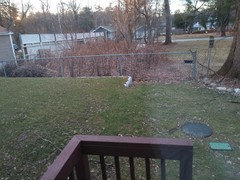
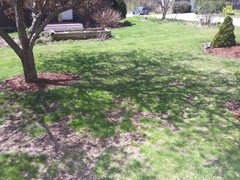
    So I am concerned the "mulching" electric mower did not break up the leaves I expected it to mulch sufficiently. We have leaves here in New England that come off the trees in the fall and cover the lawn. I read several articles from "experts" that mowing them should provide good feed for the grass. I took more photos recently that show the comparison between my lawn and the neighbors. If you zoom into the "holes" you can see bits of leaves. I am not sure if its a cause or effect but can't imagine how leave chunks would help the grass? I was hoping they would decompose now some months after being semi-mulched and under snow/ice/rain but they still are there.

    west side of house


    view from second story, west side

    East side. The above photo foreground shows the area that was hyrdro-seeded. It has a weird radial lines thing going, not sure if that's from the way it was sprayed which was from the direction of the street by a truck in 15 minutes?

    south-facing side

  • 10 years ago

    I think I am going to get some organic fertilizer. Would it also make sense to get compost or is that more of the nuclear option? The Organic Lawn Care FAQ seemed to indicate compost is only necessary in the most rare cases. Also do protein fertilizers = organic fertilizers?

  • 10 years ago

    Well I went down to my feed store in search of cornmeal or similar organic fertilizer and all they had in stock was Agway Organic Stage 1 Natural Fertilizer. So I applied this with a spreader about March 16. I didn't see too much change until mid-April when now I don't see a lot of added grass, but I do see some new blue and yellow flowers like shown. Is this "working"?


  • 10 years ago

    You have a lot of weeds and bare spots where your weeds from last year died during the winter. Go yo YouTube and search for the lawn care nut, he has a series on hybrid organic lawn care and lawn renovation. Under that tree use a shade mix.