Software
Houzz Logo Print
jedwaking

Which espoma product?

10 years ago

Which espoma product should I use to feed my emerald green arborvitae? Espoma's plant food finder on their web site (linked below) says to use Plant Tone. The garden center where I purchased the arbs said to use Holly Tone, which is consistent with what I find with a Google search.

While the general consensus seems to be to use Holly Tone on evergreens, Espoma says to use Plant Tone on taxus, boxwoods and arbor vitae. What gives?

http://www.espoma.com/plant-food-finder/

Comments (7)

  • 10 years ago

    Arbs are calciphiles, unlike most other conifers. And while the entire idea of specialty fertilizers for this and that plant are almost completely nonsense, this one is especially so. First of all, the plants almost certainly do not "need" any fertilizer. What are you seeing that leads you to believe the opposite? And secondly, acid-lover specials are not at all needed for arbs. They have no need and no liking really for acidic soils. All conifers are not one monolithic entity.

  • 10 years ago

    have a soil test done.. to determine if anything is lacking in your soil.. then act accordingly ...


    if they are of any size ... and near a fertd lawn ... that will be good enough forever ...

    conifers are trees.. and i am simply of the opinion that trees are everywhere.. and simply dont need help from us ... but for proper aftercare after transplanting ... and that is water management ... water and mulch ... and a wet dirty finger ...


    they are not children .. they dont need to be fed ...


    ken


  • 10 years ago

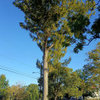
    Thanks for your replies! Here's more info: I had nine arbs planted by a local garden center in Apr 2015. They were mulched when planted and Ive kept them watered. Two of them went into decline in late summer and over the course of a few weeks turned brown. The remaining ones look just OK, with one (third from the right in the photo below) noticably paler and droopier than the others, and showing some brown spots.

    This is new construction in central Ky (zone 6). The soil they are planted in is clay that was disturbed and backfilled both for the development (around 2013) and for excavating and final grading during construction of my house (2014). There's no lawn around them. Ive been reluctant to have a soil test done because so many different fills were brought in and layered I'm assuming any random samples i take will only be representative of the top layers for only a small area.


    I want to give the remaining arbs the best shot possible!

  • 10 years ago

    That is a root/water issue that caused that decline. Nutrient deficiency would have taken years to manifest itself. How were the roots when planted and how did you water them?

    tj

  • 10 years ago

    The two dead'ns could have gotten that way before you owned them, drying out just once in the parking lot or whatever. I understand your reluctance about putting much reliance on a soil test result, given the unknown homogeneity. Tell me this...does it look like decent stuff? Any smell to it, sweet or otherwise? My strong hunch is that overall fertility of the backfill around these arbs is not a limiting factor in any way here. The two dead ones....hard to say..and going forward, by far the thing that matters most is water. If in a fairly moist regime, check and make sure the ball or former potted area of soil is getting wetted. If quite dry, then soak entire area well once a week.

  • 10 years ago
    last modified: 10 years ago

    I suspected from the beginning that the two that died were due to the roots staying too wet. I thought the garden center crew planted them a bit too low in the ground to start with.

    As for watering -- they were planted in April, and we had a very rainy summer through July. Throughout the summer and fall, when we went for more than a week or so without a decent amount of rain, I've watered them with both a soaker hose and a sprinkler. Toward the end of the summer when the first one started to turn a little yellow, I stuck my finger into the root ball and it was soaking wet -- even though I hadn't watered it in the past few days.

    These arbs were planted by the garden center I purchased them from, so they have a one-year guarantee and they're coming out in March to replace the two that have died. They're the ones who told me to put Holly Tone on the rest of them this spring.

    The soil is typical Kentucky clay and has never had any sort of odor or smell otherwise. At the end of the construction of my house, I insisted that the builder backfill closer to the house with good topsoil, and what the builder brought in (from a new home excavation in an adjacent neighborhood) looked darker and richer than the rest of the soil in my yard. But where the arbs are planted is mostly the stuff that the developer left when they graded my area of the neighborhood in 2013. So the soil structure was disturbed then, and I'm sure it was compacted during the construction of my home.

    What is your advice for my remaining arborvitaes -- particularly the one shown below which looks more puny (more yellow, some brown spots on the exterior, and generally droopy foliage) than the rest. Do I just need to give it some time? Do you recommend I dig it up and try to raise it by putting a little topsoil underneath? Is PlantTone going to do anything for it? Is it in decline to the point nothing can pull it through and should I therefore plan to replace it? Or maybe this is not unusual in late Feb for arbs in the ground less than a year?

  • 10 years ago
    last modified: 10 years ago

    Again, the soil could be deficient in one or more ways, but that's a slow-death spiral, not an instant or near-instant occurrence. I think these were handled poorly at some stage-either before or after being dug at the nursery. Realize-a B&B plant's whole world is that little bag of dirt with 10% of its roots left in it. Not much to go on is it? One stretch on the garden center's parking lot, baking in the hot sun with no relief (water) in sight could have killed the roots.

    I'd let the warranty work its magic for now, but do make sure they plant properly. It is at least somewhat interesting that things stayed so wet in the period post-planting. You're correct in wondering if that wasn't a factor. always somewhat ironic, in that the parent species from which all these endless arb cultivars are spun off from is supremely well-adapted to a high water table. Oh, the plants we ruin in this biz!

    ps.......for certain, these plants do not need fertilizer at this point. It will only stress them more, by pushing top growth at the expense of the poor, bedraggled root system.