Software
Houzz Logo Print
ragone4550

Need advice on tree spacing and types

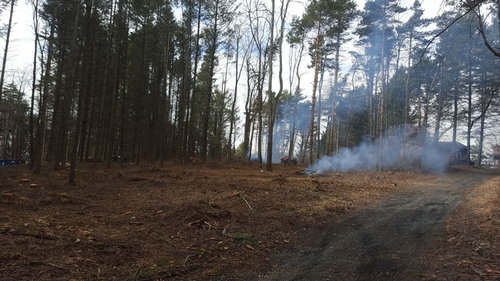
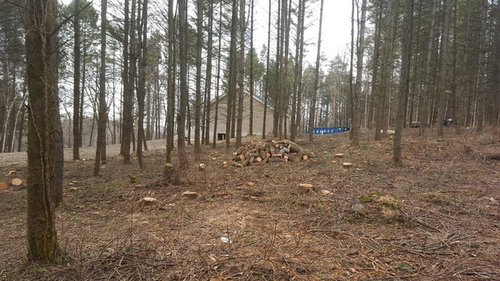
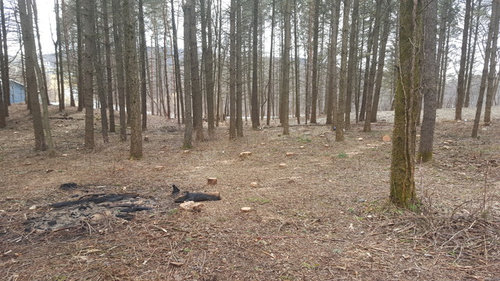
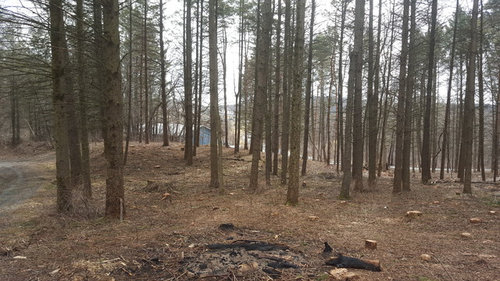
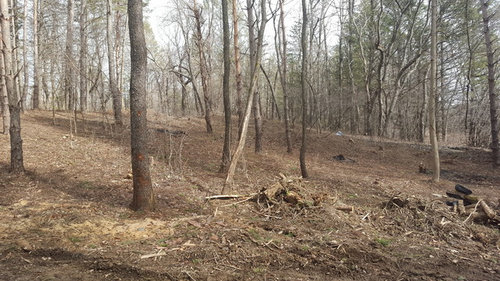
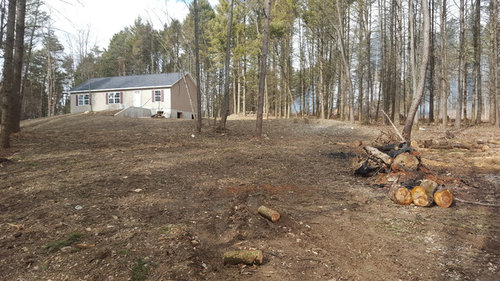
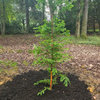
Hey guys attached is some pictures of the area I am looking to plant some new trees. I want to make it look like a natural wood setting with a mix of maples, oaks, some tree's that produce nuts/fruits and some evergreens for privacy. I know I have to remove all the tree stumps just looking for advice as I am new to planting trees. My overall lot is 3.5 acres, zones 5-6 and have a hard pan / small glacier till soil. All the tree's that have been cut down were dead pines that I believe died from being planted too close together and a severe ice storm from a couple years ago.


Comments (24)

  • 10 years ago

    What zone are you in and what is annual rainfall?

  • PRO
    10 years ago

    zones 5 and 6, average rainfall is 39-40" year

  • 10 years ago
    last modified: 10 years ago

    In a natural woodland trees are a lot closer then people recommend for a yard.

    If you want to plant trees in among the pines you would need pretty shade tolerant trees...sugar maple and Beech,, for instance. Beech are beautiful trees but hard to transplant. Unfortunately neither like compacted soil.

    If you are trying to create a simulated woodland that produces nuts. I'd suggest hickory and black walnut. (if you have the sunlight) Hickory are an important part of woodlands that no one seems to plant, and supposed to be good with compacted soil. Walnuts are pretty tough trees that make edible nuts and have valuable lumbar.

    American Persimmon (Diospyros virginiana) are pretty tolerant of shade and compacted soil, and produces edible fruit.

    wisconsitom is the person who can contribute the most to this topic...I wonder if saying his name three times would work?

    If going for a woodland look, a lot depends on how patient you are, and how "authentic" you want it to be.

  • 10 years ago

    " Walnuts are pretty tough trees that make edible nuts and have valuable lumbar."

    True,,,,,,but,,,,,you must graft them or buy grafted trees. Also be aware that walnut roots and leaves inhibit other plant growth nearby.

  • 10 years ago

    "I know I have to remove all the tree stumps"

    Why? I can't see any reason for that in a woodland setting. Plant the new trees between the old stumps and let the nature decompose them. You probably don't want a totally flat ground anyway.


    You should plant some shade tolerant bushes as well, that will benefit both wildlife, privacy and the natural look of the woodland.

  • 10 years ago

    i agree with hug .... the only reason to remove them.. would be to put in a golfcourse fairway ... and that is not the definition of a woodland ...


    save the work and/or money ...


    give us a state and nearby city .. z5 is about half the US and varies wildly ...


    ken

  • PRO
    10 years ago

    Albany NY. I just figured the pine root balls would interfere with new root systems

  • 10 years ago

    Eh, let them decompose naturally. No one was out there 500 years ago removing tree stumps.

    Black walnuts do not have to be grafted clones btw unless you are planning on selling nuts or eating hundreds. The squirrels here get into my native black walnut nuts just fine.

  • 10 years ago

    I'm still back at why the original pines died off. An ice storm is a total non-issue unless it physically felled the trees or uprooted them. For a semi-natural woodland, they don't look that close together. It doesn't look like a high water table. Maybe an insect pest?

    For something like this, you aren't toddling down to the local nursery and buying a 6 ft tree. The county Soil & Water people have annual plants sale where they sell very small trees and shrubs quite cheaply. I have a catalog around here, somewhere, buried under layers of my daughter's homework.

  • 10 years ago

    So the reason no market exists for native black walnuts is because,,,,,,,,,,,they are are worthless and by some difinitions posion ivy is also edible because squirrels and deer eat it. It can require hundreds for a single cake wheras a dozen or two improved yield plenty. Since we are spliting hairs I must say native lumber is valuable,value varying tree to tree but grafted command's 5 to 20 times the price in any case. Now that the can of worms has been opened,understand that improved nut require's different scion to that for lumber. If there's enough interest,we can split hairs even farthur by getting into walnut's ability to hybridize through cross-pollination with other juglans.

  • 10 years ago

    mad_gallica,check out "Pine Bark Beetles" for a likly cause. Pretty scary little pest wipping out thousands of acres every year. I would have a professional look. If that's what killed them the remaining pine will be gone within 2 years. May as well take them down now so they don't fall on transplants.

  • PRO
    10 years ago

    mad_gallica I believe they planted the tree's 40years ago in rows 3'-4' apart. I am looking at a few different sites online for tree's but unsure of ordering off them. The only place I found to purchase in bulk like you say was from the state.

  • 10 years ago

    Do grow a few from seed - this is such a lovely, life-affirming project. I have 5.5 acxres of old poplar plantation, so of negligible environmental worth but surprisingly beautiful owing to its high canopy and generous light levels. I only started to feel ownership of the land after felling my first tree and also planting one grown from seed (quercus robur and sorbus hupehensis)

  • 10 years ago
    last modified: 10 years ago

    Black Walnut are perfectly edible. I've bought and eaten them. You can buy Black Walnut online. However, the major commercial use for Black Walnut is lumber. They are actually planted in Europe for that purpose.

    If you want walnut in commercially viable quantities, you'd want to plant grafted Persian Walnuts. There are a lot of things you do differently if you want a commercially viable orchard...the advice you get at the Fruit & Orchards Forum is different and often contradictory to the advice you get here. The spacing guidelines are very different. But is that the goal? If you are growing nuts for wildlife, or for the novelty value and showing kids where food comes from, you can ignore a lot of that.

    Black Walnut do poison certain other trees. Of particular relevance is the fact they poison pine and apple trees. They don't effect most varieties of oak or maple.

    I did wonder about the pine die-off.

    What kinds of pine were those? If they were pitch or loblolly they could have been taken out by pine beetles. You would notice a lot of holes in the trunks and spots where brown or pink sap bleeds. Unusual for the common white pine in Zone 5.

    Whether to remove stumps is an aesthetic choice, to some extent. No one takes out stumps in the wilderness. How "natural" a look you want. Although until they rot stumps do take up some space where you could plant trees.

    Ragone Foundations Inc. thanked edlincoln
  • 10 years ago

    Just a comment about the wooded area you will eventually have.

    People plant trees and call it a wood land. What makes it even more attractive is winding paths that cover the area. The path does two things. One it provides access to the entire woodland so you could get a tractor or similar tool into the area. They provide easy access for the control of poison ivy and similar plants, and a way to get to the area for trimming. To maintain a woodland looking natural it takes a lot of work and trimming.

    The paths also provide a place to walk to enjoy the woodlands. While the path can direct the walker to an attraction in the woods, they also divert foot traffic from sensitive areas of you wood. I have an area of ground cedar that I would hate to see destroyed by people walking through it. My path diverts people around it. You can also add plantings at strategic points to attract small animals and birds, both of which make a wooded area natural.

    While these path can go in any time, you may wish to plan them before you start putting trees in. ie space trees so you can get the tractor between them on the path you intend to create.

    I maintain my paths by occasionally mowing down each path. It keeps the grasses under control and the path free of leaves and debris.

  • 10 years ago
    last modified: 10 years ago

    I agree with krnuttle, paths are useful. If nothing else, without them you only get to see the edges of the wood.

    As far beetles, look up "Southern Bark Beetle" and "Turpentine Beetle". Bark Beetles are rarely a problem for white pine in zone 5, but can wipe out Austrian Pine, loblolly, or pitch. In Zone 5 I'd think you'd mostly have white pine. Do the needles come in clusters of five, two or three? If they are white pine, you probably won't have to take out all the pine, despite what klem1 says. klem1 is in a warmer zone then you or I...down south Southern Pine beetles are worse and you see more pines other then white pine in the woods.

    I've had good luck with the NH State Nursery.

    There are also some places specializing in trees to attract deer (for hunters).

    And look into "conservation planting".

  • 10 years ago

    For starters, being planted "too close together" simply did not kill the previous trees. I don't have the time to list the myriad ways a stand of trees can fail, but that wasn't it. Second, you've heard from a few-and now me-that it makes no sense-for what I can tell you are trying to do-to remove those stumps.

    Third-and again, this has already been said-you are after seedlings or plug stock, not landscape plants.

    Fourth: If walnut is grown for lumber, it must be pruned regularly to keep low branches from forming. No wood, no matter how valuable-and black walnut lumber can be very valuable-is worth anything to any mill owner if it's full of knots from lower limbs that were allowed to form and grow large. You have to prune.

    Fifth: Reexamine your goal. I can't tell from your description if these are all compatible goals. You're not going to have a nut orchard and simultaneously be growing saw log-grade timber. Two very different programs.

    I'm tired this morning, but there is a lot more than could be said here. You need the advice of a local, professional forest management specialist, and preferably, not just a guy who is cruising timber to drop and sell. Beware.

  • 10 years ago

    I think I was the one who brought up lumber as a side benefit, not the OP. Not sure if the OPs primary goal was orchard or aesthetic.

    Everyone seems to have gotten bogged down on the black walnut suggestion. No one has commented on the hickory or American Persimmon suggestions.

  • 10 years ago

    Wouldn't Tilia americana also work well for filling in those shady areas?

  • 10 years ago

    For certain^. An extremely common component of the northern hardwood forest type.

  • 10 years ago

    mixing tilia americana and some white pines or red spruces would be awesome

  • 10 years ago
    last modified: 10 years ago

    Yes, American Basswood (Tilia americana) is a good choice for the spots closer to the existing pines. It's listed as shade tolerant, so it could probably do well in the shade of the pines. Bees like them. The ones near my parents have survived a lot of storms that have felled other trees...so decent chance of surviving ice storms. Probably more tolerant of compacted soil then sugar maple or beech.

    My thought is, since he has a lot of pines already, what he wants is "secondary succession" species. Shade tolerant, long lived trees that can survive in the shade of the pines.

    He probably wants to stick the fruit and nut species in the sunnier center parts of the cleared space.

    johniferous, from what he says he already has a lot of pines, and they are dying off on the site. Haven't gotten any feedback from the OP as to what kind of pines they were, or whether he sees any signs of bark beetles. I'm a bit concerned we overwhelmed him (or her?) and drove them off.

  • 10 years ago

    Yeah, I do that sometimes, as do we all I suppose.