Software
Houzz Logo Print
nikki209

Shower Wall Tile Installation

10 years ago
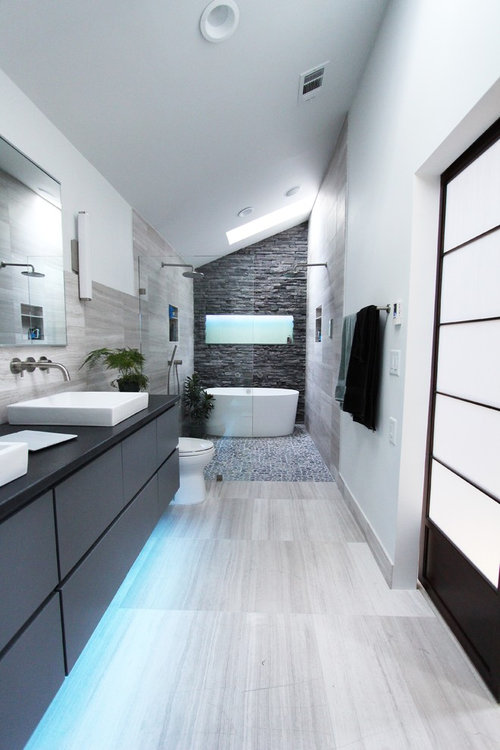
Hello, It looks like the shower wall tile was applied directly to the drywall instead of floating out the shower. Is there a risk for long term water damage to the drywall?
Cool Gray · More Info

Comments (19)

  • 10 years ago

    Thank you for the quick response! To clarify, you removed the drywall and installed hardie board instead? What did you use as a "vapor barrier" and "waterproofing"?

  • PRO
    10 years ago

    We used concrete board in this application. Hardie Board is not exactly 1/2" so it's not a good material to transition into sheetrock, but concrete board a true 1/2". When using concrete board make sure it is screwed using the correct backer screws that are powder coated and are resistant to alkaline and rust.

    This is a great vapor barrier: http://www.homedepot.com/p/CertainTeed-MemBrain-100-in-x-50-ft-Air-Barrier-with-Smart-Vapor-Retarder-902018/205920791

    This is a good water proofing- it drys quickly and allows for tile installtion sooner than most: http://www.homedepot.com/p/Custom-Building-Products-RedGard-1-Gal-Waterproofing-and-Crack-Prevention-Membrane-LQWAF1/100169081

  • 10 years ago

    Thank you for the links! Do you also have a link for a cement board that you would recommend over hardie backer board?

  • PRO
    10 years ago
    last modified: 10 years ago

    Cement Board: http://www.homedepot.com/p/DUROCK-Next-Gen-1-2-in-x-3-ft-x-5-ft-Cement-Board-172965/202263276

    Screws: http://www.homedepot.com/p/Rock-On-9-x-1-5-8-in-Phillips-High-Low-Threaded-Wafer-Head-Cement-Board-Screws-150-Pack-23310/100202725

    With these length screws, they are better for fastening but make sure you know where all your water and drain lines are so you don't puncture them.

    In addition, you can use Stud Guards to protect the plumbing pipes: http://www.homedepot.com/p/Halex-1-1-2-in-x-5-in-Nail-Plate-Bulk-100-Pack-62851B/202241088


    nikki209 thanked Change Your Bathroom©
  • 10 years ago

    Thank you! You've given me more information than all of the installers that I've talked to. Thanks for walking me through the process.

  • PRO
    10 years ago

    Not a problem! If you have more questions feel free to contact me.

  • PRO
    10 years ago
    I'm a tile installer of over 30+ years. The installer in this project did the "right" products. Using a Cement board is a far superior product over Hardi Backer Board. You also need to look at which shower pan method is being used. I grew up doing mud pans which is a great old time method. Problem with that system was that tile setters were bound to the liner installed by the plumber. Today we utilize the SCHLUTER Shower systems. There is a lot of info / videos out there on the system. You may want to research the Wedi system as well. Do your homework. It's important to use the right product, by a certified installer.
  • 10 years ago

    Can tile be installed on drywall if it is not in the shower area?

  • PRO
    10 years ago
    Yes, tile can be installed over Sheetrock if not in a wet area.
  • PRO
    10 years ago
    last modified: 10 years ago

    @kippee It depends on what you are tiling, if you are tiling a whole wall you would want to use cement board to support the weight of the tile. If you are just tiling a back splash you can tile directly on the drywall with proper prep using a membrane (such as a water proofing).

    Drywall is a panel made of gypsum plaster pressed between two thick sheets of paper and does not have the integrity to support weight of tile over time. The drywall is designed to support its own weight while the cement board is comprised of portland cement with glass-fiber mesh and engineered to support not only its own weight but also the weight of your material.

    For example, the weight of the drywall fastened to your studs and then an added weight of tile would cause the screws to pull through the drywall over time causing it to sag and therefore crack (or pull itself off the wall depending on the drywall install). The cement board can support itself and other materials allowing for a strong install over a long period of time.

  • 10 years ago

    The tile would cover the whole wall--some of it in the shower and the remainder outside the shower area. The tile is large. There seems to be differing points of view on using drywall vs. cement board. Any thoughts as to why?

  • PRO
    10 years ago
    Generally, the cement board is a better installation. However in most cases it isn't necessary in non shower areas. Moisture resistant Sheetrock is adequate with the proper setting materials. However, the shower must have some sort of waterproofing element to it. Cement board, Sheetrock and other products do not have that waterproofing element on their own.
    Additionally, products such as Schluter Kerdi Membrane may be used on top of Sheetrock to create the waterproofing. You can Google them.
    I personally have installed and we continue to install large format tiles on Sheetrock outside of wet areas with no adverse effects.
  • 10 years ago

    Thank you for all your input.

  • 10 years ago
    If you go with the better elements -- like cement board vs drywall---you know you have done what you can to ensure the durability and quality of the install...
    The cost is higher and many people choose to go with less expensive backer board to save a few $ but you are buying peace of mind with something like cement board if you are tiling quite a lot outside the wet area and using larger tiles, especially...
  • PRO
    10 years ago
    last modified: 10 years ago

    @kippee drywall cannot always support the load of tile vs concrete board.

    (See above comment): "It depends on what you are tiling, if you are tiling a whole wall you would want to use cement board to support the weight of the tile. If you are just tiling a back splash you can tile directly on the drywall with proper prep using a membrane (such as a water proofing).

    Drywall is a panel made of gypsum plaster pressed between two thick sheets of paper and does not have the integrity to support weight of tile over time. The drywall is designed to support its own weight while the cement board is comprised of portland cement with glass-fiber mesh and engineered to support not only its own weight but also the weight of your material.

    For example, the weight of the drywall fastened to your studs and then an added weight of tile would cause the screws to pull through the drywall over time causing it to sag and therefore crack (or pull itself off the wall depending on the drywall install). The cement board can support itself and other materials allowing for a strong install over a long period of time."

  • 10 years ago

    Thank you all for your help.

    Lately, some contractors seem to have stopped using using cement board and are replacing it with kerdi board. I realize this is faster to install and does not require the additional step of the separate sealing with Schluter kerdi. But with the lightness of the foam in the kerdi board, regardless of its thickness, can it support the weight of large tiles over the long term? Do large tiles need to have cement board which is heavier in order to have greater stability?

  • 2 years ago

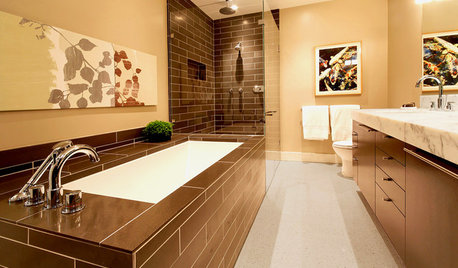
    Love the design. What is the square footage of the bathroom?

  • PRO
    2 years ago

    @Suzanne Loutsenhizer Thank you, this bathroom is 140 square feet.

Sponsored
Buckeye Basements, Inc.
Average rating: 5 out of 5 stars40 Reviews
Central Ohio's Basement Finishing ExpertsBest Of Houzz '13-'21