Software
Houzz Logo Print
mattp321

Magnolia as street tree?

10 years ago

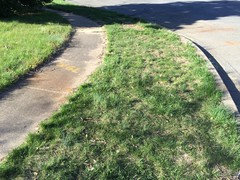
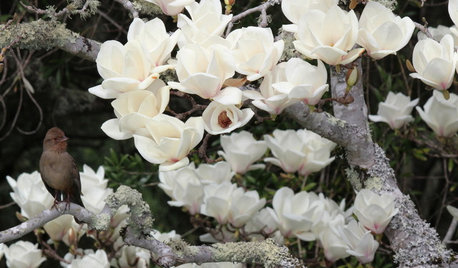
Any advice on planting a magnolia denudata as a street tree? Basically in a "hell strip" between a street and a sidewalk? Will it survive?

Comments (21)

  • 10 years ago

    Matt, are there overhead wires? If not, street tree design parameters call for tall-growing tree types. In other words, if there is no overhead space restriction, it is kind of a waste of good tree space to plant the low-growing ornamental tree where a tall-grower could go.

  • 10 years ago

    No overhead wires, but space is a bit limited due to other trees bracketing the site. So I can't plant anything too big.

    i was more concerned about the effect of the pavement/sidewalk on the roots. As in, do tree roots extend under the pavement successfully? Will this tree survive or thrive in a hell strip?

  • 10 years ago

    Since no one else has answered, I'll make stuff up...

    Aren't magnolia shallow rooted trees that dislike having their roots walked on? Bad qualities for a hell strip.

    Someone on this forum said trees in general seldom extend their roots under the road, but often extend their roots under the sidewalk.

    I've heard swamp-dwelling trees deal with the lack of oxygen supply for their roots better, and trees that tolerate clay or compacted soil have an advantage in a "hell strip". One source listed Star Magnolia as being tolerant of clay, and sweetbay magnolia is sometimes called "Swamp magnolia" so maybe those would be the best magnolia to use as a street tree?

  • 10 years ago

    I think you nailed it Ed. And Matt, now that I better understand the site, it makes sense to want to plant such a tree. As far as pavement, trees-pretty much any tree-can and eventually will root under the sidewalk. Not so much on the road side, as there is not much oxygen in the engineered, compacted materials that roads are built on top of. But even in the sidewalk case, this takes years and years to happen. I would never limit what I wanted to do on that account.

  • 10 years ago

    Round my way, this wouldn't stand an earthly on a hellstrip - if not the neighbouring dogs, kids and wandering drunks - a wayward bicycle would certainly do destruction. Slow growing and a tad demanding and unreliable, at least here in windy east anglia...I would grow one in a area of space where it could be easily seen from all sides (away from marauding oafs). Afraid I would be looking at a hornbeam or pollarded lime...but your idea of a hell strip might be somewhat different to what we optimistically call 'verges' here.

  • 10 years ago

    in my MI ... you could never get it up fast enough.. to trim the lower branches as to not blind peeps on the sidewalk ... a zone thing for sure ...


    and a large one would be cost prohibitive ... though maybe they are cheaper your way ...


    ken

  • 10 years ago

    Great points, thanks everyone for the comments. Maybe will pass on this idea, or will locate it elsewhere.

    is a serviceberry (tree form) a better choice for a small spring blooming tree in a hellstrip? Or much the same issues?

  • 10 years ago

    Serviceberry (if unpruned) tend to be a small bushy thing...I don't think that'd work in your hell strip either.

  • 10 years ago
    last modified: 10 years ago

    Serviceberry are great trees and a good size, but not known for being good with compacted soils.

    Redbud would likely do well in this environment. Are you in one of the few areas Black Locust isn't an invasive species? Hackberry is bigger and has less impressive flowers, but is supposed to be very well suited to these conditions. Crab Apple are a standard street tree. Unfortunately, there is a limited palette of trees that are really reliable in this environment, and they tend to be over planted.

    ...although you do occasionally see a big old specimen of something that has no business surviving there happily growing in a tiny cut-out in a sidewalk. Sometimes you luck out. You could roll the dice with magnolia.How wide is this "hell strip" anyway? How much space to the neighboring trees? I'm wondering how much space you have to play with here.

  • 10 years ago
    last modified: 10 years ago

    mm, think the key word is 'eventually' here, Embo. There are some terrific magnolias in my local botanics including a lovely denudata and gigantic campbellii (astonishing on Cambridge chalk!)...but they were decades in the growing. Myself, I would probably go for loebneri Leonard Messel or plain kobus (chalk!)...and even then, as you rightly say, late frosts are always a gamble.

  • 10 years ago

    Hell strip is 6.5 feet wide. Approximately 12' from any other tree. I think you all convinced me to go with an eastern redbud. I'll go for one of those hot pink/fuscia ones instead of the normal purple.


  • 10 years ago
    last modified: 10 years ago

    'Leonard Messel' is smaller and bushier than M. denudata, so going in that direction would seem to be at cross purposes. M. kobus, while making a good street tree in Vancouver, B.C. may take decades to produce a fully flowering specimen with a mature habit - when raised from seed. So again, how does that improve on the original choice - as far as the points of objection raised against the Yulan are concerned?

    Red buds branch out sideways and tend to be short, so then there is the question of one fitting into the space shown. Also in the past there have been dozens of posts on the internet asking why their new red bud tree was dying back or dying.

    Especially if you aren't likely to be right on top of developmental pruning you may need to pick something naturally on the skinny side. And I don't remember if this was brought up yet but some municipalities require permits for planting trees on city streets, with a list of approved kinds sometimes also in the picture.

  • 10 years ago
    last modified: 10 years ago

    *MY* objection to the denuda was that I heard magnolia had shallow roots and were sensitive about traffic on their roots. I suggested swamp magnolia or a kind known to do well in clay might be more likely to send it's roots under the sidewalk.

    I suggested redbud because I think they are "tried and true" as a street tree...and I wasn't sure what he meant by hell strip. (And I figured a tree that can grow back from roots might be an advantage in a spot where it might get abuse.)

    The common problem with redbud seems to be the species is pretty cold hardy...but for some reason the fancy cultivars aren't. Also they disintegrate in ice storms. So people quote the zone tolerances of the species when selling the cultivars, sell them up north, and they do terribly. In zone 7 that shouldn't be an issue.

    Good catch on a short tree interfering with traffic more then a tall one. From what you say, the branching habit could be a problem. This is a spot that would benefit from a tall tree.

    Anyone want to recommend a tall flowering tree that does well in hell strips? I'm not sure I'd be comfortable recommending tulip tree in a hell strip. I'm not a huge fan of them, but maybe catalpa? I never got an answer as to whether black locust is native to that area. I'm only familiar with the options that can survive up north...maybe you have more options down south?

  • 10 years ago

    Red bud is prone to verticillium wilt, this might be more of a problem with many plantings than cold damage.

  • 10 years ago

    One of the great spring sights in New England is the blooming magnolias along Commonwealth Avenue and throughout Beacon Hill in Boston.This is a tough, urban environment subject to air pollution, snow melt products and the usual hell strip planting areas. The original plantings of magnolia 'Galaxy' continue to flourish and are are at least 70 years old by now. Other varieties continue to be added from time to time, usually by volunteer fund raising. I would not underestimate the ability of many magnolias to grow and prosper in seemingly hopelessly inhospitable environments.

  • 10 years ago
    last modified: 10 years ago

    They do have shallow roots...and fragile ones at that. Personally, Embo, I wouldn't choose ANY magnolia in a public place where idiot members of the public, often on bikes and bloody skateboards roam...especially not MY public space which is town centre...but given the options, if I was going to pick one for me, Kobus is proving to be a good vigorous specimen and Leonard Messel is an improvement on the plain stellata - and, as with wisteria, there are some things just not worth growing from seed when either the wonderful Burncoose or Bluebell arboretum can provide good plants likely to be flowering well in my lifetime. Course, that's also true of the gorgeous Yulan (I think magnolias should always be white with only the merest hint of blush...but that's just me). PH is always a consideration for me though - on chalk. Oddly though, I have also seen them used on road verges and dual carriage dividers in more genteel urban environments - presumably where nitwits don't get to stomp about tugging at branches

    Verticilium crept into my allotment (sigh) and did for my redbud...or at least murdered the red-leaved scion, leaving me with an iffy, slowly vanishing rootstock...and the cotinus also.

  • 10 years ago

    God, you all are gonna leave me to stick a crape myrtle in there like all my neighbors!

  • 10 years ago

    akamainegrower, "The original plantings of magnolia 'Galaxy' continue to flourish and are are at least 70 years old by now." Must be something other than Galaxy, which was released by the USNA in 1980: http://www.usna.usda.gov/Newintro/galaxy.html

    matt - have you considered sweetbay magnolia (edlincoln referred to as "swamp magnolia")? Moonglow is an upright variety often grown in single stem form.

  • 10 years ago

    A photo I have seen - perhaps here on GW - that may be taken at one of those locations shows saucer magnolias. Saucer magnolia is the common, cold hardy tulip magnolia that is able to in a wide range of climates.

  • 10 years ago

    Embothrium and arbordave are correct. The oldest magnolia plantings in Boston's Back Bay are the classic saucer magnolias and these are approaching the 70 year mark. I believe, however, that a number of 'Galaxy' magnolias were planted in the late 1960's. These came, if my obviously fallible memory is to be trusted at all, from the USDA via the Arnold Arboretum and were a kind of trial planting years before the official release of 'Galaxy' in 1980. The comparatively narrow profile of 'Galaxy' makes it a valuable street tree. In more recent years, other magnolia varieties have been added. These include the Little Girl series, forms of m. stellata and, I believe, some of the yellow types.