

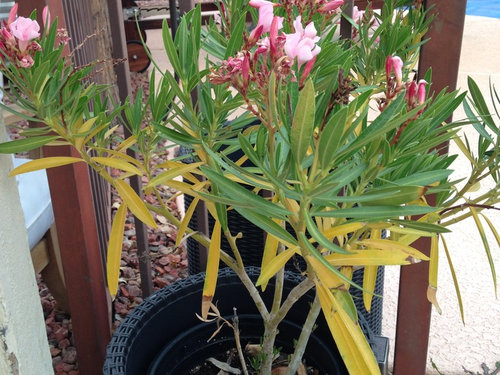
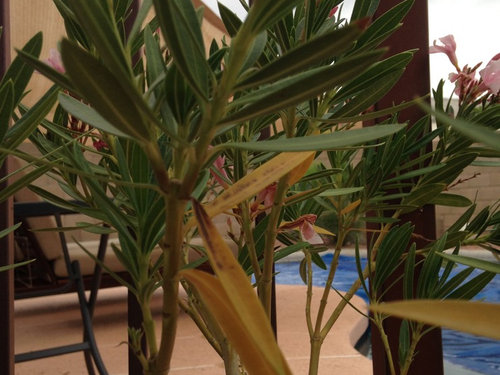
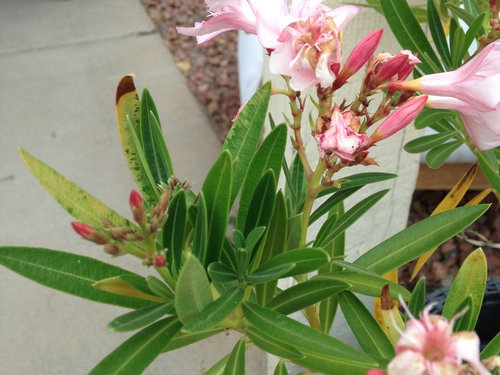
What's wrong with my potted oleander?
10 years ago


Featured Answer
Sort by:Oldest
Comments (8)
 10 years agolast modified: 10 years ago
 10 years ago
Related Professionals
Joplin Landscape Architects & Landscape Designers · Amherst Landscape Architects & Landscape Designers · Worcester Landscape Architects & Landscape Designers · Omaha Landscape Architects & Landscape Designers · Kennewick Landscape Architects & Landscape Designers · Baton Rouge Landscape Contractors · Houma Landscape Contractors · Oklahoma City Landscape Contractors · Laconia Landscape Contractors · Syracuse Landscape Contractors · Portsmouth Home Builders · Aberdeen Home Builders · Idaho Falls Home Builders · Kalispell Home Builders · Seattle Home Builders- 10 years ago
- 10 years ago
- 10 years ago
 10 years agolast modified: 10 years ago
- 10 years ago
Related Stories
GARDENING GUIDESWhat's Wrong With My Plant? Leaves Often Hold the Clues
Learn how to identify common plant ailments by reading their leaves
Full Story
LIFEYou Said It: ‘The Wrong Sink Can Make You Hate Your Kitchen’
Design advice, inspiration and observations that struck a chord this week
Full Story
LIFEYou Said It: ‘Every Room Should Have the Right Wrong Thing’ and More
This week on Houzz we were inspired to break out of catalog styling ruts and let our design freak flags fly
Full Story
GARDENING GUIDES11 Perfect Plants for a Moonlit Garden — in Pots
Create an alluring after-dark aura on a patio or deck with container plants that glow white under the stars
Full Story
HOUZZ TOURSHouzz Tour: A Modern Garden Pavilion Sprouts Up on an Ex–Pot Farm
This compact Dallas house now connects to its leafy surroundings in a gorgeously irreproachable way
Full Story
KITCHEN DESIGNHang 'Em or Hide 'Em: 10 Stylish Ways to Store Pots and Pans
Keep cookware neat and at the ready with racks, drawers and creative storage solutions
Full Story
KITCHEN DESIGN8 Stylish Sink Types for Kitchens of All Kinds
Choose the wrong sink and your kitchen renovation efforts may go down the drain — these sinks will let you clean up in the style department
Full Story
WINDOW TREATMENTSThe Key to Designer-Look Window Treatments
Learn the one thing that will make your curtains suffer if you get it wrong — and how to get it right
Full Story
CONTAINER GARDENSContainer Gardening Basics: The Dirt on Soil
Learn the types of potting soil available and the best mixes to help your containers thrive
Full Story
12 Gifts for Green Thumbs
Use your imagination — or borrow some here — to turn a potted plant into an even more special gift
Full Story

dale92539 Riverside Co SoCal