Software
Houzz Logo Print
johnnycoleman

Growing our own mulch

10 years ago
last modified: 10 years ago
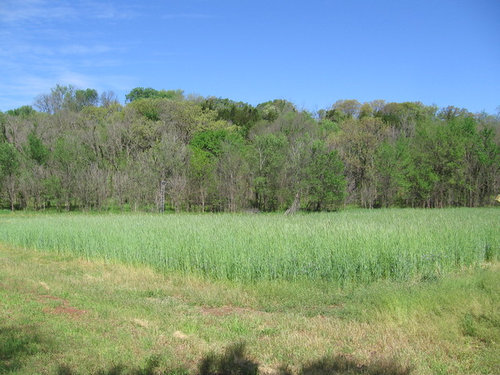
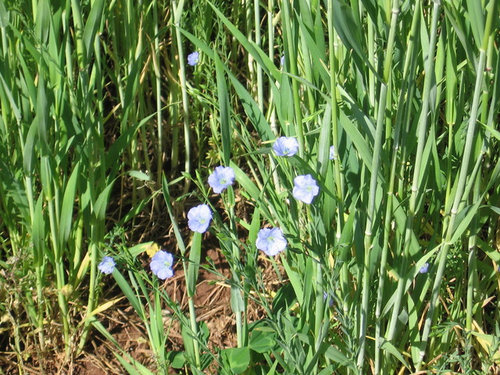
Our mulch looks very happy. Notice the Flax flowers. Whatever
we don’t use as mulch will be mowed and plowed under to improve the soil.

Last September, we rough plowed this plot. Broadcast rye, wheat and flax seed then drug a heavy chain over the field (two people abreast) to cover the seed. Mother nature did all the hard work.


Comments (19)

  • 10 years ago

    How tall is that?

  • 10 years ago

    Between three and five feet.

  • 10 years ago

    That's terrific, Johnny. I love flax and have some in bloom in our front pasture right now. With flax, bluebonnets and borage in bloom, there's lots of blue flowers for the bees.

  • 10 years ago

    Share your pic with us, Dawn. With a 100 acres we have a lot of areas we need to put to use and improve the soil and feed the bees.

  • 10 years ago

    cochiseinokc,

    We are planning a plow day near Coyle, OK to support https://www.facebook.com/visionfarms/

    We would appreciate your support.

    Johnny

  • 10 years ago

    How do you plan to use that for mulch? Are you going to lay it down with a swather or sickle? Square bale it? Roll it down and plant something in it?

  • 10 years ago

    osuengineer,

    Good question. Cut with sythe or weed eater, gather up by hand and apply to both sides of the crop row.

    Johnny

  • 10 years ago

    Are you planting the crop on site? That seems like a lot of work, Johnny! Maybe you could rent a mini baler, or find someone with an old square baler. At least someone to cut it.

  • 10 years ago
    last modified: 10 years ago
    AmyinOwasso

    I'm in no hurry. I'm retired.

    What ever we don't use as mulch will be plowed under to improve the soil.

  • 10 years ago

    Growing our own mulch is one of the best things we've ever done for the garden. It is astonishing how much the mulch helps keep the soil cooler and more moist during the season, and it is rewarding to see it decompose in place and feed the soil so the soil can feed the plants. It is as close as you can get to making your property self-sustaining so that you don't have to bring in compost or mulch from outside sources. For most plants in the garden, just the nitrogen that comes from the mulch as it decomposes is all the nitrogen I have to add to the garden in general, though I do add Espoma fertilizers at planting time just as a precaution so none of the heavy feeders run out of food during the growing season.

    We cut down 90% of our mulch pastures on Saturday in a feverish attempt to mow everything and mulch before the forecasted rain and flooding arrived. We mowed several acres, and used the weedeater where the grass was too tall for the riding mower, and the push mower in the dog yard because it is easier to maneuver it in there. Also, we do not catch the grass clippings from the dog yard. We leave them on the ground. We were working so hard that we didn't even stop for lunch until almost 3 p.m. We only left the bluebonnets along the driveway standing because they haven't gone to seed yet. They might be floating down the Red River by now though.

    We mow our home-grown mulch with a riding lawn mower that has a triple grass catcher that is pulled behind the mower (it looks like 3 big trash cans lined up behind the mower). When the grass catcher is full, Tim brings it to the garden, and we mulch with it. He dumps mulch in the pathways and I do the time-consuming part of putting the mulch by hand up around the plants in the raised beds. I also try to pull out any weeds that have popped up in the beds as I mulch, so it is not necessarily a quick process. I always wear gloves because sometimes the mower/grass catcher pick up fire ants with the grass/wildflower clippings. I also have to be extremely careful about how I handle the mulch when the main chigger hatch is occurring---usually in late May. That batch of freshly cut mulch gets dumped into pathways and left there without being spread on raised beds by hand, and I try to stay out of those pathways for a few days until the chiggers have died or gone somewhere else or whatever. And, once upon a time, a small non-venomous snake that I wasn't happy to find in my hands found its way into the grass catcher intact and I didn't see it. Now I scan a bunch of mulch before I grab a handful.

    We mow the yard regularly--once or twice a week as needed, depending on what the weather is doing. Occasionally we don't collect the clippings and cut with the mulching mower so they can remain on the ground and improve the soil there.

    With the pastures (one of our main sources of mulch), which we have overseeded with wildflowers and clovers, we mow periodically but not weekly. We wait until it is about as tall as it can get and still be mowed with the lawn mower and it sometimes is tricky to achieve that because we have to work around the weather and we also try to let as many wildflowers go to seed as possible in between the rounds of mowing.

    We always postpone the first mowing of the pastures, especially the front pasture near the front garden, as late in spring as we can because it has the most early-season wildflowers. I don't like to mow it until we have enough flowers in bloom elsewhere (which we now do) to keep the bees happy.

    It sounds harder than it is. We've done it for so long that it is just part of our regular routine. When a mowing day is approaching, I usually spend a couple of days in advance of mowing/mulching day doing both harvesting and weeding, which makes adding more mulch a bit quicker and easier when mowing/mulching day arrives. It is such a part of our routine that we don't even really talk about it and plan in advance---we know that Saturday is mowing/mulching day unless we're scheduled to be somewhere else.

    In our early years here, after we'd poured our life savings into buying the property and building the house, we cut the tall stuff with a scythe, and everything else with a push mower....and not a self-propelled one either. We waited and didn't buy a riding mower until we'd been here several years and could afford to buy one without going into debt. I now look back at how physically hard that the scything and mowing was and think we were stupid, and just should have whipped out a credit card and bought the riding mower from day one! lol.

    My favorite mixes to overseed pastures are wildflower or wildlife mixes from places that sell them by the pound (and in larger and smaller amounts). For wildflowers, we use Wildseed Farms and I order online. The last time I overseeded wildflowers was after 2011, when many wildflowers died in the heat/drought without ever blooming and setting seed. I bought 4 separate seed mixes....the poppy mix, bluebonnets, the Texas-OK mix and the Firecracker mix. For wildlife plot mixes and for clover, we buy whatever we find in farm stores. Sometimes when I have extra veggie seeds (kale, cabbage, turnips, radishes, cowpeas, etc. ) I sow them in the fields....in the autumn for the deer and the bunnies, but we cut and use for mulch whatever they don't eat.

    Johnny, I'm begging you to do anything but hand-scything. It seems cool and old-fashioned when you start and you feel like a back-to-the-basics hippie from the 1960s, you know.....a Mother Earth News type. After a day or part day of scything, you feel like your body has died.....or you are hoping for death as a release from all the muscular pain and torment.

  • 10 years ago

    Dawn,

    If I were that pain averse, I wouldn't have stayed in the Army for 20 years. (:-)

    Have you seen this technique? https://www.youtube.com/watch?v=5HA1gbvixT0

    Johnny

  • 10 years ago

    Johnny, I hadn't seen that. That looks about the same to me as using a string-trimmer, which I will use for some limited trimming but don't particularly enjoy using for a whole acre when it gets too high to mow. Been there. Done that. Hated it. Maybe that partially come from being a woman who has less upper body muscular strength than you guys do. Anything that makes me go inside exhausted and with aching muscles soon goes on the list of "techniques to avoid". I think it is great for those guys, but I'd just as soon not carry one of those things around for too long!

    Obviously your pain tolerance is stronger than mine and you might enjoy harvesting your mulch crop in that way, but I probably wouldn't. In our early years here we spent a great deal of time clearing stubborn brush out of our pastures and we had a machine that was a string trimmer on wheels. Ours had a metal cutting blade and would cut through tree saplings an inch or more thick. I love it. We used the heck out of that for quite a few years and also used it to clear underbrush in our 10 acres of woodland, but eventually wore it out. I loved it because it had big wheels and I could push it instead of lugging a string trimmer all over our 14+ acres. The machine we had was not a DR Field and Brush Mower but it was similar to one (and a whole lot less expensive, which might be why it only lasted 5 or 6 years).

    Before we got the riding mower with the big grass catcher, I did almost all the mowing (Tim was in the detective division then and always on call and always getting called in, so the mowing fell mostly on me) with a push mower. I didn't mind it and could mow all day, but our sloping land can be challenging and it was hard work. Once we got the riding mower, Tim somehow became more available to mow (he did change jobs within his PD at some point and no longer worked in the detective division so wasn't on call on weekends as much) and took over almost all the mowing. I kept telling him that his timing was suspicious to me. (grin) Now I just do the mowing if he has to go on a work-related trip or something and isn't around to mow. I still don't use the riding mower though. I like using the push mower because it gives me a good workout. I guess I am a glutton for punishment. Our mowing/mulching routine works so well because we are a team with a well-established routine. It might be hard for someone who had to cram all their garden and yard work into the weekend. I can spend all day Saturday weeding and mulching as Tim mows because I have the rest of the week to do the regular garden chores.

    I am not fond of GMO crops, but if they could insert a gene into a mulch crop that would make it clip itself off at the right maturity level and fall to the ground so all we had to do was gather it up, I might plant it. That, of course, is never going to happen.

    Dawn


  • 10 years ago
    last modified: 10 years ago

    Dawn,

    You mentioned large wheels. That reminded me of something I have been looking for.

    Some years ago, I saw some folks in Europe using a push planter with very large (18" or taller) wheels. If you come across a planter like that, we need one. Large wheels are much better in rough soil.

    Johnny

  • 10 years ago

    I suppose you mean larger than this one, right? seeder

    Or do you mean a pull behind type?

  • 10 years ago

    soonergrandmom,

    That is close. The type I saw in Europe had a back wheel about 2 feet or larger. It was a push type.

    Johnny

  • 10 years ago
    last modified: 10 years ago

    Maybe it was similar to Earthway's High Wheel push seeder? Now I have to go and find a link because I'm pretty sure its' wheel is at least 24".

    And.....when I found it, it was their High Wheel Cultivator. Darn it. I wonder if someone who welds could turn a High Wheel Cultivator into a High Wheel Seeder.


    The High Wheel Cultivator


  • 10 years ago

    My grandpa had a high wheel cultivator like that. It was made totally out of steel, but it was still lightweight.

    I don't see why you couldn't extend the frame on the push seeder and put larger wheels on it. Then you would need to figure out a way to get the double disks lower. Your seed rate would also be affected by the larger wheels.

    Johnny, I would think something like this would work for your old Ford.

    http://www.tractorshed.com/gallery/uptest/a69607.jpg

    Or even this for a larger lawn "tractor".

    http://www.rotarytimesavers.com/sickle-mower.php


  • 10 years ago

    osuengineer,

    Yes, both options would work. Thanks.

    I will look for a way to build a planter with large wheels next Winter.

    Johnny

Sponsored
Peabody Landscape Group
Average rating: 3.5 out of 5 stars8 Reviews
Columbus' Reliable Landscape Design & Contracting