Software
Houzz Logo Print
bkalgren

Help! New build, power line issue.

10 years ago
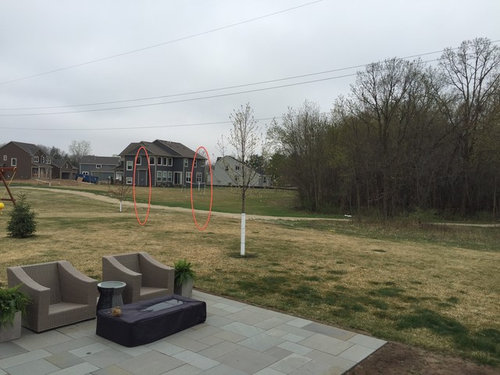
Hello! We are in a new build that needs trees. We are in St.Paul, MN - zone 4. The area we are planting is sandy dirt.

Problem is:

1) we know nothing about trees (I am in a state of analysis paralysis after tons of google research)

2) there is a very pesky power line at the back of our lot.

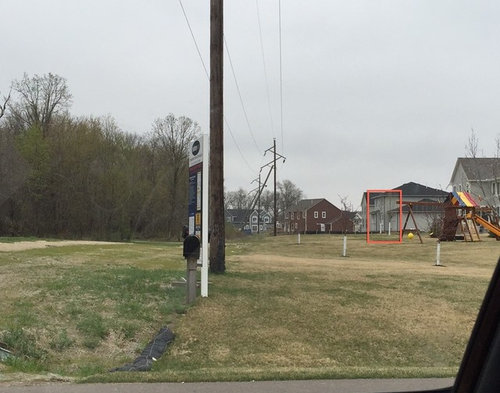
Our landscaper (who is doing the privacy screens and plants around our patio next month) recommended a couple, even a few river birch clump on that back corner of our lot to block out direct sight lines to that blue house and give us some privacy from the road, too (second picture below taken from the road). I like this idea, if they only get to 40ish feet. Would like your input. Is that way too risky? Is there something smaller that would be better and still provide a nice screen and boundry. Would it be weird to do one river birch clump (left) and one something smaller (right) to be safe? The oval pictures on top picture is where we would like trees. You'll notice we planted two (well, you can only see one) black hills spruce on the side of the lot - they will get big. I am not sure how tall the power lines are - maybe 35 feet? I want to be cautious, but I don't want like tiny, decorative trees back there (crab apple, lilac, arborvitae, etc).

The box in the bottom picture is where two silver maple trees (we think) are that are on our lot so that may help you see how much room we have to work with.

Suggestions appreciated.

Comments (10)

  • 10 years ago

    Another thought-you could go with a mixed shrub border. There's more googling for ya! You don't need height, in fact can't use it here, but you do want screening. I see shrubs as doing this job best.

  • 10 years ago

    thanks for your response!! we really feel like we need (okay, maybe really want) height. as much height as we can have.

  • 10 years ago
    last modified: 10 years ago

    I think you may be being over cautious. There are a million options that would work. What do you want in a tree? What threats would these trees face? (Eg wind, salt, gypsy moth, draught, snow load?) What were you thinking of as "smaller things"? How many feet from the power lines could you plant them? Who owns under the powerlines? Could a bucket truck reach them to trim them?

  • 10 years ago

    I'm glad to hear you say that (over cautious)! Thank you! That's kind of what I was hoping to hear. We really want TREES. Threats...hmm...I'm not sure I know enough to answer this. They are in sandy conditions, a lot of full sun, some wind for sure. Our priority is filling in our backyard borders (we have little kids, so we do want to have a big open space for them to run around) to make it not feel like we are on display. I don't want a "hedge" of trees, either. I want it to feel natural, beautiful. The woods behind us are great! It's just that back corner that is stressing us out. I think we could plant back about 15-20 feet from the power lines to still leave a big open center yard for the kids. I think we could consider tree trimming if needed in the future. I guess I think our city owns the power lines, but not totally sure - we were just warned that the powerline company has the right to come through and cut anything down in their way (or the tops of anything).

    Because we are in MN, and the majority of our year is leafless, I would love to plant more evergreens for year-round beauty...but they just get too huge. Our landscaper suggested river birch clump, and I do think they would like really nice...but I keep reading up to 60 feet (although she said, in her experience closer to 40 which would be okay)...


  • 10 years ago
    last modified: 10 years ago

    Ooops...after getting your hopes up, 15 feet isn't much room.

    I hate to say it, but you may be stuck with those tiny decorative trees. You want a vertical accent, winter interest, and a "wooded" look as opposed to a decorative flower garden look?

    The reason I asked about bucket trucks is if a tree is near a road they can still be pruned when they are pretty tall. If they aren't within reach of a road, they become unpranable when they reach a certain size.

    The reason I asked who owned the land under the lines is the power company may own it, or may just have an easement. Depending on the exact terms of the easement, you may be able to plant the sort of shrubs that grow back from the roots when they get chopped down directly under the lines. Check with your power company or the County Registry of Deeds to find out the details.

    You could plant:

    Hophornbeam (Ostrya virginiana) because it is the right size or Crataegus viridis 'Winter King' for the winter interest.

    You could get Striped Maple (Acer pensylvanicum.) You could get Limber Pine (Pinus flexilis) because it is evergreen and close to the right size. (Warning...I'm not personally familiar with these two trees)

    You could go for a narrow cultivar or a naturally narrow tree like American Persimmon (Diospyros virginiana ) or Eastern Red Cedar (Juniperus virginiana). (The latter is not super attractive and looks stupid if limbed up but is quite narrow, evergreen and wind resistant)

  • 10 years ago

    Have a look at the trees I suggested. They're in accordance with not making trouble with power lines and are larger than shrubs and are considered small to medium trees and give you the extra height a shrub will not.

    You can't go wrong with Acer pseudosieboldianum in your climate for what all your neighbors will think is a Japanese maple. It is in fact a Korean maple, but, it's very hardy.

    Your landscaper's suggestion of River birch is li8kely going to be ok for many years but a downfall of river birch is their short urban lifespan (soil and borers.) Why not put something in that will live a long time and never disagree with the power lines? Acer griseum comes to mind. Yes it could reach your power lines but not in a very-very long time.

    And there are many conifers that are determined as intermediate growing (6-12" a year) vs. dwarf which is 3-6" annually. I don't know your preference for landscape design, but there's an enormous amount of plant material now available to everyone because of the internet.

    Dax

  • PRO
    10 years ago
    last modified: 10 years ago

    I would plant evergreen trees like spruce- deer resistant, american arborvitae- find a cultivar that suits the height you want- deer loves it though, eastern juniper- as a backbones on your property line- then plants progressively smaller trees in 30- 20 ft range the closer to the house you go.You will get a beautiful layered effect for all 4 seasons- noise and possibly emf barrier and create a better view from your property. Go to University of Minnesota extension and get a plant guide depending on where in MN you are located. Check U of Illinois as well.

    http://www.extension.umn.edu/garden/yard-garden/trees-shrubs/recommended-trees-for-minnesota/northwest-central/doc/conifer-recommended2.pdf


    recommended for MN

    MN conifers and deciduous trees planting guide


    NW and Central MN tree recommendations


  • PRO
    10 years ago
    last modified: 10 years ago

    One more thing- long branches make large tree. If you learn how to prune correctly- not shear the trees and not top them- you may keep a lot of trees smaller. In addition the closer you plant them to each other- impedes their growth- seek free advice from U of MN extension horticulturists or Master Gardeners (they volunteers- check different MG- not everybody knowledgeable enough) Check your hardiness zone again- you may have microclimate warmer than your z4- take some risks like holly trees or western red cedar maybe. I would not buy "instant" landscape- buy smaller younger trees- less money and they will recover transplant shock faster and always catch up and do much better then transplanted larger trees.

    Absolutely crucial for your success to learn the proper planting technique- 9 out of 10 trees planted incorrectly by professional landscapers! Too deep- they struggle for a few years with diseases and give up, never thrive!

    Google root flare images to understand. The hole must not be too deep, but shallow saucer shaped, dirt under the tree must be undisturbed, so the tree won't sink. Do not stake- the wind action in tree crown promotes developing of an anchor roots- the stake prevents it and the tree may fall down, be uprooted without anchoring roots when mature

  • 10 years ago

    Is new construction a concern? My buddies with new houses just don't have thebsame type of soil I do.