Software
Houzz Logo Print
zoerosehill2

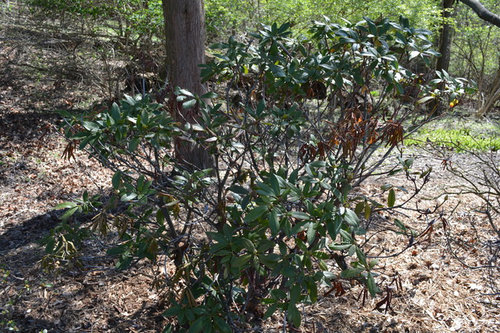
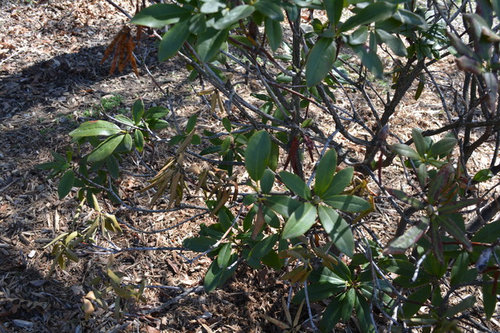
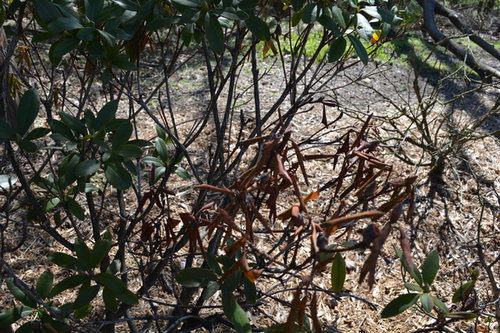
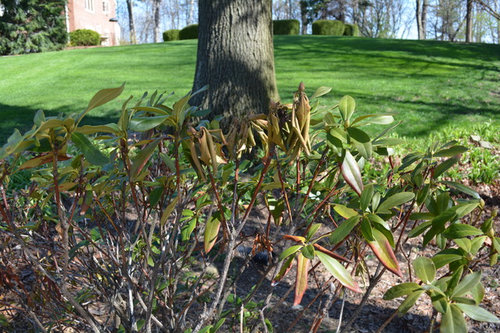
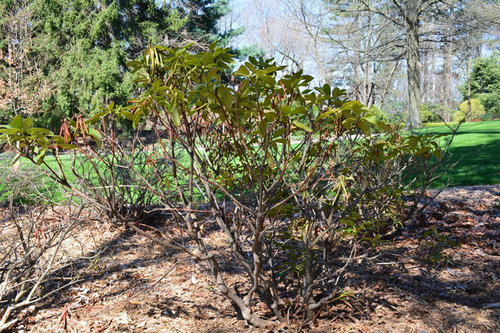
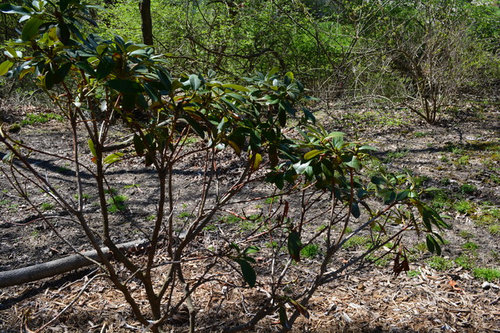
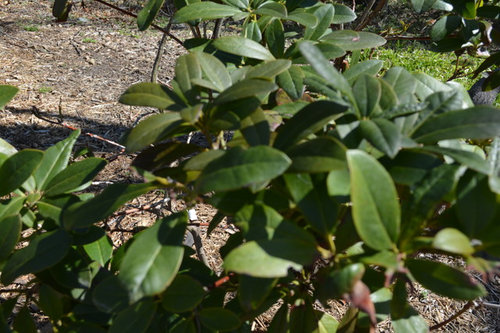
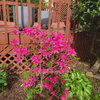
What is wrong with these rhododendrons?

My son was going to throw these away last year, so we dug them up and planted them here. They made it through winter, but branches are dying. I have more trouble with rhododendrons and azaleas. Should I spray them or just prune off the dead?


rhododendrons · More Info


rhododendrons · More Info

rhododendrons · More Info

rhododendrons · More Info

rhododendrons · More Info

rhododendrons · More Info

rhododendrons · More Info

Comments (18)

  • 10 years ago

    Impossible to tell for sure from the photos, but the damage seems to be pretty typical "winter burn" - dessication from cold, sun and wind. All of the rhododendrons are also pretty leggy. Usually this results from too little sun during the.growing season. Prune back the dead branches to a point where there is green cambium beneath the bark. If you experience difficulties with rhododendrons and azaleas, a soil test would be the first thing to do. Make sure these are not planted too deeply - a good rule of thumb is to keep 10% of the rootball above the soil surface. Don't use any sort of spray or fertilizer unless there is a good specific reason for doing so. Keep watered during dry spells.

    Donna Roesink Zone 6a Ohio thanked akamainegrower
  • 10 years ago
    last modified: 10 years ago

    They also look like they are planted too deep, thus some of that dieback could in fact be caused by root rot. I have sometimes seen that this is partly cryptic: it doesn't fully show until winter but the branch was already sick at the end of the growing season.

    Nice park-like grounds you have, btw.

    Donna Roesink Zone 6a Ohio thanked UpperBayGardener (zone 7)
  • 10 years ago

    Thank you, akamaingrower. I appreciate your answer. And, davidrt, thank you. Both of you may have hit the nail on the head. I know that 10% of the rootball is not above the soil surface. I am on a mission to gently raise them up today. It is cool, a little overcast, it will be a good day to dig gently, and put a mixture of bark, peat and perlite under them, and raise them up. Should I loosen the rootball, or leave it alone? I have a feeling that we will be able to dig them up very easily- they probably have not set out new roots, if I am guessing right.(they have been in this location since may of last year- I know that this was not a good time to move them, but like I said, our son was going to discard these plants). We will prune out the dead and hope for the best. Would an inexpensive soil test kit from a big box store be sufficient to tell us what is going on in the soil department?

    Davidrt, thank you for your kind words on the yard. We often think about selling this place and getting something smaller-hubby is 76 and I am 63. We would sure miss it though!

  • 10 years ago
    last modified: 10 years ago

    "and put a mixture of bark, peat and perlite under them,"

    Although it might not cause a problem in your case, it's worth pointing out this is now considered outdated advice. Although incredibly I still see it on nursery tags sometimes. Mixing soil textures can create the "bathtub" effect. The only exception is where you create a truly raised bed or mound, or when you amend a whole huge area to have a modified soil composition. For typical planting you should just backfill with the existing soil.

    Donna Roesink Zone 6a Ohio thanked UpperBayGardener (zone 7)
  • 10 years ago

    Thank you, davidrt. I read this recently on this forum. I will have to go back and find out where I read it.

  • 10 years ago

    Putting bark under the rhododendrons to ensure that the root ball is at the right level is not the same thing as amending the soil. I'd go ahead and use the bark - the peat and perlite are unnecessary - as you intended. I am also a skeptic about much of the research davidrt28 cites. For some plants going into some types of soil it is undoubtably sound. For magnolias, Japanese maples, and especially rhododendrons and azaleas digging a hole in unamended native soil, unless it is a very unusual type, and then popping in the plant will result in a slow but inevitable death. These plants and a number of others need highly organic soil with lots of air spaces. If your soil contains a great deal of clay, tends to drain very slowly and/or is shown to be insufficiently acid by a simple soil test, the best thing you can do is buy bark mulch in quantity. Suppliers often offer some form of partially decomposed bark. If it is available mixed with some compost, even better. Replant the rhodendrons in the bark mixture placed on top of the soil. You can create a wide - 4 foot of so - shallow depression in the native soil if you wish. Then plant the rhododendrons in 9 to 12 inches of the bark. No real digging at all. While you have the rhododendrons out of the ground, check that the root balls are not dry and compacted. If they are, tease or cut them apart and soak in water before replanting. Not sure how extensive the area is from the photos, but covering the entire surface with a foot or so of bark would look great and give you many other planting sites. Somewhat pricey to be sure, but it's a one shot expense except for periodic replacement of the mulch around the rhododendrons.

    Donna Roesink Zone 6a Ohio thanked akamainegrower
  • 10 years ago
    last modified: 10 years ago

    mainegrower...actually I agree the matter is more complicated than black or white, which is why I prefaced by saying it might not matter in her situation. OTOH, if she has quality garden soil and in Ohio she might, I still suspect some people like bboy would be very willing to argue that she should have just backfilled with that.

    We always have to remember that we are biased by our own experiences; you are in a rather cool summer climate by US standards. (and with more summer rain than the PNW) I feel like if I took your approach to planting here, although it would work, I'd literally have to be watering the plants every 3 days in summer. A pile of bark mulch will simply be bone dry after that many days, even in shade. Which is fine if that's what you want to do and you're set up with an irrigation system or whatnot. In my case I know my dark brown clay loam soil has saved me from having to water so much; and the rhodies still grow just fine in it. When I dug up my big R. 'Gables Hardy Decorum', last fall, I saw that it had happily put down 6 to 8" of roots in that soil. Maybe even a little more.

  • 10 years ago

    Different climates, different native soil types matter, of course. It's also possible that different types of bark are an important factor as well. Most dealers around me sell partially decomposed bark as Dark Bark, Black Forest Mulch, and other names. This has a consistency very much like the duff what would find on a forest floor. It's water holding capacity is very high - sometimes too high. I usually add pea gravel when I'm trying to provide the right conditions for so-called alpine rhododendron species. Perhaps even a foot of this would dry out in 3 days for you, but I do find that hard to imagine even in the heat of high summer.

    Donna Roesink Zone 6a Ohio thanked akamainegrower
  • 10 years ago
    last modified: 10 years ago

    Ok, glad we can agree on that. And, again, climate wise, I'd worry around here that a "partly decomposed" bark would accelerate to a fully decomposed state faster than it would up there. But I can fully believe your approach is the best up where you are.

    I notice with the rhodies I ordered from rhodosdirect that they seem to be grown in a mix of mostly bark chunks. Again, this is great if you have an irrigation system in place. The plants were beautifully developed and the roots very healthy and not knotted and matted as is sometimes the case with rhodies planted in typical potting mixes. (yes, I finally bought from them on your advice. Glad I did! I bought a few tender west coast hybrids I couldn't resist trying, and a couple species.)

  • 10 years ago

    Maingrower~ I dug up the largest of the two of these struggling rhododendrons yesterday. I only had to dig a wide perimeter around the bush, and loosen it up, and my husband just lifted it out. Probably not a good sign, as it has not set good roots in the year since it has been transplanted. We mixed up a boatload of your 5-1-1 mix, out of very fine pine bark, peat moss and perlite. I cannot imagine anything wanting to grow in this mixture, but I trust you. I do hope they live. I also dug up very small azaleas in this same area and replanted them in this mix too. I tried my best to plant them high. We will dig up the other rhodo plant today and do the same. I have some 15 year old Boudouir or Fedora azaleas in this same area that have all but died, I will try to post pics this week to ask you what to do about them. They are 99% gone with a little life. I will ask you whether to dig them out or what to do with them, as I have pruned out all the dead. I either killed them last year with azalea food or they went through a funny dry period in early summer and we didn't catch them. Will ask you opinion when I finish this other job. Thank you!

  • 10 years ago

    Donna Roesink: I'm trying to find someplace where I wrote anything about 5-1-1 mix which is not, in any case, "mine". There is a vast number of references to it in the container forum and I believe, Al, aka Tapla is the originator. This is a fine mix for plants growing in containers because it provides excellent drainage and aeration, but is unnecessarily fussy and not well suited for plants growing in the ground. That's why I wrote that the peat and perlite were unnecessary in my second post above. If you placed the 5-1-1 mix in a hole, you may have created the very sump or bathtub effect davidrt28 mentioned above.

    Anyway, what's done is done. On the next one (or more) use just the bark and don't worry about screening it to a particular size. Lots of bark spread over the native soil and the rhododendrons planted in it rather than in a hole, as I suggested in the second post, is the best way I know to provide an acid, moisture retentive but fast draining medium. Again, there are lots of variables as davidrt28 points out. It's not too late to use pure bark. Spread it out a bit over the 5-1-1 and replant into it. Many years ago, I helped a friend and rhododendron dealer plant dwarf rhododendrons on pure granite ledge at a Maine summer cottage. Never more than 6" or so of bark placed directly on suitable areas of the ledge. Drip irrigation system, annual renewal of the mulch and the rhododendrons did just fine, although it has been many years since i last saw them.

    Your experience in digging out the first one is not untypical. Rhododendrons and azaleas produce flat, shallow root systems except in exceptionally sandy, gravelly or woodsy soil. The roots remain where there is maximum oxygen. Since you just recently moved these, I would not have expected much root extension. Keep them well watered - use just a trickle at he base of the plant - during dry spells this summer. Treat the azaleas in exactly the same way. Evergreen azaleas are tough plants, so these may regrow from the old wood. Too early in the year to know for sure. Don't use fertilizer unless a soil test indicates a need. Excess nitrogen can kill a rhododendron or azalea. It can also stimulate late soft growth that is easily killed in the winter. Find out the pH of your native soil if the foot or so of bark is not practical.


    Donna Roesink Zone 6a Ohio thanked akamainegrower
  • 10 years ago

    Oh no. I did not understand your post. So if I am reading this correctly, the rhododendron should have been removed, the original hole should be filled with native soil, and then a layer of the fine pine bark should be layed down, and then the rhododendron should be placed on the bark, and then the root ball should be covered with an all bark mixture? Wow, that's a lot of bark that would have to be purchased, as this area is about 30' x 20" aprrox. The root ball of this plant is around 15" tall. I just told my husband that I read your instructions wrong. He said he is not re doing it, so we will see. The area is on a slight incline, so maybe it will drain very well. I am sorry that I misunderstood you.

    The weird thing about Ohio is: you drive by homes where they look like they do no yard work. There are huge rhododendrons planted which are doing beautifully. I bet these plants were plopped into the ground and planted many years ago, with no regard to how it was done. I literally see homes almost falling down with neglect, and there are huge rhodies growing in the yard. Me? I can't grow them.

  • 10 years ago
    last modified: 10 years ago

    akmainegrower, isn't it more likely that large old rhodies in a residential setting are the so-called Ironclads, instead of R. maximum? At least in the Philly suburbs, that's what most of the big old ones are: 'English Roseum', 'Catawbiense Boursault', etc. Maybe even a 'Cynthia' here and there. Sure here and there is a big old R. maximum but they have a different look that is recognizable. For example there are some planted along a gothic style building at Swarthmore that have a memorable more open branching structure and bigger leaves.

    Maybe in northern New England the big older ones are R. maximum. I haven't been north of Boston but I did notice that in western MA I did not see nearly as many big Ironclads as you do in say suburban Philly or Long Island.

  • 10 years ago

    There are large old Iron Clads to be found in northern New England. They never reach the height and spread of r. maximum, however, at least in the case of ones I'm familiar with. The Iron Clads are mostly based on r. catawbiense, either selections or hybrids. This species has, according to David Leach, a maximum height of only about half the potential height of maximum. There are many enormous maximums near me. Easily 20 feet tall and very late blooming. In some years, not until early July. Given the proximity of eastern Ohio to the native range of maximum and my own imagination about what constitutes a "huge" rhododendron, my surmise that the ones in question were maximum is really just a guess.

  • 10 years ago
    last modified: 10 years ago

    No you could well be right...it's colder in Ohio than SE PA. When I'm talking a "huge" Ironclad there, I mean one reaching to tops of 2nd story windows of houses. So maybe 15-20' high. Unfortunately some of them probably get chopped before they reach that size, or after they do.

    Somewhere I have seen pictures of those big wild R. maximum in New England, but I never knew they were as far north as Maine. That's good to know. Have you ever gotten to see the private Hunnewell collection in Wellesley? I can only imagine they have many large plants there, as they started importing from the UK in the mid 19th century. Sadly the curator there told me on the phone that vandals ruined most of the labels in the 1950s-1970s.

  • PRO
    10 years ago

    winter burn- remove the dead leaves and branches, if that doesn't work then it is probably diseased and there isn't much you can do about it

  • 10 years ago

    "if that doesn't work then it is probably diseased and there isn't much you can do about it"

    Actually not true at all, rhodies can have a non-fatal case of root rot, shown by branch dieback , and if they are re-sited appropriate in a better drained spot, they can recover.

Sponsored
Bella Casa LLC
Average rating: 5 out of 5 stars17 Reviews
The Leading Interior Design Studio in Franklin County