Software
Houzz Logo Print
blevine2

gritty mix soil

10 years ago

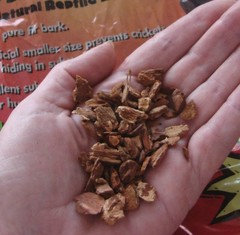
I have located Turface and chicken grit..and now need the pine bark..I did see the reptibark at the petstore..it seems like the pieces were too big..however we have a nursery that makes their own mulch etc..They had a sample of what they have, these come in 30-40kb bags,,,One is called Park soil conditioner..small chips of pine park, one of the others was 75% pine bark and 25% compost plus trace minerals..this comes in either organic or not. I sifted some of this one..and it had a powder like soil that came out --it had small pieces some pretty small others not.....so which of all the above I have mentioned is the one I should buy? The pieces in the reptibark seemed too large for small containers..of newly propragated leaves..am I wrong?

Thank you,


Comments (8)

  • 10 years ago

    Photo of bark would help...

    While 'classic' gritty mix has bark, it is not absolutely necessary. I have difficulties to find good bark, so I don't use it for succulents at all.

  • 10 years ago
    last modified: 10 years ago

    I have used Repti-bark for nearly all my past gritty mixes. Yes, it is a little larger and some people grind it smaller in an old, cheap blender. I used mine right out of the bag. Not ideal, but it worked for me.

    I recently made up the gritty just like Rina, without the bark at all. I find I have to water more often in the winter (my dry season), but I am sure the plants will do better in the summer with our daily rains.

    Edit - found a picture of the bark.

  • 10 years ago

    yup, I don't use bark either. Repti-bark was too big & floated to the top when I watered. It also didn't stay 'mixed' in the dry mix. Now I use straight up pumice, or pumice with chicken grit, but no bark.

    Too much of a pain to source =)

  • 10 years ago

    Thanks so much for your help hookilau and crenda. I have read tons of info on this forum...but can't find it again...but it suggested soaking the bark in water..have you heard of that...don't know how long...I assume it stays wet for a period of time..and makes the batch if mixed with turface and grit..moist even before adding it to a pot. I don't know what purpose it serves if you are able to get good results without it..you don't get very much for your money. It finally dawned on me..that the different products that could be added to the gritty mix if the original recipe stuff can't be sourced ...all work...and just learned..the trick is all the ingredients need to be similar in size.? Right now mine are in containers indoors...it's still a little cool outside...

  • 10 years ago

    I hear ya Belvine =)

    One thing gritty mix is not is FUSSY, lol! Follow the principals but don't overthink it, you literally can't go wrong.

    The short version is, if the particulates are of similar size, for succulents, chicken grit (aquarium pebbles believe it or not a just a tad big) and 3/8 pumice or scoria (anything like that) will work well.

    Bark & turface, add moisture to the mix but it's been my experience here in NY that these 2 ingredients were unnecessary. Both required sifting and a dust mask.

    Though pumice should be handled similarly, I prefer to mist with the hose. I you keep it in an outdoor plastic tote that has been hosed already, and it's constantly moist, so no issue with inhaling dust.

    The principals of gritty mix is most important. Once you know the principals, you can substitute ingredients that are easily locally sourced & with any luck, cheap!

    =)

  • 10 years ago

    Reptibark is good, but expensive, especially for use in gritty mix. You really do have to screen it both for fines and large particles - in my experience about 40 - 60% of a bag of reptibark is suitable for standard gritty mix. The biggest bags are the best deal, (24 quarts / about 1 cubic foot), On sale it's usually between $15-18 a bag, sometimes including shipping. Easy to find in local pet stores as well (prices vary widely).

    It's perfect directly out of the bag for 5-1-1, and all of the parts screened out (the "discards") for gritty can also be used for 5-1-1, but, straight out of the bag, I find reptibark unsuitable for standard gritty mix - it'll both have too many fines, and also too many large pieces and act like hookilau observed above - the bark will end up near the top of the pot, and the turface on the bottom, holding the most water right where you don't want it.

    just my experience, after using much reptibark. other members have reported it working great straight out of the bag. in the end you can grow a plant in anything once you learn how to water.

    For tropicals I use something very similar to 5-1-1 - most of my tropicals are larger plants (10"+ pots) and I find gritty mix too heavy once pots go above 6 inches or so - also gritty is too labor intensive and expensive to make for me to use on large pots, with my current methods and sources.

    I highly recommend making (hardware cloth+wood frame) or getting some sieves/screens, and screening at least small amounts of anything you plan to use, just to get a better intuitive understanding of particle sizes. Was eye opening to me.


  • 10 years ago

    Totally agree with above info.

    I bought 2 sifters for about 12$ on Amazon. Check link below.

    pan sifter

    I bought the 1/4" one and 1/8" sifters. They both stack well on top of 5 gal Homer buckets and I put the larger one on top with the small one below.

    This allowed fines to drop to another receptacle below.

    This ended up to be quite a production & if you have limited room for storage, it can be problematic & clutter-y =P

    I ended up with 1 tote for each ingredient that wasn't sifted, plus one tote for the sifted, and yet another large tote that I could sift fines into.

    For regular container plants for the spring and summer season, I just use plain ol' bagged mix 1:1 with perlite or pine fines (unsifted) mixed with rinsed perlite.

    YMMV 8)

Sponsored
Peabody Landscape Group
Average rating: 3.5 out of 5 stars8 Reviews
Franklin County's Reliable Landscape Design & Contracting