Software
Houzz Logo Print
yonatin

How does this look?

10 years ago
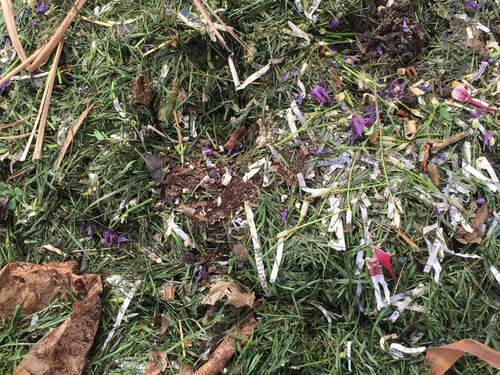
Is this too green? I want to buy a thing of straw or wood shavings to add to it, but I wanted to make sure it needed it before doing so. The pile looks like this consistently and is hot. Do I need more brown and if so how much?

Comments (38)

  • 10 years ago

    I'm no expert but it looks too green to me. You don't have any leaves to add? Those are free... that all being said, I would kill for all that grass. I have an excess of leaves over here and need some greens to mix with. Want to trade...? Lol

    Yonatin 7a thanked Jessica Whittingham
  • 10 years ago

    What does that pile smell like? Is there an odor of ammonia or is there an odor that is putrid or does the pile smell of good rich earth?

    If the pile smells of good rich earth and stays hot for several days it is good.

    kimmq is kimmsr

    Yonatin 7a thanked kimmq
  • 10 years ago

    it has a slight ammonia smell to it, this is the third day its been piled up and it is still hot.

  • 10 years ago
    last modified: 10 years ago

    IF it is hot why do you want to add anything to it?

    You can add too much and slow the process down or stop it by adding too much esp. if it's the wrong stuff.

    Yonatin 7a thanked gumby_ct
  • 10 years ago

    okay so if it is hot I'm good and I don't need to add anything to it?


  • 10 years ago

    You can certainly do whatever you want. But my motto is if it ain't broke don't ficks with it.

    If you don't have a compost thermometer pick one up on Amazon or somewhere. That can be a big help to know when the temp starts to decline then you can turn it if you want to bring the temp back up.

    Yonatin 7a thanked gumby_ct
  • 10 years ago
    last modified: 10 years ago

    isn't it ironic that we are swamped in either leaves or grass clippings but never both at the same time.

    I think if it is hot, leave it be.

    And if it's not, add some oxygen.

    Yonatin 7a thanked tete_a_tete
  • 10 years ago

    I have a thermapen that will work for taking the temp. Last I took the temp it was 120F and it feels hotter than it did when I took the temp. I turned it and it smells less ammonia like and more manure like now.

  • 10 years ago

    You should be gettin a musty (moldy) kind of smell.

  • 10 years ago

    Based on the photo, I'm with the 'too much green' crowd. Based on your last comment, I'd bet money on it.

  • 10 years ago

    Grain straw nor wood chips/shavings are great browns. Leaves are the best bar none but in the absence of leaves I've used wheat straw. Doesn't work well, but it does help with aeration so there is some benefit. As for how much, I'd go with at least an equal amount by volume of what your pile is right now, probably more. If you were anywhere near me I'd run some bags of shredded leaves over to you. I hoard a bit just in case.

  • 10 years ago

    That ammonia odor says you are loosing Nitrogen to the atmosphere, it is not being recycled into the material in the pile. A musty (moldy) kind of smell would not be good at all.

    If after 5 days, or so, the pile starts to cool down turning, and remixing, would not be a bad idea.

    kimmq is kimmsr

  • 10 years ago

    Tete_a_tete if we had both at the same time, then we'd have compost instead!

  • 10 years ago

    Lloyd I'm in Salt Lake City, Utah. I don't know if that is near where you're at.


    What does the horse manure smell indicate then? It's crazy how the pile shrinks everyday I go out to check on it.

  • 10 years ago
    last modified: 10 years ago

    Shrinking is a sign of good heat and digestion from all the bacteria growing in there.

    Sorry I don't know about horse manure smells so will leave that for those that do.

    But I'm gonna say IF you don't have a musty smell from the grass it
    doesn't have the bacteria you are trying to grow nor the heat. So musty is a good thing when composting.

    As the pile cools the smells will go away or change to earthy type smells.

    And everyone always talking about loosing N during the composting process - yet no one offers suggestions on how to measure the loss. I think you will always loose N esp. during the composting process.

  • 10 years ago

    Ya, not really close....I'm up in Canada just north of Winnipeg.


    A manure smell is a real good indication of an anaerobic condition which means decomposition in the absence of oxygen. It is still decomposing, but not the ideal situation. Obviously the remedy for this is more air. The ammonia smell is the N gassing off. Again, not the ideal and can usually be remedied with some added C materials.


    Pile shrinkage or generated heat can be caused by several things as well so by themselves means little. A bag of pure grass clippings can generate a LOT of heat but will not be anywhere near the best C:N ratio for decent aerobic composting.


    Ideally, your C materials should be quite a bit greater than your N materials. As an example, one would need about three bags of unshredded fall leaves to one bag of grass clippings. Again, there are variables but this ain't a bad guideline. One variable would be the availability of the C. Straw does not have a lot of available C. It helps with aeration, but the C is not easily available.

  • 10 years ago

    What does the horse manure smell indicate then?

    That there are horses around.

    Seriously, a ponging compost heap or a worm farm where all the worms have committed suicide smells nothing like horse manure. Horse manure has various smells depending on whether the horse is well or unwell, stabled or at pasture, living in over-crowded conditions or clean conditions. A dead compost heap or worm farm, OTOH, smells revolting. You will glance worriedly in the direction of the neighbours.

    It's crazy how the pile shrinks everyday I go out to check on it.

    It's very good that it is shrinking.

    It should not smell mouldy, fowl, foul or putrid. If it smells pleasant or at least not unpleasant, that is good. It will smell more and more earthy the more it decomposes.

    Upon my first glance I did think it was too green. But I said to myself, "Where is yonatin going to get some leaves? Should yonatin really go out and buy compost materials???" And I decided that a wait and see approach might be more sensible.


  • 10 years ago

    An odor of horse manure is an indication of a loss of Nitrogen, it is an ammonia like odor. That odor does not necessarily indicate anaerobic digestion. A hot compost pile and anaerobic digestion do not mix.

    kimmq is kimmsr

  • 10 years ago

    There are a lot of odors in manure.. I think it is still possible that part of the pile can be hot and aerobic and other parts deprived of oxygen. But it certainly could be mostly nitrogen. Anyway, my own experience provided for what it's worth.

  • 10 years ago

    Armoured, you pretty much hit the nail on the head. It is wet and I have spread it out to dry up. As luck would have it the day after I made the pile we had almost a week worth of rain that just kept soaking it. I will definitely be rethinking how I do the next compost pile. I haven't been able to find much dead leafs to add to the mix, I do have a lot of papers that need to be shredded though.

  • 10 years ago

    If the pile went from an ammonia smell to a manure smell something changed. I'll still bet money on anaerobic conditions. An optimum 30:1 C:N pile can still go anaerobic. Looking at the picture I don't believe that pile is anywhere near a perfect 30:1.

  • 10 years ago
    last modified: 10 years ago

    The secret is to always have something to cover any compost pile or bin in case of rain. Use a tarp, an old shower curtain, trashcan lids, get creative. You must keep the compost from getting too wet.

    So we were looking at a pile that looked nothing like what you were having a problem with?

  • 10 years ago

    @yonatin - yep, rain will do that - lots of water makes it anaerobic fast. As gumby says, it is a good idea to cover a pile. Keep in mind of course, with time and air just about everything will turn to compost, just perhaps not when or how exactly you want it. I think compost worms colonizing a pile is a great thing, but I'm a bit lazy about it all.

  • 10 years ago
    last modified: 10 years ago

    As a chemist I can tell you two things about this odor topic.

    1. Ammonia smell is definitely a loss of N as has already been said. Add browns.

    2. There are other forms of N - such as N2 or NO2 which are odorless so you can't necessarily know when you are losing those. But if you mitigate the ammonia odor you know you're not losing it through ammonia and that's good.

    3. Other stinky odors (manure etc.) generally result from nitrogen or sulfur containing compounds as well. Therefore a foul odor suggests you are still losing some N, just in other forms. Amines, amides, thiols, mercaptans, indoles, phenols, there are a bunch.

    OK, three things.

    So, ammonia or poop, either way you need to add browns IMO.

  • 10 years ago
    last modified: 10 years ago

    Interesting if horrific trivia: animal manures produce specific volatile products when various amino acids are metabolized anaerobically, including compounds such as 'putrescine' and 'cadaverine'. Who says chemists aren't creative. Both are short hydrocarbon chains (C4 and C5) with amines (NH2) stuck on either end. Further pointing out that the stench = loss of nitrogen.

  • 10 years ago

    The only thing I'd add Tox is if the C:N is already in the "range" then adding air is better than adding more browns.

  • 10 years ago

    Agreed...another way of saying that it can be too wet or compacted but with a proper green/brown ratio so it needs air. Definitely.

  • 10 years ago
    last modified: 10 years ago

    I'd be inclined to add the shredded papers to the pile, in layers.

    It's not the end of the world if this compost heap isn't the be-all and end-all of compost heaps. As someone above said, over time, eventually every compost heap becomes compost and sometimes the worms have moved in and given a hand. (Probably rolling their eyes on some occasions. Let's face it, we have all made rotton compost heaps on occasion.)

    And someone else said that they leave the clippings in situ. I have done this too when not in the mood for composting. I just let them blast out the side of the mower and fall where they will. You can barely tell they are there.

    And other times I have gathered them but put them on garden beds as a very thin layer. So thin that they don't mat down and go mouldy.

    Remember, if you are not enjoying your composting, you are taking it too seriously.

  • 10 years ago

    Oh, tete-a-tete mentioned probably the biggest single issue with glass clippings: the tendency to mat and form a dense layer, usually wet. Sometimes seems like those could last forever. I had some like this that eventually only broke down once it was left to dry out completely - at which point is was almost like a very rough dense paper-fibre thing. Eventually some fungus or some other soil bacteria broke it down, but it was slow. Another reason I like to let grass decompose on the lawn - plus it's supposedly good for it, plus it's less work )).

  • 10 years ago

    I let my clippings fly almost all the time except in early spring when 1) the lawn is growing fast and making a lot of them and 2) I have piles of leaves from last fall that need some greens to mix in. Otherwise I mow by spiraling inward from the property lines, throwing the clippings outward so they are evenly distributed over the whole lawn. They disappear pretty quick.

  • 10 years ago
    last modified: 10 years ago

    I think it is worthwhile to point out that even the "perfect mix' for compost (I can't believe we are talking perfect but) when it is too wet will go anaerobic and stink. Life is all about balance.

    I've done grass myself by just adding water with "perfect results". In life the first time you do anything is the hardest - and so it is when building a compost pile. My first pile mixed to what I thought was "perfect" stunk but I had no clue what I was doing.

    I still have no clue but now I have a compost thermometer to guide me.

    Honestly, after you get the knack down you don't need a thermometer but it is extremely helpful when learning to get things right. For me the biggest thing was getting it just moist. I use rainwater in a watering can and put things together by eye so to speak.

    Tonight I put together my first pile for this season after sundown, in the dark using a score from the produce dept., kitchen scraps saved all winter, and grass clippings the went uncovered during the rains but were dried out by today.

    Since the clippings got too wet I decided to dry them out and mix into another pile so I could make it hot to kill the weed seeds. When I first started I was throwing out any weeds that had seeds. Seeds have lots of nutrients but you don't want to spread weeds in your garden intentionally.

    So we shall see just how things turn out tomorrow.

  • 10 years ago

    A wise person on this forum once said 'observe and adjust.' That's really what it's all about. That, and the fact that a compost pile is pretty forgiving. It doesn't have to be perfect, it will make compost anyway. It's good to know the underlying principles so you can maximize speed, yield, quality etc. But let us never forget, "Pile it up and let it rot. Compost happens!"

  • 10 years ago

    < "Pile it up and let it rot. Compost happens!"> Finally something I can handle <smile>

  • 10 years ago

    We sometimes forget how simple it is. I include myself in that. :-D

  • 10 years ago

    I frequently forget how simple I am too.

  • 10 years ago

    I know people like to trot out the "IALBTC" and "pile it up an let it rot" clichés but the fact remains many people give up composting because of problems. Neighbours complain because of odours. Sure, out in the rural areas it doesn't matter as much, but doing it right (no offensive odours, no unsightly piles, no attractions for rodents, etc etc) is important and we do a disservice to say it doesn't matter.

  • 10 years ago

    Looks like what I consider my green layer. Add equal amount of brown if possible. Remember you are striving to go up to 140 degrees to kill weed seeds and hasten decay, but not higher because you don't want to kill beneficial microbes.

    Here in SW Michigan, a local nursery sells a high-quality composted cow manure named "Dairy Doo". They collect manure from mostly calves, to cut the quantity of weed seeds, and they constantly monitor the temperatures of their hedgerows, to maintain 140 degrees. Whenever the materials starts to heat up above 140, they move the material to mix and cool it.


    If you want to pile it up and let it decay without turning, you still need to strive for equal parts green and brown. An ammonia smell means you have the wrong kind of decay process (anaerobic), and you are not creating desirable compost..