Software
Houzz Logo Print
hzdeleted_33922

Does Anyone Regularly Coppice Any Of Their Shrubs?

10 years ago

I've seen photos of this, for example Cotinus and I like the look of all that fresh new growth. Thanks!

Comments (15)

  • 10 years ago

    I do with all of my Hydrangea arborescens. They look great and are floriferous.

    User thanked maackia
  • 10 years ago

    Yes, Cotinus (the yellow leafed one--the cultivar name escapes me), Callicarpa dichotomia 'Issai', and, of course, Buddleias.

    User thanked laceyvail 6A, WV
  • 10 years ago

    "We" do-the we in this case being the city I happen to work for. We'll take down large old clumps of most any multi-stemmed shrub eventually. It's one relatively quick way to manage large numbers of big, overgrown shrubs, which we have in abundance.

    User thanked wisconsitom
  • 10 years ago

    conifers aside ... with no insult to the root mass ... most shrubs are not going to die.. from being cut down ...


    as you suspect.. its more a matter.. if they will bloom the next season ... and timing would matter on that ... as well as zone .. length of growing season ...


    i believe many peeps do this with spirea ..


    ken

    User thanked ken_adrian Adrian MI cold Z5
  • 10 years ago

    The big determinant is whether or not the shrub in question is multi-stemmed. So, a real good example of a shrub where this works perfectly well would be red-osier dogwood. A case where this would not work would be burning bush, which although it may appear to be multi-stemmed, is actually like a mini tree on a mini "trunk" Cut that thing down and you may just have no plant left. But for those species which truly exit the ground in multiple stems, this practice tends to work well.

    User thanked wisconsitom
  • 10 years ago

    ...which is different than coppicing.

    User thanked wisconsitom
  • 10 years ago

    Sorry - not enough coffee this morning.

    User thanked lisanti07028
  • 10 years ago

    yes.. i was going to ask if OP was using the term properly.. or if she just meant cutting down to 3 to 6 inches .... or if she may have meant pollarding ...


    its always a good start.. to make sure we are all talking about the same thing ...


    ken

    User thanked ken_adrian Adrian MI cold Z5
  • 10 years ago
    last modified: 10 years ago

    I appreciate your replies, thank you! I mean cut to the ground :~) I may try it with a Spirea 'Gold Mound' next Spring.

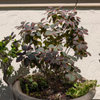
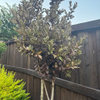
    Correction I think the pic above is Ilex crenata...

  • 10 years ago

    I never thought of cutting back Gold Mound as coppicing; I just "cut it back" to about 6 or 8 inches every spring. It regenerates within a couple of weeks and is compact. Looks like new!

    This spring I haven't gotten to it. It is uneven and lots of dead twigs mar its shape.

    Cotinus Grace I coppice. I don't cut it back to the ground. I did that once and waited at least 4 weeks hoping I hadn't killed it. No sign of life for weeks. It took 3 years for it to regain its shape and fullness. Now I cut it back to about 2 feet, maybe a bit more.

    It is worth it for the new leaves but it really is pretty ugly before those branches leaf out. I've tried to have other things blooming while it is in the scarecrow stage.

    User thanked Marie Tulin Boston burbs z 6a
  • 10 years ago

    Right^. I tend to think of Spireas as "bowl haircut plus renewal pruning" shrubs, not coppiced. Sure, they are "multi-stemmed" but that's just not the best way to handle Spirea IMO. Up to one half of total stem length can be removed in a mounded shape, then go through and remove (at as near to the base as possible) any older, thicker stems. So a sort of hybrid approach. By doing so, one can keep Spireas (and Potentillas) in good shape and proportion for many years.

    User thanked wisconsitom
  • 10 years ago

    I don't for size - I try to match the plant to the size spot available and it's too much work. I only severely prune when the aesthetics improve (red-twigged dogwood) or the shrub needs it. So for instance, I grow a group of multistemmed shrubs along an area out from the eaves where in bad snow years they get damaged from ice and snow fall. So in bad years with broken stems or lots of rodent damage, I whack my spireas (and Annabelle hydrangea) back hard. I posted a few photos of my hack job a bit ago on the New England forum. They now are pushing leaves and new stems, two weeks after I did this.

    Tom, the one time I tried removing the stems to half length on this particular spirea, it spent the season as a bad hair day plant, so now I either hard prune stems or leave them alone. I haven't tried it on others.

    User thanked NHBabs z4b-5a NH
  • 10 years ago

    Thanks, everyone!

  • 10 years ago

    @Babs, yeah, I've seen cases where it didn't work well. The renewal part often gets skipped-not saying that's what you did-and then pretty quick it's a mass of congested dead sticks. Basically though, where a person can keep up with it, a good treatment. Funnily enough, I just dug out a bunch of 'Goldmound' spirea of decrepit condition at my mom's house. Soil was nice and moist-plus landscape installer had used that *$^*)@! landscape fabric, so I was busting that out too-but I think this S-facing wall with wide roof overhang does get too hot and dry for even these ultra-common plants every now and then, and then they go to heck. Will be returning with hot/dry-tolerant herbaceous perennials I think.