Software
Houzz Logo Print
chilloway

Shrub ID please

10 years ago
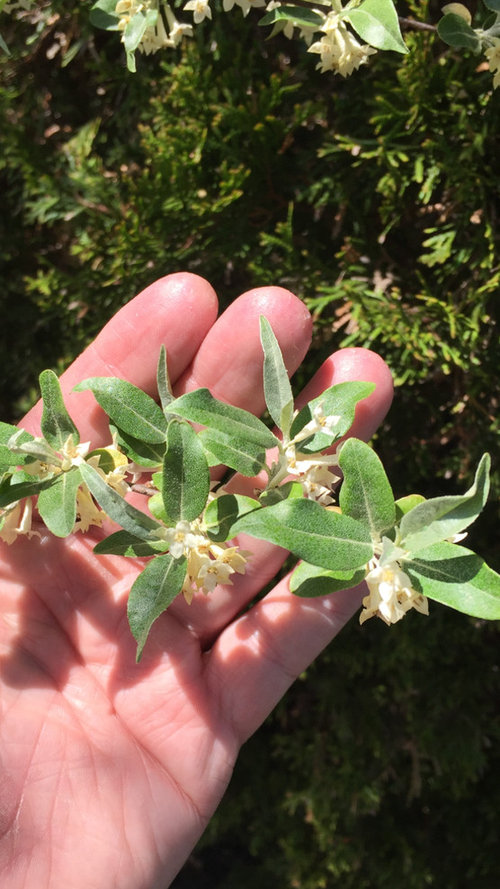
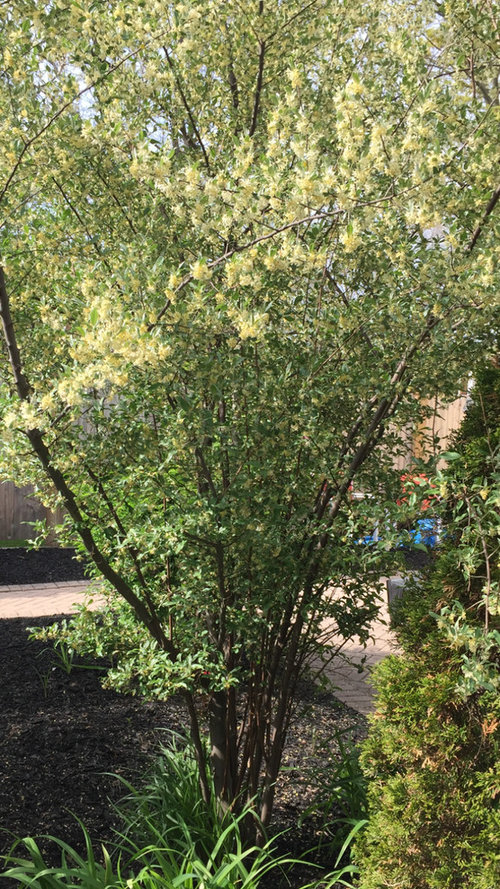
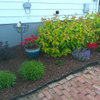
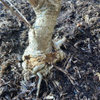
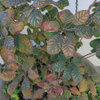
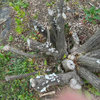
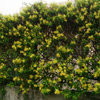
New home and found this overgrown shrub. Smell is strong and sweet with almost fuzzy leaves. Any info would be greatly appreciated including how to trim down the size if possible. Sorry if the pic are too big. Thank you.

Comments (18)

  • PRO
    10 years ago
    last modified: 10 years ago

    that is a russian olive, one of my favorites. do not drastically cut it back it is too pretty but if you must just do some small pruning so you don't get the crape murder look

    chilloway thanked Caldwell Home & Garden
  • 10 years ago

    isnt this the invasive one.. in some areas ????


    when the shrub gets huge.. the scent of the flowers can perfume a couple acres ... yours is small ... lol


    google .. renovation pruning of flowering shrubs.. if you want to maintain size ...


    ken

    chilloway thanked ken_adrian Adrian MI cold Z5
  • 10 years ago

    Russian Olive is generally used as the common name for Eleagnus angustifolia and it has yellow flowers. The plant in the picture is Eleagnus umbellata aka Autumn Olive. This is why using botanical nomenclature is so important. It provides us with unambiguous identifications understood the world over.

  • 10 years ago
    last modified: 10 years ago

    http://www.ncforestservice.gov/publications/Forestry%20Leaflets/IS11.pdf is a factsheet for North Carolina. This is a good page on Autumn Olive and applicable to the whole midAtlantic area. I associate Autumn Olive with waste areas, areas that have been trashed, dumping grounds etc. When the OP asks about trimming it "down to size" I would recommend cutting at ground level and treating with full strength herbicide like the link says. DON'T LET IT GO TO SEED.

    chilloway thanked sam_md
  • 10 years ago

    This^. Has become a top-tier invasive here as well. As for Eleagnus angustifolia, that tree too has naturalized to an excessive degree. Both species are obviously great bee plants. Yet for me, neither can be recommended for any purpose.

    Checking out a hillside drainage corridor las fall for planned cut/treat invasive shrub work, I was surprised at how much autumn olive was there. Right there with buckthorn and junk honeysuckles.

  • PRO
    10 years ago

    they are invasive, but they are nowhere near as bad as callery pear, japanese privet, etc. great thing to add to any landscape

  • 10 years ago

    It is included in a listing of the 20 most invasive introduced plant species in the US, so it is right on up there with the rest of the really bad actors!!

  • 10 years ago

    This^. Plus Caldwell, I would be interested in hearing of the research supporting your statement. Have you traveled the land, checking this situation out?

  • PRO
    10 years ago

    yes, I have seen them growing on the sides of roads, in the woods, etc. typically they take over where vegetation has been cleared. typically they can be easily controlled and won't spread within your landscape and cause problems with your other plants. I don't see these used often in landscapes, when I do they are usually butchered down into tiny hedges. I have several that are medium-sized shrubs that are really beautiful in the spring

  • PRO
    10 years ago

    wisconsitom, I have never seen buckthorn growing in the wild. must not be an invasive here in North Carolina. I only see buckthorn used in older landscapes so most of it is old-growth around here, I like it too.

  • 10 years ago

    I have seen them growing on the sides of roads, in the woods,


    ==>>> they are currently blooming.. the only time.. at 70 mph i can ID then ... drove thru 5 straight mile of them on the highway the other day.. just south of ann arbor ...


    ken

  • 10 years ago

    I don't say things here just for the hell of it. I hardly have time right now to participate, period. But the comments above-by Caldwell-are simply nonsensical. Particularly, the statement that autumn olives are "a great thing to add to landscapes everywhere" is just about as ignorant as it comes. Hey Caldwell, I've got a nice hillside full of autumn olive Lonicera morowii, common buckthorn, and a few other wonderful items. What do you say you come up here on a warm, humid day and see how "simple" the control of this mess is. And while you're at it, try to find one native shrub or tree sapling within that mess. Try, but other than box elder, you won't succeed. Maybe wait a few weeks though, to let the mosquitoes ramp up. It's been a mostly cool spring.

  • 10 years ago

    They are very invasive here in central NC. We are currently doing plant rescue in an area that will be developed and they are throughout the woods. When there are that many of them, they are not easily controlled. I would never plant this.

  • 10 years ago

    Hi mate I have just purchased an elaeagnus umbellata and an elaegnus multiflora and to me the plant in youre picture is more like the multiflora which also has the stronger smell of the two, Paddy in England

  • 10 years ago

    Hi Paddy - the denser flower clusters (i.e. umbels) show it is E umbellata. BTW you are probably aware of this already but don't worry about the invasive problem people are referring to. It is not invasive in the UK.

  • PRO
    10 years ago

    wisconsitom, not saying they won't spread in the wild. they are easily controlled in yards except in one of four situations.

    1. you inherit a yard that hasn't been kept up where they were previously growing

    2. your backyard has woods

    3. you don't constantly upkeep your yard (mow,trim hedges & trees, etc.)

    4. you live on the side of a road (LOL)

  • 10 years ago

    Caldwell, It's not in yards that it's an issue, and planting invasive plants that overtake wild areas is irresponsible and is even more irresponsible to encourage others to do so. It's like having your leaky septic tank next to your neighbor's well or the town water supply, but since it isn't a problem for you, you do it anyway regardless of who else it might be an issue for.