Software
Houzz Logo Print
jon_beard89

A scientific test

10 years ago

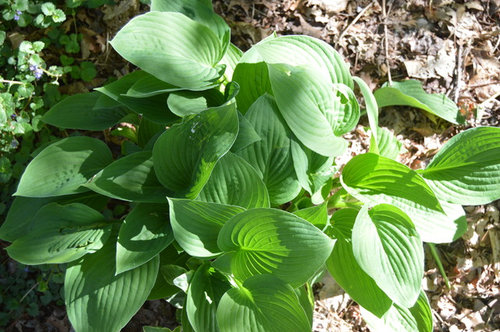
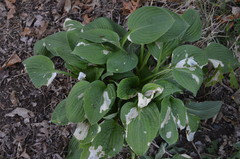
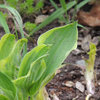
Today I sprayed this hosta;

with:

bought at Home Depot

These:

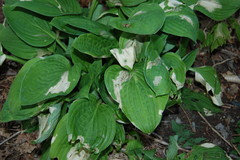
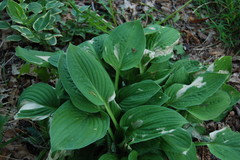
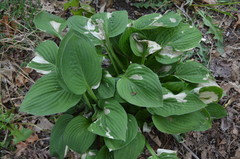
are 'double-blind' subjects that (trust me) have no idea of what is going on.

I have long been the advocate for treating HVX infected hosta by 'painting' them with glyphosate. I have been told that my idea is not valid because I have never killed a hosta with glyphosate.

In attempt to settle the question I sprayed (did not paint, but the leaves were fully wet) this hosta on both sides of the leaves. I could have chosen higher strength solutions sold for poison ivy and other invasive plants. I thought I would try 'regular strength according to the manufacturer's instructions. I will report the results no matter what happens.

Obviously this isn't close to a test that a university would make, but it should be an indication as to what affect glyphosate has on hostas. The manufacturer says it 'Kills to the root, guaranteed!' Well, let's see.

Jon

PS- these 'test subjects' are 3 of 10 clumps that are growing off in the corner lot. If this one is killed I can easily divide up one or all of the 9 left if I ever wanted to.


Comments (40)

  • 10 years ago

    keep us posted....


    whats the % solution of the active ingredient??


    cant tell from the pic.. do these H have the glaucous coating???


    ken

  • 10 years ago
    last modified: 10 years ago

    Active ingredients

    Glyphosate 2%

    Pelargonic acid and related fatty acids 2%

    Other 96% I imagine water

    "Pelargonic acid is a fatty acid naturally occurring in many plants, animals, and foods. Pelargonic acid may have applications as a broad-spectrum post-emergence or burn-down herbicide for organic crop production." USDA Information

    I don't know how long Pelargonic acid has been an ingredient. It may be fairly new or not; I simply don't know.

    "Pelargonic Acid

    There are many varieties of Roundup formulated for different uses. In its ready-to-use form, Roundup contains less glyphosate and has the addition of pelargonic acid. Pelargonic acid helps foliar penetration and improves spray control. It is a fatty acid and enhances adherence of the product to speed up penetration through the leaves' cellular structure." Garden Guide

    The directions just say it is harmless to pets or people when dry. May cause eye irritation, wash hands after use. This appears to be the same directions as it has always had.

    I will post....daily, probably to check the progress or lack thereof.

    Jon

    No glaucus coating. Maybe the fatty acid would help penetrate any waxy coating (???). I just don't know. The test obviously cannot / does not cover various varieties. The manufacturer simply says don't get any on a plant you don't want to kill, it will kill it.

  • 10 years ago

    I don't doubt that Roundup will kill off the tops, but how will you "scientifically" examine the roots. Seems to me you need to do this in a pot to contain the roots, then after the top dies back you could sift the soil to look for living roots. I have used Roundup to kill off the tops of babytears, but after a few weeks, the roots resprout.

    -Babka

    Jon 6a SE MA thanked Babka NorCal 9b
  • 10 years ago

    I used round-up to kill an oriental poppy. From experience I discovered that trying to dig it up was useless. Anyway, the round-up seemed to work. But this spring, guess what? the poppy has risen again. It took a year, but obviously the roots weren't dead.

    Jon 6a SE MA thanked north53 Z2b MB
  • 10 years ago

    Babka, I can dig it out and sift it. That is not a problem. I would say if the top is dead the plant is dead. Glyphosate works by disrupting plant enzymes and only plant enzymes. No living animal, mammal, fish or other aquatic animal has ever been harmed by it.

    There is only one type of grass that was unaffected by glyphosate and this was genetically modified to produce corn, soy and cotton plants that are 'Round Up ready'. Crops can be sprayed with Round Up and they survive while all the weeds are killed. It dramatically increases yields and lowers cost. There is no way to buy any soy, corn or cotton crop that isn't Round Up ready. No one can compete with heirloom crops.

    Dandelions can be sprayed with vinegar or a herbicide other than glyphosate, but there is no guarantee it will not grow back. There is no reason that the enzymes in the root would not succumb to the enzyme disruption just as the tops do. Dandelions are killed to the root.

    Of course you may not trust that the root is completely dead. I would, but not everyone thinks the same way I do. Let me ask you a question; knowing what we do about HVX, do you think it would be safer to treat in with glyphosate and when it appears to be dead the hosta is THEN dug up, or would you think digging it up and hoping you have not left some tiny bit of live tissue that could potentially infect any hosta you plant in that spot for years was a better idea than increasing the odds there is no HVX infected tissue in the area by: a hundred percent, a thousand percent ten thousand percent?

    I think the odds of there being live tissue left after treating with glyphosate is astronomical. I think my test will reinforce my opinion. Of course we may find out that I am not God and might be wrong........but, what are the chances of that?

    Jon ;-}

  • 10 years ago

    North 53, I don't think glyphosate would kill the seeds. It certainly wouldn't even be exposed if the seeds were buried.

  • 10 years ago

    Jon, the poppy is growing from its root. My point being that though the roundup killed the foliage, it didn't kill the root.

  • 10 years ago

    I have no idea how you would know if it was growing from the root or a seed. Since Round Up is guaranteed to kill 'to the root', maybe you can get your money back.

  • 10 years ago

    Jon, surely you jest. It would be rather obvious if the plant was growing from a seed or rootstock. If the size of the new top growth didn't convince you, a peek at what is underground would. North53 has the same results as I have with babytears. Roundup didn't kill the roots. Good luck with your experiment.

    -Babka

  • 10 years ago

    Think the Roundup will work on vinca minor? I've lost patience with it (the vinca).

    It certainly worked beautifully on the grass when we created new/expanded beds last fall. We mulched over it then, and now it's great for planting. Unfortunately, or fortunately, now we've decided to have two old maples removed (wish we'd done it 5 years ago when we built!), so I'm not really planting in the back-40 yet.... that will have to be next year when the trees are gone and replaced and that bed reshaped. Better late than never, I guess. And better to git 'er done before I put lots of nice larger hostas and companions back there!

    But the vinca that has crept in under the fence... and some of which I planted... it's too assertive and its gotta go! I sprayed it a few days ago. Waiting now to see if anything happens. I expect to have to spray it again.

  • 10 years ago

    Glyphosate is a systemic herbicide that kills by disrupting the enzymes of a plant. It is not a contact herbicide such as salts, acids such as vinegar, copper sulfate etc.. Once it gets into the system it is in the entire system. Saying that it only kills the foliage and leaves the roots intact is impossible. Roots are an integral part of the circulatory system of the plant and Glyphosate does not 'just kill the foliage'.

    That is simply an impossibility. The only known plants immune to glyphosate are the one grass and the cotton, corn and soybean plants derived by genetic modification with the genes from that grass.

    I would be very surprised if hosta were another exception and cannot be killed with glyphosate. Very surprised. Now, perhaps it might take a stronger dose than the 2% solution I used. Round Up is available in concentrate and there are directions on mixing a stronger concentration for use on poison ivy or other tough plants. Maybe a hosta might be one of those plants tough to kill. That would be the reason for the experiment.

    Time will tell if my experiment will kill the plant I treated. One thing is certain, it cannot kill only the foliage. It disrupts the entire enzyme system of a plant. It CANNOT and does not just act on the foliage. It enters the plant through the foliage and spreads throughout the plant and disrupts enzymes throughout the plant as they are in every part of the plant.

  • 10 years ago


    Many years ago my neighbor and I each bought a novel new hosta....Blue Freckles...the freckles ended up being HVX...I dug mine up and tossed it...she sprayed hers with Round Up...3 times...it laughed and asked for more....then she dug it up and tossed it.

  • 10 years ago

    Hope you don't mind me chiming in here. I have never used Round Up but have considered it for some weed control.

    Question #1, could it be possible if the 2% solution was not strong enough to kill the whole plant that it killed the foliage first (possibly weaker part of plant) and not the root?

    Question #2, how will you determine if the root is stone dead?

    Question #3, assuming the entire plant is indeed dead, is it OK then to add it all to a compost pile, and eventually add it back to the soil?

  • 10 years ago

    "EPSP Synthase
    Enolpyruvyl-shikimate phosphate synthase. An enzyme produced by virtually all plants, and internally transported into their cells' chloroplasts, it is essential in a plant's metabolism biochemical pathway, and for the biosynthesis (i.e., creation) of the aromatic (ring-shaped molecule) amino acids tyrosine, phenylalanine, and tryptophan; which are needed for plants to live. Some (glyphosate-containing and sulfosate-containing) herbicides kill unwanted plants (e.g., weeds) by inhibiting EPSP synthase." Link

    This how it works. It basically kills a plants cells; in the leaves, the stems, the crown and roots. no living cell is immune in all known plants except one grass and genetically modified plants imparting the gene from this one grass that is genetically capable of surviving exposure to glyphosate. It is impossible to prevent killing the entire plant unless an inadequate dose is provided. It does not and cannot preferentially start at the foliage or any other part of a plant.

    The question at hand is 2% glyphosate capable of killing a hosta, specifically the one in my corner lot.

    Jon

  • 10 years ago

    Windy, great we can check Vinca out as well. I have plenty of Vinca as well. It grows great and I keep it in control with the lawnmower, just chopping it along the edge of the lawn.

  • 10 years ago

    Glos, if the lowest 2% doesn't kill this hosta then I will get some concentrate and use the strongest concentration they have in the directions. I am not arguing that different concentrations are needed for different plants. Some vines and ivies for example.

  • 10 years ago

    I'll let you know how it goes with the vinca.... If I could dig it out I would, but it's tough stuff!

  • 10 years ago

    Didn't a few guys come up with a whole new sport a few years ago by weed killer accidentally drifting onto the plants ? If nothing else John maybe you will produce a new sport.

  • 10 years ago

    Old Dirt, you are a welcome addition to the discussion.

    #1. Based on how it works it would affect all the cells of a plant and not just kill part of the plant. Different plants require stronger concentrations as I might find out with my hosta.

    #2 I will dig it up and we can all look at it. My thoughts are that if all the leaves, crowns, roots are brown and crinkly, it would be dead. When I suggest to use glyphosate I always say that I would wait until the following spring to plant another hosta.

    #3 To be safe I wouldn't use the dirt from the hole anywhere near where I was going to plant a hosta. I think it would be safe, but why not use an abundance of caution.

    Another point on the difficulty in killing a hosta with 'Round UP' would be that the season would enter into it. I think it would be difficult to kill a hosta if it is entering dormancy, just as HVX is not spread easily when plants are going into dormancy. The season might explain why some who tried failed.

    I don't have that crutch to lean on as now should be the optimum time to do this experiment. Glyphosate works best during the Spring when growing is at a peak. When the leaves are falling I don't think you have a very good chance.

  • 10 years ago

    I went over to look at the test specimen and I will try to get a picture later. All I can say is I hope no one has become attached to it.

    Jon

  • 10 years ago

    I will be hanging around to see the dead roots, Jon.

    Jon 6a SE MA thanked DelawareDonna Zone 7A
  • 10 years ago

    That's what I like; loyalty. We should get a Deadpool going.

    Jon

  • 10 years ago
    last modified: 10 years ago

    Well, it doesn't look good for whoever bet on the hosta. This morning the leaves looked a little curled. Today at ~ 7:15 PM it is looking pretty bad.

    Granted not many would carefully spray all around and under the leaves, but this has always been my recommendation. This is a tough hosta. Nothing has phased it in the past and since it is my least favorite it doesn't get pampered at all.

    My guess is that in 3 days there isn't going to any green left at all. Explanations for failures to kill hostas or poppies might be:

    - Poor coverage.

    - spraying when the plants are going dormant.

    I will follow up with pictures daily and I am open to suggestions to test if there is living tissue in the roots when I am satisfied all living tissue is dead. Soak it in water, sift it for any visible green......Without a laboratory we may not have evidence strong enough to convince the skeptics.

    My guess is that if cells from the 'double-blind' hostas were compared to the roots of the 'Hostacide' hosta under a microscope life or death would be readily apparent. So where can I borrow a microscope?

    Jon

  • 10 years ago
    last modified: 10 years ago

    Pictures from day two: 05/20/2016

    All leaves show some affect. The non-sprayed hostas continue to grow and their size is noticeably larger than the sprayed hosta. I think this is an indication growth has stopped as the plant struggles to stay alive and cannot direct any energy to growth.

    Also, I found this information: Ortho Kleen-Up contains 2 percent of the active ingredient. Roundup Lawn and Garden is 18 percent and Roundup concentrate contains 41 percent glyphosate. Tractor Supply Company sells a 50 percent glyphosate product called Weed and Grass Killer. Link MSU

    Maybe I should have shopped around for some stronger stuff. 2% seems to be the weakest concentration of glyphosate on the market.

  • 10 years ago

    Day 3. The double blind hostas are about 18 inches across and this one is 12 inches across. It appears to that this one has stopped growing and the leaves are curling up and dying. All three started off the same basic size. Most reports of time to kill weeds is one week on average.

    Quite a bit of rain coming overnight. I don't think it will make any difference as once it dries the no more transpiration through the foliage takes place. Glyphosate immediate locks on to any soil and becomes inert.

    Jon

  • 10 years ago

    'bring out your dead'


    [monte python moment]


    I'm not dead yet ...

  • 10 years ago

    Death is a natural part of life. Rejoice for those around you who transform into the Force.

    YODA, Star Wars Episode III: Revenge of the Sith

  • 10 years ago

    Who into the force transform ..

    yodaspeak

  • 10 years ago

    Day 4. Death isn't unpleasant at all; its the dying part that sucks.

  • 10 years ago

    Go and go, walk out the door
    Turn around now
    You're not welcome anymore
    You're the one who tried to hurt me with goodbye
    Do you think I'd crumble
    Did you think I'd lay down and die?

    No, not I, I will survive
    Long as I know how to love
    I know I'll stay alive
    I've got all my life to live
    And all my love to give and I'll survive
    I, I, I will survive

  • 10 years ago

    And when I die and when I'm dead, dead and gone,
    there'll be one child born and a world to carry on, to carry on.

    I'm not scared of dying and I don't really care.
    If it's peace you find in dying, well, then let the time be near.
    If it's peace you find in dying, when dying time is here,
    just bundle up my coffin cause it's cold way down there,
    I hear that's it's cold way down there, yeah, crazy cold way down there.
    And when I die and when I'm gone,
    there'll be one child born and a world to carry on, to carry on.

  • 10 years ago

    I'm sure that my information is old, from back in the days when Round Up was first introduced. However, I thought glyphosate was a grass killer and was not very effective on broad leafed plants.

    bk

    Jon 6a SE MA thanked bkay2000
  • 10 years ago

    Who knew killing a hosta would bring out the oldies?

    Jon 6a SE MA thanked Deb 215 SEWI5
  • 10 years ago

    Well that's cheerful Jon, I don't recognise it, what is it?

    Don't get me started, too many irish songs about dying lol.

    Jon 6a SE MA thanked mountainy man z8 Ireland
  • 10 years ago
    last modified: 10 years ago

    Blood Sweat and Tears, And When I'm Die. YouTube

  • 10 years ago

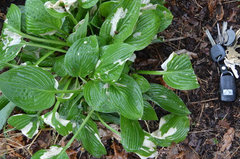
    A little over day 5:

    Treated hosta with keys for size reference.

    One of the untreated hosta with keys (bottom of picture) to show how growth has stopped. These were virtually the same size 5-6 days ago. It seems undeniable that growth of the treated hosta has virtually stopped. Will there be a glimmer of life left enabling it to regrow? That is the purpose of the test as we will find out as time goes on.


    bk, My recollection is that it was always sold as a weed killer. The earliest commercials I remember showed how it killed dandelions 'to the root'. Since 1974 (when it was introduced) it has been advertised as a herbicide for weeds, grasses and broadleaf plants according to Monsanto Link

    It doesn't act as a contact herbicide. It is absorbed into the plant and disrupts plant (and only plant) enzymes. This affects leaves, stems and the root of plants. Other herbicides kill the foliage because they are acid or otherwise burn the foliage. If any plant is capable of regenerating new foliage from the roots, which remain unaffected, these types of herbicides are ineffective. Vinegar is looked at as a safe herbicide and it is, however there is zero chance of completely killing a weed such as dandelion which readily regenerates new foliage from any bit of root.

    From my experience hosta that have mush for a crown retain roots that are still green for a very long time. When I dig up the roots, their condition will be telling. If they are brown and dried out I would convinced there is no live tissue. If anyone has an electron microscope at their disposal and they can observe the plant cells to verify this, I would be happy to mail them the roots.

    If the roots do show life, then my next test would be with a more concentrated formulation intended for poison Ivy or other tough customers. I will not utilize anything that is not in accordance with any manufacturer's directions. and I don't recommend anyone else do so either.

    Jon

  • 10 years ago

    Jajoana, did you dig up the roots to see they were killed. Cobalt nitrite would be a 'burn' herbicide. It is $38.95 (delivered) for 100 grams (3.5 oz.) on Amazon.

    I bought a 5 pound bag of sodium nitrate on Amazon to get rid of a stump (didn't work). Soon after I received it I got an email from Amazon saying they were no longer selling it, but if I had it fine. I knew it was an ingredient in gunpowder, but I recently saw an episode on This Old House where they packed sodium nitrate into about 40 holes drilled into a twenty foot thick granite rock. They put a huge used tire mat on top and blew the 20 foot granite ledge away. Silly me I tried to use it to rot the stump.

    As I have said if this doesn't work then I will try a more potent version. Monsanto has some and some manufacturers have strengths many times the 2% I tried.

    Jon

  • 10 years ago
    last modified: 10 years ago

    Yes, I did. But next season, because my virised hosta was close to some other hostas and I didn't want to take the risk. Actually cutting the crown (espesially that part where leaves and buds grow from) is enough to kill hosta. Adding carbamide is important to destroy it's roots completely and as fast as possible.

    I am not a fan of herbicide using and any poison using in my garden. Want it to be as ecology-friendly as possible. It was a sort of emergency case.

  • 10 years ago
    last modified: 10 years ago

    You are exactly right that the roots must be killed. The university studies done by professor Lockhart showed that any bit of root left alive is infective over 2 years. I will take another picture later, but the leaves of the subject hosta are laying over and are limp. Some stems seem to be still slightly stiff.

Sponsored
The Creative Kitchen Company
Average rating: 5 out of 5 stars52 Reviews
Columbus Area Kitchen Remodeling and Refacing Professional