Software
Houzz Logo Print
dave_in_nova

Q. myrsinifolia

10 years ago
last modified: 10 years ago
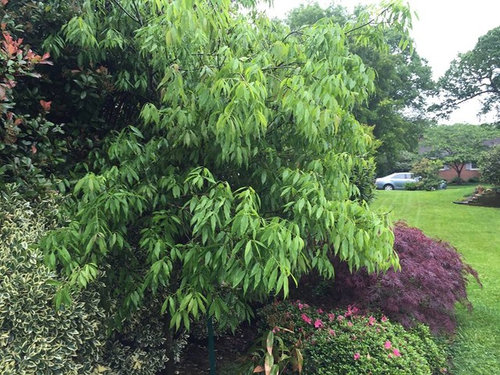
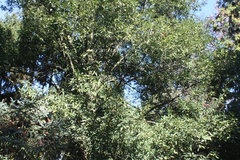
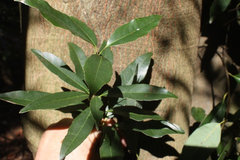
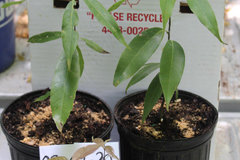
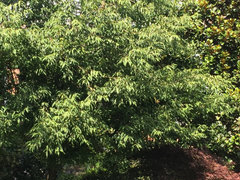
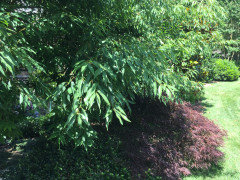
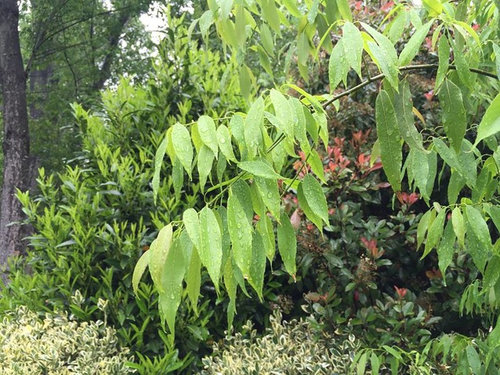
Ample rains and a somewhat milder winter have allowed this Quercus myrsinifolia (Chinese evergreen oak) to leaf out well this Spring. 'Bamboo Oak' is another name for it and a mature tree does sort of look like a stand of bamboo with the drooping leaves.

Comments (20)

  • 10 years ago

    Nice tree. I wouldn't guess it was an oak from the pictures and it doesn't really look evergreen either with those bright green leaves. Wish I could grow one myself.

  • 10 years ago

    In the second pic you can make out a few of the darker green old leaves from last year behind the new flush.

  • 10 years ago

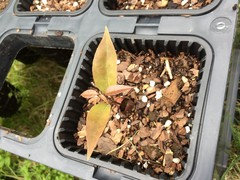
    I have a few I'm growing from acorns this spring.

  • 10 years ago
    Kind of an odd leaf color. Started out more purpleish, seems to be on its way to turning green, at least the oldest leaves. Tiny things so far, no more than about 2 inches tall
  • 10 years ago
    last modified: 10 years ago
    My little daughter (1st grader) and I just planted the extra myrsinifolia I had (the plant is about about 4' hight) at the end of our street in a common area that has been mulched. I just hated to see it go to waste and it's in a good microclimate too! Hopefully it will thrive. We'll take walks down there in summer with extra water. This wet spring should help it get established.

    No worries, yours will growth quickly! Pot it up in a larger pot this summer. Keep critters away from it.


  • 9 years ago

    Nice Q. myrsinifolia Morris Arboretum, Philadelphia. No sign of winter damage.


  • 9 years ago

    mine is still small from woodlanders but did put out a flush this year. Going to pop a cover over it for the winter and hope for the best. hoping next year it really takes off. Where did you find the 4ft one Dave I would love to buy one that size.

  • 9 years ago

    Mike: I grew it from an acorn.

  • 6 years ago
    last modified: 6 years ago

    Dave did your end of the street tree survive? One of the multiple 'horticultural tragedies' one becomes aware of with travel (even to other parts of the USA) is the lack of intelligent municipal plantings in most of the US. I love that you thought to donate an extra plant to your neighborhood.


    Beautiful trees there sam. It's a damn shame that arborescent BLEs are so underplanted in the mid-Atlantic. Can't believe I missed them in my multiple trips to the Arboretum, guess I was too busy looking for the similarly stunning ilex purpureas!

  • 6 years ago

    I'm thinking the name means "foliage like myrtle". Doesn't really look like what most of us think of as an oak. I guess this is the hardiest of the evergreen quercus?

    What's up with those bitty acorns? Feathered/furry critters not interested?

  • 6 years ago
    last modified: 6 years ago

    Yeah probably the hardiest evergreen Quercus, although not the hardiest evergreen Fagaceae. That is Lithocarpus henryi.

    It's so random with acorns it seems. I have visited the legendary (to about 10 people!) Howard County Lithocarpus henryi some years and all of the acorns have been eaten by late fall. Other years they are all over the place, fallen on the ground, no sign of them being foraged by anything. Those trees survived -16F in 1994, and hairmetal relayed reports of that species surviving similar temps in Kansas. Imagine that - an evergreen oak in Kansas!

  • 6 years ago
    last modified: 6 years ago

    davidrt28 (zone 7), the Q. myrsinifolia we planted at the end of the street it still doing well. We also planted a Daphniphyllum, which is nearly dead from the drought last summer. Also, a Quercus acuta we planted died from drought. Just could not get over there to water. I'll probably plant a holly in those spots or maybe Quercus hypoleucoides --- I have a couple small seedlings. It's a nice little microclimate on a southern slope so rain tends to run right off. I'll have to create more of a well when we do our next planting.

  • 6 years ago

    Kansas -- there's no place like home.....

  • 6 years ago
    last modified: 6 years ago

    Thanks for the update Dave, I will have to check that out next time I'm in your 'hood LOL. I wish I could spruce up my street but I endeavor to, shall we say, "leave well enough alone" here in hayseedistan haha.

    I love a good dark green BLE...a striking contrast is my 'James G Esson' or 'Hohman' hollies vs. the lighter, matte, sometimes almost sickly greyish-green of the native Ilex opacas I have. OTOH, if I were planting against a screen of say, dark green conifers like my Abies firmas and Abies recurvatas, the lighter apple green of the Q. mysinifolia would have its place. It certainly isn't unattractive although if I could only have 1 large evergreen oak, I'd probably choose Lithocarpus henryi.

  • 6 years ago
    last modified: 6 years ago

    My myrsinifolia grown from acorn didn’t make it.

    It got foliage burn over the first winter and completely defoliated. It leaved back out very anemically that spring, but died off by that fall, never to recover. Never fell below 5° that winter, but I think bright sun + frozen soil was the culprit.

  • 6 years ago
    last modified: 6 years ago

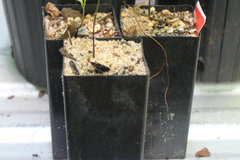
    Here's an update on my Bamboo-leaf Oak seedlings. The smaller ones only just germinated last month and I find them slow to fill out. Even at this stage they are still vulnerable to vermin. The larger ones are from last year. They will be overwintered in an area that is cold but not freezing. Heritage Seedlings in Oregon wholesales this species. I get alot more satisfaction if I can manage to propagate them myself.


  • 6 years ago
    last modified: 6 years ago

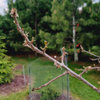
    Update on my myrsinifolia in the back yard. Doing well. Unfortunately the large one in the front yard died for some reason. It developed a weeping hole. Not sure if it got stressed from drought.

    I would not plant out a new myrsinifolia into the ground unless it's at least a 3-gallon-sized pot. They need to be sort of beefy to get through the first winters.


    By the way, I would give a good northern provenance Quercus virginiana the hardiness edge over myrsinifolia. I think it's just overall tougher and hardier by maybe 5 degrees or so.

  • 6 years ago

    Q. myrsinifolia survived -6 in 1994. Burlington County, N.J.

  • 6 years ago
    last modified: 6 years ago

    Dave, we can agree to disagree. 😀 Although I will of course admit you have much more experience growing and comparing in the same garden. In my current garden, I have tried neither. In any case, neither are as hardy as L. henryi, which is clearly the winner in the evergreen, non-scrubby Fagaceae category. -9F killed my Q. myrsinifolia to the ground in 1994, but it would have done so to any Q. virginiana of similar size and establishment. As a baseline comparison, a nearby Ackerman oleifera X sasanqua survived with severe foliar burn.

    Even though the Udel tree is arguably a bit more sheltered, the difference after the polar vortex winters was night and day. OK, maybe their live oak, as I theorized, is NOT a northern-provenance sample of the species, you are still talking about 1) no foliage damage at all vs 2) complete defoliation and trunk splitting. It barely made it thru the back to back PV winters. [Which means it had to be planted after 1994, which would clearly have killed it. My memory of my past plant observations is fading but the mental notes I remember creating about evergreen oaks in 1994, Williamsburg,VA at 0F and cold spell so long the coastal creeks frozen to the point my dorm's daredevil walked 25 feet out on one...was Q. myrsinifolia, no damage, local live oaks, bit of bronzing to foliage, the other two Asian evergreen oaks, more serious damage up to death of large branches. If my old posts show an inconsistency with that, would be happy to have it brought to my attention.]

    BTW, I can't remember if I authorized this harangue for release (LOL), slightly OT but something heinous is going on at the Udel gardens. I guess losing access to their volunteer corps due to COVID could have something to do with it (if true?), but the gardens are suddenly in a terrible state - full of weeds - and individual plants are looking terrible. The huge Daphniphyllum - possibly the biggest that far north on the east coast - is dead as a doornail. I can't put my finger on it but the Q. mysinifolia was looking sickly, too. The Q. virginiana is still 'recovering' from past winter hits but still has bad bark damage that I suspect will fester for years or even decades. I just don't see it fully outgrowing that but we'll see. They took a lot of time to "trim it up" and are clearly intent on letting things play out. OTOH the Mahonias are growing like crazy as though they'd been [over] fertilized. Since Daphniphyllum is likely to get root rot if over-fertilized, I wonder if that's why it died. Someone came along thinking the gardens needed a "dose of plant food" and went a little overboard. In any case their track record of establishing rarities is clearly NOT what it once was. For example, the Emmenopterys didn't make it through the winter a couple years ago I dubbed "PV-3". Not as long a cold but lows near 0F WITHOUT snow cover this time. (in my garden at least, and certain plants suffered for it more than PV1 & 2.)

0