

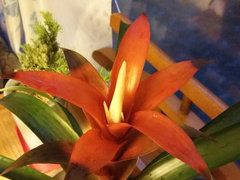
Recieved as a gift. Complete novice with Bromeliads.
I have no idea how to care for this plant. It is about 36 inches high and looks healthy. It was bought from Lowes on Mothers Day. It is in a small6 or 8 in pot. Inside or outside? How do I care for it? What should expect?
Comments (22)

babyfeets
Original Author10 years agoThanks for your interest in helping me with this plant. The photo idea was a good one, I had not thought of it. And my location is in east Texas.
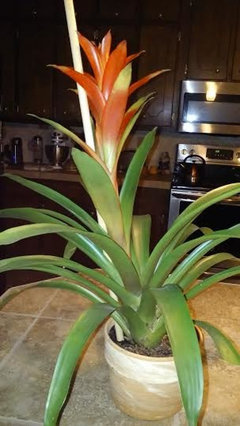
The bloom (I guess that is what it is) is so tall and heavy it cannot support itself so I staked it.Related Professionals
Muskogee Landscape Architects & Landscape Designers · Greenfield Landscape Architects & Landscape Designers · Newark Landscape Architects & Landscape Designers · Ithaca Landscape Architects & Landscape Designers · Cleveland Landscape Architects & Landscape Designers · Everett Landscape Architects & Landscape Designers · San Marcos Landscape Contractors · Lewiston Landscape Contractors · Sterling Landscape Contractors · Jonesboro Architects & Building Designers · Florence Architects & Building Designers · Newburyport Architects & Building Designers · Syracuse Architects & Building Designers · Orange County Architects & Building Designers · Palm Desert Architects & Building Designers- 10 years ago
Hi everyone.
Babyfeets – The plant in your
picture is a Guzmania which is just one of many different types of bromeliads.
These plants are commercially produced in their thousands and sold at
department stores with the aim of using them as a substitute for cut flowers.
They are a much better option for this purpose whereas cut flowers only last in
good condition for a week or two (if you’re lucky); these plants can remain in
colour for several months.The colour you see is not the
flowers, these are called the bracts (coloured leaves) and the flowers are much
smaller and can be seen inside these bracts. They only last a day or so but the
bracts remain in colour for many months depending on where the plant is kept
and how it is treated. The majority of these store bought plants may be kept
inside in a well-lit area but not so close to a window that the sun’s ray can
burn it. Eventually the colourful bracts will die and turn brown after which
the flower spike can be cut off and the plant grown outside in a semi-shaded
area if your weather conditions are suitable. Eventually it will produce new
plants (called “pups”) from its base and these will eventually grow to maturity
and flower as well.These plants should not be
allowed to dry out nor should they be stood in a saucer of water which will cause
“wet feet” from which they will ultimately rot and die. Where I live in
Australia, with these plants inside, we water the whole plant overhead once a
week in summer and fortnightly in winter making sure the potting mix is deep watered
until the water flows out the bottom of the pot.Also water the leaves so the plant
captures some water in the leaf axils. Leave it to drain thoroughly before
standing it on a bed of pebbles on a saucer to avoid “wet feet”. If the weather
is exceptionally hot, it’s a good idea to mist spray the foliage in between watering.When the plant is finished
flowering and if you decide to continue growing it, I would advise you to get
some cultural advice from a local grower as I live in Australia and any advice
I give may not suit you conditions. To learn more about the culture of these
plants,see: https://www.youtube.com/watch?v=ZWGQOPDNznk
http://www.bsi.org/brom_info/growing/gencult.html
All the best, Nev.
 10 years ago
Nev, you are so kind. That was lots of great advice!
Carol in Jacksonville
 PRO10 years ago
I have same brom given same time. I did pull back browned leaves to find a beautiful white spike in center. I also have 2 pups as they seem to called but what do I do with them?
- 10 years ago
Hi everyone.
Ackerman flooring - Don't do anything with your new pups at this stage they're far too small and will most likely die if removed.
With and bromeliad pups, you have two choices;
Leave them attached to the Mother plant and allow a clump to form as they would do naturally. The advantages of this are that you often get multiple flower spikes which make a really nice specimen plant.
Remove them and grow them on as extra plants which will obviously increase the size of your collection, but in my experience with these plants, (although other growers will recommend them to be one third the size of the mother when removed) I prefer to wait until the pups are at least half the size of the mother or even a bit larger and remove them in the spring time when the weather is starting to warm up.
I have found they respond to more fertilizer than other types of bromeliads, and I usually add a bit of controlled release fertilizer (as per the manufacturer's instructions) to the potting mix at potting time and then supplement this with a good foliar-fertilizer at half strength every two weeks throughout the growing period.
The other thing I've found is that they prefer a little less light than Neoregelias, Billbergias and Aechmeas, and this is what makes them such an ideal plant to bring into the home when flowering.
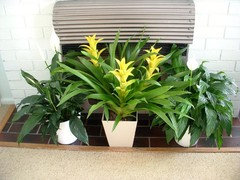
The plant below is Guzmania 'Hilda' and was the same size as your plant when originally purchased. I didn't remove the three new pups that formed and allowed them to clump up in the same pot and eventually it finished up with what you see in the picture.
All the best, Nev.
 10 years ago
I grow Guzmania outside in as much shade as I can give them. I keep them beside the house until they bloom, and then move them into my pergola, where they get 80% or more shade. I never separate them, as I think they look better in clumps, but I do repot them when they get root-bound. I sometimes bring them inside in the evening, if I want to add color to my living room, and it is nice that they generally are not too large to do this, unlike most of the bromeliads that I have.
This photo is from August 2013, and some of these are now starting to bloom again.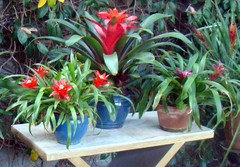
- PRO10 years agosplinter1804. you mentioned fertilizer. where would I put that. in soil or in cup? I was an idiot to these last year and didn't know anything about pulling leaves back. I thought it got moldy and died on me so I planted it outside this spring but was unable to bring back. as you see in picture with white spike is that the flower to bloom. I'm so glad you told me shade cause it was in a northeast window and was browning and drying out. also much thanks to you for explaining pups. the plant is in a 3" plastic pot set inside a 4" clay pot. I've wanted to just put it inside clay pot but should i? my next post will show some close up issues I'm having with this and I need advise regarding it.
- PRO10 years agoLars your are absolutely beautiful and I hope my brom looks as nice.
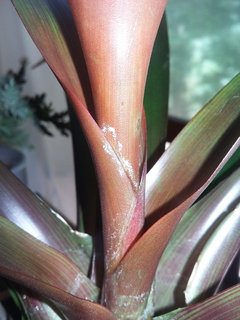
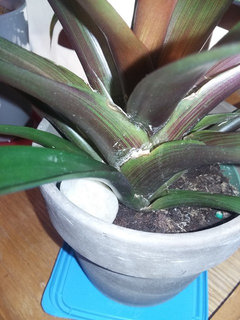
- PRO10 years agowhite residue on leaf edges. I think it's moldy and is an eye soar and does not have it on any other plants I noticed posted regarding these beauties.
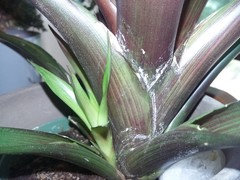
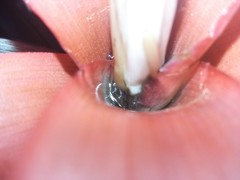
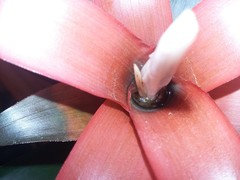
- PRO10 years agothis is where I pulled back the top part and this beautiful white spike was inside the dead leaves. I think I should use a q-tip to clean around it and should remove any moldy residue in there.
- PRO10 years agoLars or splinter1804 what is that white yucky stuff. please advise what is it and how to deal with it please
 10 years ago
That looks like rot in there. The leaf underneath is showing signs of rot too.
- 10 years agolast modified: 10 years ago
Hi everyone.
Akerman Flooring – I’ve just found
your question about fertilizing which I’ve for some reason missed until now. Everyone
has different ideas on fertilizing , so I’ll just tell you what I do because I
know it works well for me.When I re-pot any bromeliad (Guzmanias
included), I always add a bit of controlled release fertilizer.; this can be
done in two ways, it can be mixed through your potting mix or added as you pot
the plant in which case I wait until the pot is about three quarters full of
potting and sprinkle the required amount on the surface of the potting mix. (I
apply it at the rate of 1gram per inch of pot diameter; i.e. for a five inch
pot I add five grams) I then continue with the re-potting and the fertilizer is
covered with the remaining quarter of
the potting mix. (Some growers prefer to spread it on the surface once the
plant has been re-potted but I find this increases the risk of washing it out
when plants are watered)The controlled release fertilizer
I use (Sorry but I don’t think we’re allowed to use brand names here) releases plant food at the rate that plants need it.Unlike many slow-release
fertilisers, the release of fertiliser from these particular prills is
controlled by soil temperature (not by soil moisture, as many gardeners think).
When the weather is warm in the active growing seasons of spring, summer and
early autumn, plants need more food and these prills release fertiliser more
quickly. In winter when soil and air temperatures are lower, plants need less
food because their growth rate is reduced, so less plant food is released from
the prills.With plants such as Guzmanias
which like more fertilizing than others, I supplement this control release fertilizer
with a well balance foliar fertilizer applied monthly at the manufacturer’s
rate. If you have plenty of time and don’t have a lot of plants it is better to
apply it at half strength each two weeks or even at quarter strength each week.
This follows the age old garden recommendation of “little and often” which is a
tried and tested method of fertilizer application.I think the white sediment on
the leaves (next three pictures) is just calcium build-up from your water. I
see it occasionally here and find it affects some plants more than others. I
remove it with a soft brush dipped in a mix of one litre of water with 10 ml. of
vinegar added. When it’s all removed I give the whole plant a light spray with water
from the hose.I don’t think the news is as
good with the “white spike” in your next two pictures as I agree with Green
Larry, it looks like rot to me also; but to tell for sure, just smell it and
you’ll soon know for sure.If it is rot, the spike and
the central leaves will come straight out with a gently pull and it will smell
even more. Many people "toss" plants that have rot such as this but I never do as
I find if I pull out all the rotten leaves and give it a good flush out with
clean water, allow to dry out for a few days and sprinkle a bit of fungicide
powder down into the centre, this usually halts the spread of the rot.Even if it doesn’t, and all
the leaves rot, just keep it on the dry side for a few weeks and quite often
new pups will appear at the base. I have seen this happen numerous times with
my plants and those of friends.What the rotten centre does is activate the
plant’s natural survival mechanism in exactly the same manner as when a flower spike
is damaged or broken, or when the plant has finished flowering. The centre is
the growing point and when that’s destroyed or damaged and stops growing, the
secondary survival mechanism responds by producing pups to ensure the plant’s
survival.I hope this info is of some
help.All the best, Nev.
- PRO10 years agosplinter and greenlarry I can't thank you enough for your advise. A few more questions, 1. I will get rid of rot in center of mother plant & I will also leave pups as is.
2. issue with the white residue being calcium may be true but I try to use fresh spring water not tap cause our tap is not even good to drink right now so I wonder what else it could be? I will try to use the water with diluted vinegar and see if that keeps it away.
3. I had mentioned it's sitting in a 4" clay pot but in a 3" plastic pot set inside and was wondering if I can just repot it to clay pot and I have slow release fertilizer and understand what your instructions are regarding that.
4. what do I do with white spike in center cup? at one point one of you mentioned cutting the top off? I never saw flowering or small ones even but naturally I figured with rot they would not bloom. - PRO10 years agonev. that beautiful picture of the 'hilda' you said it was the three pups in the pot you just allowed to clump together. what happened to the mother plant? I'm just so new all this knowledge will allow me to increase my own collection of these beautiful species of plant that seem to be around the world as I am from US in New Hampshire zone 5ish
- 10 years agolast modified: 10 years ago
Hi everyone.
Akerman Flooring – The ‘Hilda’
Mother plant in that pot with the three pups eventually died as is all part of
the natural life cycle.To explain the bromeliad life
cycle and survival process simply, the plant starts with a pup; the pup grows
to maturity, flowers, reproduces itself with pups and eventually declines and dies.
The space that was previously taken by
the Mother plant is eventually taken over by the new pups as they grow. (As
explained before, at this stage the pups can be removed when large enough or
left together to “clump” up)Bromeliads only flower once
and when flowering is finished, a survival process is activated to ensure continuity
of that particular plant and the start of that process is the production of pups.
There is also a secondary process and that’s the formation of seeds, but for
this to occur, the flowers need to be pollinated which introduces extra genes
into the strain which will cause the resulting seedlings to all be different to
the Mother plant (seed parent). Some may resemble it, but for the most part
they will be different. Pups are the preferred method of reproducing more
plants as growing from seed is a much slower process and the seedlings won’t be
the same as the Mother plant anyway.Bromeliads are very resilient
plants and the survival mechanism is very strong and that’s why I tell other
growers never to give up on a damaged, rotted or dying plant as they will often
surprise you.To give an example; when I
first started into bromeliads I had a plant of Aechmea miniata v. discolor, (See pic. below)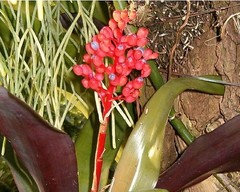
It
was an interesting little plant as it had discoloured leaves (green on top and
burgundy coloured underneath) and when the small blue/mauve coloured flowers finished,
little orange coloured (almost iridescent) berries formed and stayed in colour
for several weeks.During a storm a branch from a
tree broke off and fell on top of this plant completely crushing it. Being new
to bromeliad growing, I watched helplessly as over a few weeks the leaves died
off until all that was left was a bit of dead looking stolon and base
material. Thinking it was beyond help, I
tossed it on the compost heap and several months later when I was turning over
the compost, something caught my eye and it was the remains of this plant with
a tiny, deformed, spindly flower spike and two buds. This had survived after
being completely covered by grass clippings for some months.Out of curiosity I planted it
but it never survived, the thing I did learn from it though, was that the
resilience and survival instinct of these plants is truly amazing, and this is
why I say to never give up on a supposedly dead plant.All the best, Nev.
- 10 years ago
Hi everyone.
Akerman Flooring – In answer to
your question 2. In my comment on the white residue I said I “think” the white
sediment on the leaves (next three pictures) is just calcium build-up from your
water which I see here occasionally and find it affects some plants more than
others.I don’t know if this is the case
for sure, it may be something completely different; just try some of the water/vinegar
mix on a small section and see if it works; if it’s calcium it should remove
it.Question 3 – Many people
prefer clay pots because of their more natural appearance than plastic ones,
however it seems the plastic ones are more common due to their cheap cost and
the fact they are easier to clean and don’t break as easily as clay ones.Clay pots have been used
successfully for hundreds of years and long before plastic was ever invented
and your plants will grow quite successfully in them but there are traps to be
aware of.They usually only have one drainage hole in
the centre and this is easily blocked which can cause the mixture to become waterlogged
which can start rot and kill the plant. When I first started into orchid
growing over sixty years ago clay/terra cotta pots were all that were commonly
available. Of course some of us bought stainless
steel moulds and made our own pots from a sand and cement mix to save money,
they worked OK but didn’t look as attractive and besides they still had the
problem of the single drainage hole.To overcome the risk of it
blocking up, it was common practice to build a pyramid of broken pieces of old
pots or bricks over the single drainage hole. From here it progressed to the
stage where growers were using gravel in the bottom quarter of the pot to act
as a filter and stop the potting mix from solidifying in the bottom of the pot
and blocking the drainage hole. Another method was to drill extra holes in the
bottom or use a small hammer to chip away at the edges of the hole to enlarge
it; unfortunately both methods sometimes ended with breakages.Today’s plastic pots have overcome
this drainage problem with their multiple drainage holes in the bottom and often
around the edges as well, and it’s now unnecessary to use any material other
than potting mix. So if you prefer clay pots, just be aware of the pitfalls above.The other thing to be aware of
is that clay will dry out much quicker than plastic so you will need to water
your pots more often. It’s a good idea to group you clay pots together in a
different area to you plastic pots because if they are all mixed together you
will often find that by adequately watering the clay pots, the plastic ones will
be getting far too much water. If on the other hand you water to suit the
plastic pots, the clay ones will be getting insufficient water.I forgot to mention in my
previous response about fertilizer; I personally don’t think you should put solid fertiliser
in the central cup as it could burn the tender new central growth. The run off
from liquid foliar fertiliser is OK though as that’s diluted and doesn’t hurt.As for the white spike in the
centre (Question 4) if it isn’t rotten as I suspect just leave it and see what
develops, but if it is rotten a gentle tug should see the whole thing just pull out along with
some of the leaves, in which case you could try what I suggested in the previous
post.All the best, Nev.
- PRO10 years agoOMG nev/splinter1804 I don't know if your a holy man or not but God bless for your time and effort to make someone such as myself informed about what I love to do most which are plants. I hope to have a job at a nursery this spring which the gentleman already said it was a go. if I could my entire house would be over joyed with larger plants ferns or palms and multiple vines of potho or Ivy etc. I still need advise on other plants and getting around this site but I'm getting there. again thanks so much to all of you. this is by far the most amazing site I have ever encountered and somehow it should be recognized an awarded.
- 10 years ago
Hi everyone.
Akerman Flooring - I'm pleased to share any advice I have with you or anyone else if it will help to understand and grow these wonderful plants better. One thing you need to remember though is any advice I give is based on my own growing experiences and as I live in Australia and my growing conditions are much different yours, you will need to allow for seasonal and climatic differences.
I've been on this forum for several years now and much of the knowledge I have is what I've learned on here from our other more experienced growers. We can all learn from others and there's no better place than a forum like this with nice friendly people as members.
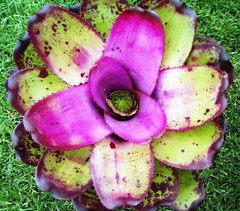
I guess it's time I shared a picture of one of my plants with you, as all text and no pictures is a bit boring after all.
Neoregelia 'KayJay'
All the best, Nev.

splinter1804