

Your Best Weeding Tools and Control
Though, I still have way too many weeds, it does seem to be lessening and getting easier. What has helped in your garden?
For myself, anytime anyone goes out and sees a "flower" on a weed, I ask that they rip it off and discard it. Though they aren't getting the root at least new seeds won't be dispersed to create more agony the following year. It's amazing how much this has helped decrease the amount of weeds year to year. I can go back later and get the root when the rest of the weeding is done.
I purchased a very sturdy chef's knife at the thrift store for $1.50. It makes weeding so much easier. My DH was very skeptical but now that's his tool of choice for weeding. It works so so on dandelions but most others it works like a charm.
I'm trying to get some mulch from one of the tree service companies to put a fresh layer of mulch a few inches thick. Last time we applied about 2" of mulch the weeds didn't even need to be dug out. The few weed seeds that propagated in the loose mulch, pulled so easily out. I had placed newspapers down, so nothing came up from the actual soil. I'd like to have about 3" this go around.
What are your best defenses?
Comments (20)
 10 years ago
Labor.
A stool. Yes, a knife works well. I have been using a little, light-weight hand hoe with a bent handle. Then, I can step up the game:Okay, this is the ultimate attack, hand tool. I have another I like between that little bent hand hoe and this instrument of destruction. It has a triangle blade and is good for those dandelions. Honestly, I can't remember the last time I used the one in the picture for the beds and hope I can keep things that way! Still, that pesky lawn grass that shows up in the garden paths, this will take care of it.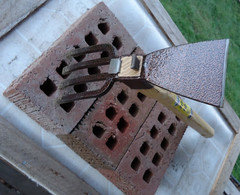
Yesterday, I used the mantis-type, 31cc tiller, pulled backwards through the paths of the little veggie garden. That works well but I had to buy the more traditional tines for it since I wasn't just using it for jobs like mixing amendments in soft soil. The tines are badly worn now; those rocky paths are hard! In fact, I cannot use that little tiller in the big veggie garden paths. Too many rocks ...
I've got the big, rear-tine tiller for that. Paths between beds then ... I take it out in the garden extension ... 30" and 60" between rows out there! What a waste of space. Still, it's okay with the sweet corn and vining crops. And, that spacing is necessary for tilling.
Steve 10 years agolast modified: 10 years ago
Well, weeding never ends, does it? Weeds are part of life (like death and taxes, unfortunately, and equally unwelcome!)
My major culprits - what is the plural of "nemesis?" - are Quackgrass and that lovely noxious weed Campanula rapunculoides, Creeping Bellflower. I am pretty sure it is Quackgrass I am dealing with, anyway; it gets very tall, very quickly and has roots from hell that can overcome everything else planted in a bed - another name for it is Devil's grass - seems more appropriate than "Quack" - how did it get that name, anyway? The Quackgrass can be found most everywhere in my yard and garden beds, while the Campanula, at least so far, seems to be confined to my backyard.
And there are the other perennial weeds, bindweed and dandelions, that I am sure everyone suffers from. This year the dandelions are making a sea of yellow throughout my entire neighborhood, including the local park. No way to get rid of either of those completely, or so it would seem. I have managed to pretty much eliminate the Russian thistles, though one or two crop up from time to time (plenty in the neighborhood) just by pulling and pulling and pulling them, but I would say that is probably the only weed I have managed to "conquer" since starting to garden here 20+ years ago.
I dug up my entire front Iris bed this spring just to get rid of all of the Quackgrass in it; not a good time of year to dig up Irises but I had been fighting with the grasses for 2+ years, trying to remove it without disturbing the Irises and other perennials I had planted in my front yard, but realized this year it was a lost cause - the grass had to go even if I killed most of my Irises. I have a couple of beds in my backyard that I will have to dig up, too. Oh, and the Quackgrass I apparently missed is already sending up new shoots in my front Iris beds; I have to go back in and get the strays. (Like bindweed, don't ever rototill Quackgrass - every bit of root will start a new plant.)
Removing the flowers before they can go to seed helps, but.....Bindweed's roots can stretch to 20 feet or more; you can remove the flowers but the plant will remain forever and keep putting out more flowers and seeds. Without a backhoe or other major excavation equipment, how do you get all of the roots? Creeping Bellflower can produce 3,00-15,000 seeds PER PLANT (:=O) but it also spread by rhizomes; if you don't get all of the root (they can be at least 6 inches deep and spread several inches from the plant as well,) the plant will recover and reemerge. Love this article about the creeping bellflower - very appropriate name given to it by the author, too! Creeping Bellfower: The Zombie Weed And, no matter what you do with those in your yard, if there is a dandelion within 5 miles of your garden, let alone right next to you in your neighbors yard, the windblown seeds will happily come visit you and you will have dandelions, too.
Mulching helps, at least preventing windblown seeds from landing on the soil and germinating. Unfortunately, I can not afford to mulch all of my beds; sometimes it feels as if gardening is only for the wealthy. Also, though some weeds, such as the Quackgrass, can probably force their way in anyway, keeping your perennial beds full of happy, healthy plants so there is no room for weeds is also helpful.
And then there are herbicides like Roundup. I try my best to avoid them, keep using the" pick off the flowers, dig up the weed, pull, pull, pull" methods, but there may come a point where I get so frustrated that I am ready to nuke my garden and start over!
As for weeding tools, a tool similar to the Japanese Hori Hori gardening knife, is my go-to tool - I certainly can understand your preference for the Chef's knife, aloha2009. I have several Hori Hori's, but also have an AM Leonard soil knife which is based on the same design, but has a bright orange plastic handle so is easier for me to find amongst the plants when I set it down than the wooden handled Hori knives. I see that these soil knives are pretty expensive now; I have had mine for a few years and don't remember paying that much for any of them, but they are well worth the price. My soil knife is the first thing I "strap on" when I get prepared to garden for the days; I am always reaching for it because there are seemingly weeds no matter where I look, lol. Highly recommended: A.M. Leonard Classic Stainless Steel Soil Knife There is also a "deluxe" version of the tool that has depth measurements on the blade, a twine cutting notch and a longer, sharper serrated edge, etc. I may have to spring for one, but the Classic model has served me well for years.
So basically I have not learned how to completely control or prevent weeds in my yard, but I do manage to get a handle on them eventually so mostly you notice the things I WANT and MEANT to have growing in the beds. Oh, and the Campanula has a lovely flower on it, so those that aren't in the know probably think they are part of my "garden design" too!
Holly
Related Professionals
Myrtle Beach Landscape Architects & Landscape Designers · Detroit Landscape Architects & Landscape Designers · Niles Landscape Architects & Landscape Designers · Altoona Landscape Architects & Landscape Designers · Elizabeth City Landscape Contractors · Fayetteville Landscape Contractors · Peoria Landscape Contractors · Elizabethtown Architects & Building Designers · Saint Joseph Architects & Building Designers · Williamsburg Architects & Building Designers · Clarksburg Architects & Building Designers · Coldwater Architects & Building Designers · Odessa Architects & Building Designers · Provo Architects & Building Designers · Bronx Architects & Building Designers 10 years ago
My strategy is first to not let weeds go to seed. Much easier if it's kept on top of.
My tools of choice are mechanic gloves for hand pulling. A basic weed digger for dandelions and a hoe for areas that have not received mulch.
Almost all my beds get mulch. Start with grass clippings or spent plants. I also grow alfalfa and clover that I will cut back and use as mulch. Then there is purchased straw and alfalfa bales. Wood chips from the city, unfinished compost or finished compost. My point is use plenty of mulch.
 10 years ago
My favorite tools are at the end of my arms. Never forget them in the garage, never leave them on the ground and can't find them two seconds later, and they never get rusty after being out in the rain.
My biggest weed problem is chamomile that I rue the day I told my wife "okay" and now plagues me. Its easy to hand pull though, even if tedious trying to get all ten thousand that sprout every day. The other biggie is, and you have all heard me before, SNOW ON THE GOD DANG MOUNTAIN!!!! It has started encroaching ony vegetable beds and the ONLY way I have yet found to slow it down is repeated applications of RoundUp. That's great when there's no vegetables in those beds yet....
- 10 years agolast modified: 10 years ago
The light-weight alternative to that big one in my photo may be the Ken Ho hoe.
Sold here: Ho!
Although, Johnny's "tool dude" calls it a Nejiri Gama hoe:Ho!
Maybe someone who knows Japanese can explain why there are multiple designs when I search using either name. It's the sickle type with the bent, off-set handle that I like.
That tool is a little too light weight for me. The handle is especially small but I can get more work done with it than other choices as long as the weeds are small. And, I actually have 5 choices in the short-handled hoes.
Steve
 10 years agolast modified: 10 years ago
I got a hori-hori knife for Christmas that is a great tool for weeding out larger plants, but the best weeding method I've found is pulling them by hand when they're less than an inch tall. I never have to devote much time to weeding if I make a point of pulling them when I see them.
Not tilling the soil goes a long way toward preventing new weeds. I'll turn the dirt by hand for new beds, because any time I've used a rototiller there are explosions of weed growth that last for years. In subsequent seasons, I only dig directly where I'm planting to disturb the soil as little as possible. I grew up being taught that turning the entire garden was necessary every spring and fall, but I've gradually stopped doing that and it has been one of the best decisions for me, simply because of the reduction in weed propagation.
The stirrup hoe linked by digit is *fantastic* for weeding larger areas, or garden paths - I got my sister-in-law one as a gift and she is able to weed even though she is enormously pregnant and due to give birth in 10 days!
The biggest problem 'weed' I am dealing with right now is catnip that I let go to seed two years in a row and it's showing up in the oddest of places. Even when pulled with less than an inch of growth, the root almost never comes out and they regrow rather readily.
- 10 years ago
Sadly, I am so busy in the spring that by the time I have noticed the weed it is already knee high, lol. Slight exaggeration, but sort of the truth. Somehow I need to get more done in the fall and over the winter so I am not so frantic in the spring, lol - and of course, our wet springs don't help. Can't do a whole lot of weeding or gardening in general when the clay soil I have here is a gooey mess - at least, I try to avoid working the soil when it is wet, just compacts in more, even with all of the organic matter I keep adding.
I think I have a stirrup hoe somewhere in my shed; I will have to bring it out and see if it works as well for me. For some reason, I have never really tried putting it through its paces; even if the hoe leaves the root in the ground, chopping off all the foliage should at least slow the weed down!
Holly
 10 years ago
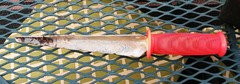
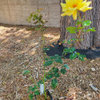
My current favorite. The handle has a cushy rubber grip and the weird triangle shape seems to work well for all kinds of weeds.
- 10 years agolast modified: 10 years ago
I almost bought some chamomille the other day; asked the seller if it was an invasive plant (somehow reminded me of feverfew so got worried.) He said that when it goes to seed and the wind blows.....I didn't buy the plant and after reading your post, I am glad I didn't, Zach. As for Snow in Summer; I tried it
Unfortunately, the "tools on the end of my arms" are starting to develop arthritis - well, my thumbs are anyway - so supplementary tools that ease the work are a necessity for me. Started really bothering me this spring, just as the "weeding season" began; the twisting and pulling of weeds becomes rather painful.
I couldn't find the stirrup hoe - must have gotten rid of it at some point because I didn't have a clue what it was for?? - but did discover that I have a Nejiri Gama Hand Hoe or whatever it is called; I am going to see how it works for decapitating weeds around plants and such. Though most weeds need more than just their tops cut off, this should at least slow them down! Still may get a stirrup hoe; I am sure there is an "Instructable" somewhere that will show me how to use it if I am still confused. :-p
That is an interesting looking tool, popmama. Any idea what it is called and who makes it? You can never have too many hand tools!
Holly
- 10 years ago
It says patent pending on it but I can't find any label of identification. I probably bought it at a yard sale. That is certainly my style. I love the thing and if I ever saw another, I'd buy one just to have a spare!
- 10 years ago
lol - oh well, perhaps I will find one that way, too! Since it has a plastic covering on the handle, I would think it is a relatively "modern" tool, so there might be other samples out there somewhere. It looks like a nice cross between a soil knife, dandelion weeder and a small trenching tool - versatile and useful. Lucky find!
Holly
- 10 years agolast modified: 10 years ago
I have that shed-attached hoop house in the neighbor's yard. The neighbor is a single guy with a 90 year-old mother, still in her own home a few miles away. His father died last summer. One reason he thought to have me over there a few years ago was that he had heart surgery and was still in recovery and his garden was in shambles! He went right back to his paying job once released to do so.
After we pulled up stakes last spring, his gardening efforts fell apart, again. This will be the third time I've tidied things up for him, if he wants me to do it this year. The only weeding he has done in nearly 12 months is right along his garden fence.
Okay, what I did when his father was ill and he decided he wouldn't even attempt the garden was to pull or cut everything and patrol it the entire summer with Round-up in hand. Nothing green was safe.
The first clean up was while he was still trying to grow vegetables. He likes plants! He has petunias out front and a south window you can hardly see through - it's so full of house plants. How did I deal with all the perennial and annual weeds so that he could have a veggie garden? Spading fork and 4-prong cultivator.
That fork can get under and lift most any weed. Well loosened, the long-handled cultivator can jerk them completely out. I hardly need to bend with either tool. I am doing no lifting with the fork. Step on it and use that long handle to pry the weed from the ground. It may not break completely free. That's where the cultivator comes into play. I can also use either to rake the weeds together.
It really isn't that difficult. I'm almost inclined to say that it's easy-peasy!
Steve
- 10 years ago
Sometimes I don't even turn one of my computers on over the weekend during "growing season," but today I discovered the wonders of the garden fork and had to come here to thank you, aloha2009, for starting this thread, and you, Steve, for bringing the gardening fork to my attention.
I have had one for quite a few years, actually, and it is an old one, obviously used by someone else for years; I never used it. Someone gave me another one, modern rendition with a shorter handle, doesn't appear to be as well made. I never used that one, either.
Today I needed to make a bed for some more tomato plants, having run out of room where I had my others planted. The bed was originally planted with Irises and some other perennials. It was overrun last year by Quack Grass, or whatever that nasty grass with the foot long roots is called, had such a wet spring that I couldn't even get to it until it was about a foot or more tall and I was never able to get it under control.
This year, of course, the grass is even happier and taller because I haven't been able to work on it as yet; other things were a priority. l normally use a shovel and cut up the area for a new bed or an overrun one in "bite size pieces," so to speak, then get down on my knees to laboriously dig out each chunk and pull up all the roots, using my soil knife to pry it out of this lovely mostly-clay soil I have, breaking up the clods with the knife and my fingers. (This year for the first time in my life, my hands - thumbs especially - are objecting strenuously to gardening (I suspect I am getting arthritis) so this part of my gardening has been somewhat painful as well as time-consuming.)
Enters the garden fork - the old one with the nice long handle. I gave it a try this morning and IT IS MARVELOUS! It easily penetrates the soil and mass of grass roots, acts like a lever to pull the darn stuff right out of the ground where it can have the soil easily shaken off, also pulls out the bindweed - of course, this too has taken advantage of the jungle some of my backyard beds have become - with lots more of the root than I am usually able to get with just the shovel/soil knife/hands method. I already have about a third of the bed done in approximately 30 minutes; it would have taken me an hour or more, I think, with my old method. And my thumbs don't hurt!
Can't believe it took me so long to find out about such a useful tool, one that farmers and gardeners have been using for centuries, but now I have "discovered" it, so thank you, thank you, thank you!
Holly
- 10 years ago
Oakiris (and anyone else interested), I found the weeding tool today in the Lee Valley Tools catalog. Here it is:
http://www.leevalley.com/US/garden/page.aspx?p=57088
I just may order a second one. I'd hate to be without one!
- 10 years ago
By the way, Lee Valley has all kinds of cool gardening items and they carry the Flexzilla hose which really is the best hose I've ever owned.
- 10 years ago
Thank you, popmama - it would figure that Lee Valley Tools would be the place you would find your mystery tool. That is a great place, isn't it? I love their wish books (i.e., catalogs!) I may have to check into that hose, too - field repairable, how cool is that? I am so tired of kinking hoses and replacing leaking ends, etc.....
Holly
- 10 years ago
Yes, I love their catalog. I found them through the internet when I was looking for some hanging plant hooks and now I get their catalog. That's where I saw the weeder today.
I found the Flexzilla by searching on line for the "best" hose. I found some youtube video of this guy saying he'd had his for 10 years using it for concrete work and it was the best hose ever. After having mine for a month now, I think he's right. It doesn't kink. It will try to fold over, but I just give it a swift yank and the kink comes right out with no bend left in it. It's also lighter than most hoses. I'm pleased.
 10 years ago
The only weeds I get aren't really weeds. . . they are the horrific seed pods from the neighbors ash (I think) tree. They grow in bunches of a million per bunch, the trees are in bad shape (no trimming-ever) and they hang over our common fence line. If the ground under the trees was grass I could just mow and be done. . . however its our concrete driveway. So every little breeze those buggers find their way into my flower beds. They are easy enough to pull but a few have settled in under some plants and I don't see them until they are already a tree in the making.
I just started to eliminate the dreaded snow on the mountain today. . . I wacked it to the ground with the weed eater, laid down cardboard on which I layered fresh grass clippings, saw dust, manure and top soil. time will tell if it works or not. . . I made all of my flower beds with this method (lasagna bed) I call it the no dig method. . . and I am quite impressed with the fact I don't have weeds to deal with.
I do get a few dandies in the lawn but I keep the heads picked off and use a long handled forked tool. Not sure the correct name but it works good for plucking the dandies.
- 10 years ago
I have been getting catalogs from Lee Valley since before the Internet, lol - have known about them for a long time; glad you discovered them, popmama! Between them and Vermont Country Store, you can get a lot of "old time" tools, gadgets and other "heirloom-type" things that have withstood the test of time and have proven to be just the best!
From what I have read, there is so much less effort - and possibly better results - with lasagna gardening, and I have wanted to give it a try for a year or so now, maidinmontana. Somehow I never plan ahead in time so end up using my shovel and my (newly-rediscovered) garden fork to make new beds because I need more planting area NOW, can't wait for the lasagna gardening method to do its thing!
Good luck with the ash tree clean up - I have a similar but perhaps not as time consuming problem with Catalpas - there are several in my neighborhood, unfortunately including in my yard (I didn't plant it, but it is huge, literally right next to my house,) and those seeds go everywhere when the pods break open. Luckily, the resulting seedlings are very easy to pull up.
Holly


popmama (Colorado, USDA z5)