Software
Houzz Logo Print
iioana333

Problems with granite countertop repolishing, please help!!!

10 years ago
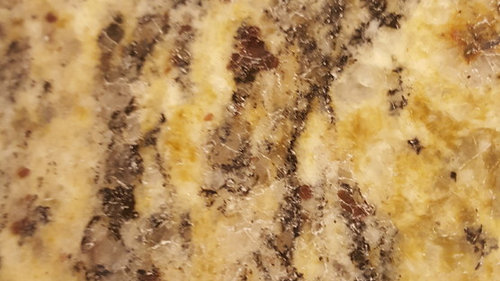
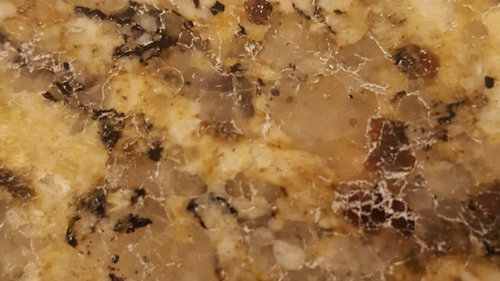
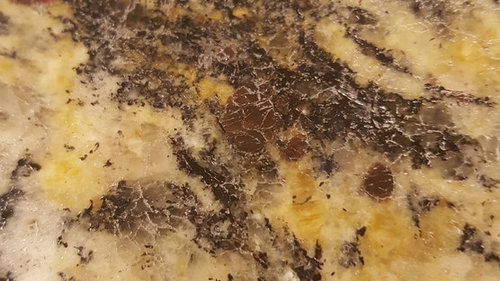
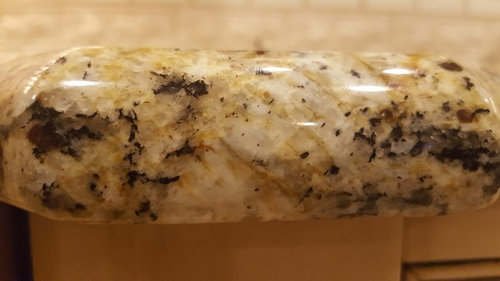
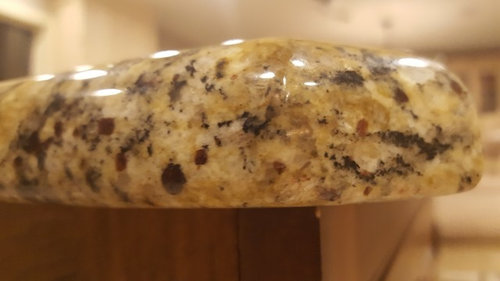
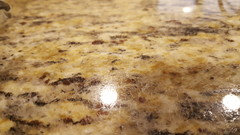
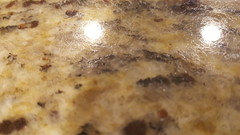
Hello everybody, We just moved into a new house and although the kitchen is in a good condition after 10 years we thought that a polishing and sealing of the granite countertops would bring more shine to them and would protect them for longer. They were not in bad shape at all, just a little bit dull from using the cleaners probably. We hired a company to do the job in a professional way, but to our sad surprise they look now worse than before. There are very, very tiny crackles on the surface and inside the stone the color was compromised. You cannot see the beauty of the stone anymore, the different colors look like they have dust on them. And if you look closer, it looks like those tiny crackles are filled with a white powdery deposit. The black and brown spots are no longer clear colors and the yellow has a whitish appearance. At night the whole surface look whiter than the sides (the granite was a warm mix of yellow, brown, ivory color). We do not know why this happened and the "professional" people were not able to explain it, saying that the stone looks normal (????). And that after the guy who did it said he saw the problem after finishing. We are very upset and, at least, we want to find out the cause before redoing this with somebody more skilled and we want to know if there is a chance to restore the beauty of the stone. Please let us know if you have seen this before and what might have caused it. I will attach some pictures with it and how it looks now and, for comparison, I will put at the end two pictures from the edges that were not touched,

where you can still see the beauty of the stone and how it was on top before starting the process. Thank you a lot!!!


Comments (17)

  • PRO
    10 years ago

    Your stone is full of polish. What product/process did they use? Have them scrub it out then apply Tenax Pectro. It should look fine.


    I just got off the phone with a guy who wants his granite re-shined. I'm going to do a small section for his approval. If he likes it, we know how long it will take and how much the bill is going to be. If he doesn't, I leave, no charge.

  • 10 years ago

    Thank you very much, Joseph, for your answer. Unfortunately we trusted the guy, no sampling before, he came highly recommended. And we did about 120 sq ft of granite already :(. What do you think about the "wrinkled" surface? is this how it is supposed to look? The guy insisted on the fact that it is a cheaper granite, and this is the best that we can get (?) but there is no way it looked like that before he started, it had no chips, no scratches, no "wrinkles", just a little bit dull, it was in a pretty good condition. Please let me know if you think the surface looks ok, to me it doesn't and when compared to the edges it is totally different now. The beauty and clarity of the stone seems lost. Thanks a lot.

  • 10 years ago
    last modified: 10 years ago

    "and would protect them for longer."

    Granite is an igneous rock does not have to be sealed. It's probably about 2,000,000,000 years old. You should have left it alone. It's a natural substance.

    Having said that, I think it's the polishing compound - maybe there's a way to get it out of all the little voids and fissures?

    I wouldn't use any sealer.

  • PRO
    10 years ago

    "Granite is an igneous rock does not have to be sealed."


    Granite varies in porosity and certain stones will not perform well without sealing; their age is irrelevant. Most commercial stones have resin vacuumed through them at the factory and will still accept sealer.

  • 10 years ago

    Thank you a lot, Geoffrey. That what we thought, too. We requested them to live the stone like it is and polish it in its natural state, but they insisted on doing crystallization for a better look :( And it is a lot worse now than before :(

  • 10 years ago

    The deal is if the granite absorbs water (say after 10 minutes) then it will absorb a sealer. If it doesn't absorb water it doesn't need to be sealed.

  • 10 years ago

    Joseph, we wanted them to just seal the granite but not crystallize it (I believe these are two different steps in the process). We did not imagine the outcome would be so bad. I will get more info regarding process/product they used (if possible).

  • 10 years ago

    Somebody glopped on a topical film forming coating rather than an impregnating sealer. They need to remove it.

  • 10 years ago

    Why do 'people' want to add all sorts of sealers / topical products? The reason is that they make money selling them. I would venture a guess that 80% of the 'granite' does not need any kind of sealer.


  • PRO
    10 years ago

    geoffrey_b:


    Your guess would be wrong.

  • 10 years ago

    Hi Joseph, do you think, from your professional experience that it is going to take more time now to polish the stone because of the situation created with the polish residue? Or the product that you recommended helps a lot the process and it is about the same?

  • PRO
    10 years ago

    The polish appears to be fine. As I stated previously, the polish residue needs to be removed then the micro-fissures filled with the Tenax. The Italians have been doing this for eons. They've got this, trust me.

  • 10 years ago

    How do you remove the polish residue??? Thanks a lot for your answer.

  • 10 years ago

    I am afraid that, because they insisted on doing crystallization, this might be a chemical reaction of the granite with the product they applied for that. I hope not. Thank you very much for your advice, Joseph.

  • 10 years ago
    last modified: 10 years ago

    It just needs to be stripped of whatever polyurethane or other unsuitable surface treatment that they put on it. Try a rag with some acetone and see if it does any good. You need to know specifically what they used in order to do the job right though.

    iioana333 thanked User
  • 10 years ago
    last modified: 10 years ago

    I think the mica and other softer minerals might have been abraded, causing flaking. There's a geologist in the Kitchens forum, karin_mt, and she has an ongoing thread about the geology of countertops. I'd ask her opinion. Her thread, Countertop Geology, is on the first page right now.

    iioana333 thanked User