Software
Houzz Logo Print
michael303

Looking for Soil Test Feedback Please

10 years ago
last modified: 10 years ago
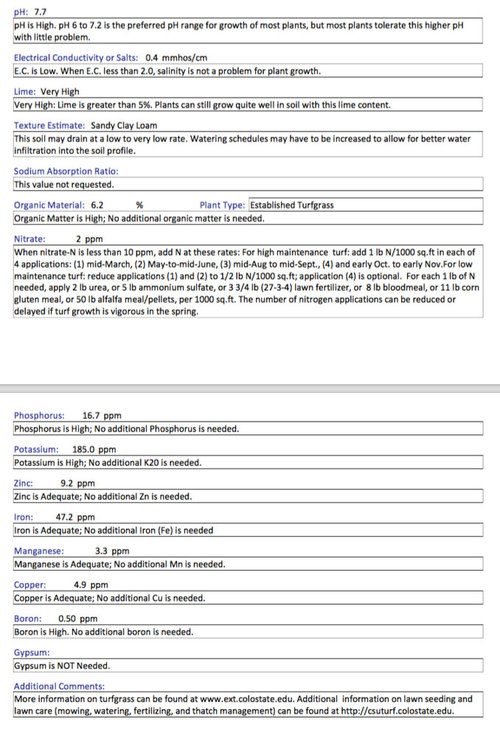
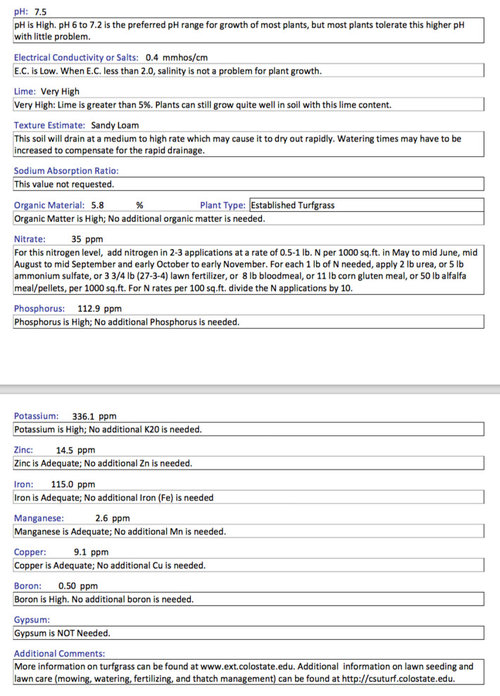
I did a soil test through the local University (Colorado State) and I'm hoping I can get some feedback here on the results as the recommendations included on the test don't go beyond fertilizer. I had the front and back yard tested separately so I've included both.

I'm considering a full renovation and possibly some leveling this fall. Mostly because some of the best spots on my lawn are where I repaired some patches with new seed this spring. I assume the rest of the grass is from 1978. I also have some invading annual bluegrass and wide blade tall fescue that looks bad and I'd like to get rid of.

At this point I just want to make sure I'm watering properly and making the best of the lawn and soil until then and do anything else I need to based on the test results.

Front:

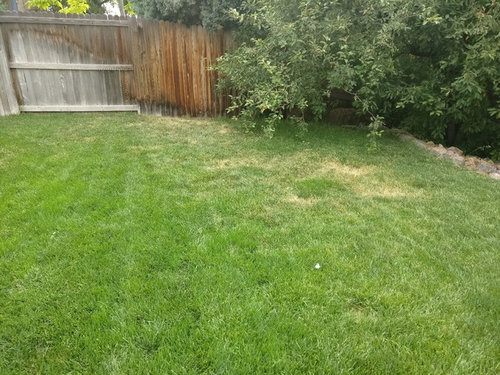
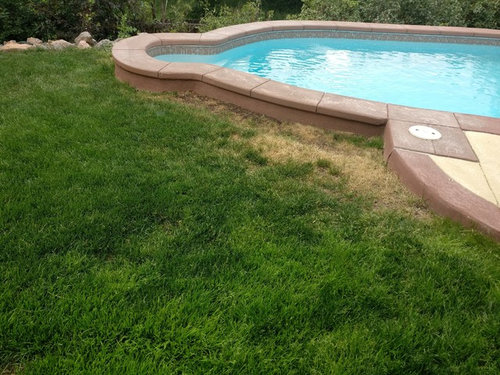
Back:

The front seems to be in good condition but the back is brown in a few spots including where I took out a planter area. Right now I'm watering about 1.5" per week since we've had a hot spell lately but was doing about 1"/wk before that. I put down organic fertilizer twice in the spring and Revive a couple times too. I think I'm going to switch to alfalfa and soybean meal if I can find it at a decent price.

Any feedback is appreciated.

Michael

Comments (10)

  • 10 years ago

    Hey thanks a bunch for taking the time to give me some the feedback. I'll try Logan for testing next time since that's what everyone here send to use. What other details do they provide?

    To answer your questions, the area next to the pool is where the planter came out of. I dug it out and filled it with a couple bags of topsoil. I kept it really wet for 2 weeks in the spring after putting down some seed but went to regular watering after that. The new grass didn't make it once it started to get hot. Maybe I didn't water daily long enough to allow it to establish better. It's just my wife and I and we don't splash much. LOL

    I think area by the tree could be shade. The base of that tree isn't too close there. The soil in the backyard seems to be made up of a lot of gravel. I assume this may have been introduced when the pool was put in the backyard because we're actually on a slope. The front soil is mostly clay. There's a retaining wall at the back of the yard to make the yard level. I was wondering if that soil makeup allows the water to drain through too fast. Is that something I should be concerned about?

    Thanks again.


  • 10 years ago

    People grow gorgeous lawns in sand, so drainage speed isn't a problem. Mine drains quite fast (silt and clay, but highly organic and properly balanced). Sand would just mean watering less in amount, but more often than other soils would require. Gravel can be a bit of a challenge, requiring very high levels of organic matter to hold enough water.

    The pool was probably an establishment problem. You usually have to keep new sod/seed watered the entire first year at a higher rate than most people bother, but it might come back when the weather cools a bit. If not, that's the proper moment to seed anyway. :-)

    Logan gives specific numbers to a lot of things that this only gives a general guide. Lacking a specific CEC and saturation percentages, there's not much work I can do with this.

    Michael H thanked User
  • 10 years ago

    Thanks for the additional feedback. If I renovate later in the year I'll be more aware to not let up on the watering. Especially since the entire turf is at stake and not just a little strip.

    Based on what you said I assume adding a little sand for leveling purposes can only help then. What's the best path to increasing organic matter in sandy soil though? I use an organic fertilizer currently and mulch instead of bagging.

    I've also read allot about shampoo and soybean meal here. Would either of those help my situation?

  • 10 years ago

    When the time comes, ask about watering--it's best to progressively step back. By next summer, it'll simply need to be watered just before it's thinking about wilting.

    Sand for leveling in minor amounts is fine if you can't get a soil that resembles your local one.

    Increasing OM...always a fun one. :-) Mulch mow, as you already do. Mow all your fall leaves. Take neighbors' leaves as long as their lawns don't have major weed and disease issues (weeds are less likely to spread that way than diseases, but I've seen it happen).

    Organic feeding does help, but it's a slow process. Still, every little bit helps, and nobody's saying you need to reach the finish line tomorrow... Soy's a good organic feed and only about fifteen pounds per thousand square feet is required to feed the lawn appropriately.

    Shampoo would loosen your soil and improve oxygen penetration (good for root growth) and soil softness (good for helpful soil fungi) over time. It's never a mistake, but it also isn't always necessary.

    Michael H thanked User
  • 10 years ago

    Thanks again for the additional feedback! You've been a big help with getting me on the right path. I'll start a new thread when I get closer to my renovation so I can get some feedback on my plan and ask a few questions. I think I'm going to try out the shampoo and see if it helps any too since it won't hurt.

    One last question for now hopefully. If I increase the amount of OM feed I use should I reduce the amount of organic granular fertilizer I use and still shoot for about 1lb of N per 1000 sq/ft per year? Is the application schedule about the same?

  • 10 years ago

    That's a difficult question because it depends. My top flight year was 37 pounds of N per thousand square feet delivered 100% organically (well, OK, 97% as the winterizer around here has to be synthetic). That was also 1,300 pounds of OM per thousand square feet that year.

    Done synthetically, I would have sterilized the soil and rendered it incapable of growing anything for a while. Since I did it organically, the grass went absolutely insane and required cutting two to three times a week. And we're talking Kentucky bluegrass, not Bermuda.

    Most northern grasses really do like from 2-4 (fescue, rye) or 4-6 (Kentucky bluegrass) pounds of N per thousand per year. I apply around 1 pound of N per thousand on May 1, August 1, September 1, and October 1, then winterize at the correct time (usually Thanksgiving). That gives me about 5#/K/year, and keeps the KBG very healthy.

    Really, half that would probably make do--and five times that is not going to be an issue (organically done).

  • 10 years ago

    Oh wow. 37 lbs is crazy. Good to know I can go wild a bit with the OM feed and not have to worry about much other than some extra mowing.

    I did have my numbers wrong. I'm on schedule to do 4lbs N per 1000ft per year. Your schedule seems to be more weighted towards the fall so I'll keep that in mind.

    Thanks again for the help. I'd like to nail down what kind of grass seed I want to use for the reno so I'll make a new post on that soon.

  • 10 years ago

    Michael - is there a reason you are letting those branches hang over the lawn? I'd trim them way back so you have full sun there. I had a section of lawn like that last year. I had some guys come in and trim the tree line way back, and that same section is doing very nicely this year.

    Michael H thanked danielj_2009
  • 10 years ago

    Based on a suggestion I read I was waiting until the fall when the tree was dormant to have it trimmed. The same tree on the other end of the yard doesn't look healthy so if it's sick I didn't want it to spread it to the healthy tree. Maybe it's really not a big deal and I don't have to wait though. I'm not sure. It might be smart to do it before the reno.

Sponsored
Custom Home Works
Average rating: 4.6 out of 5 stars10 Reviews
Franklin County's Award-Winning Design, Build and Remodeling Expert