Software
Houzz Logo Print
lvparmele

Brown patch spreading

10 years ago
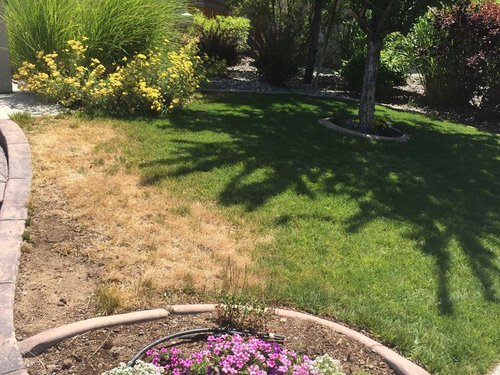
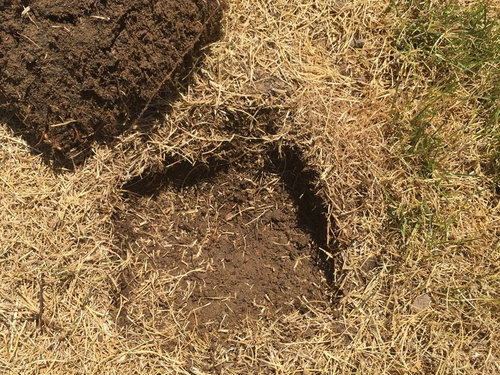
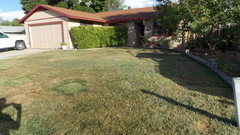
I had this bare spot in my lawn that was about 2'x2' and now has taken over the left side over completely. The soil seems damp and not too dense underneath the dead area and I don't see any insects or anything. I previously was watering for 12 minutes morning and night 3 days a week. After this brown popped up, I researched and changed watering to 25 minutes two days a week early morning. Was it the previous watering that cause shallow roots and browning? Is changing my watering schedule in summer going to make it worse? Any ideas of what's causing this would be appreciated, last time I fertilized was in April 2016 and I aerated a few days before that. I can't stand looking at this when I come home.


Comments (21)

  • 10 years ago

    What kind of grass is it? Where are u located?

  • 10 years ago

    I believe it's KBG but not 100% sure, just guessing based off comparing pictures that I've seen online and what seems to grow out here. I live in Reno, NV.

  • 10 years ago

    Same problem here, at 4300 foot elevation in northern Arizona. I tried fertilizing, fungicide, grub control and soil conditioner. Lawn is still dying. Weather has been very hot and dry. Watering every other day for 20 mins at 5 AM. need help fast. Large sprawling Front yard is about to be converted to rock

  • 10 years ago

    @lvparmele

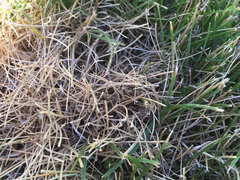
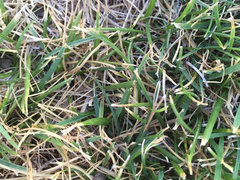
    Can you post a few pictures of where the brown area meets the green area please? Take them from a couple of inches away in the shade if possible.

    @toddglasenapp

    Please start your own thread for this problem so we don't hijack this one and post a few pictures as well.

  • 10 years ago

    And for future pics for both y'all...if you can take them in the shade or on a cloudy day, they are a lot easier to interpret. When you take close up pix, take them from about 3 inches away. That's really close.

    For both y'all, put a piece of paper on the grass at the fringe area where green goes to brown. Then wipe the flat of your hand away from the paper and see of any bugs flick up onto the paper. If so, those might be chinch bugs. Chinch bugs usually start at the edge of concrete, asphalt, or large rocks. They love the heat so they start where the soil is warmest and move away just like in your picture.

    But also, warm concrete dries out the adjacent soil more than the soil away from the concrete.

    Both of you are watering wrong. Here's more:

    Watering: Deep and infrequent is the mantra for watering. This is for all turf grass all over the place. Deep means 1 inch all at one time. Put some cat food or tuna cans around the yard, and time how long it takes your sprinkler(s) to fill all the cans. Memorize that time. That will be the time you water from now on. My hose, sprinkler and water pressure takes 8 full hours to fill the cans. Your time will likely be less. I like gentle watering. As for watering frequency, that depends on the daytime air temperature. With temps in the 90s, deep water once per week. With temps in the 80s, deep water once every 2 weeks. With temps in the 70s, deep water once every 3 weeks. With temps below 70, deep water once a month. Note that you have to keep up with quickly changing temps in the spring and fall. This deep and infrequent schedule works in Phoenix and in Vermont, so it should work for you. The reason for deep and infrequent is to grow deeper, more drought resistant roots and to allow the soil to dry completely at the surface for several days before watering again. If it rains, reset your calendar to account for the rainfall.

    Having said that you cannot go cold turkey in switching from frequent watering to infrequent, but you should be able to get there in a few weeks. Start with deeper watering and stretch the intervals between watering.

    Something else you might be experiencing is hard soil. You can fix that by spraying the soil with 3 ounces of shampoo per 1,000 square feet. Give that 3 weeks and your soil will be much softer and will allow much deeper penetration of the water you do give it. If the soil is not noticeably softer when wet, then repeat the shampoo. It's hard to overdo that shampoo. The more you use the softer and deeper soft it gets.

  • 10 years ago

    Try propaconozol it worked great for my tall turf fescue. Dead patches leave until sept when cooler. Cut real low bout 1.5 inches over seed apply fertilizer water deeply but infrequently next year.

  • 10 years ago

    I really appreciate the input so far. I will get some close up pictures of where brown meets green and check for bugs as mentioned above.

  • 10 years ago

    Here are two pics hopefully close enough. It's right where it changes from brown to green. I didn't see any type of bugs when brushing the grass or below when I lifted a chunk from the original post. I will slowly adjust the watering to what was stated above. Really hoping I can bring back what is currently brown by next year....

  • 10 years ago

    I would expect KBG to be fairly thin in the shade you have. I'm thinking you have a sun/shade mix where the KBG would be doing better in the sun and fescue would be doing better in the shade. Or it could be all fescue. You're close enough to California that they might be selling a lot of Marathon dwarf fescue.

  • 10 years ago

    I was asked to supply a photo sample of my problem in northern Arizona. My photos are a very close match to these. A few days after posting, the problem is unchanged and I will likely remove the front lawn in favor of rock if I don't see some improvement. The grass type is a mix of several fescue varieties, thanks to my stepson's carrying fertilizer and grass from a number of golf courses onto it.

  • 10 years ago

    I actually tried fertilizing the day I posted this and it seems to be making a slight comeback over the last week. I will see if it changes over the next week but there are slight patches of green appearing in the brown grass. I'll take more pics this weekend if it changes more.

  • 10 years ago

    I applied propaconozol last month now my lawn has recovered well. Fungus is gone and I went to deep infrequent watering.

  • 10 years ago

    I just applied this product: Ferti-lome, Liquid Systemic Fungicide II, from the local hardware store. Propiconazole has a content of just 1.55 percent. It is a hose-end spray product, but also recommends 5 fluid ounces in one gallon of water per 250 square feet of lawn. I figured the sprayer would regulate product released, so I just let it fly and concentrated a little more spray on the many brown spots on my lawn. I will report back in a few days. It also recommends repeat treatment in 10 days. A comment on the Amazon page for Propaconozol mentioned that the product as advertised on Amazon said it turned a brown lawn into lush greenery just in time for a backyard wedding.

  • 10 years ago

    I might add that I live in a small town with no established authoritative person on lawn care and I have heard several different explanations for brown spot. This page has offered more direction than anyone living in my town.

  • 10 years ago

    I applied Propiconazole four days ago and the brown patch is spreading. HELP!

  • 10 years ago

    @toddglasenapp59 no one can provide you information about your situation without an accurate assessment. You really need to start your own thread, provide info, pictures, ect. Applying the wrong treatment in the wrong situation to the wrong lawn may kill it fyi.

  • 10 years ago

    You need to start your own thread and post pictures. The shape and color of fungal lesions, if any, may point to a different fungal disease.

  • 10 years ago

    UPDATE

    After using a fungicide weekly for about 6 weeks, my lawn has rebounded -- except for a few spots here and there, which I have dug out and replaced with sod or seed. Also our monsoon season has produced a few showers totaling .48-inch of rain. The 16-year drought continues...

  • 10 years ago

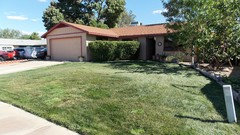
    Below is the Before photo from July 23

  • 8 years ago

    Update: 2 years on, I will now be ripping out my sod and going to rock. I have tried the following to no lasting avail: granular fungicide, fertilizer, fluid fungicide, anti-grub agent and overseeding (which worked for a few weeks before triple-digit heat kicked in). I have found, however, that the back yard has resisted fungal growth because of the presence of Bermuda grass. Overseeding it worked -- so far. One variable in the back is that is has more shade, and the fully exposed parts of the front yard are a fungal crispy yellow, with the more-shaded areas lush green -- but grass is not growing.