Software
Houzz Logo Print
terrene_gw

Seeing very few Pollinators :(

10 years ago
last modified: 10 years ago

It is alarming how few pollinators I am seeing, especially bumblebees. Maybe 3 all year. Usually there are many, and the number increases as the season progresses. My lot is very natural and organic, with lots of flower gardens, leaf litter, native vegetation at every layer, a little meadow, thickets, piles of brush, stumps and mulches, and other natural features that provide habitat for the critters.

Numbers have picked up a little, but still relatively low. I am wondering if the very cold snap back in February might have killed some overwintering insects.

Anyone else notice this? What are you observing in your area? (I am in metro west Boston).

Comments (29)

  • 10 years ago

    I Live just outside of Boston and have seen quite a few bumblebees and carpenter bees but almost no Honeybees. I can remember 30 years ago they were everywhere.

  • 10 years ago

    Actually, we haven't seen as many bees as usual here along the CT shoreline. My Nepetas, Agastaches and Lavenders are usually covered with them, especially bumblebees. I hope this year's strange growing season is the cause and that it's not a permanent problem.


  • 10 years ago

    Just one bumble here this season. Some honeybees on the lavender.

  • 10 years ago

    I was thinking about this today. No bees. Cabbage moths; not a single butterfly. Very strange. Wonder what the vegetable production will be like this summer?

  • 10 years ago

    I hadn't even thought about this. Too busy, pulling ticks off me but the other day I spent time in the yard and didn't get a single tick. But deer flies are around. I wonder if the drought is playing a part. I have seen a couple of butterflies and recently noticed different bees on clover in the lawn before it got mowed. But, no bees on the creeping thyme edge to the herb garden. It's usually loaded.

  • 10 years ago

    Found a dead bumblebee on my driveway this morning :(

  • 10 years ago

    terrene, I clicked on like so you knew I had commented but your description of neighbor is terrifying. I know our neighbor and his son on adjacent properties use round up along the stone wall but otherwise they are pretty careful about things since they are raising grass fed beef cattle. He checked a field for a noxious weed (related to bedstraw) and it turned out we had a large clump in our back yard which we only mow once a year. We use round up on this clump and also sprayed carefully on some Japanese knotweed (bamboo) that keeps trying to grow along the road. We have plenty of wild space. Odd that last year I didn't see much milkweed in our wild area but this year there seems to be a good bunch of it, including in our weedy asparagus patch. Perhaps with all the poisonous algae that's blooming in ponds, the news will raise people's awareness. There are bumblebees on the annual poppies that self sow under our kitchen window. On another thread someone mentioned a lack of dragon flies which I hope can be attributed to the drought. Last year we had hundreds.

  • 10 years ago
    last modified: 10 years ago

    Come to think of it, the number of bumblebees here seems to be down this year. Honeybee numbers are up, from 2 or 3 bees last year to 6 or 8 this year. It used to be scary walking across the lawns/meadow with a bee on every clover blossom, but those days are long gone. It looks very grim for pollinators.

    We have had one or more tiger swallowtail butterflies flitting about, but it remains to be seen if the monarchs will show up. We have a beautiful crop of milkweed waiting for them, but last year saw only a few. I wonder how these wildflowers manage to bloom, given the serious decline of the pollinators.

    My property is much like yours, Terrene. All organic and lots of brush piles, wooded areas, and open areas allowed to grow wild. I stopped buying any flowering plants a couple years ago to avoid pesticide treated flowers, and grow most everything from seed. Many around me buy treated flowers, so I wonder if this is killing the non-migratory insects. At least none of the neighbors treat their lawns with chemicals. The only toxins that I ever use are hornet killer when a nest appears, but that is pretty well localized, and of course spot-on flea and tick meds for the dogs, but again that stays where it is put.

  • 10 years ago

    Honeybee populations have been dwindling over the last 20 years and probably longer. Here in Somerville Ma I have seen a fairly healthy bumblebee population as well as carpenter bees (look a little like bumblebees). I am also seeing a lot of sweat bees which vary in color to shiny green to black.

  • 10 years ago

    I'm seeing many bumblebees, but no honey bees since the neighbor gave up his hives. Very few butterflies (no monarchs yet) but my first sightings of fireflies in years. (not sure if they are pollinators but I'm still happy about it). I'm in central Vermont.

  • 10 years ago
    last modified: 10 years ago

    I have been noticing the same thing here. Very few bumble bees. One Monarch butterfly. I have seen honeybees on the lavender this week, but not in abundance. It seems to get worse every year. I put in a bug house this year. A big one with a lot of different areas for different kinds of bugs, and I don't think I have one resident in it. No wasps or yellow jackets, come to think of it. Usually, I have more bumble bees than anything else.

    Like you Terrene, I'm organic and I've added more and more plants for pollinators every year. I have lots of herbs that I allow to flower for them. Parsley, chervil, oregano, thyme. Alyssum all along my walkway. Sedum and Butterfly bush should be flowering soon, I'm going to have to pay more attention and take a count.

    I wondered if there is more mosquito spraying because of Zika this year? Mosquitoes showed up very late this year and I still have very few.

    So what are the birds doing, that don't eat seed? I had catbirds when it was strawberry season, but they may have moved on now.

  • 10 years ago

    Well, today was a nice day for pollinators because the oakleaf hydrangea seedling that I got from diggingthedirt way back in 2008 is now a sizeable shrub and it is in full bloom. N ever noticed how much the pollinators loved the flowers but it was buzzing with honeybees and other little bees. That is the first time I've heard a plant abuzz with bees so far this year. But no bumblebees at that time, anyway.


    Then later this morning I saw a bumblebee on the Buddleia 'Black Knight', which has just started blooming, and another on the tomatoes. So there are a few but not many.

  • 10 years ago
    last modified: 10 years ago

    It's possible that the decline in insects might not be just a local problem, and it's not just pollinators. I haven't noticed many mosquitoes, and there are no ants on the hummingbird feeder, and no beetles eating the basil (there is an upside to this).

    Stumbled across this article on Yale360:

    Vanishing Act: Why Insects Are Declining and Why It Matters

    Insect populations are declining dramatically in many parts of the world, recent studies show. Researchers say various factors, from monoculture farming to habitat loss, are to blame for the plight of insects, which are essential to agriculture and ecosystems.

    Every spring since 1989, entomologists have set up tents in the meadows and woodlands of the Orbroicher Bruch nature reserve and 87 other areas in the western German state of North Rhine-Westphalia. The tents act as insect traps and enable the scientists to calculate how many bugs live in an area over a full summer period. Recently, researchers presented the results of their work to parliamentarians from the German Bundestag, and the findings were alarming: The average biomass of insects caught between May and October has steadily decreased from 1.6 kilograms (3.5 pounds) per trap in 1989 to just 300 grams (10.6 ounces) in 2014.

    "The decline is dramatic and depressing and it affects all kinds of insects, including butterflies, wild bees, and hoverflies," says Martin Sorg, an entomologist from the Krefeld Entomological Association involved in running the monitoring project.

  • 10 years ago

    So far we seem to be in a relatively normal range considering the dryness. I've seen bumblebees regularly all season, and other smaller bees and flies visiting the flowers. I haven't seen honeybees for years. There was apparently a feral population when we moved here (no neighbors keep honeybees) since I sometimes saw them, but not for at least 10 years. Perhaps the bears found the hive, since I know that in order to keep bees around here one needs to surround them with a functioning electric fence. I do try to plant for pollinators, at least partly since I love watching the insects as much as I enjoy the flowers. My favorite is that in the early fall, I often find bumblebees nestled into flowers in the early morning when they are too chilly to fly.

  • 10 years ago

    There's no lack of Colorado potato beetles which I try to hand pick. I just started seeing adult squash beetles on the summer squash plants. I don't think Monarchs are due in our area until late August. This week I attended an outdoor education class at Petals in the Pines in Canterbury NH and she will be doing a presentation on Monarchs for the OLLI program in late August - a date she picked when she hopes to have Monarchs. Last year I didn't see much milkweed but this year there seems to be much more. Our back yard is only mowed once a year so right now wild turkeys are wandering through pecking away at grass seeds. I'm seeing more insects but the tick population seems to have dropped off (thank goodness). Mosquitoes are here. I don't see many butterflies but I have started watching where I step because of bumble bees and other possibly stinging insects on the white clover. At Petals in the Pines, she showed us how to make a bee house from a tin can and sticks (a project to do with children) but she has a large set up of various places for the mason bees.

  • 10 years ago
    last modified: 10 years ago

    For a few years now, I've noticed bumblebees in both our front and back yards. I think they live in stone walls, and they complain when I come too close to flowers they like....

    But this summer for the first time I've also seen lots of bees or wasps (I'm not sure which) flying into & out of a 2-inch hole dug into a sandy patch of a hillside in my back yard. They're different sizes but all look similar, and there are many coming & going!

  • 10 years ago

    If anything, I think we have an increase in bees. I think that because we have planted many more flowers they have finally discovered us. I put up a mason bee house last year, but no one moved in. Still we have plenty of honeybees and bumblebees and other kinds of bees. They love our lavender, Russian sage, coneflower, rudbeckia and liatris.

  • 10 years ago

    Wasps are predators not pollinators so lets hope its a bee barret001. It could be a bumblebee as that sounds like a place they make there nest. I have a large back yard for living in a crowded city and have been debating the pros and cons of putting a honey bee hive in my back yard. You are allowed to have one per household in my city. I just don't know how much actual work they require and if I can leave them be for long stretches of time.

  • 10 years ago
    last modified: 10 years ago

    John, I'm hoping they're bees, not wasps, too. Although there are many kinds of 'helpful' wasps in nature too, and even the ones we humans don't find helpful have their place in the grand scheme of things..... They're not at all bumblebee-looking either. I have a number of solitary cranky bumblebees who live in crevices in the rough stone walls in our yard. They're a lot bigger and fuzzier than these particular hordes of small and smaller bee-like creatures living in this hole in the sandy hillside.

    After a lot of clicking around the web to try to identify my particular mystery critters (--there are SO many bee varieties in North America!!) , I've come to the conclusion they may be one of the bee imitators, actually a type of fly that looks like a bee. On this page they're described near the bottom with a photo, as Syrphid flies. http://bugguide.net/node/view/475348

    Looking at them carefully as they fly around, I think they have single wings instead of the doubled wings of true bees, as this page describes. And the photo of the first kind of Syrphid fly is very close to what I see. They ARE actually pollinators, but not bees. :--}

  • 10 years ago

    Bumblebees and yellow jacket (wasps) are the two species who typically and often build nests underground. They are very different in appearance. At my house bumblebees get a free pass if they are not actually under the house itself, while the yellow jackets are promptly exterminated.

    Bumblebees are not solitary, but I'm told carpenter bees are similar in appearance to bumblebees, and they *are* solitary.

    Here's hoping you are host to beneficial pollinators and not to a nest of stinging predatory pests, Barrett001!

  • 10 years ago

    Sounds like you have carpenter bees living in the wall. They look a bit like Bumblebees but are solitary https://en.wikipedia.org/wiki/Carpenter_bee.

  • 10 years ago

    In my organic vegetable garden last year, I noticed for the first time yellow jackets patrolling my Brassica bed. I observed that they showed up after the moth that lays eggs on the underside of the brassica leaves. We initially had a minor amount of holes in the leaves, and that was the end of it. Never had a healthier crop of Brassicas. I didn’t even realize that yellow jackets could actually be beneficial.

  • 10 years ago

    If yellow jackets would kill and eat Japanese beetles, I might give them a free pass! Amazing how the JB's are thriving while so many pollinators and other insects are threatened.

  • 10 years ago

    Colorado potato beetle larvae are thriving in my garden. I've seen a few JBs while on bug patrol so they get knocked into the bottle of death with the CPB larvae. My creeping thyme is flowering and that is usually a buzzing center of activity but not much this year. I need to take a good look at things now that we've had some good rain. Maybe there will be more pollinators around.

  • 10 years ago

    I'm located in Virginia, and we were just talking about seeing a lack of pollinators this year. We're at a loss as to why there are so many fewer. We also grow all organically and even have a sizeable pond near are the garden that provides the insects with a fresh water source. I have a seen a few carpenter bees and I think a mason bee once. The honey bees though have been few and far between. I've actually had to resort to hand pollinating some of our plants, which is definitely disappointing. I'm hoping our heat wave has to do with most of it, although I am already stocking up on more pollinator friendly flowers.


    Also, I know this isn't the place, but I was looking at your profile Terrene and was wondering if you were still up for seed trading? I saw somethings I would really love to add to our garden from your trade list. Feel free to send me a message or comment if you'd like.

  • 10 years ago

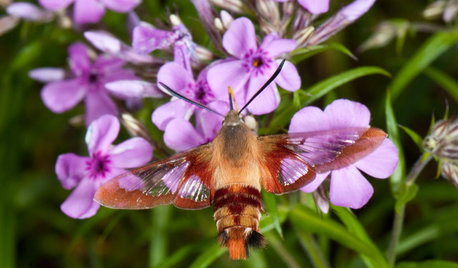
    The pollinator situation in my NH garden is looking better. Bumble bees and what might be honey bees are very busy in borage and calendula plants that border one veggie bed. I'm starting to see some butterflies and moths including what might be a hummingbird moth or something similar. A neighbor down the road has what looks like bee hives in the yard but I don't know if they are active or not.

  • 10 years ago
    last modified: 10 years ago

    Not a big improvement here. And we have flowers blooming. Butterfly bushes, sunflowers and lots of herbs that I allow to flower for pollinators - chervil, oregano, thyme, lavender. It seems so odd to see all these blooming plants with a handful of pollinators and that's it. I allowed a lot of Borage to reseed this year and those flowers normally would be covered with pollinators, but not this year. I did see one Hummingbird moth on the Butterfly Bush and one Monarch, one day. Very eerie.

  • 10 years ago

    I hope it's the drought that is causing less pollinators and not something else. Our house is set up with the driveway along the south side that we use the front yard all the time and hardly ever use the back yard so the back yard is only mowed once a year. Recently someone complained that wild turkeys keep scratching up their garden. The wild turkeys that come through our yard usually stay in the back yard where they peck away at the grasses and who knows what bugs that are out there. It's the small birds who spend time in the front yard swooping after bugs and perching on the bean trellises. My thyme however seems to be attracting some kind of fly and not bees.