Software
Houzz Logo Print
m_meimani

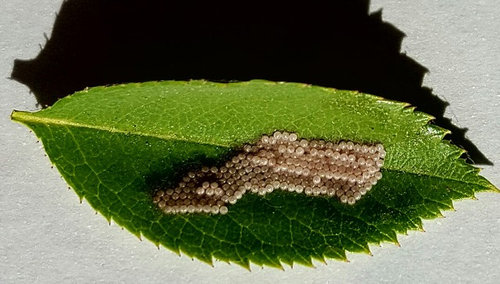
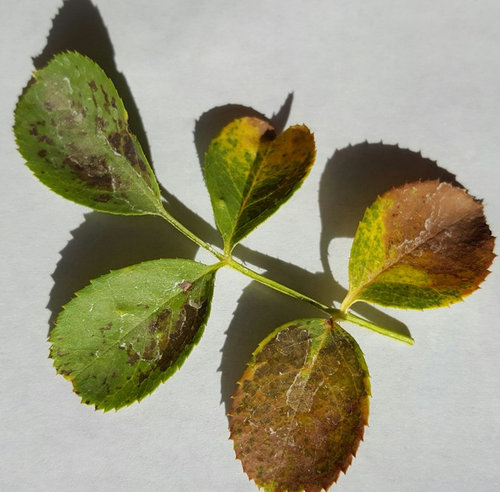
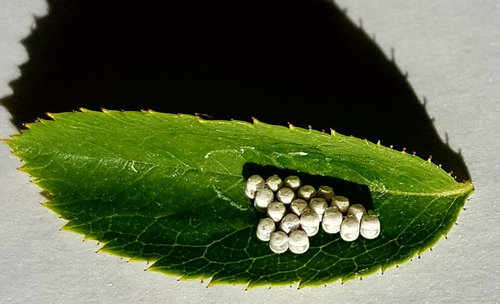
Can you identify this?!

We have 23 rose bushes (David Austin Lady of Shalott) and a few of them were recently infected with what u can see in pictures. Can u please tell me what's happening with our roses, and how to treat them. We prefer organic methods but if there is no way to cure these desease we would use systemic methods too. Please help.

Comments (6)

  • 10 years ago
    last modified: 10 years ago

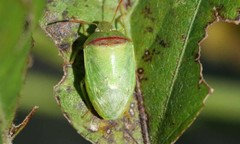
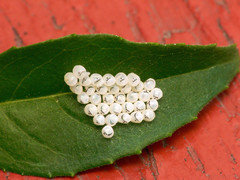
    Hi meimani: Those look like stink-bug or more likely caterpillar eggs, some pics. from the Internet: The first is entitled "stink bug damage on soy bean leaves"

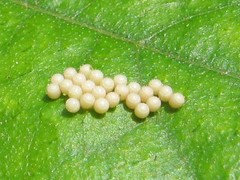
    Second pic. is stink bug egg on leaves:

    I googled "eggs on leaves" and caterpillar-eggs also look similar.


    From Wikipedia: "The stink bug, or Brown Marmorated Stink Bug, The stink bug gets its name from the smell that has been likened to smelly socks, that is released when the bug is crushed. It is considered to be an agricultural pest, causing damage to a variety of orchard fruits. It poses severe agricultural problems in seven states and is a nuisance in nineteen others."

    A stronger possibility is caterpillar eggs on roses: "Fruittree leafrollers (Archips argyrospila) are small, semi-opaque green caterpillars with black heads that may hide inside folded-over leaves as they actively feed. They prefer tender new leaves, but will expand to older leaves if populations are large and young leaves scarce. Fruittree leafrollers appear from March to mid-May, then feed for about 30 days before pupating for 8 to 11 days. They mate and lay eggs furiously the week after hatching, then die. Eggs will remain on roses until larvae emerge in the spring."

    http://homeguides.sfgate.com/caterpillars-roses-62823.html

    *** From Straw: I would STOP ALL CHEMICAL FERTILIZERS, that's a sure way to attract caterpillars. In my 34 years of growing tomato and roses, the only time I got giant hookworms on my tomato was when I used chemical fertilizer NPK 10-10-10 .. that's 2 years of worms versus 32 years of zero worms on tomato (without chemicals).

    Nitrogen fertilizer attract pest, fast-growth of foliage means softer leaves for insects to devour. The brown-leaves look like fertilizer burn in hot & dry weather.

    I have Lady of Shalott as own-root, it has multiflora-parentage and VERY SENSITIVE to salt. For that reason I don't use chemical fertilizer on it, only alfalfa pellets. My Lady of Shalott has a higher need for water than normal, lower leaves turn brown when it's hot & dry. The above link, also have guidelines on how to stop caterpillars on roses:

    http://homeguides.sfgate.com/caterpillars-roses-62823.html

    " If leafrollers or tent caterpillars are your problem, you can clip the unsightly nests from your bushes if they aren't extensive.

    Caterpillar Sprays

    Broad-spectrum insecticides are less effective than sprays specifically designed for caterpillars and may kill beneficial insects that would otherwise prey or parasitize these pests. Bacillus thuringiensis is a commercially available soil bacteria that produces endotoxins that destroy the gut wall in caterpillars, grubs and maggots, and is safe for honeybees, humans and the environment. Spinosad, a nervous system poison, may be used for caterpillars with caution, since it is dangerous to bees until it has dried. Wait until dusk to apply spinosad, when most foraging bees have returned to the hive."

  • 10 years ago
    last modified: 10 years ago

    Meimani: You have my deepest sympathy. Lady of Shalott is the most difficult rose I had ever grown, out of the 100+ varieties that I grew for past decades. That rose has multiflora parentage which likes tons of rain, dislike salt in chemical fertilizer, and get brown & yellow lower leaves in hot & dry weather.

    Lady of Shalott had brownish & yellow leaves in perfect potting soil, so I moved it to a well-watered spot (next to rain-barrel) .. gave me 2 stingy blooms, but broke out in blackspot. So I moved it to a drier & loamy spot, and give it rain-water daily. If I give it alkaline tap water, leaves become pale.

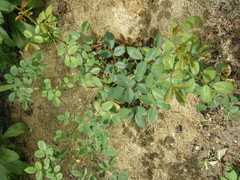
    Below is the best I can do with Lady of Shalott, pic. taken today, July 15. It's a tiny own-root bought mid-May. This rose demands constant water and doesn't like chemical fertilizer. I fertilize it with alfalfa pellets & red-lava-rock.

    To help solving the solving the problem, it would help me to know what planting zone you are in, and what rootstock are your roses grafted on, also annual rainfall & type of soil. Austin roses from David Austin are grafted on Dr. Huey, unless bought as "own-root". The type of soil (alkaline or acidic), and one's average rainfall (dry or lots of rain) can influence the solution.

  • 10 years ago
    last modified: 10 years ago

    Straw

    That is a nice picture. I like that mulch it looks good. Is that the alfalfa mulch?

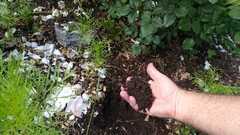
    My 5 Austins are healthy too. With compost and ground cover plants as mulch.

    I feed the Birds close to my roses. There are no disorder of any kind in my garden.

  • 10 years ago

    Sam: The mulch I used around my Lady of Shalott is free grass-clippings (collected from neighbors). Your compost looks nice and fluffy.

    Meimani: David Austin website lists Lady of Shalott in the partial shade category, which translates to 4 to 5 hours of sun as recommended. Lady of Shalott has 3 drawbacks: 1) multiflora-parentage, which prefers loamy & acidic soil, and doesn't like salt 2) orange-color roses prefer partial shade, like my orange Pat Austin fried in full-sun, and I had to move to 4 hours of morning sun. 3) Being an Austin rose, it's bred in foggy & rainy England .. and hot & dry climate isn't suitable.

  • 10 years ago
    last modified: 10 years ago

    meimani: Your words and gorgeous pic. of Lady Shallot lifted me up from my despair .. do I regret buying that own-root rose !! David Austin catalog is misleading, one year I bought Queen of Sweden just because the 2011 catalog says "almost thornless" .. well it has large thorns, but a bit further spaced.

    Own-root Lady of shallot is cursed with blackspot here, besides being stingy. I already moved it twice, so I post-pone until next year. Will apply Azomite, that helped to stop blackspot on Dee-lish rose in a pot. THANK YOU for sharing your experience, that helped me a lot.