

Citristrip
I've been experimenting with this to strip window trim. The stuff works great getting stuff off even vertical and upside-down horizontal surfaces (like along the top of the window frame).
However cleanup is a totally different matter.
First I used denatured alcohol and that did clean up the citristrip but left stringy white bits of latex paint all through the brush. THAT cleaned up ok with Dawn and water.
After calling the manufacturer (because there are no clean up instructions on the container) I switched to mineral spirits for the next round. They guy was pretty snotty about it, even though they do not give you any clean up instructions, just a recomendation to remove residue on your stripping surface with mineral spirits.
OK fine, I used the mineral spirits. This caused the citristrip to ball up into gooey plastic-y globs. It cleaned NOTHING. The brush is ruined and now I have about 3 inches of mineral spirits in the bottom of a quart size paint can.
What the heck do I do with this stuff now? I guess let the brush dry in an empty can (waste of a can while that is going on, but how else to insure no fire due to possible spontaneous combustion) - but then what about the used mineral spirits sitting in that can?
Possibly causing the citristrip to glob up like that has some positive effect when you're trying to remove remnants of paint after stripping, I don't know - I'm not sure I want to try it.
What has been your experience with this stuff?
For sure I'm switching back to the denatured alcohol to clean out the can used for holding the stuff and any brushes I use. (By the way, troweling this stuff on with a putty knife works really well on the tops of horizontal surfaces and even the verticals).
I've also seen multiple recommendations to cover the stuff with plastic overnight to keep it from drying out. I quickly noticed, however (not terribly surprised either) that it MELTS HOLES in the plastic wrap if its still wet when you try to cover it. So I'm not sure what those guys were thinking or what kind of plastic they were using.
Wrapping a brush you used in plastic has also been suggested and after I saw what it did to the plastic wrap on the trim, I'll not be trying that either, LOL!
Possibly they waited until the top was dry to the touch and THEN wrapped, but that doesn't help keeping a brush fresh for the next day at all, and it doesn't seem it would be that useful for keeping it from drying out on the stripping surface either if you have to wait until it is at least partly dry to do that.
Also how can I dispose of the stripped paint residue? I've been letting it dry out in a can in the middle of the floor in the empty garage in case of spontaneous combustion. Once its dry can I just toss it in the trash? How dry is dry enough?
Comments (7)
 10 years ago
Ok, use chip brushes for applying the stripper. I get mine at a local dollar store. Or at a hardware/home improvement store. No real reason to save brushes.
Example of a chip brush
The Citristrip website has as Step 5 the following step:Step 5: Wipe Away Residue
By now, you should be seeing the fresh, clean surface emerging from
beneath all that old finish. Use a clean abrasive pad dipped in
Citristrip® Paint Stripper After Wash or Klean-Strip® Odorless Mineral
Spirits to loosen remaining stubborn bits of paint. When the wood looks
clear of all finish, clean the surface of all residue with soft cloths
dipped in Citristrip® Paint Stripper After Wash. The surface should be
completely clean and dry before refinishing.After each work session, place all rags, applicators, and old-finish
residue in a well-ventilated area. Allow liquid to evaporate and residue
to dry outdoors before disposal in accordance with federal, state and
local regulations.
Most state/fed regs. (Calif. is probably different) say the trash is fine for dried paint/stripper. That is dry to the touch.I've used Saran wrap with no problems. But, that was a long time ago(15+ years).
Related Professionals
DeRidder Cabinets & Cabinetry · Altoona Cabinets & Cabinetry · Los Angeles Cabinets & Cabinetry · Magog Cabinets & Cabinetry · Selma Carpenters · Bowling Green Carpenters · Florence Carpenters · Hartford Carpenters · Waterbury Carpenters · Newburyport Carpenters · Baltimore Flooring Contractors · McComb Flooring Contractors · Beaumont Flooring Contractors · Lancaster Flooring Contractors · Modesto Flooring ContractorsPyewacket
Original Author10 years agolast modified: 10 years agoThanks, but I don't throw things away when they are still useful. I'll stick to the denatured alcohol followed up with Dawn & water to clean the brush. I do like troweling the stuff on, but that doesn't work for all surfaces, particularly the quarter round.
I used restaurant grade plastic wrap from Costco and it melted. Perhaps Citristrip has changed in the last few years?
I guess I could give it one more shot and try grocery bags and see if it melts those. But honestly, the stuff I didn't cover at all was tons easier to strip and work with than the stuff that was covered. I'm not sure there's any real advantage to covering the stuff up. The covered stuff was much messier and did not bubble up and separate cleanly from the wood at all, like the uncovered portions of trim did.
I am at this point very skeptical of using mineral spirits at all if its going to come into contact with the Citristrip. I may have to revert to "normal" strippers to get the last of the paint off.
What about clean-up of the residue on the wood surface? I mean aside from their proprietary "afterwash" which our local hardware stores do not carry.
- 10 years ago
Handymac, that's exactly the brush I use. I did 4 stripping projects 2 years ago, and used the same brush for all of them - just put the whole brush in a zip-lock bag between uses. I tossed it at the end of the summer - but the bristles had been beat up enough by the end that it would not have paid to try to clean it anyway. While I diligently clean expensive paint brushes, disposable applicators do serve a purpose.
I use a plastic scraper to remove the majority of the Citristrip/paint sludge - I have a cardboard box handy, and wipe off the scraper on the edge of the box. I work in the garage or driveway, and use water to wash off the residue, with a plastic scrubby or plastic-bristled brush, depending on the grain of the wood. Of course water soaks into the grain, so I have a lot of towels handy to dry off the wood as much as possible after it's scrubbed clean.
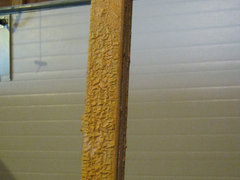
I have always covered my projects with plastic (even the trim on around the garage door). Spots that do get air and dry out can require a second application (depend on the number of layers). Here is a table leg, just after I removed the plastic - the paint was so loose that it came off with the plastic.
- 10 years ago
For projects like that, I buy paint brushes from the local dollar stores and toss them after use. Not worth the hassle to try and clean the brushes. Save the good brushes for the painting.
 10 years ago
Blue Bear makes a cleaner/degreaser that they recommend using after stripping with their soy-based paint remover. It's not specifically for Citristrip but might be worth a try if you can find some locally. It's relatively benign compared to some of the stinky super-toxic solvents out there.
- 10 years agolast modified: 10 years ago
(after the majority of the old paint and citri strip have been removed with a plastic scraper)
I have a mostly full container of the citri strip after wash. You can have it if you like.
Personally I didn't like it. It left the wood feeling really greasy.
I much prefer using odorless mineral spirits. I use a 3M white scrub pad to clean the wood as much as possible. And I have bucket of clean water to rinse the pad in. And then I scrub with some fresh mineral spirits and rinse some more until the surface is satisfactorily cleaned.
Even though more expensive, I prefer the citri strip in an aerosol can. Much quicker and easier to apply nice and thick so it doesn't dry out. I feel if the coat of citri strip is thick enough, it does not need to be covered because that stuff stays wet for a long time.
And you are correct, it does work better if uncovered. Covering it somehow prevents the paint from lifting from the surface and you have instead a gooey mess.


AnnKH