Software
Houzz Logo Print
topthumb

Wilting and Yellow

10 years ago
last modified: 10 years ago
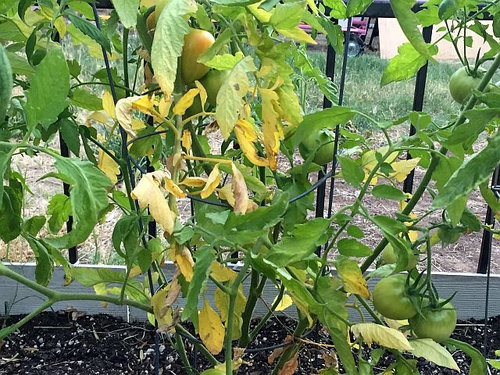
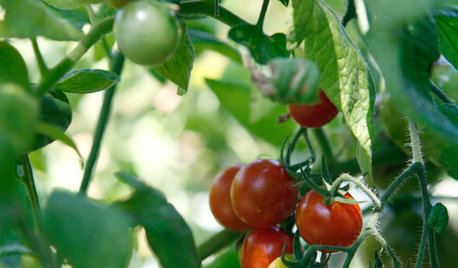
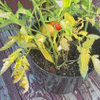
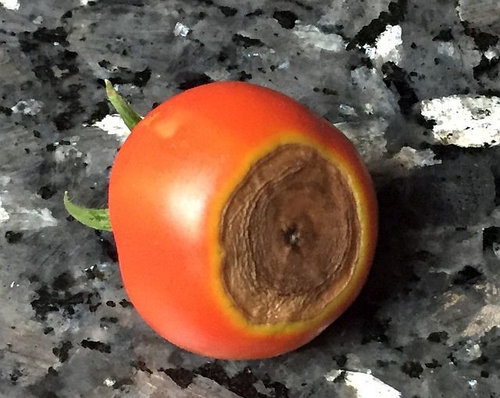
So all my tomato plants have been doing real good and supplying enough fruit to be able to give some away but just recently in the past week I've noticed that the leaves are really wilting and turning yellow plus I found one tomato that had end rot which is a first. I tested the soil and everything seems to be in order except the water is on the low moist side. It has been hot here and the temps for the upcoming week are going to be in the 100's. Any advice on what to do or is it just the heat? Here are a couple pics.


Comments (39)

  • 10 years ago

    How are you fertilizing your plants?

  • 10 years ago
    last modified: 10 years ago
    In the beginning I had to use some nitrogen because it was low but now I just use some Miracle Grow every two weeks which seems to have been working until now. I apply it by just pouring the mixture onto the soil.

  • 10 years ago

    The yellowing , in container, at this time of the year is normal. I would just clean them out. Container plants need more frequent fertilizing at reduced strength. ( 1/3 strength ). This is because frequent watering can wash and leach out some of the nutrients.

    The tomato with BER, is probably due to inconsistent soil moisture level . If it is a plum variety the it could varietal related issue.. Calcium deficiency is also a cause but most tomato fertilizers have some calcium in it. Read the label.


    Furthermore, To keep moisture level more even, I would add some more soil and then mulch it with small pine bark nuggets or whatever is locally available.


    Sey


  • 10 years ago

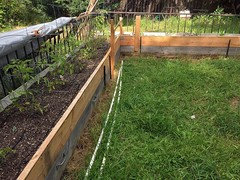
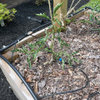
    Well, they are in a raised bed with about 20" high of soil. They are watered about twice a week by 2gal/hr drippers for an hour. This particular tomato is an Early Girl and is the only one that I have seen with BER. I was thinking about adding some mulch to the top of the soil just to keep in the moisture a bit better during these hot days. Here's a pic of the raised bed to give you an idea. This pic was taken early May.


  • 10 years ago

    Are you using general Miracle Grow? Or Miracle Grow specifically for tomatoes?

  • 10 years ago

    Actually, BER is also seen when the soil is over-nitrogenated. Nitrogen ties up calcium. Frequent fertilization with MG could do that. That is you may have over-compensated on your nitrogen.

  • 10 years ago

    It's MG for tomatoes. The nitrogen I used when I first planted them because when I tested the soil there was no nitrogen present. Now what may have happened is the soil that I used was a garden mixture with 50% sawdust and what I've been told here in another thread is that it takes awhile for the sawdust to break down but when it does it creates nitrogen which may have now made it too much. I must say though that so far this season I have had the best crop of tomatoes in the 14 years I've lived here. I'd still like to find out what is causing this though just for future reference. Thanks for all the thoughts so far.

  • 10 years ago
    last modified: 10 years ago

    I'm wondering if you're not watering too much. I run my 2g/hour drips twice a week for a half an hour. My raised beds very similar to yours, except mine look to be about twice as wide. The water I supply through irrigation is pretty much the only water the plants get from like
    Feb-Nov as it really doesn't rain here at all in the summer. It also probably gets a lot hotter here for longer periods. Don't know what part of OR you're in (east or west), but especially in western OR, it seems like an awful lot of water to me.

    Just another thought/possibility.

  • 10 years ago

    50% sawdust is a significant fact. That's a lot of sawdust. And I doubt that it's responsible for excessive nitrogen, as even in a compost pile, sawdust takes about a year to break down to the point where it stops robbing nitrogen. I would suspect that that much sawdust is causing a medium that drains really quickly, resulting in uneven moisture levels, especially in a raised bed that is as high as yours. I think mulch will help a lot with the BER. Do you check moisture levels in the soil frequently? In excessive heat in a 50% sawdust mix, you may actually need to water more frequently.

  • 10 years ago

    Humsi, I'm in S. Oregon just 30 north of the Cali border. We've been in the 90's basically for about 3 weeks and starting tomorrow will be in the triple digits and like you, we hardly get any rain here during the summer. gorbelly, I check it about once a week down at root level once a week or more if I think it needs to be checked and today was the first time it was on the low side of moist.

  • 10 years ago

    BER can be caused by too much alkaline in the soil, add some watered down vinegar.

  • 10 years ago

    topthumb, maybe Humsi is right then, and you're watering too much. My instinct is to think that that much sawdust in the mix would be one of the few instances when one might want to water a smaller amount more frequently. But perhaps I'm misunderstanding how old the sawdust in the mix is or how quickly it drains.

  • 10 years ago

    Check the pH then?, And find an alternative way to the fix the pH

  • 10 years ago

    My bet is overwatering, which has slowed root growth or even caused a root disease. I see no foliar disease on those yellow leaves.

  • 10 years ago

    The pH is OK, maybe a bit on the low side with a reading of about 5.9. I checked the soil with a soil test kit I have plus a meter that tells you the water content and also pH. As far as drainage goes, I think it has pretty good drainage the way I set up the beds but it could be retaining water. The meter I use has probes about 8" so that's as deep as I can check unless I dig up some dirt with a possibility of hitting the roots because of the drip system, it only waters at the base of the plant. I do have enough plants that I could possibly try one and if it kills it I will not miss much since I have 8 plants and way too many tomatoes.

  • 10 years ago

    BER is an issue when it is chronic. If you just see BER on one fruit, which happens occasionally for some reason, it isn't an indicator of any specific problem. Is the problem chronic?

    Lots of yellow leaves are a potentially more serious problem. If the huge amount of sawdust in the bed is recent, it will certainly be eating all your soil nitrogen. If the nitrogen was low when the tomatoes were planted because of still-composting sawdust, it is assuredly still low. As noted, it'll take a year for sawdust to properly compost. You say you apply MG now and it seemed to be working. As the plants get larger and the root system expands, it's going to be a lot harder to nitrogenate the larger soil area that they cover.

  • 10 years ago

    I may just have to wait until next year and mix up the soil before next planting season.

  • 10 years ago
    last modified: 10 years ago

    If you could stand to possibly lose one (although I doubt you will, it's very easy to see when tomatoes need water), I would really experiment with watering more on some and less on others. It would be an easier test than some of the pH/soil changes, and easier to fix if it does end up being the problem.

  • 10 years ago

    What I'll do is continue to water what I think is right except for one and I'll water it less and see what happens. I'll pick the one that had just the one BER.

  • 10 years ago

    daninthedirt makes a good point. If it's just one fruit here and there, that can happen even to the happiest plants. And if it's a variety that is prone to it, semi-chronic BER is possible even with great conditions and practices (however, Early Girl is not one of those varieties).

    Re: the nitrogen issue-- if there's a way to add dilute fertilizer to the drip irrigation so that you're always watering with very dilute fertilizer, that might be the way to go?

  • 10 years ago

    'As far as drainage goes, I think it has pretty good drainage the way I set up the beds but it could be retaining water. The meter I use has probes about 8" ...'

    Why not get your hands in that lovely raised bed (very impressive. Did you build it?) and see what is going on? There is a lot of space to dig around and have a look, between those plants. Then you can venture closer. See what your hands find.

    I agree that 50% sawdust is a lot of sawdust. Is it tying up nitrogen?

    To me, the plants look a little spindly. Maybe they are lacking nitrogen.

  • 10 years ago

    Blossom end rot is caused by calcium deficiency. A calcium deficiency can be caused by uneven watering.

    But the main thing is to look. Feel. Investigate. We don't know from here what is going on in that there bed.

  • 10 years ago

    topthumb: As far as drainage goes, I think it has pretty good drainage the way I set up the beds but it could be retaining water.

    My concern was less that you are retaining water than that a mix that is 50% sawdust may drain TOO well. Excessively well draining mediums need a different watering strategy--more frequent, less deep, as deep watering just ends up running off. I think you're going to have to play with things and experiment to figure out what works in your setup.

  • 10 years ago
    last modified: 10 years ago

    tete_a_tete, I can do that and see what I find.

    gorbelly, you may be right on too good of drainage too. As soon as the temp gets down below 90 or so I'll see if I can go digging a little.

    I think I have things mixed up on the sawdust %, here is what the mixture I bought says: "Topsoil Plus 50% Topsoil, Aged Sawdust & Composted Manure (AKA Gard-N-Grow)"

  • 10 years ago
    last modified: 10 years ago

    OK, that mix sounds much more reasonable. But it also complicates diagnosing your issues. Overwatering is a far more common problem than underwatering, so I would personally start by cutting back on the water a bit, per Humsi's advice. Overwatering could definitely cause yellowing leaves.

    As for the BER, I notice a lot of big tomatoes on that plant. BER will typically show when the tomato is a bit smaller, maybe 1/3 to 1/2 of its full size. So if those big green tomatoes don't have BER, it's unlikely that they will ever develop it. I think daninthedirt is right--looks like a transient issue, not a real problem.

  • 10 years ago
    last modified: 10 years ago

    That was a smaller tomato that had the BER. I just went out and dug down to root level next to the plant in question and it is bone dry plus the pH is about 7.1. I took a soil sample down to where I dug and am going to do a full soil test on everything. It will take a day or so for the water to clear up so I can test it but I'll let you know the outcome. Right now I just turned the drippers on for one hour and will see if the soil even gets damp down at root level. Depending on that outcome I will decide to water more or less.

  • 10 years ago

    Is the BER plant in a location that might get less water from the drippers?

    Re; pH
    7.1, while not ideal for tomatoes, isn't terrible and could be affected by the lime you just added, depending on what form you used. Also, if you are testing pH with one of the home kits designed for testing soil, you should be aware that those are notoriously inaccurate, as are those cheap meters you stick into the soil. Tomatoes like things in the 6.0-6.5 range, slightly acidic, but will tolerate some leeway either way. Rain can affect pH somewhat, but that's usually due to accumulated effects over very long timelines and is unlikely to make or break the pH in your garden soil, especially if there's sufficient organic matter in it. If you can't get information on the initial pH of your soil mix from the people you bought it from, I would suggest a soil test through your county extension, which will help you determine what's going on with nitrogen levels and other nutrient levels as well.

  • 10 years ago
    last modified: 10 years ago

    That plant gets just as much as the others do, I check to make sure the drippers are always working the way they should a couple times a week. Now the only thing is that this plant is at the end so maybe the others are getting water from the other drippers next to them, just a thought. They are also getting yellow leaves so that's probably not the case.

    Would those test kits be so inaccurate that if it says the nitrogen is almost 0 should I believe that or go with that the nitrogen is too low any way? Or any other reading in that scenario?

    Just tested the pH and got a reading between 6.0 and 6.5. The Nitrogen test will have to wait until tomorrow to let it settle. BTW, I turned the drippers on for another hour and the soil is still dry down at the roots so I just turned them on again for another hour and will check in the morning to see if water has made it down to the roots. Something is soaking it up.

  • 10 years ago

    Your pH reading 6 to 6.5 is well in the acceptable range for tomato.

    It is ok to do your own pH test. I bought some liguid pH tester from Petsmart some time ago and it works well. My resuslt were almost the same as soil test results.

    But for nutrients I would not trust any test kit or chipo pH testers.

    Sey

  • 10 years ago

    Those soil test kits are bad on pH as well, from what I understand. I know people who have test the same exact soil twice one after the other and gotten very different results, or who have sent in soil samples to a lab and received wildly different results.

    I don't know much about using test kits designed for aquariums or pools to test soil, but Sey and others say that works for them, so I would tend to think that those are OK. With the caveat that, if the soil test results were close to neutral, the fact that the lab test and the aquarium tests agreed might just be coincidence. Also, you have to make sure the water you use for testing is absolutely neutral pH.

  • 10 years ago

    I'm using distilled water so it should be good to go but you never know. I guess I could test it with my pool test kit.

  • 10 years ago
    last modified: 10 years ago

    'I just turned them on again for another hour and will check in the morning to see if water has made it down to the roots. Something is soaking it up.'

    I think that the amount of water delivered by the drippers is very low. You will need to experiment to see how long they need to be on.

    When your soil is thoroughly moist, I think your plants would love some blood and bone.

  • 10 years ago

    I guess I need to test how much is actually being delivered by those drippers. I never thought to test them because they seemed to be dripping a lot. I think I actually ran them for a total of 4 hours last night and when I checked it was in the low moist reading so the water finally did get down there. I'm still waiting for the water to clear up from my test of the soil for nitrogen, sometime later today it should be good to test then.

  • 10 years ago

    It's good you are so diligent.

    By the way, have you condidered (or even considered) growing a companion crop with your tomatoes? There is a lot of space in your planter box, or so it seems. But maybe the roots of the tomato plants are all over the shop.

    The nay sayers will have a fit, but plants like company, particularly of plants in different groups.

  • 10 years ago

    Well, I really don't need any more tomato plants, I already have enough to give away. Maybe next year I'll plant them a bit closer together which will give me more room for some green beans and cucumbers. Right now I only have one bean plant and it doesn't give me enough even for one meal at a time. We also have a lemon cucumber but so far we've only gotten two cukes from it but more are growing right now. For me to even consider beans again I would have to have at least 4 or 5 plants to yield enough at a time to eat. I just might forget about the beans next year and buy fresh ones from the market and plant more of the cukes.

  • 10 years ago

    OK, I just did a Nitrogen test on the soil and it is still zilch, depleted, nada! I don't know if now is a good time to even try to bring it up to what it is suppose to be or just wait until this crop is gone. BTW, I did a test on one of the drippers and ran it for one hour into a bucket and only got just under 1 gallon of water. Now these are suppose to be 2 gallon/hr drippers so I need to up my watering times by 2x at least. The plants are looking better since I had watered them for 4 hours a few days ago.

  • 10 years ago

    topthumb: OK, I just did a Nitrogen test on the soil and it is still zilch, depleted, nada!

    FYI, as many of us have mentioned already, those home test kits are notorious for being terrible. Here's an article in which someone compares home kit results to a real lab test, and they were unable to get the home test to register anything but (very incorrect) pH. I would not make any decisions based on the result of such a test. If you've been feeding Miracle Grow tomato formula, it's highly unlikely that your nitrogen level is literally zero.

  • 10 years ago

    I'm not going to do anything now because I am getting plenty of fruit and the plants seem to be doing a lot better since I gave them plenty of water. Before next season though I will take a soil sample and have it tested.