Software
Houzz Logo Print
caldwellhomegarden

Your Top 3 Most Hated Trees

Tell us Your top 3 most hated trees, whether they are native or invasive. Maybe you just think they are ugly, or maybe you have to deal with their downfalls. Here are mine:

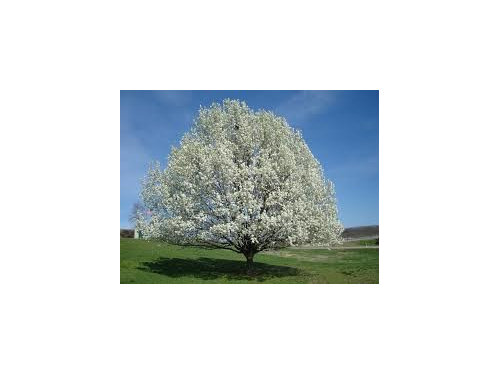
CALLERY PEAR:

Callery Pear isn't just invasive, it is a nuisance. The 'Bradford' cultivar (which is probably the most widely planted) splits and falls, destroying anything in it's path. When in bloom the terrible odor can be smelled anytime the wind blows, or when you are within about 80ft of one.

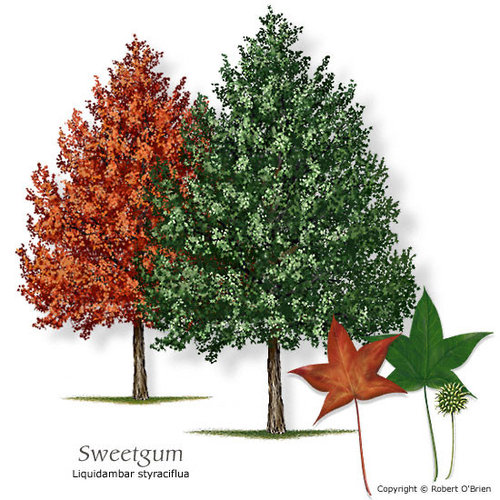
SWEETGUM:

Sweetgum is a beautiful tree when used in the right place (a forest). You cannot plant anything around them without taking out the upper roots, and they drop spiky seedballs that really hurt when they get stuck in your foot.

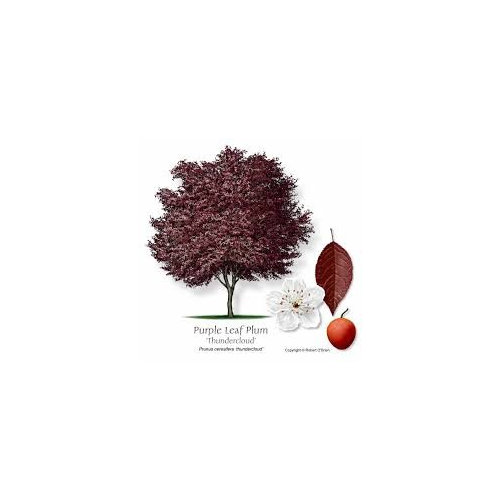
PURPLE LEAF PLUM:

I actually like the beautiful flowers, which are followed by unique dark red - purple foliage. The problem comes after 2 years when they get start defoliating, due to all of the diseases which they are prone to.

So, What are your most hated trees?

Comments (69)

  • PRO
    10 years ago

    I'd rather talk about the trees that I love. Which means most trees!

  • 10 years ago
    last modified: 10 years ago

    1) Mulberry

    2) Mulberry

    3) Mulberry

    Seedlings come up everywhere. Hard to pull once they get well rooted. Neighbor's tree came up along our fenceline and he has not done a thing about it. It's breaking the fence and shading my border, and stealing moisture from the ground.


  • 10 years ago

    Bradford Pear! When we bought our house the previous owners had planted one right smack dab in front of the front steps. Could not get it cut down fast enough.

    They also stink! when in bloom. A sour sickly smell that made me nauseous. UGH!

  • 10 years ago

    Red Horsechestnut thread from 2013. RH represents one of the worst trends we see, those who choose 10 days of "pretty" over substance. Must be a congenital defect, starting in another week or two most RHs look like someone took a blow torch to them.

  • 10 years ago

    I think one of the big problems with trees in general is like the kitten you fall in love with. People do not consider what the tree will be like in 20 years. The home you live in now will probably see 3 or 4 new owners by then but some one will have to correct your mistakes.

    I am responsible for the property of the church we go to. About 15 years ago someone planted two different magnolias in the beds around the church. Today both are beautiful well shaped trees...........however they are both going to have to be cut down, as they are too close to the building. Same for a small variety of crepe myrtle that was planted at the same time. This small variety of Crepe Myrtle is about 30' high and also too close to the building.

    Before you plant any thing you must consider what it will be in 20 years. A tree lives in tree time, not human time, or you do not need to worry about trimming to shape a tree that is less that an inch in diameter. You do that several years later.

    We have a 3/4 acre lot. Some people question when I say it is nearly fully planted when they look at the little trees that are scattered around the lot. However in 20 years those trees will have canopies that are 20 to 60' feet in diameter, and the lot will look quite full at that time.

  • 10 years ago
    last modified: 10 years ago

    pakersuga, I guess I'm lucky that my Chinese elm has no other around -- hundreds of seeds but apparently none viable. It's actually one of my favorites and at least here is always densely leafed.

    Don't really "hate" any tree/shrub -- they're just trying to survive. But I do find all the Siberian elm, black walnut, black cherry and Japanese honeysuckle seedlings annoying.

  • 10 years ago

    1: Norway spruce. They are too dominant here, shading away all competing trees, turning the soil into acid podzol. And they are ugly, with lots of dead branches still attached to the lower part of the trunk for decades. The needles are pointy and sharp, and obviously don't have any fall colors.

    2: Salix cinerea. This shrub is forming thickets everywhere, impossible to pass through. If you cut them down they come back with dozens of new trunks, making them even worse. At least spruces die when you cut them down, willows just come back even more aggressive.


    3: Spiraea x rosalba. Another shrub that just spreads and can't be stopped with less than digging all the roots up. They spread with root suckers several feet in every direction each year. If you cut them down in spring, they will stand six feet high and flower in august.


  • 10 years ago

    salix caprea - nasty, thuggish, graceless

    taxus baccata fastigiata - death - the gloomiest tree alive

    prunus pissardii/cerasifera nigra - even gloomier

  • 10 years ago

    krnuttle, dont cut down the magnolias! lol

  • 10 years ago

    Silver maples, I planted 2 of them and the trunks buckled and the trunk snapped down to the ground, I was going to have them in my yard, but they self-destructed before my eyes! That happened about 4 years ago. They were only about 5-6 inches in trunk diameter. My neighbors had larger ones planted there already, and their's are still there, dumping their branches every week when I mow, and sometimes I move them to those neighbors side, sometimes not. It's a pain to have to stop and hurl them over to the neighbors side, it's good that the branches are usually weak little twigs, but, there are plenty of 3inch wide branches falling on my side, and I am sick of dulling my blades on them, (mower). Okay, 1) Silver maple 2)Black Walnut 3)short lived oaks. That includes Sawtooth, Laurel, and Q.Nigra (southern black oak) the short lived oaks, because they will just be getting large and impressive, then will present with heartrot or other forms of decay, and you have to pay to get them chopped down, or be lucky that they fall down at the time that you are NOT mowing or walking beneath them. Don't care for Staghorn Sumac either.

  • 10 years ago

    Cercis canadensis (reseeding nightmare) and the bane of my existence right now is Robinia pseudoacacia 'Lacy Lady' aka 'Twisty Baby' locust. The rootstock went rogue and I have a black locust hellish fight going on right now.

  • 10 years ago

    Almost seems-from reading Huggorms occasional Norway spruce rants-that that tree is more successful over on these N. American shores than in Scandinavia. I wouldn't doubt it; As pine resin (learned member here) occasionally pointed out in past threads about this tree, the poorest genetic stock is what colonized the Scandinavian countries following the last wave of glaciation. To see better plants, one must look to Germany, Poland, and other points in eastern Europe apparently. And to that I will add, Wisconsin! One of the most imposing, healthy, and impressive tree types around. Nor do the calamities he ascribes to this species occur over here. Ever! I hav eyet to see one specimen-one!-come down in a storm or even lose a large branch. Simply does not happen.

    I've watched big old Norway spruce boughs move in the wind. It's amazing the way these big devils distribute that wind load-one limb rising with the wind while the next falls, and so on, all around the tree. An engineer could spend a lifetime trying to configure something like this, and probably fail. Easily one of the best trees in more northerly parts of the US.

  • 10 years ago

    tlbean2004(Z7) krnuttle, dont cut down the magnolias! lol

    I am open to suggestions to save the trees. However I see no other long term solutions.


  • 10 years ago

    I dislike trees w/ purple leaves for some reason. Canada red cherry..

  • 10 years ago

    Tom

    Growing up in New England I saw lots of old Norways, big things with massive trunks. But, they didn't age gracefully. Most of the old ones had dead tops, and the green parts were kinda thin. How old they were I have no idea, I'd guess at least a century, probably more, especially the ones on the grounds of old buildings, public parks, and cemeteries. They were very impressive trees in spite of that. The late Donald Wyman, of Arnold Arboretum, always said Norways didn't like the hot, dry summers of the east. Other than the ancient ones, Norways were the most green, vital, vigorous evergreens around, even moreso than the native white pine. It was very rare to see any storm damage, and then only the dead top.


    My dad told me that when he was in the Black Forest in Germany during the war, the spruces would be covered with snow, all the branches hanging against the trunks. Something would cause the snow to suddenly fall from the trees all at once, and the branches would spring back to normal position, as if a great weight had been lifted from them, and it was!

    I grow Norway spruce here in TN. They do very well for me, although they don't grow quit as fast as "up north". I'm happy with 18 inches per year. My oldest trees are showing the characteristic dangling branchlets and cone regularly, but I've not seen any volunteers. The only issue I have is that the trees look somewhat out of place, I'm not in the eastern mountains. Like you I'm of the opinion that the natural vegetation conveys a great sense of place. But it is neat to see a northern Norway spruce next to a southern Magnolia grandiflora.

  • 10 years ago

    krnuttle

    You've peaked my interest re the church and the magnolias. Care to post a little more info and maybe some pix? Maybe some of us here can come up with some suggestions so church and magnolias can live happily ever after.

  • 10 years ago
    last modified: 10 years ago

    And how about some alternatives to plant in place of these trees?

    Instead of Norway Maple or Silver Maple, plant Sugar Maple or Red Maple.

    Instead of Norway Spruce, plant Red Spruce (a great native tree that is bouncing back in areas like Massachusetts after decades of deforestation and decline)

    What would you guys sub out for some of the junk trees in this thread?

  • 10 years ago

    MULBERRY - there are 2 large ones that appear to have been intentionally planted (?!?!?) in my backyard by the previous owners. I want to cut them down yesterday, the spousal unit likes the larger one because it has a "good branch for a tire swing".

  • 10 years ago

    "good branch for a tire swing", a valid reason. My grandson keeps asking when I'm going to install his, and I've got trees up the, well you know...

  • 10 years ago

    Campanula UK Z8

    salix caprea - nasty, thuggish, graceless

    They are, somtimes. But they can also be very attractive, especially the foliage and the bark. They just need the right amount of shade to form a tree rather than a huge shrub, but still bright enough to have a lush canopy. IMHO one of the best salix.

  • PRO
    10 years ago

    I am surprised nobody has said chinese tallow, I heard these where invasive in some parts of the united states. I also think chinese tallow is useful in the landscape, it is unique with flowers, seeds, and great fall color (at least here in NC). I would like to see them used more.

  • 10 years ago

    Kentrees-agreed, not every large old NS is in great shape. Spruceman, another member here (who happens to not visit often lately) and I spent countless threads going over where some really good ones are. For some reason, the village of Cedarburg in SE Wisconsin, but just north of Milwaukee, is an area holding a vast number of specimens which are both very large and still vigorous. One of my sons lives there and he and I have oft marveled at some of the very nice ones in and around that community.

    Another thing that was once reported here by Spruceman-and we've discussed this more fully at ENTS, another tree board-is the very wide genetic range of NS, apparently, one of the largest, if not the largest genomes currently known of. Far larger than the human one, for one example. In any case, this points to the wide variability of the species and could account for the differences in health, vigor and so on that one sees out in the field.

    I've said it before and I'll say it again: I propose we anoint Norway spruce with honorary native status, lol!

  • 10 years ago

    Tom

    I well remember reading the extensive conversations between you and Spruceman, very enlightening and enjoyable. That was back before I stuck my toe in the 'posting pool'. I hope nothing has happened to him, he was a prolific contributor.

    Apparently in Europe the various ecotypes of Picea abies have been ID'd and are available as site indices and climate dictate. I know on the relatively few individuals I have there is a large variation in growth habits, rates, needle color and length, etc. Whether this will hold until maturity I don't know. I know that various traits are seen in immature baldcypress, but at maturity they all seem homogenous. Anyway, I won't live anywhere near long enough to see it in my trees. The trees I grew up with in New England all seemed uniform, I suppose the local nurseries were using a common seed source.

    I once read that Norway spruce was the benchmark upon which all other spruces were judged, in the east. Out west, it would have to contend with Sitka lol.


  • 10 years ago

    no one mentioned buckthorn?

  • 10 years ago
    last modified: 10 years ago

    Campanula: Taxus baccata fastigiata ("death - the gloomiest tree alive") also happens to be a "Great Plant Pick" in the Pacific Northwest region ;)

    http://www.greatplantpicks.org/plantlists/view/1541

    Agree with your "gloomy" assessment of purple leaf plum (Prunus cerasifera nigra).

  • 10 years ago

    Thorny locust. Why, why, why is there such a tree? What was He thinking?

    Sweetgum. Ever have 2 fully grown prolific sweet gums in your front yard with 2 young boys who like to hurl the balls at each other?

    Silver maple. Just when it's starting to look attractive, it self destructs.

  • 10 years ago

    littlebug - re: "What was He thinking?" Per Wikipedia, "(Honeylocust) thorns are thought to have evolved to protect the trees from browsing Pleistocene megafauna which may also have been involved in seed dispersal."

  • 10 years ago


    Anything with maroon foliage such as Redbud here. Also purpleleaf plums and 'Crimson King' Norway maples. These plants start out maroon but become green/bronze as the season progresses. We see this stuff around the MacMansions, the owners have money but lack taste.

  • 10 years ago

    Tom, Cedarburg is my backyard. Funny how something can be right under your nose and you don't notice it. The next time we have a windy day, going to find some NS and watch them sway with the breeze.

    Willows, neighbor planted five of them on property line. Killed my beautiful, tall, privacy-giving privet hedge. Not to metion all the limbs that landed in our yard after every minor breeze blew thru!

  • 10 years ago

    Deb, it's all over that part of the state....Grafton, Mequon, Cedarburg....the whole area, and on up into Washington County as well. Something about the confluence of heavy German immigration (bringing many of these trees to plant), soils, climate, etc. have co-conspired to produce an exceptional number of truly large and healthy specimens. Of course, as a commonly-planted species, one can see them anywhere in the state too, including some very nice ones way up in NW Wisconsin, where our dear governor wanted to site this planet's largest open-pit iron ore mine. Some real big ones in the woods near Hurley/Montreal WI.

    I'm a fanatic-what can I say? We've probably planted close to 5000 Norway spruce between our forestry land up north and still more at the kid's place in Cedarburg!

    Agree in general with the "dulling" effect of too many so-called purple-leaved cultivars on the landscape, yet as I've reported here recently, the 'Crimson King'-style Norway maples actually look pretty good. Much better-to my eyes-than the Schweidler types, with their dark, almost brown bronzey foliage. The CC's actually stay purple, at least in this region.

  • 10 years ago

    I'm a fanatic-what can I say? We've probably planted close to 5000
    Norway spruce between our forestry land up north and still more at the
    kid's place in Cedarburg!

    I have probably killed close to 5000 Norway spruce by now, lol. Still many left in the far northern end of my property though. Work goes on. I'm kind of fanatic too, I guess. By the way, you will soon have to rename that place to Spruceburg!

  • 10 years ago

    Haha hug, you're the anti-me! Together, we cancel each other out. BTW, Cedarburg is aptly named although you'd never know it today. For evidence of the vast stands of swamp conifers that would have once existed there, one would need to investigate old barns and sheds, since the "cedar"-actually Thuja occidentalis and tamarack were readily used by early farmers for their structures. Then, most of the land where these trees would have grown was ditched and drained, and now supports corn and soybeans and alfalfa. Same pattern repeated itself all over this state. People coming up today will largely be clueless as to what once was. As if yeah.....that place was always a farm field!

    Also of note, where my son's land is in Cedarburg-enormous paper birch in his woods. I've heard college-educated people say that birch-they don't say what kind of birch-doesn't grow around there. So much nonsense, it gets hard to refute all the BS after a while. And these aren't man-planted items, but holdovers from the original flora of the area.

  • 10 years ago

    KR, I would like to see a pic of the trees also.

  • 10 years ago

    I grew up near "Cedar Cove". Not sure what was there originally, but Eastern Red Cedar grows wild now, and Blue Atlas Cedar seems happy where it is planted. (Although on paper the area should be too cold).

    Norway Spruce does great and never has dead branches. We lost one to a hurricane but have four that have survived several hurricanes. I'm torn about planting it...some experts (not the state government) say it is an invasive species here.


    I have no problem with purple leaved trees...though my favorite are beech cultivars.

  • 10 years ago

    Littlebug, about those thorny Locust, I KNOW, I remember walking in the woods when I was a kid and getting a thorn up through my shoe and foot all the freakin time. I have a 30 year old Norway spruce, and it looks great, and has green cones on it, I have 4 more along the driveway that are likely about 10 years old, and they are close to my Southern Magnolia. I gotta get a pic.

  • 10 years ago
    last modified: 10 years ago

    Taxus baccata fastigiata may well be a great PNW plantpick, ArbourDave...but as far as I am concerned, these glum behemoths seem to infest all our urban cemeteries (and favourite dog walking haunts) and let me tell you - they have comprehensively eaten dozens of tennis balls - apparently, the collie's main purpose in life is to chase a ball on the end of a flinger and because it is flung by my unco-ordinated self, every bloody yew is hiding many, many of my balls in the drear impenetrable leafage.

    Huggorn - there's no accounting for taste - I normally love willows and grow many - from the small red-stemmed albas (Chermesina et al) green viminalis osiers and purple daphnoides, to the enormous golden weeping babylonica and, my urban favourite, the slightly tricky crack willow...but caprea is the most oafish, seeding ditch intruder and even flouts its unwelcome self around my allotment. I do have to agree that s.cinerea is a swine though.

  • 10 years ago

    Just butting in, I hate fastigiate trees. I realize there's a need for them sometimes, but, I would go with shrubs before fastigiates.

  • 10 years ago

    I mostly don't care for them either, Poaky. Like you say, there are times and situations, but even there, mostly I find that another tree type would have served better.

  • 10 years ago

    I like a lot of the fagistate oaks, they're a neat niche tree, but in general I think they're overused.

  • 10 years ago

    I have planted a row of Thujas, but they aren't growing very fast. I get along with the neighbor anyways. When busy we just ignore each other. I just like wide plants vs skinny and tall, I have an Eng. oak that is not fastigiate, but, is more upright growing. There is a variety native to the UK I saw in a book of mine that is like that more upright, but not fastigiate. If anyone really cares I could search my books for the name. Since my Q. Roburs acorns came from the UK, maybe it is related to the tree in my book. My other Q. Robur is the usually type. Sorry if I led the conversation astray but I am just going along with how the posts are rambling in subjects coming up etc.

  • 9 years ago

    I can't stand green ash trees. They were heavily planted in my city along with American elm. They look alright when they're young, but as they age they just get scraggly and thin, unlike the elms, which are beautiful, especially when they make the lovely tree tunnels. So glad DED hasn't reached here yet.

  • 9 years ago
    last modified: 9 years ago

    While this thread has been bumped, anyhow...

    Campanula: Taxus baccata fastigiata ("death - the gloomiest tree alive")

    These perceptions depend a lot of climate. Sorry, our beloved UK brethren...your COUNTRY being gloomy is part of the problem! Yearly hours of sun:

    Liverpool 1500

    London 1630

    Seattle 2169

    Syracuse, NY 2119 (upstate NY considered rather cloudy by CONUS standards)

    Baltimore 2580

    Los Angeles 3254

    In fact in my all-too-brief time in Mediterranean areas, like the outskirts of Barcelona, I thought dark evergreens have the opposite of a gloomy effect. When the sun is blazing down on rocky, dry hills, the green of a carob tree looks like an oasis. Same with the Q. agrifolia of Ventura Co. CA etc. etc. It would be a different kind of gloomy if those areas just looked like the surface of the moon.

  • 9 years ago

    Let's not forget : Balsam poplar (Populus balsamifera)

    Even where they grow good, the don't amount to anything. Extremely light wood that looks diseased when cross cut even in a healthy looking tree. Caterpillar bait. Like using news paper when burning for fire wood.

    I don't really hate them but when working in the woods, I'd cut them down so the regular poplars could take over. You could break off a branch in the winter and stick it into the ground and next spring it would leaf out and keep on growing.

  • 9 years ago

    The smell is why I planted balsam poplar. And yes, I just put some branches in the ground!

  • 9 years ago
    last modified: 9 years ago

    no offense intended huggorm. The only place I see them is out in the swamp, growing wild. I can give you a few next time you drop by. :)

  • 9 years ago

    I like the balsam poplar for its ability to fight reed canary grass and colonize new ground overtaken by that invasive grass. And the smell in the air....I somewhat agree Bill that they are not the most amazingly beautiful trees but I do appreciate them. Have quite a few on my land and as I said, they and they alone seem able to bust through an area long taken over by reed canary grass-Phalaris arundinacea-the single worst invasive plant species in Wisconsin-and colonize that area. Then later, cedar, pine and other good things can move in. But they'd never do it if the poplars didn't beat up that grass first.

  • 9 years ago
    last modified: 9 years ago

    Populus deltoides - very disease prone and falls apart like no other. And the seed is just ridiculous!

    Acer negundo - rarely do you see a nice looking specimen. An agressive plant with poor form and weak wood

    Prunus x cistena - All I have to say is that most perennials will outlive this commonly planted POS

    Fastigiate trees are a wonderful option where you need a vertical exclamation but don't want the shade....ie confier garden. Otherwise I think people dislike them as they aren't used properly. I see them used in the oddest locations quite often.

  • 9 years ago

    Sweet gum is my least favorite, but only because there are tons of them in my neighborhood planted as street trees, plus a huge old one just over the border in my neighbor's front yard. Along our dog walking circuit is a house where the balls cover the sidewalk and extend about 7-8 feet out into the street. It looks terrible and is a hazard for walkers. Most years I fill at least a half dozen paper yard bags with the balls from my front yard, which come down mostly in the winter but also year round.

    Other than that what bugs me most are the sorts of weak, fast-growing trees impatient people plant, like callery pear and silver maple. I'm always appalled by anyone who opts for one of these over a higher quality, slow-growing tree because they might move in five years and won't be able to enjoy it.


  • 9 years ago

    Its a travesty that I saw Ginkgo on this list! Its true the fruit is a pain (for some) and that many seed grown specimens can take on some not so desirable characteristics but many of the male cultivars are some of the most majestic specimens in the plant kingdom. Sorry I had to pick on that one!