Software
Houzz Logo Print
sherri1058

Risotto in the steam oven

10 years ago

Not sure this is the right place to post, but since I know some of you have steam ovens..... I generally make risotto the "old fashioned way", stirring, stirring, stirring on the cooktop. I've had some good success with the pressure cooker and now I see that making risotto in the steam oven is being touted. I'm all for making my life easy, but is it good / authentic?? Would love to hear from anyone that's tried it in the steam oven. Do you get that same creaminess? Or should I stick to the t&t?

Comments (14)

  • 10 years ago

    Just reading the instructions are a turn off to me. I've made plain brown rice in the steam oven. It comes out the same as on the stove or in a regular oven. You put in rice and water and it comes out cooked rice. It's a good method for giant batches, where the water distribution in a big pot might not be as even as doing it in a wide 2/3 sheet pan with the steam. For sure you can make arborio rice. The question is proper risotto.

    I've had really bad "risotto" at fine dining restaurants which had none of the hallmarks of a beautiful risotto. More overcooked soggy rice. I've also heard TV chefs call things made out of other grains "risotto" even though they don't shed starch like arborio and that other rice whose name I always forget.

    Real risotto can be made with just rice and water (though without at least a little salt it's not going to taste like much). Real risotto is about the starchy "broth" as much as the grains. How you can make that without stirring is beyond me. I haven't tried it, but I won't believe it if someone tells me it's true because there are so many things that are called "risotto" which are just rice in cream sauce. Perhaps I'd believe it if I ate it.

    Real risotto is dead easy to make. It doesn't need to be reinvented. Though I bet one of those battery powered automatic stirrers might work, so you could add the stock, give it a proper stir, then set the auto-stir to work until it was time for more liquid.

    If you have a steam oven recipe that can be made in a small batch, I'd be willing to try it for you, just to see. I could be wrong about the oven...but I won't believe it without proof.

    sherri1058 thanked plllog
  • 10 years ago

    I am not Italian by any mean, and have been subscribing to no stir risotto method even for stove top for a while. I forgot which Chef's recipe I read or watched that turned me onto no stir risotto.

    No stir mean, no stirring during most of the cooking, but once rice is just about done, then it is finished of with big knob of butter and good amount of stirring with fork to break down a bit of starch and cream it up.

    For this method, difference between pressure cooker, stovetop, and steam oven is just timing. Pressure cooker, it is 7 minutes. Stovetop it is around 13-14 minutes after liquid starts going in. Steam oven it is about the same as stove top, 13-14 minutes in side the oven at 100˚K plus heating time. If I am using steam oven, it starts out on the stove similar to Pressure cooker and stovetop method until the moment liquid is in, then it goes into steam oven.

    sherri1058 thanked Chanop
  • 10 years ago

    I have made Risotto in the steam oven a few times with fairly consistent results that I am able to achieve on a cooktop. I am by far not a 5 star Risotto chef but, I don't get complaints from from those that have consumed my results. As Chanop mentions I do the prep on the cooktop. I do find the risotto program does not totally incorporate all of the liquid so I finish it off on the cooktop for a few minutes and use that as an opportunity to add any last minute ingredients that the recipe calls for (butter, parm etc.). The one downside is that you lose I think some of the strength of your stock since it incorporates the water from the steam rather than all broth that you would add just using the cooktop so I would recommend strengthening your broth if possible. Give it a try and see how you like it!

    sherri1058 thanked Kim G
  • 10 years ago
    last modified: 10 years ago

    Thanks for your responses. I will likely give it a try. Thanks for the tip on strengthening the broth kimg1114, that makes sense. Plllog, I didn't have a specific recipe in mind, I had just seen it mentioned in various places including the Purcell Murray website and was curious whether it was worthwhile pursuing. OTOH, I guess I will never really know until I try.

    Chanop, thanks for laying out the differences between the 3 methods. As I said, I've had some good success with the pressure cooker. I think the secret there (at least for me) is to not just saute the rice, but to lightly toast it. It turns out really creamy and lovely. I may try that with steam oven method as well.

  • 10 years ago

    Do try it. You might like it fine.

    I generally trust Chanop, but cannot get behind the no stir risotto. If you have to put in butter, you don't have real risotto. That's not to say that I never add things like cream or parm or butter, but that's only AFTER the risotto is a proper risotto. Of course, I can't get behind calling anything made with cottage cheese and curly noodles "lasagna", either. I have nothing against a pasta bake, but don't call it "lasagna". :) Maybe I'm too picky. Though...if chefs are putting out no-stir risotto recipes, maybe that explains the crap I've seen at fine dining establishments where they should know how to make risotto properly....

    sherri1058 thanked plllog
  • 10 years ago
    last modified: 10 years ago

    Kenji wrote an interesting article that high light toasting and creaminess on serious eats as well as in his book, The food lab. His suggestion is to isolate starch initially by collection water/starch at pre-rinsing stage. Then do enough toasting to get nutty flavour, and re-incorporate back the starch water back into cooking.

    There are also some points about stirring vs no stirring in the article as well.

    I will give Kenji's idea a try next time.

    sherri1058 thanked Chanop
  • 10 years ago

    So true. In my case, my missus does not cook so, I keep sipping the wine while keeping preparing those last minutes things waiting for induction hob to beep in 7 minutes. May be it is enough time to churn a fresh butter out in food processor to be incorporate into risotto at the end ;-)

    sherri1058 thanked Chanop
  • 10 years ago

    Sherri, I am not an expert, but have done the full stir,, the Americas test kitchen 1 stir halfway through, then a final stir at the end, and in a steam oven, usingua Miele recipe, though it wasn't the US site, The steam oven is much less work, though not the same texture. BTW, the Miele recipe says put the stock in the pan with risotto, then cover with plastic wrap, so the steam does not get into the risotto

    sherri1058 thanked barryv_gw
  • 10 years ago

    Interesting article. (Kenji is always interesting!) I appreciated his pointing out the difference between arborio and carnaroli (the name I can never remember. Plus the Spanish one which I'll ignore because I've never seen it but I'll take his word about it). I didn't realize that the toothier risotto I've eaten was actually carnaroli. I get why he prefers it, wanting it to be more regular ricelike, but I much prefer the arborio for its creamier texture. When made correctly (BTW, I have often had it made correctly in fine restaurants which is why I order it, but I just get peeved when it's all wrong), arborio has substance, but not chew, so it's clouds of softness in the broth of shed starch. The risottos of carnaroli are fine, and were obviously made right, but the firmness prevents the transcendence that arborio gives.

    Had to laugh about the grandmothers requiring constant stirring. I've never had to constantly stir the risotto. If I need to work on something else, I do. I just pick up the spoon every so often and stir between adding liquid and stirring more. Without agitation the starch doesn't shed properly. You can use trickery to imitate the end product imperfectly, but stirring every couple of minutes just isn't that hard!

    See, at the end of his description of the old school method, Kenji says to add cream, butter or parm to halt cooking and add creaminess. WRONG. You put in something at the end to add flavor. Period. If you need it to make your texture right, you're doing it wrong. You can halt cooking by putting it in a cold bowl, but we like it piping hot and it's more about eating it than cooling it. :)

    I have no opinion about the heating of the stock. I've never used cooler than a warm room temp (over 70° F). I'd think that the effort you save from heating the stock would be found in a greater cook length on the rice while the pan reheats from the cold stock, but whatever. Maybe there is enough of a time savings there that it's worth it to him. It's the liquid with friction from stirring that makes the starch shed, and that the warm pan is for making the rice cook.

    I have no argument with his wider pan theory. I actually do that. The only reason for a tall risotto pot is a small stove with no more room to give over to just the rice. I still think you need to stir to get the broth right, and I can say from experience that adding too much stock at once interferes with this. It just makes it take longer--the water has to steam off before the rice pulls together enough to start abrading again. It seems to me that he's trying to divide the cook into cook rice first then abrade. It might work.

    I toast rice for paella, not risotto. I do not believe that the starch is all on the surface, because I've cooked arborio risotto down to nubbins so it was mostly broth with just some little rice hearts in it (maybe you can't do this with carnaroli?). More and more starch rubs off. Kenji's desire for toasty flavor in risotto, which is not traditional but is not a bad innovation, has led him to this make starch water first pursuit, but just looking at the picture of his finished dish proves that the starch to rice balance is "wrong". He calls it "creamy". I call it wet rice. NOT a quality risotto. It might be great tasting wet rice, but it's not the same thing at all. Especially with nuttiness and chew.

    Conclusion--you can make interesting rice dishes with arborio and carnaroli rice, taking advantage of their tendencies to release starch which are not really risottos.


    sherri1058 thanked plllog
  • 10 years ago

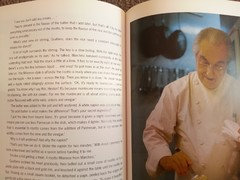
    I think I have found my first reference of no stirring risotto. It was from Heston's In search of perfection: Risotto. This is an excerpt from his book, page 156. Gualtiero Marchesi replied to Heston about stirring "A lot of myth surrounds the stirring. The key is a slow boiling. With the right heat, the rice will amalgamate on its own."

    sherri1058 thanked Chanop
  • 10 years ago

    So this is turning out to be more of a discussion than I originally anticipated.... although in retrospect, I'm not sure why I should be surprised! My friends from Italy add butter at the end of the cooking process, but did not tell me why. Frankly, it's not something that I care about.... if it makes it creamier or adds flavour, I'm not overly concerned. I just like the outcome. They also tell me that stirring constantly is not a requirement and is really not needed. That leads me to think there are many roads leading to Rome.... or should I say risotto? And perhaps just because "it's always done that way" doesn't mean that it needs to be.

  • 10 years ago

    You should try Ina Garten's risotto in the oven. After standing at the stove making traditional risotto for a dinner party, I opted for this method the next time around. Much less work and quite good.

    sherri1058 thanked Melissa Johnson
  • last year

    I have a Neff oven receipe for risotto in a full steam oven. The recipe says 600ml water on 100% steam for 25 minutes I used 500 chicken stock and it took at least 50 minutes and the rice was gluggy. After 25 the liuid was nothing like absorbed.