Software
Houzz Logo Print
nathan_lucas78

Need Assistance with Grass Identification

10 years ago
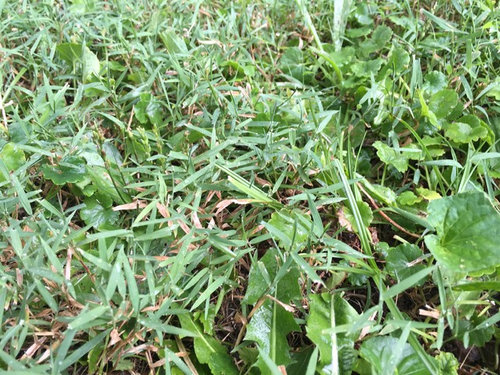
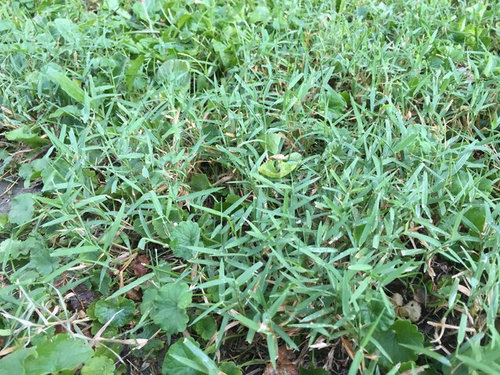
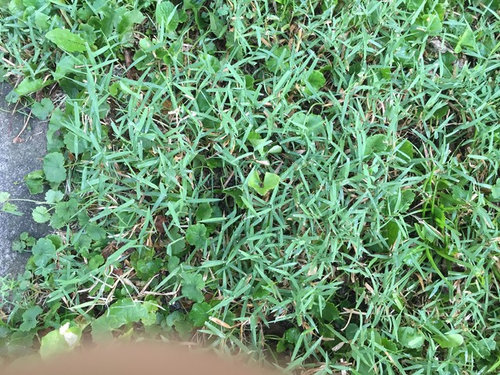
My wife and I are closing on a house in a few weeks, and this will be my first opportunity to really take care of a lawn. There is quite a bit of this grass (or weed?) growing on the lawn, and I want to start researching how to get rid of it and replace it with thicker grass that will make the lawn look more uniform and healthy. Each sheath has multiple blades that kind of alternate up the stalk (left, right, left, right). The individual blades are kind of "dainty" for lack of a better term. These are actually pictures of the same grass in the yard of the place I rent currently. As you can see in the pictures, there is also a lot of creeping charlie in the same area, if that gives any clues as to the grass type. The reason I want to get rid of it is that it doesn't grow very much in height, making it difficult to tell where I have already mowed. This also means that it doesn't give those nice, "freshly mowed lawn" lines that actually make mowing somewhat satisfying. I've looked at pictures online until my eyes were crossed, and haven't come across anything like it. The closest thing I could find picture-wise was "creeping bentgrass". But I don't think that's what this is. I've read that bentgrass is a cool-weather grass that browns out in the summer. It's August here in Central Indiana, and it has been an unusually hot summer, and it seems to be thriving. Any ideas on what this is?

Comments (17)

  • 10 years ago

    Looks like a bunch of crabgrass. I actually don't see any kind of turf grass anywhere.

  • 10 years ago

    Crabgrass was my initial thought as well. But all of the images I see of crabgrass look like it is taller/thicker than the surrounding turf grass. This seems to stay short and is finer than say, Kentucky Bluegrass, which seems to be the favorite for yards in my growing zone.

  • 10 years ago

    Also, Crabgrass looks like it grows in bunches, whereas this seems to be more like a carpet. Like it spreads via stolons rather than rooting.

  • 10 years ago

    Where are you located?

  • 10 years ago

    Indianapolis, IN

  • 10 years ago

    In pic 1 I see nutgrass (Lower right side), creeping Charlie, dandelion, and crabgrass. Can you get pictures of the actual property? Close up is great but I'd like to see a pic from across the street, too, to get an idea about how much property we're talking about.

    Do you want to have a lawn that everyone does a double take? Or do you just want to keep the mud off your shoes? or something in between?

    Is there much shade in the area?

  • 10 years ago

    We close on Friday, and I won't get a chance to get up there before then. Also haven't been there enough yet to gauge amount of shade. I would say shade in the morning and evening, but direct sunlight throughout the day. Less as the sun moves south for the winter.

    Regarding those who think it's crabgrass, I went and found some crabgrass, so you can see how significantly different this looks. This clump of crabgrass is nearly the size of my hand, and has long, relatively broad leaves. Compare that to the grass I'm trying to identify, which I can cover quite a lot of it with one hand. Also see the third and fourth pics, comparing individual "clumps" the mystery grass (3rd) and crabgrass (4th). I'm still not entirely convinced that it's crabgrass.

  • 10 years ago

    Are you talking about the grass in the 2nd picture above? If so that looks like bermudagrass to me. Are there "vines" aka stolons walking the yard or paved areas? If so, that's going to be your new best friend - get to know it very well because you will be seeing a lot of each other. If it is bermuda your saving grace is your location. Bermuda is a warm season grass and does not do well in the cold. The first few frosts of the year should send it into dormancy, turning those areas brown.

  • 10 years ago

    It does look like coastal Bermuda, aka Torpedo grass, but the location seems really odd for that grass.

  • 10 years ago
    last modified: 10 years ago

    Well...I've never been so excited and dejected at the same time. Haha! Excited to finally have what seems to be the correct answer. It definitely looks like bermuda grass. Dejected to see how difficult it seems to be to get rid of. I think my plan of attack will be to overseed with Kentucky Bluegrass this fall when it hits around 70°-75° for a few solid weeks. This will give the Bluegrass time to have a full growth cycle before it gets too cool, and will be maturing as it starts to get into the 50°'s. That is right around when the Bermuda grass starts to go dormant. I'll rake out as much of the dormant Bermuda grass as I can before it snows. Then in the spring/early summer, I'll put down a pre-emergent AFTER the Bluegrass comes up, but before the Bermuda grass comes up, to keep any seeds that fell off of the Bermuda grass during the fall from germinating. We shall see how that works.

  • 10 years ago

    Also see the third and fourth pics, comparing individual "clumps" the mystery grass (3rd) and crabgrass (4th). I'm still not entirely convinced that it's crabgrass.

    The 4th picture is not crabgrass, it's quackgrass.

  • 10 years ago

    Still time to non-selectively kill areas that have Bermuda, and then reseed? He plans on overseeding anyway, so it's not much more work.

  • 10 years ago

    Yes, there is time. But killing bermuda is not as easy as most of us think. I broadcast spray my bermuda lawn with glyphosate (75%) recommended dose mixed with other stuff and it kills everything, except the bermuda. Scroll to the bottom to see what a bermuda lawn sprayed with glypho looks like. So keep that in mind when dealing with bermuda. It can be controlled but you will have to stay on it from now on.

    Raking dormant bermuda will do nothing unfortunately. It will grow in the Spring/Summer when the temps get high enough. I would suggest TRYING to kill it all now while it's growing. I would plan on 6-8 weeks of fertilizing, spraying glypho, watering, repeat. I would do this cycle every 1-2 weeks with the max dose of glypho x 3 - 4. Bermuda should not be growing that well there because of the cold winters. That alone would scare the crap out of me. The traditional advice of mowing high, 4" if you can, to shade out the bermuda may work. But it looks like you have too much to shade out effectively.

    Pre-emergent won't hurt the bermuda, it will help it. We bermuda folks use preM to help keep weeds at bay, it in no way stops our bermuda growth.


  • 10 years ago

    Yes I saw your post about 75% gly, that's crazy. I wonder if the last winter was mild for OP. Maybe a cold winter this year will help.

  • 10 years ago
    last modified: 10 years ago

    Pre em can help dormant Bermuda seeds right? No way to know how many there are. Kill it now, hope for cold winter, keep any seeds from sprouting. Obviously time pre em around any reseeding.

  • 10 years ago

    A good ground freeze, especially is the soil is dry can kill bermuda. But that bermuda has been there for some time most likely - which concerns me. Also if there is going to be new grass grown that will reduce the potential of a hard ground freeze by trapping heat. The new grass will also help trap more moisture, which reduces the bermuda kill off. It's going to take a multi-pronged approach to keep that stuff at bay. It's very possible but it won't be as easy as killing of other weeds.

  • 10 years ago

    A mix of Gordon Ornamec 170 and triclopyr (stump killer) will do the job. Albeit slowly, it takes a week or two to see it go brown.

Sponsored
Buckeye Basements, Inc.
Average rating: 5 out of 5 stars40 Reviews
Central Ohio's Basement Finishing ExpertsBest Of Houzz '13-'21