Software
Houzz Logo Print
snowangel122961

How to start

We just moved into a new home--I need to start from scratch. How do I start? Top soil? Sprinklers?


Backyard is completely empty--no grass or anything

Comments (25)

  • 10 years ago

    Start with a PLAN on paper where you decide what you want to have and where you want to have it.

  • 10 years ago

    Live there a while before making permanent changes. See where you tend to hang out, what pathways you take to get around the yard/property. Start small and slow.

  • 10 years ago

    Yep, take your time. How is the neighbor to your right? Do they play music all night? Does the neighbor to your left like to walk around in the buff where your children will get an earlier lesson in the birds and the bees than you'd have hoped? Maybe you're the buffee lol. Are there drainage issues that won't show up until monsoon season? How much sun do you get in each area of the yard in each season of the year... etc... etc...


    Write down each concern as they arise, talk with other family members about what they want from the outdoor living spaces of your home. When you're driving around, do you see something and enjoy the atmosphere it creates?


    Many of these things take time to learn. Oh, and don't forget the changing needs of family life, wind breaks (if necessary), pets... ugh, the list can get exhaustive lol.

  • 10 years ago

    "Buffee" har har. But wouldn't the naked party be the buffER?

  • 10 years ago

    Lol, well, as long as none of us come off as the buffOON, I think we're okay either way. ;-)

  • 10 years ago

    organic matter, cover crops, and patience.

  • 10 years ago

    If the back yard has no grass at all, you're probably going to want to cover it with something even if some of it goes away later for flower beds, garden etc. Otherwise it's going to erode in the rain. Frankly I'm surprised the building inspector signed off on it as completed without at least seed-and-straw.

  • 10 years ago

    Not really a Soil and Composts issue (although they will both come into play down the line), but a landscape design issue. You can try posting on that forum but as a practicing designer, I will say that online design suggestion seldom result in a very satisfactory outcome - there are simply too many variables that can only be addressed properly with a site visit. I'd suggest you investigate if any nurseries/garden centers in your area do landscaper design consultations to at least get you started. Or inquire as to skilled LD's in your area.

  • 10 years ago

    Start with a good reliable soil test, something any good landscape designer would do as well.

    What kind of soil do you have? Clay, sand, loam? What is the soils pH? What are the major nutrient levels? What needs to be done to make that soil into a good healthy soil that will grow strong and healthy plants. Along with that soil test would be these simple soil tests,

    1) Soil test for organic
    material. From that soil sample put enough of the rest to make a 4 inch level in
    a clear 1 quart jar, with a tight fitting lid. Fill that jar with water and
    replace the lid, tightly. Shake the jar vigorously and then let it stand for 24
    hours. Your soil will settle out according to soil particle size and weight.
    For example, a good loam will have about 1-3/4 inch (about 45%) of sand on the
    bottom. about 1 inch (about 25%) of silt next, about 1 inch (25%) of clay above
    that, and about 1/4 inch (about 5%) of organic matter on the top.

    2) Drainage. Dig a hole
    1 foot square and 1 foot deep and fill that with water. After that water drains
    away refill the hole with more water and time how long it takes that to drain
    away. Anything less than 2 hours and your soil drains’ too quickly and needs
    more organic matter to slow that drainage down. Anything over 6 hours and the
    soil drains too slowly and needs lots of organic matter to speed it up.

    3) Tilth. Take a handful
    of your slightly damp soil and squeeze it tightly. When the pressure is
    released the soil should hold together in that clump, but when poked with a
    finger that clump should fall apart.

    4) Smell. What does your
    soil smell like? A pleasant, rich earthy odor? Putrid, offensive, repugnant
    odor? The more organic matter in your soil the more active the soil bacteria
    will be and the nicer your soil will smell, to a point. Too much organic matter
    can be bad as well.

    5) Life. How many
    earthworms per shovel full were there? 5 or more indicates a pretty healthy soil. Fewer than 5,
    according to the Natural Resources Conservation Service, indicates a soil that
    is not healthy.

    which can help determine what needs to be done to the soil as well.

    Getting the hardscape, including any type of sprinkling system, in now is best and then begin putting in the plantings.

    kimmq is kimmsr

  • 10 years ago

    Just do it.

  • 10 years ago

    I would say start with reading and learning and know this is not a day or week long process. Google for gardening classes in your area, look for Master Gardener courses. They are not what people think just learning basic gardening principles with some hands on learning.

    You haven't mentioned if you are working or retired or what? Don't even know where on this glorious planet you are located so we might help with suggestions on where you can get classes.

    For me sight selection is the first priority as you can always improve the soil over time. From the pic I will guess there shouldn't be a problem with sight selection but what that means is choosing a location that gets the amount of sun needed for what you want to grow, usually 6-8 hrs. of direct unfiltered sunlight.

    Then get a professional soil test of that area from the agriculture dept. or college. Not the pH test you can get from the local garden center. Keep in mind at the garden center the solution to any of your problems will be something they sell - whether it works or not. "Try this" is it doesn't work come back, lol.

    Befriend your local Ag Station and/or master gardener office they won't profit by selling you things.

    But above all, read, learn, and Google.

    Google SquareFootGarden (SFG) all one word no spaces. IF I had to do it all over again that is how I would do it. A Google of SFG should find a forum here by that name, not very active but some good reading in the FAQs and other posted questions.

    Find the oldest book on SFG by Mel Bartholomew . IME the oldest book has info you can use even if you don't use the SFG method and Mel even mentioned things were changed in the new books that he didn't approve of.

    Other gardening methods to research are Lasagna Gardening and Winter Sowing.

    Do your learning, planning, researching during the winter months so you can be ready to go when spring arrives.

    And as already mentioned start small but leave room for expansion if you decide this is something you want to continue. Many people start too big only to realize just how much work it is esp. during the heat of summer when the weeds and insects have moved into your garden.

    About insects keep in mind YOU are trying to grow in their living space. There are good bugs and bad bugs. Some Bugs will help pollinate or some kill your prize plants. But life and gardening are both about balance.

    Using insecticides can kill the good along with the bad and when it is over the bad bugs will come back first and in force. Learn to let the good bugs do their jobs. IF bugs offend you gardening is not for you.

    Another reason to grow your own fruits and veggies is too know exactly what chemicals are sprayed on them. I prefer not to spray anything.

    You should also keep a Garden Notebook. Start with things you like to eat that will grow in your area. Some may be worth the trouble of growing some may not. For the first year cut that list in half if it is rather large. Also write in things to do, things to buy like tools, seeds, plants, or other materials. Things to do next, or dates to do them, Questions you have; leave room below the question for answers to those questions.

    Most of take your time to enjoy and relax, this should not be a stressful thing in your life. If all else fails there is the Farmers Market.

    HTH and Good Luck

  • 10 years ago

    While the above post has a lot of helpful information, it seems to assume that you are focusing in on a edible garden. That's where SFG is most applicable - certainly not for an inground landscape or growing ornamentals and is in fact the exact opposite of how you want to go about things if that is your focus. And I'm not sure from your initial post if that is where you want to be heading. But do keep in mind that a soil test is wise investment before you do anything. It is far, FAR simpler to make any necessary improvements before you plant than it is to do so after :-)

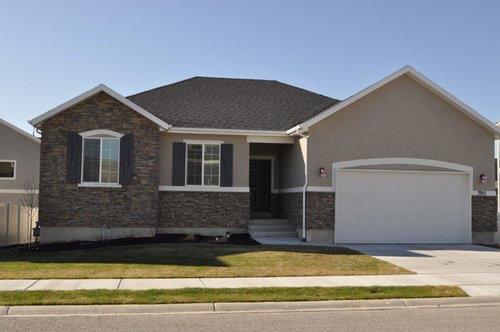
    Since this is a blank slate new home with NO landscape other than a rather mangy looking builder front lawn, deciding what you want from your garden and how to arrange it is the first order of business.........basic landscape design layout. You can do this on your own with some help from online sources or a good landscape design text or ask basic advice on the Landscape Design forum or hire a design consultant to get you started. Once you have a layout firmly in mind that considers possible tree placement, outdoor living areas, play areas for kids and pets, privacy issues/need for screening, an edible garden if you desire and landscape planting beds, then you are ready to roll. But planning before any planting is the key!!

  • 10 years ago
    last modified: 10 years ago

    <it seems to assume that you are focusing in on a edible garden.>

    It certainly does. Mea Culpa if that is not what you are after.

    I will say if it were me (but it's not) I would plan any landscape around my garden. To me the more garden the less I have to mow <grin>

    btw - I also like to keep any grass at least 4ft away from any garden beds because grass will harbor insects, slugs, etc. and steal nutrients and moisture from any thing near them. Plus is makes it more difficult to mow up next to a garden bed. So for me it would 4ft of mulch.

  • 10 years ago

    Have you never encountered edging??? It's pretty darn effective in most of its iterations to keep lawns out of planting beds! Even a periodic edging of the beds - like every third mowing - with a flat edged spade will keep things tidy and under control. 4' of mulch would be an excessive waste of valuable planting space in a garden that small, if the front yard is any indication.

  • 10 years ago

    I have the bestest idea to liven up the summer doldrums on this forum:

    Start a new topic, post: "I want to start a garden! But I don't know what to do. I bought some Miracle Gro, some Roundup and some topsoil. Help!"

    And then do nothing further. The topic will instantly fill up with 1,500 posts.

  • 10 years ago

    <Have you never encountered edging???>

    My garden walkways are 4ft wide and one reason is that plants in the beds can send out roots that far in search of nutrients and moisture. I feed and water the soil under the mulch.

    I don't think edging will stop that or the other things I mentioned.

    <btw - I also like to keep any grass at least 4ft away from any garden
    beds because grass will harbor insects, slugs, etc. and steal nutrients
    and moisture from any thing near them. Plus is makes it more difficult
    to mow up next to a garden bed. So for me it would 4ft of mulch.>

    Remember I am talking about my garden and how I would do it.

    To me grass is a perennial weed that invades my vegetable garden,

  • 10 years ago

    Maybe 1,501.

  • 10 years ago

    While edible gardening IS very popular, it is by no means the standard by which all gardening methods should be undertaken or even judged. A large portion of suburbia is focused on ornamental landscapes - trees, shrubs, flowering perennials and lawns. In fact, conforming to traditional ornamental landscape is a requirement of many HOA's in new developments such as illustrated by the OP in his/her photo.

    And while soil quality is certainly a consideration in this instance, at this point in time it is not the overriding concern - planning and garden layout IS. This is really a landscape design issue, not a soils issue...........yet :-)

  • 10 years ago

    Excellent advice here...first, make the major decisions about what you want from your yard and what you're willing to put in. Do you want maintenance free, or at the other end of the spectrum, are you planning on gardening as a major hobby? Lawn or gardens? Vegetables, flowers, trees, perennials, shrubs?

    You can do anything from leaving it like it is to removing the lawn entirely and making a jungle-like English cottage garden to cover the entire yard, or anything in between.

    And that's the first thing a landscape designer would ask you.

  • 10 years ago

    No mention of an edible landscape?

  • 10 years ago

    Well, there is now. :-]

    I'm a big fan of edible landscapes but was trying to keep it simple till we had at least a ballpark idea of what the OP's goals are.

  • 10 years ago

    But a week and 22+ posts later we still have no idea what those might be!! I tend to get a little irritated at these hit and run threads where someone posts a question, generates plenty of discussion but never bothers to return to provide any more input or even a vague thanks!!

    But nice chatting with the rest of you all :-))

  • 10 years ago

    Probably either 1) still moving in, 2) house already burned down, or 3) read the first response that started with "You start by doing a lot more work ...", sighed, popped open a coldie, and turned on the big screen TV in his/her new living room. "Maybe next year." LOL

  • 10 years ago

    Work, schmerk.