Software
Houzz Logo Print
bau_theman

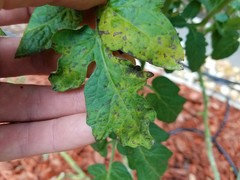
Preventing late blight? Before it appears?

I live in a major late blight area!, It's crazy go blight heaven.

I just descovered a little blight on one plant, i ripped the infected bits off the plants!, And discarded.

I have the plants with no symptoms in a green house, to protect from blight in the rain.

I spray every tomato with, one part oil, one part dish soap, one part baking soda, solution, diluted with water.

I am going to prune to improve air flow.

Is there anything else I can do?, Should I spray with diluted bleach.

My tomato plants are my babies, i hope they don't get infected!.

I wanna kill the spores before any symptoms arrive, before they spawn and spread.


Comments (43)

  • 10 years ago

    I don't think it's alright as we are told to destroy infected plants (and burn or bin them). I'm guessing that you are asking for trouble by keeping that infected plant because it probably still has the disease (even though you cannot see signs of it) which it will now pass along to the others in the greenhouse. However, if you are willing to take a chance, go ahead and let us know how it turns out.

    Linda

  • 10 years ago
    last modified: 10 years ago

    " spray every tomato with, one part oil, one part dish soap, one part baking soda, solution, diluted with water."

    For what reason?

    If it really is late blight then salvaging the plant is very seldom possible no matter what you do. So removing it and disposing of it safely is the recommended approach if for no other reason but to prevent spread of the spores.

    The only really effective preventative measure is regular use of one Daconil or one of the copper-based commercial fungicides from Day 1 of planting. And in the case of Late Blight, even that is no guarantee. Once the fungus takes old there is little that can save the plant.

    Curious as to your location as LB has not been reported as even marginally active this year.

    Dave


    Link to all the Late Blight discussions here

  • 10 years ago
    last modified: 10 years ago

    Hey dave, im from england, a city called bristol, You've probably heard of it, i think bristol was mentioned in the book treasure island.

    Edit.

    I don't know why there is so! Much blight here!.

    I know many growers who have given up growing tomato's altogether due to the late blight.


  • 10 years ago

    Maybe because of the cool nights, wet conditions and the fact that many people grow potatoes in the UK? Late Blight can over-winter in potato debris.

    I gave up growing potatoes for years so that I wouldn't have that problem, but am growing fingerling potatoes this year, in a bed that tomatoes will never be grown in.

    Linda

  • 10 years ago

    " im from england, a city called bristol,"

    Then would you please complete your profile page here so that information is automatically included with your posts? See how most all of us have our location info after our names - like Linda's says Kingston, ON and mine says No. Central Arkansas.. Otherwise you have to include that info in each and every post as it makes a great deal of difference in replying to questions.

    I don't know what commercial fungicides you may have available to you in England to use but with Late Blight even they can't save the plant. Like Linda said Late Blight can over-winter on any live plant debris so if you are 100% sure that is what it is it is important to bag up the debris and dispose of it carefully.

    Dave

  • 10 years ago
    last modified: 10 years ago

    Better?

  • 10 years ago

    Perfect! ;-)

  • 10 years ago

    Yeah, potatoes are a major source of late blight and the disease pressure from fields of them is huge. I had the same problem for many many years growing in a certain region. The solution as you said it's simple: greenhouse. Just make it bigger.

    If you want to prevent it outside, bleach is probably no use. Copper fungicides are decent at preventing it, but if it rains often it still won't do that much. As long as the stem is not black in one place the plant can still survive and will actually recover (the new growth) if the weather will turn for the better (it needs a minimum of 2-3 weeks completely dry weather to stop however).

    Also there are some new varieties with decent resistance. ph2 and ph3 gene combined are the best. Try Iron Lady, Mountain Magic, and I believe there are a number of english bred tomatoes specifically for the UK late blight problem (local forums should help more there).

    So a combination of resistant varieties + copper fungicides (or Bravo or other slightly more powerful ones) should allow a decent crop, but you will still get infected plants for sure in a bad year.

  • 10 years ago

    Unfortunately in a rainy/wet cool climate ( Such as England and our PNW) it is a challenge to prevent and fight foliage diseases. Reason being that you don't get enough window of dry weather to spray for the fungicide stay on the foliage. But you have to do it at any given opportunity no matter how short the window of time is. I mostly get Gray Mold when our rain season starts some time in September. My experience shows that bleach spray is most effective. Last year I sustained my plant well into the end of October. Then it got cold and I let it go.

    Sey

  • 10 years ago

    It's been super sunny the last few days, but I think I found out the problem, the stick that was supporting the infected plants had snapped, leaving the tomatoes to lay about in some grass.

  • 10 years ago

    bau, it's very important to know that not all blight is late blight. "Blight" is a term that a lot of gardeners use to describe general foliage diseases, and is very imprecise. "Late blight" (Phytophthora infestans) is a very serious disease that can wipe out not only all your plants but also other people's in the area. It spreads on the wind very easily, and a greenhouse doesn't actually offer that much protection. Once a plant gets it, it's pretty much going to be toast within the week.

    "Early blight" (Alternaria solanii) is much less serious and much slower to take down plants. It can be controlled/delayed enough to bring in a harvest through spraying fungicides and pruning affected leaves. It's also much more common than late blight. Pre-emptive spraying works well to delay or lessen seriousness of onset of this disease.

    There are many other common fungal/bacterial diseases depending on area. A lot of people refer to these casually as "blights", but they're neither early blight or late blight. There are also viral diseases than can be an issue in some areas.

    Does the RHS have any kind of information outlet for home gardeners about the different diseases in your area? I know the local university in your area has an agricultural program as well. Is there any kind of equivalent of our cooperative extension program we have in the US where local universities have resources and expertise to help local farmers and home gardeners?

    Over here, people are generally advised to spray fungicide preventatively on a weekly basis. TBH, I don't know how well it would work during a late blight outbreak, but it generally helps delay or prevent a lot of common fungal and bacterial foliage diseases, depending on what you use.

  • 10 years ago

    Dave - this late blight map shows that Arkansas seems to have it bad this year. Note that not all states report to this site so it may not be comprehensive but I do not know of a better map for the entire US.

    Late blight map

  • 10 years ago

    Gorbelly i know the difference between blight, early blight and late blight,

    I have the more serious late blight. I caught it early and discarded the infected.

    Hopefully it won't come back although it probably will.

    Gardening is my hobby it has been my interest for years, im going to horticultural collage soon.

    Although this is only my second year growing tomatoes, i have learnt a ton alot about tomatoes before hand through videos and articles.

  • 10 years ago

    If your plant really has late blight, simply pruning isn't going to stop it. You're better off throwing the entire plant away. For the sake of others, you should seal it in a garbage bag. But it's very hard to definitively diagnose late blight from "a little blight". What led you to believe it's late blight?

  • 10 years ago
    last modified: 10 years ago

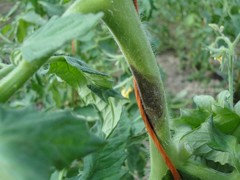
    Part of the stem was black, i do not know of a disease that infects the stem...

    I'll give it a few more days if i see more late blight i'll get rid of em.

    Not many people in the area grow tomato's.... too much blight.

    Dont worry about the spread of it, im very careful...

  • 10 years ago

    Off the top of my head, alternaria stem canker, bacterial canker, botrytis/grey mold, late blight, and early blight can all cause black stems.

    bau: Dont worry about the spread of it, im very careful...

    Can you control the air? Can you control microscopic things that float on the air? Some things cannot be prevented by handling them carefully. If you want to try, that's fine, but just know the risks you're taking, and keep in mind that far more experienced tomato growers would not take such a relaxed attitude toward late blight. Nor would they casually diagnose late blight.

  • 10 years ago

    It is 100% late blight, so stop going on and on about it!.

    Your right I can't control the air, i can't control the microscopic things that float in the air, if i could there wouldn't be late blight at all!.

    All I can do is remove foliage and pull the plants that are too far gone!.

    I am not taking a relaxed attitude towards blight!, Nor have I casually diagnosed it!!!!!!!!, I had late blight last year, i know what it looks like!!!!.

    I have done everything possible to prevent it!, What is wrong with you?, Why are you out to get me????!

  • 10 years ago

    there is always late bight here (blue ridge near nc). i've kept production going by spraying copper and epsom salt. they don't prevent it but slow the spread to new growth. spray copper one week and epsom salt the next. i think someone else mentioned mountain magic as a resistant variety. i've grown that variety and it is resistant.

  • 10 years ago
    last modified: 10 years ago

    Thank you randy, I'll definitely try that.

    I have three blight resistant plants

  • 10 years ago

    bau: It is 100% late blight, so stop going on and on about it!.

    Your right I can't control the air, i can't control the microscopic things that float in the air, if i could there wouldn't be late blight at all!.

    All I can do is remove foliage and pull the plants that are too far gone!.

    I am not taking a relaxed attitude towards blight!, Nor have I casually diagnosed it!!!!!!!!, I had late blight last year, i know what it looks like!!!!.

    I have done everything possible to prevent it!, What is wrong with you?, Why are you out to get me????!

    I am not out to get you, and I'm sorry if it seems that way. But your comments, questions, and advice on this forum indicate that you know very little about growing tomatoes. That's not to blame you for anything--you're a 16 year old growing tomatoes for the first time. It's normal that you would have a lot to learn.

    I just want to make sure that you don't lose all your plants or become a liability to others in your area growing tomatoes or potatoes. Urging you to be sure of the diagnosis and making sure you understand that, with late blight, you're taking a serious risk by taking a pruning-only management approach is not intended to put you down but to emphasize what a serious problem you could potentially be setting yourself and others in the area up for.

    I strongly urge you to at least spray fungicide instead of just pruning. It doesn't have a great record with plants already affected, but it can protect other plants and possibly contribute to controlling how many spores get released.

    And that will be my final piece of advice to you. Sorry it came off so offensively to you.

  • 10 years ago

    "Dave - this late blight map shows that Arkansas seems to have it bad this year. Note that not all states report to this site so it may not be comprehensive but I do not know of a better map for the entire US."

    You are right jack but that is still somewhat "marginal" for AR vs. the average year. Still bad of course, especially for the commercial growers in the southern 1/2 of the state, but nearly as wide-spread as in the past few years. And the rest of the country, compared to the past 3 years, is quite low.

    Dave

  • 10 years ago

    bau, I would once again urge you to 1) confirm a late blight diagnosis before throwing away your plants, and 2) spray fungicide on plants not yet affected, whether you throw out affected plants or not.

  • 10 years ago

    Here is a UK service that sends you alerts when weather conditions favor late blight. http://www.blightwatch.co.uk/

    Here is a tool that maps blight outbreaks. It focuses on potatoes, which I guess are the more agriculturally important crop, but IIRC most if not all strains affect both tomato and potato. http://potatoes.ahdb.org.uk/fight-against-blight/blight-incidents

    Maybe these will be helpful in future.

  • 10 years ago

    I have followed your instructions.

    Thank you.

    Im sorry about the misunderstanding before.

  • 10 years ago

    Does anyone have a favourate early tomato?

  • 10 years ago

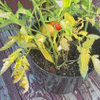
    Hopefully you did pull your infected plants, I'm kicking myselfself right now for holding on to plants that had some fungus/bacterial disease going on, now I'm down to 9 plants out of about 25. They all starting to look like this now

    I just started some new plants, with the hopes of maybe getting some torators before December 10th (my first frost date)

    Good luck.

    Kevin

  • 10 years ago
    last modified: 10 years ago

    bau the man wrote: > the stick that was supporting the infected plants had snapped, leaving the tomatoes to lay about in some grass.
    So, you use a STICK (?!) to support a FEW tomatoes ???
    A trellis is a much better solution, imo.
    To clarify what type of blight - IF it's blight - a picture of your sick tomatoes, could help us decide.
    Imo, late blight can NOT be cured. You might prevent it. I use - from day one - the organic copper fungicide.

    In the product's description in Amazon, it says: "Great for Blight!"
    In the wet and cold UK - perfect conditions for tomatoes to get diseases - maybe a greenhouse could be a solution?

  • 10 years ago
    last modified: 10 years ago

    daniel: In the wet and cold UK - perfect conditions for tomatoes to get diseases - maybe a greenhouse could be a solution?

    IIRC, a greenhouse can offer some protection from spores, but once an infection happens in the greenhouse, the closed conditions and humidity can actually make late blight worse.

    In parts of the UK, I think you basically have to spray preventively to try to delay late blight as much as possible. The site I mentioned before can send out alerts when weather conditions favor late blight for those who only want to spray when necessary. I guess when you get the alert that conditions favor late blight, you could go out immediately and spray.

    I notice that people in the UK have a tendency to just call all tomato foliage disease "blight". Part of that is probably that late blight is far more common there. But I see a lot of UK-based sites showing pictures of disease and identifying it as late blight when it actually looks like other foliar diseases. I wonder whether this is a cultural blind spot (no pun intended).

  • 10 years ago

    It's true that late blight is far more common in England than america.

    Hahahahahahahah the word blight in England can mean any disease that's black and common in the area, for example my family has gotten used to calling black aphids, blight for generations.

    But the dictionary does state that the word blight in plant terms generally is referring to an organism (insect or fungus).

    I don't think it's a cultural blind spot, i just think it's that English people generally are used to growing potatoes not tomato's haha.

  • 10 years ago

    It's so strange that england went the way of the spud, and not the tomato

  • 10 years ago

    Here is the definition of Late Blight and Early Blight in America:


    Late Blight

    "Found on tomato and potato plants, late blight
    is caused by the fungus Phytophthora infestans and is common throughout
    the United States. True to its name, the disease occurs later in the
    growing season with symptoms often not appearing until after blossom."

    Early Blight
    "Common on tomato and potato plants, early blight is caused by the fungus Alternaria solani, and occurs throughout the United States."


    Sey

  • 10 years ago

    [Update]

    No sign of any more late Blight on either of the plants.

    Hopefully it stays that way.

  • 10 years ago

    Seysonn: Here is the definition of Late Blight and Early Blight in America

    I would note that there really is no one definition "in America". Different sources give out different info, and we don't have a centralized agency that comes up with such definitions.

    Both early blight and late blight can happen any time in the season when conditions are conducive to it and both host plants and pathogens are present. Sometimes, they can happen at the same time.

    I think the more important distinction is that the diseases are very different in how serious they are.

    bau: No sign of any more late Blight on either of the plants.

    I think it's unlikely that it was late blight in that case, especially since you did not spray any fungicides. There are many molds and other diseases that can produce late-blight-like lesions.

  • 10 years ago

    I was working in the pest control department of a large commercial nursery in Texas. Part of my weekly duties was to scout my 25 acres of annuals and perennials for insects and diseases. I did this for 6 years. I can tell you that one gets pretty good at determining what disease is what. I can also tell you that there were many times I was proven wrong after getting results back from the lab that we used. A lot of the times, no pathogen was found at all, even though the crop was defiantely sick.

    Only having one year experience in growing tomatoes will not give you enough experience to diagnose Late Blight from another foliar disease. It may well be Late Blight, but you do not know for certain unless a sample is sent to the lab.

  • 10 years ago

    ncrealestateguy: A lot of the times, no pathogen was found at all, even though the crop was defiantely sick.

    Yes. I'm always surprised how often drought stress and certain nutrient problems can end up looking like early and late blight. This year, I had tomato pinworm on a scale that was new for me. And old pinworm damage can sometimes look alarmingly like serious fungal disease.

  • 10 years ago

    Yup... environmental stresses accounted for a lot of what we saw. Sometimes a secondary pathogen would then come in to take advantage of the situation.

  • 10 years ago

    Yah, that is true that only a lab test can positively identify a foliage disease but , for us the backyard gardeners that is not a practical approach. So we go by the symptoms and visual appearance, the best we can.

    The other point is that there are a few fungus fighting sprays that are used for all of them. I use them as preventive and also to fight. JMO

    Sey

  • 10 years ago
    last modified: 10 years ago

    True, it could be another disease, but I did have late blight last year.

    The infected plant was touching the mud and damp flowers.

    This plant otherwise looked superhealthy.

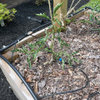
    I found this photo on the internet, it looked like this guy's plant.

    the infected part looked exactly like this!.

    It must be late blight!.

  • 10 years ago

    Bau , are you referring to the brown/black spot on the stem ?

    I have something similar to it on quite few of my plants. They have been there for months and it does not bother the plants. I took a cutting. It was just a thin superficial layer and the core of stem was healthy. Plus no symptom on the foliage. If it were Late Blight my plants must have been gone long time ago. I think it is some kind of mold.

    But I keep fungiciding regularly anyway.

  • 10 years ago

    Good advise above to get rid of the plant if it is really late blight. Here is a good article from Cornell Ag school that might help identify it.

    http://livegpath.cals.cornell.edu/gallery/tomato/tomato-late-blight/

    John A

  • 10 years ago

    I should have read further. Here's another article on distinguishing late blight from other diseases.

    http://livegpath.cals.cornell.edu/gallery/tomato/tomato-late-blight/

  • 10 years ago

    Sey, I have this same discoloration on several of my plants too. It gets to a certain size and then stops and the plant shows no signs of harm. No big deal. It could even be an environmental effect from the twine coming in contact with the stem, as the picture shows.

Sponsored
Peabody Landscape Group
Average rating: 3.5 out of 5 stars8 Reviews
Columbus' Reliable Landscape Design & Contracting