Software
Houzz Logo Print
emma_taylor1224

Kousa Dogwood?

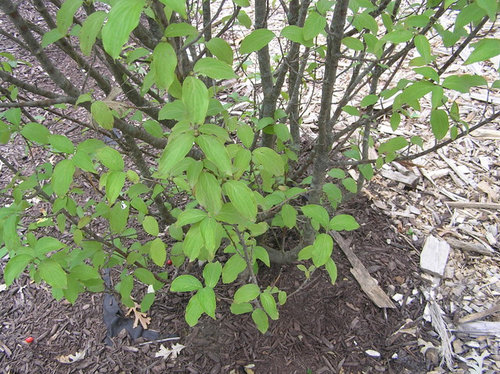
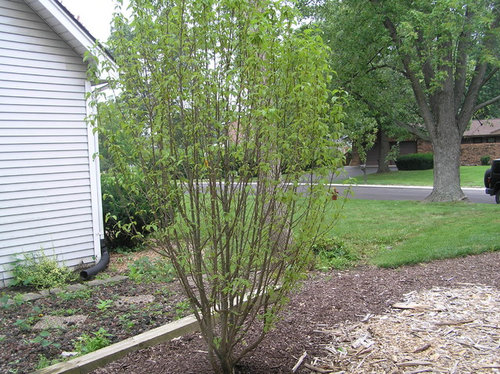
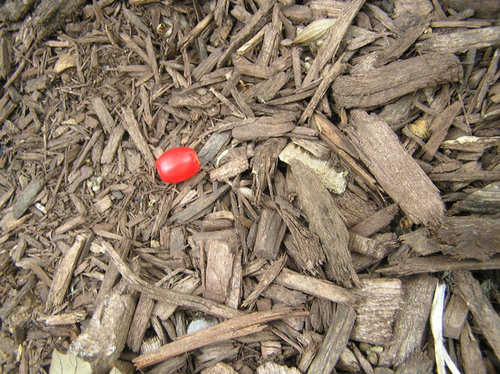
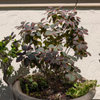
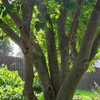
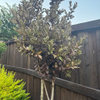
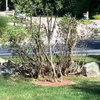
Is this a Kousa? Did not bloom; I found this berry below it.

Comments (16)

  • 10 years ago

    seems different than my kousa..mine is less like a shrub..mine was only $3..a pic from last fall..did yours have fall color?

  • 10 years ago

    I agree with GG48 that it's a Cornus mas, cornelian cherry, which is a dogwood. If you look at the leaves of this shrub, you can see how the veins are close to running the length of the leaf, going toward the leaf tip, unlike your other post about Cornus alternifolia, pagoda dogwood. These photos show classic dogwood leaves.

    gracie01 zone5 SW of Chicago thanked NHBabs z4b-5a NH
  • 10 years ago

    Thank you both. I learned something today about the leaves too.


  • 10 years ago

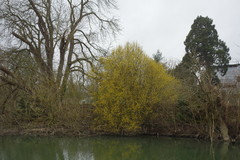
    Cornelian Cherry flowers very early in the year with yellow flowers on bare branches. Possibly you missed them. Here's one in March beside the River Thames.


    gracie01 zone5 SW of Chicago thanked floral_uk z.8/9 SW UK
  • 10 years ago

    Thank you. Well at least it IS a dogwood. Landscaper said it was Pagoda, I thought Kousa. This is one of 2 planted that I'm not happy with.

  • PRO
    10 years ago

    Kousa and pagoda, are definitely not shrubs! Kousa is more of a tree intended for use in the landscape AWAY FROM STRUCTURES. Pagoda is an understory tree which is used for the same purpose.

  • 10 years ago

    Uh, why would Cornus kousa have to be used AWAY FROM STRUCTURES? Bizarre and totally unnecessary advice. Of course, you wouldn't plant it up against a structure, but as a small shade tree near a house? Why not?

  • PRO
    10 years ago

    Kousa is not a shrub and needs adequate spacing from a structure.

  • 10 years ago

    There are many cornus kousa selections. They range in size from relatively small trees (10 to 15 feet after 10 years) to small shrubby forms like Snowboy and Wolfeyes. Even smaller weeping forms are available. Any plant needs adequate spacing from a structure. There is absolutely no special danger from kousa dogwoods, and most certainly not one requiring screaming capitalization.

  • PRO
    10 years ago

    I didn't know about these small selections of c. kousa. I really might look into these when I plant some of the weeping JMs.

  • 10 years ago

    The thing is, 10 years isn't very long for a tree. In a way planning for only 10 years with a tree is kind of silly, like maybe spacing perennials according to how big they might be after 10 weeks. Let's say for instance that one of those 15' in 10 years kousa got 30' wide in 20 years. It being 5' or 10' from a structure at that point could in fact be quite a problem.

  • 10 years ago

    Cornus kousa doesn't belong in a foundation planting, but it isn't a danger to a house as long as its size is accounted for. I have one planted perhaps 15' from my kitchen window, and it gives me great pleasure to watch the birds that spend time in it.

    This far north, I find pagoda dogwood, Cornus alternifolia, does better with quite a bit of sun, even all day sun, rather than in the understory. I have quite a number of them as they are native here, and the ones with the most sun also have more flowers and fruit as well as better structure. I imagine that isn't the case in hotter parts of the world, but the OP is in zone 5.

  • 10 years ago
    last modified: 10 years ago

    Possible damage to foundations isn't the only issue with planting trees of some size near structures - and not in fact what I was thinking about in this instance. Non-dwarf* Kousa seedlings or selections tend to grow as broad vases with multiple trunks arising near the ground, unless perhaps growing in thickets where they are drawn up by crowding and shading by other trees - not the usual circumstance in a garden planting. So if planted close to buildings these can in time block access, if nothing else. And physical or practical concerns are merely those in addition to how the tree looks with a building right there, and how a building looks with a giant bush close by.

    For a specific example of this occurrence a 7-trunked Kousa planted as a foundation shrub at a Seattle (USDA 8) play-field had an average crown spread of 48 1/2 ft. ca. 2005. If it had been instead placed where it had enough room it would have been magnificent. As it was it looked as though the building had been dropped on top of it, cutting it in half. And the building looked as though it had a tree bursting out of the side of it, perhaps the epitome of over-planting.

    *When you look into it truly dwarf named selections of this species are very few in number and do not have a consistent presence in the marketplace

  • 10 years ago
    last modified: 10 years ago

    I didn't say foundation damage, I said foundation planting, that is one along/close to the foundation. As long as the foundation is sound, plantings never are an issue as far as foundation damage. I doubt in zone 5 (both my and the OP's zone) that any Kousa will reach 48' wide since we are at its northern edge, and I did say "accounting for size" so I am not sure of your point, Embothrium. Kousas make fine trees to have in a yard as long as the ultimate width of the tree is accounted for, just like any other plant; its location just doesn't need capital letters.

  • 10 years ago
    last modified: 10 years ago

    >it isn't a danger to a house<

    sure sounds like you were talking about the foundation.

    A tree doesn't have to become a full 48 ft. across to still have the amount of space it will need in time to be given careful consideration. Meanwhile a Kousa in PA had an average crown spread of 36 ft. by 1980 and another example in CT was the same width 8 years later. So apparently these do in fact reach typical size in USDA 5-6.