Software
Houzz Logo Print
lookintomyeyes83

Share your draw schedule?

10 years ago
last modified: 10 years ago
Is anyone here willing to share their draw schedule?

We are building a 2 story home with basement, out of ICF 'to the roof'.

My bank is cautioning me that the builder's draw schedule is quite front-loaded, which may cause problems if the 'cost to complete' doesn't match well with the draws. They did also state that "sometimes it's high, and people just go with it, because they want the home". I'm uncertain if it's due to the high cost of the icf materials and construction, or simply that they'd rather finance the build with their money, rather than mine.

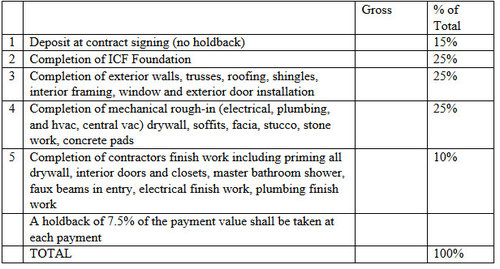
This is what they are proposing:

The draw amounts above do not include the portion of the finish work my husband and I are doing, namely the kitchen, flooring, millwork (trim) and finish painting. Value wise, our work is ~12% of the total price, though admittedly assumes 'sweat equity', ie, not paying ourselves a wage. (I recognize this isn't 'true', but as ICF houses cost more to build, yet appraise the same as a regular stick home, this allows us to keep the build cost close to the appraised cost.)

Comments (17)

  • 10 years ago

    As an appraiser, I was often tasked by the lender to go out and confirm the building draws. Usually, the number of draw visits were around five including the final competition certification. There were times where I was asked to do extra visits. In some cases, work will stop until the draw visit has been completed. Too many of these can potentially delay the project a few days. The cost of the extra visits will be passed on to the borrower.

    I really don't see anything that is concerning other than the draw schedule does not include finish painting. But, that may be a function of your contract. Most builder's will have limited working capital. The trades will want payment within 15 to 30 days of completion. Some will want immediate payment. It depends on the trade and your builder's business reputation. From experience your builder knows when he will need more money to continue.

  • 10 years ago

    Oh, homechef59, the amounts above dont include the work we are doing ourselves, namely kitchen cabinets, flooring, trim, and painting.

    Does that change your view of the draws?

  • 10 years ago

    My first draw was after the house was framed

  • 10 years ago

    No. Every build is different depending upon the materials used. But, I really don't see any problems.

  • 10 years ago

    Working in % of TCTB is very misleading, use real numbers from the estimate and pay for the work that's been completed. Then you can calculate the % of TCTB at each draw but don't confuse % of cost w/ % complete b/c some phases of construction have higher material costs and others are more labor intensive. Sweat equity always complicates the draw equation.

  • 10 years ago

    I'm not following your post CSKI 13. the percentage at each draw is based on the total price of the house

  • 10 years ago

    We paid by the month, as work was completed. A couple months were higher, a couple months were lower.

    If work wasn't completed, it wasn't on the bill.

    Get lien releases as you go. Lien releases should come shortly after you pay the GC for the work completed.

  • 10 years ago

    Our draw schedule is (reduced to as few words as possible):

    Completed Foundation - 15%

    Interior Framing - 15%

    Roof shingled - 20%

    Electric, Plumbing, HVAC rough in complete and insulation installed - 20%

    Walls painted - 10%

    Floors, Appliances, Seeding - 10%

  • 10 years ago
    last modified: 10 years ago

    Deposit (5%)

    Draw #1 (10%) - concrete slab poured

    Draw #2 (10%) - 1st level masonry walls, concrete tie beam poured

    [where I am now]

    Draw #3 (10%) - 2nd level masonry walls and tie beam

    Draw #4 (10%) - Roof trusses and interior partitions installed (time for electrical walk-through)

    Draw #5 (10%) - Electrical, HVAC and plumbing have been roughed in, and all rough materials, roof material (metal) and exterior doors and windows have been ordered

    Draw #6 (10%) - Ready for insulation, rough-ins complete, windows and exterior doors installed, cabinets ordered

    Draw #7 (10%) - Drywall installed and finished, roof is complete, exterior Hardie, soffit and stucco complete

    Draw #8 (5%) - Interior trim and doors delivered and 50% installed, exterior paint complete, interior walls primed

    Draw #9 (10%) - Cabinets installed, ceramic wall tile complete (showers), water and sewer connected, countertops templated, interior trim complete

    Draw #10 (10%) - Plumbing, Electrical and HVAC complete, driveways/walkways completed, final grading and sod, appliances installed, CO

    11 months from permit. Southwest FL.

  • 10 years ago

    @cp, the draw schedule is "front loaded" b/c 15% of TCTB is being paid before any work is done. The draw schedule isn't tied to the actual expenses incurred (and hence work completed) just %'s w/inaccurate descriptions attached. As a loan officer I'd want to see the draw scheduled aligned with actual costs and progress on the house.

  • 10 years ago
    last modified: 10 years ago

    Great info CS I would think that is how it would with no frontloads.

  • 10 years ago

    CSKI 13, yes, that's what I'm a bit afraid of, and why the bank has mentioned that the front loading is unusual.

    Annoyingly, my lawyer says check with the bank what they'll likely allow for a draw for each stage, the bank says check with my lawyer, and the appraisal company says they won't even consider doing up a draft one until we start to build....chicken and egg much?!

    That said, the bank keeps saying 'but you have a substantial down payment so it should be OK'.

  • 10 years ago

    With the way that draw reads for example on a $300,000 house they automatically get a draw of $45,000. Oh no, no and no.

  • 10 years ago

    This is an old draw schedule from a home we built years ago. The only real issue we had was the bank releasing funds for work that wasn't actually completed, meaning we would be required to pay interest on those funds. We had to switch contractors so it would have been even more money out of our pocket to finish the project. After we threatened to sue, the bank did recover those funds. We had a total of 13 draws.


  • 10 years ago

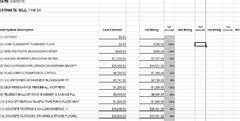
    We have a 4-worksheet Excel file we use for Construction Loans. The first worksheet in the file is the estimate for each aspect (line item) of the build; the second, using the same item line numbers, identifies all of the subcontractors being used on the project, using the corresponding line item. The image at the top shows a proposed draw schedule, based on the build schedule using the bid estimates, and is the third worksheet in the workbook. The fourth and final worksheet in the Excel file tracks the amount billed for each line item according to the invoice (each draw period); formulas are built-into the spreadsheet to indicate/track the overall spend compared to the estimate. You'll notice in this example, for instance that there is a $300.00 charge against a zero dollar line item "(2) Home Plans/SWIPT PLANS/Site Plans." If memory serves, the county asked, as part of the permitting process, for a more detailed site plan b/c the lot backs-up onto a wildlife preserve and it cost $300 to get the plan prepared. This is a good example of what a contingency fund is used for. This builder is a small one doing only 4 houses a year. He uses his established lines of credit to order materials and they're delivered to him onsite, work is performed, invoiced and paid. If he is able to stay on schedule and pays his bills in less than 30 days, I imagine he's got his trade lines set up so that he gets a discount of some type, anything from 2.5-10% is pretty typical. No doubt some suppliers offer none at all, and I would speculate they are the last to be paid. I share this only as one example of how this can be approached. It is straightforward and tied to progress and costs of the build.

  • 10 years ago

    Thanks CS, well done and very much appreciated. All in due time we'll be looking to establish the same and will work with the lender.