Software
Houzz Logo Print
bpeterson1226

What is this on my vanda roots?

9 years ago
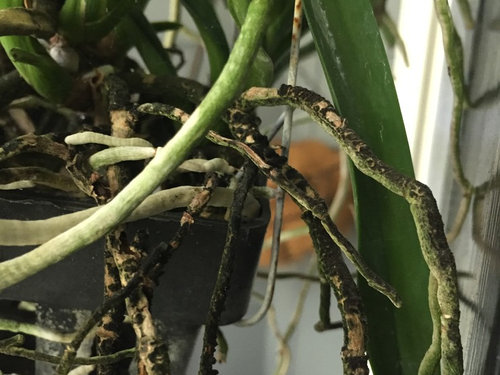
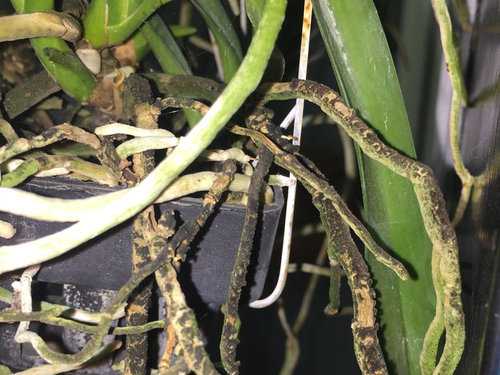
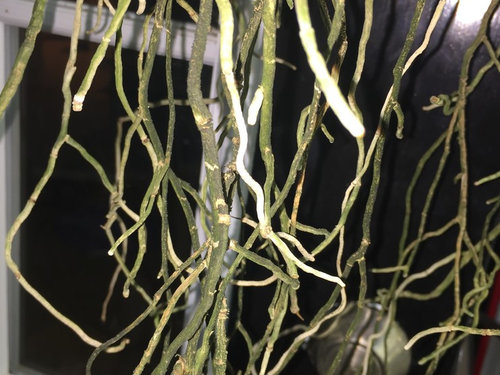
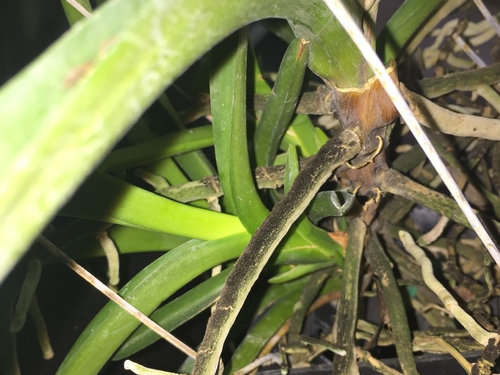
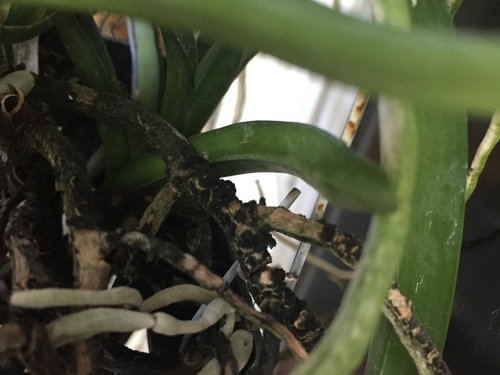
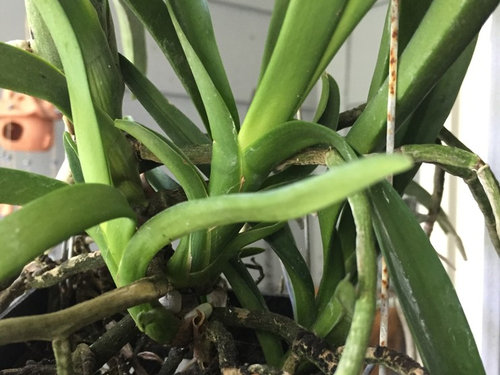
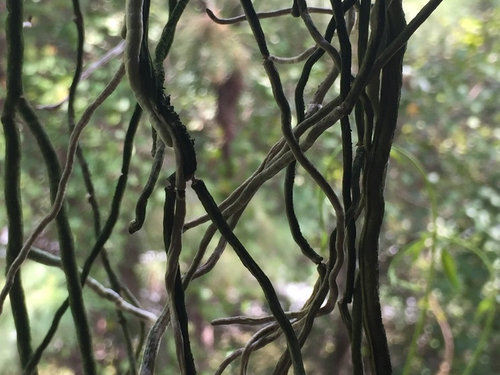
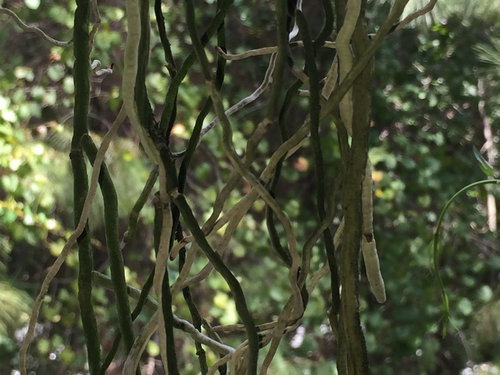
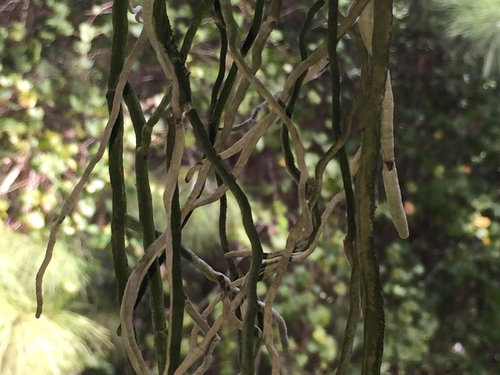
Hello everyone! Hope you all have had a wonderful day so far!! Previously I posted about my vandas that I recently (2-3 weeks ago) purchased at Lowes. They're both rather large and one of them has 4 keikis growing. The one with the keikis growing on it also had this black substance on its' roots and I'm not sure what exactly it is. Since I brought it home, it's been doing alright, not great. A leaf on one keiki turned brown and fell off, and the top of the spike also turned brown and I cut it off with sterilized scissors and put a dab of cinnamon on it to prevent infection. By no means is its' health rapidly declining, but I want to make sure I'm caring for it properly so it doesn't fade on me because it's such a beautiful, large and strong vanda. The vanda without the keikis also has a small amount of the black substance but not nearly as much as the other. Attached are some photos I took some with flash others without the first photos are the one with the keikis & a lot of black stuff on roots). Thanks in advance!


Below are the photos of the vanda without keikis but a little bit of the black substance. It doesn't look like the same type of thing, or it's just not nearly as "bad"


Comments (11)

  • 9 years ago
    last modified: 9 years ago

    It appears you have a few good, clean roots. Cut off ALL of the black ones. It sounds drastic but they do no benefit. Cut as far as you easily can. Give it Maxie-crop a Norwegian seaweed juice. A root stimulant...

    For the moment keep it in shade. When it starts showing growth gradually give it more and more sun. Give it fertilizer right away.

    Vandas are hard to grow in winter climates. Where are you?


  • 9 years ago

    Folks: Remember when I wrote in a few weeks ago about my Vanda with black stuff all over the roots and someone told me to use Physan and not diluted bleach? Well that is the same way my Vanda looked and I held a very strong stream of water from the hose on the roots and the black stuff flew off like mad. Then I held the stream to the leaves and the same thing happened. It looked like crud to me because it was spreading from my pavers to the Vanda orchids. Anyway, I did use very very diluted bleach water after spraying, then diluted soapy water and they are fine now. HOpe this helps.

    catlover_gardener

  • 9 years ago

    That looks like moss/algae on the roots. I would not cut them off. It suggests the plant might be kept too wet or damp.

    Is it getting good sun? Leave those roots alone. Moss/algae is harmless.

    Jane

  • 9 years ago

    the algae will spread. It appears some of the coated roots are dead anyway. After a clean up cut the shriveled up ones.

  • 9 years ago

    They do not look dead to me. Maybe different monitors?

    They look coated with algae, green. They appear plump and alive. I think he's keeping it too wet.

    Jane

  • 9 years ago

    I am in Savannah Georgia, and I'm a she :) I got this Vanda as is at Home Depot when i get home I will start snipping. Thank you

  • 9 years ago

    Oh no, i wouldnt cut off the black roots. They're still alive. Id only cut off the roots that are not firm and feel empty inside. The black stuff is probably mold from those roots being keept too dark. Sunlight kills mold.

  • 9 years ago
    last modified: 9 years ago

    Make sure there is plenty of air circulation around the roots so any further fungal growth is stopped. Don't cut anything off unless it feels mushy/squishy-anything but firm. If they are firm, then the roots are still viable and should not be cut.

    Make sure you sterilize your cutting tool with alcohol before cutting anything-you don't want to risk an infection. Wipe the blades thoroughly with alcohol, let dry, then cut any mushy roots off.

    Edit- saw " I cut it off with sterilized scissors and put a dab of cinnamon on it to prevent infection."

    That's good-but don't put cinnamon on root wounds. It will probably dessicate the roots. Anything else is fine.

  • 9 years ago
    last modified: 9 years ago

    In a far distant country that black stuff is called sooty mold and is an indication of a past or present infection of scale or aphids.

    Just about to bump off the aphids on my lime tree which is showing that black sooty stuff on the leaves.

  • 9 years ago

    Hey guys thanks for your advice. They are getting full sun, SE @ 125° facing patio, with direct light and nothing impairing any circulation...sun and airflow can't be the cause. It might have not had great sun and airflow at lowes where I got it a few weeks ago. The roots were same color and maybe a little black stuff on them but not to this extent. Unfortunately I snipped a few roots before some of you said not to but I didn't cut many at all. Unfortunately the spikes died when I went out of town for 3 days!!! Only 3 days. My house sitter took care of them and I showed her what to do before I left, but somehow they managed to die. Atleast I was only gone for 3 days and not 30 days... in June I went to stay with my dad in Nyc for the whole month and gave my house sitter specific directions and unfortunately a bunch of my plants died including my beautiful prosperous cymbidium which I wasn't able to save. It went from having about 14 pseudo bulbs and new growth down to 10, then 6 then 5, then 4, then I spotted 2 new growths, then one new growth died and another bulb, then despatetly trying to save I reported, and BROKE the last new growth!!! I was so angry. It's down to one flimsy bulb. Hopefully it pulls through. Anyway, back to the vandas... I cut the spikes because they turned yellow, and the stems the flowers were on turned black. I've never had a vanda grow a new spike so what can I do to help it achieve new growth? How long will it take? I'm in Savannah ga. Finally it's cooling down at night. About 85 during the day and 66 at night Attached are pics of the stems prior to the snip ✂️✂️

  • 9 years ago

    Maybe your housesitter has been overwatering? It seems strange to have mold growing on the roots without a lot of moisture and poor air circulation.

    Jane

Sponsored