Software
Houzz Logo Print
rriedel138

Bermuda lawn advice

10 years ago
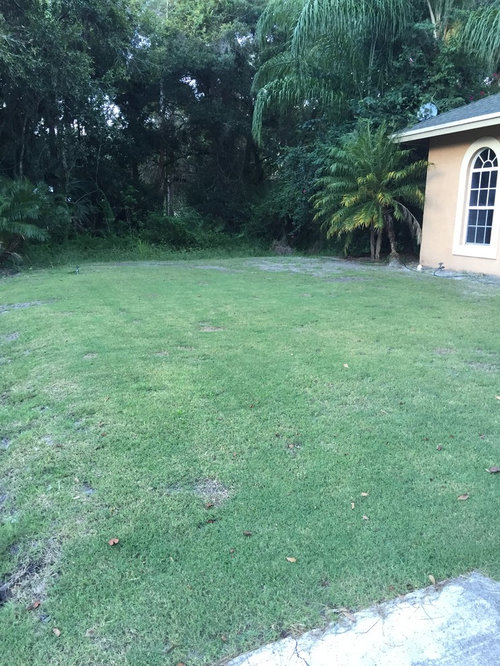
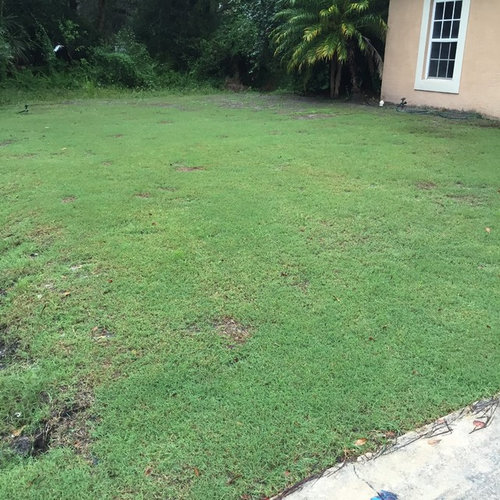
I live in Florida, about 100miles south of Orlando. Seeded riviera Bermuda on May 12. current status mow at 1 inch every 3 days, water 1 inch a week if it's not raining and apply 1 lbs of nitrogen per 1000sqft every month.

rriedel138's ideas · More Info

rriedel138's ideas · More Info
It has been quite the battle this summer with lots of weed pressure and two attacks from army worms and what I believe to be web worms. What a roller coaster ride, I'd get it looking good then have to spray weeds again or it would look really good then the worms would chew it to nothing but stems. But here it is at its most stable so far, it has been green and happy for close to 4 weeks now. As of right now my main concern is getting it to thicken up and fill in some bare spots left by weeds and what not, which it is doing, just painfully slow. The bare spots range from 6 inches to 2 ft in diameter. I'm also definitely working on the low end of the required sunlight spectrum. On to my questions: 1. I will have quite a few runners when I edge the driveway for the first time. Would it be benificial to spread them in the bare spots and cover with sand? 2. Although I'm trying to train the grass to grow horizontal by mowing at 1 inch. Should I raise my mowing height to let the leaves capture more light? What would be the effects of scalping it to .5 inch and sanding some low spots this time of year? I realize it is late in the growing season but I am in south Florida with temps still in the upper 80's with possibly the most direct sunlight yet considering the trees and angle of the Sun's path. 3. Would growth regulators have a positive impact on my situation with low light levels and wanting the grass to spread horizontally instead of vertical? 4. Pros and cons about using milogonite as my main source of nitrogen? Thanks in advance for all the advice, I would not have made it this far without the forum.

Comments (5)

  • 10 years ago

    I think you're safe to sand it now to raise the low spots. In your area the lawn may never go dormant in the winter months.

    The best defense against caterpillars are the paper wasps that live under your eaves. If you are allergic to wasp stings, then you can't have them, but if you are not allergic, leave those wasp nests alone and teach yourself not to panic when you see a wasp. That is a hurdle, but those paper wasps are almost as docile as mud dauber wasps. You can teach them that you're not going to hurt them by walking slowly up to the nest and not swatting at them. They may send out a scout, but just remain calm and the scout will go back to work on the nest. Once that happens, you're golden. Anyway these wasps collect caterpillars and stuff them into the cells in their nest to feed their young.

    If you don't have wasps or can't have wasps, then the best product to kill caterpillars is BT Worm Killer. It is a disease that only affects caterpillars. It paralyzes them immediately once they bite into a blade of grass with the spray. A $10 bottle is a lifetime supply.

    How are you watering your one inch? Are you doing it all at one time or doing 1/7-inch per day like most Floridians? Also you only need 1 inch per week when the temps are in the 90s. When it cools into the 80s you should be doing 1 inch every 2 weeks. Watering too frequently encourages weed growth.

  • 10 years ago

    1-yes, 2-maybe, 3-no

  • 10 years ago

    Thanks.. I try and water 1 inch all in one day with oscillating sprinklers now..but I do get a few puddles. I haven't irrigated the past few weeks do to sufficient rain fall. So you think I can scalp it to 1/2 an inch and sand that's great. What about the milogonite as the main nitrogen source? I also have some Bermuda planted on the south side of the house that will soon get hardly any sun. What should I do with that? Will it go dormant from lack of sun and then come back or just slowly disappear? Rye grass does really well in that area over the winter?

  • 10 years ago

    He said you could sand, the scalping part may not be wise on young seeded Bermuda--You worked hard to get it sprouted, so don't scalp it then smother it. Just a little sand to level that spot & a quick rake to pull some leaves up to the sunshine. If you bury it, it will have problems. Milorganite is a great source of N. That Bermuda in the shady side yard is not long for this world. Use it to plug your bare spots out front & plant something else in the shade

  • PRO
    10 years ago

    The comments above have some great info. I would recommend getting a soil test of the area to see what your lawn may be lacking or may have an excess of. In regards to thickening your lawn I usually focus on feeding my clients lawns before every major season, sometimes more often. This allows the roots to strengthen to create a healthier overall landscape. In Boca Raton, FL we usually have trouble with heat or over watering depending on the season. Feeding your lawn in this way allows for a faster recovery from harsh weather and the pests that have been bothering your lawn as well. Check us out for detailed landscaping and lawn care tips!