Software
Houzz Logo Print
gbehazinb

Sandy Soil Issue.

II posted the following in soil compost forum. But there isn't much traffic there . So I post it here too.

Sandy SOIL 93% sand

I have just moved to Southwest NC. The soil in this part of NC is very sandy.

I
want to make about 200 sq-ft garden and need to improve/amend the soil.
With pH being around 6.5, I can add pine needles and fall leaves. All I
have to do is to rake. But I wonder if there are other options that
won't cost too much.

Any suggestions will be appreciated.Sey

PS: I can think of adding manure, compost, peat moss.

Comments (38)

  • 9 years ago
    last modified: 9 years ago

    Well I am in Florida, and the big problem here is soil nematodes which makes it very difficult to grow tomatoes in the ground, lots of gardeners here opt to grow tomatoes exclusively in containers, hopefully that is not your problem.

    I used to buy lots of expensive amendments, but overtime I realize it's just not going to work. The soil have poor ability to hold water and all the fertilizer and nutrients just wash away. So now I try to put as much organic matter in as I can. Personally I started doing full blown back to eden garden recently, which a lot of people may be are apprehensive and skeptical of, it takes time for woodchips to break down, so it's a long term plan. Basically had a tree service unloaded a ton of woodchips and spread it over my backyard. Also doing a lot of my own composting.

    I think a faster way is buying bulk compost from some local supplier. Although I like the Black Kow cow manure compost from Home Depot, in some area they also have chicken manure compost from the same brand that is in broken pellets forms which I think is pretty good.

    You may want to look up this concept called core gardening that MiGardener is doing.

  • 9 years ago

    Check to see if your city has compost, we just got a facility and it was relatively cheap, I paid 12 dollars a yard.

    I'm using it in raised beds and containers with good results. My soil is pretty bad too, so I filled my raised beds and containers with compost, fine bark, peat moss, and perlite.

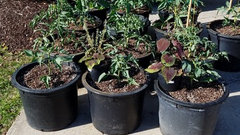
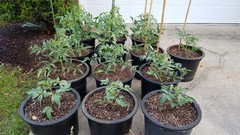
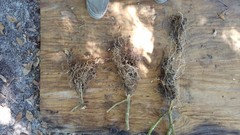
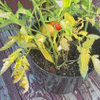
    If you do have nematodes, they suck. This is what the roots looked like from tomato plants I pulled the other day.

    Basically, if you can get compost use it in containers, raised beds, and in sandy soil.


  • 9 years ago

    Thank you, Max and PicolaG, for commenting. I have yet to find out what is available locally.

    About nematode (RKN) , I have no idea if it exists around here.

    SEY

  • 9 years ago

    Hi sey....that is a big lifestyle change...moving to NC! Congrats on that. There certainly is a lot of American history around you. I recently researched nematodes...and they are vile little suckers. I hope you do not have them there. Goodluck on your east coast garden! Ed of Somis

  • 9 years ago

    Sey,, even if your soil is very bad, you can still make a nice garden if you amend the soil properly with lots of organic material. I have raised beds with lasagna type of fillers, mine has hay, black cow, peat moss and fertilizers. Occasionally I add other fillers like bark or leftover container soil. If you are thinking to add city compost or mushroom compost make sure that you inspect it first because it is not always of a good quality but sometimes it is and it is either free or inexpensive.

    Have fun in your new place and post some pictures for us...

    Silvia

  • 9 years ago

    Sey.., Today's news reports your city is experiencing severe hurricane damage and flooding. Hope you are high and dry!

    Remember? I suggested in another thread that you grow tomatoes in containers or raised beds. Best method for southern growing and your soil conditions.

    There is reference above to 'core gardening'. Basically a rehash of the famous work of Ruth Stout who wrote about and preached this method. Take the time to search her name. It is exactly the method you should use to improve your sandy soil. Inexpensive. Eons ago I visited her New England garden. An unforgettable experience.

    When dealing with sandy soils always enrich on the surface because they drain so quickly.

  • 9 years ago
    last modified: 9 years ago

    Right now is the perfect time to get to know your new neighbors by offering to take their fall yard waste off their hands (brush, fallen leaves). I would chop/shred it fine and throw it into beds now. Just be careful about things like poison ivy, etc. in the yard waste.

  • 9 years ago
    last modified: 9 years ago

    First off, thanks, nandina. We are safe . We did get a lot of rain, some flooding, loss, loss of power, water, cut mobility due to flooding some roads . Then a dam broke on Lumber river, causing extended flooding. But we are riding it out. We just got the electricity back. That is how I could get into internet. On the positive side, the weather is beautiful, sunny, no rain, no winds.

    Thanks every body for the comments . I will come back later for an appropriate thank you note.

    Sey

  • 9 years ago

    I'm on the shore of Lake Michigan so basically garden in a sand box. My tomatoes did well this year, but required near daily watering because the water just pours right through. The soil was amended with composted manure and lime before I started. I plan to add a lot of plant and manure compost this fall to help cut down on the quick drainage, but I imagine that will be a never ending process.

  • 9 years ago

    Thank for p9sting and comments, y'all.

    I am in the process of gathering lots of fall leaves and pine needles to amend the soil. This should prepare it for next spring planting. I am also looking possibly to find some cheap compost source.

    As Janice, mentioned (based on her experience ) I can do it in sandy soil but in the dog days of summer here in deep south have to keep watering and fertilizing far frequently. But I rather amend the soil for some reasonable moisture retention.

    I have yet to till the garden spot. Looking to find a tiller to save my back. hehe

    Sey

  • 9 years ago

    I find a thick mulch on top will protect the ground from penetrating heat starting in mid June. The reduced temps from the mulch will help retain the moisture. A well amended soil is nice to have, but a thick mulch plays a big role in moisture retention when the stakes rise.

    I mulch with a thin newspaper layer at plant out. I want the heat to transmit to the ground in March. The newspaper blocks splash back when it rains.

    if your area is Like mine, the transition from June to July requires a strategy. I recommend a five inch mulch of cardboard, newspaper, and straw. You may also need a shade cloth to protect against late afternoon sun. I don't have all the answers on Summer season 2, still experimenting myself.

    Welcome to the Carolinas.

  • 9 years ago

    I don't know what your garden space is like, but I have one of these Honda cultivators. I just got it this year and love it. It starts very reliably, and I usually wear out before it does. It does tend to get fibrous roots tangled in the tines, but it is easy to stop, remove the end pieces, clear it, and get it going again. It is on the small side, certainly not an industrial heavyweight, but is very energetic.

    http://www.homedepot.com/p/Honda-9-in-25-cc-4-Cycle-Middle-Tine-Forward-Rotating-Gas-Mini-Tiller-Cultivator-FG110/207081009

  • 9 years ago

    Curious whether anyone gardening in hot, sandy soil has tried ollas? Seems like you'd need to amend soil enough so that there's something to provide wicking action, and sandy soil probably requires the ollas to be closer to the plants, but it could be an interesting thing to try.

  • 9 years ago

    I have not tried Ollas (had to look it up). I have seen similar approaches with buried soda bottles with pin holes. I put a drip hose under the mulch. Don't have any issues with moisture retention once the mulch goes down.

    I have challenges with germinating carrot seeds. Can't mulch too heavy or the seeds can't pop up. The uncovered top layer of sandy soil dries out fast. To counter, I run multiple coils of drip hose, and plant a few times. Eventually I can get a stand.

    For 200 square feet, water and fert needs shouldn't be that great. That is less than 15 by 15 feet. Even if applied weekly, not that significant. If like here, water should be plentiful.

  • 9 years ago
    last modified: 9 years ago

    Buried soda bottles, etc. are really no substitute. I've used them, and they're fine for me in my soil with lots of clay content, because they are effective at getting moisture down into the root zone if the surface is dry and doesn't want to let water in easily. But they clearly won't do what clay ollas do, which is very slowly wick water into the soil. No matter how small the holes made in a plastic bottle, the result is still that water runs out of them rather quickly, and I suspect they would still allow water to drain straight down and away far too quickly in sandy soil.

  • 9 years ago

    As I understand, Ollas? has limited potential. With 300 sq-ft garden I don't think it would be a practical approach. Where I am, it rains in the summer and watering is not an issue. With sandy soil it has to be done more frequently. I am planning on amending with lots of organic mater to deal with it, to some extent.

    Sey

  • 9 years ago
    last modified: 9 years ago

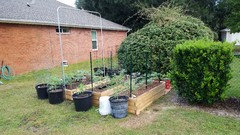
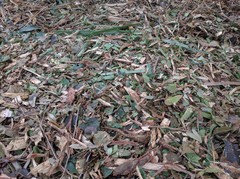
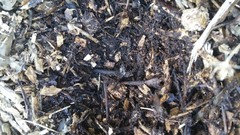
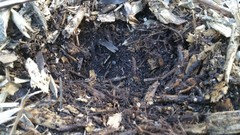
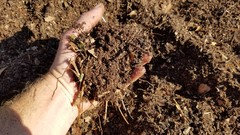
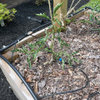
    This is 4inches thick woodchips that I put over my raised beds and soil surface 40days ago. The small pellets are all millipedes feces (or casting), who are doing the majority of the composting work.

    I was thinking it would take up to 2 years, but with the rain, proper mixing of green and brown materials, and the milipedes working, I think it's going to be just 2 seasons for a large amount to breakdown.

    Forgot to mention I have a big problem with ants, which seems to thrive in sandy soil. Their number is reduced in the mulched area because they hate the uneven surfaces.

  • 9 years ago

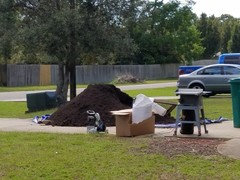
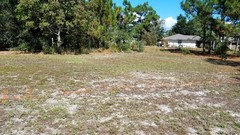
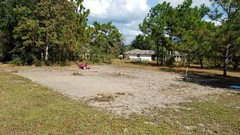
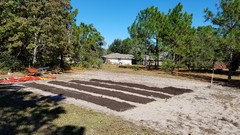
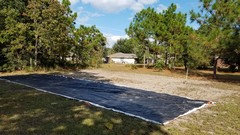
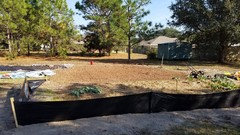
    I just found a yard to do some more gardening in, the soil is all sand. I got some compost delivered, but not sure if it will be enough. I'll let you know how it goes. Definitely rent a tiller, it cost me 60 bucks, but it was well worth it.

    Day 1

    Day 2

    Day 3

    My buddy was able to get some old billboard signs, so I'm thinking of using them as landscape fabric, going to burn holes to plant in then.

    Going to cut them in 25 x 4ft pieces, and then put drip tape underneath. What do you you guys think?

  • 9 years ago
    last modified: 9 years ago

    seysonn: As I understand, Ollas? has limited potential.

    Well, it depends on the implementation. The point of them is not only to give water but to give a consistent water supply through wicking depending on how dry the soil is. When the soil is already moist, very little to no wicking occurs. So they're not just good for drought but also for conditions in which soil won't hold water well. It saves water overall in that you don't just put water into the soil only to lose it quickly and have to put more water in, but it also prevents swings in moisture for plants in soils that are prone to drying out quickly.

    If I were in your situation, I would experiment with them in some beds to see how they work in your soil. Some people set up elaborate irrigation systems around their ollas (that guy says he saves a lot on water by using ollas, even in MI), but I don't know that 300 sq ft would require that. Trialing a few would be dirt cheap if you DIY them instead of buying actual ollas, which, granted, are more attractive but too expensive.

    I actually may try out some clay DIY ollas next year. Even here in my clay-heavy soil, I think it would be beneficial if we get another hot, dry summer like this past one.

  • 9 years ago

    I just looked up ollas, seems like a pretty cool idea. For small gardens it would work, but on a big scale, not sure. Expensive?

  • 9 years ago
    last modified: 9 years ago

    Thanks Gor. Yes , PcGrowr, I think Olas might be thing to consider and experiment in small scale .
    Your new garden location sure looks like all sand. Mine is about 93% sand. But on the spot there some nice grass growing.
    Like I have said before , I am adding lots fall leaves, pine needles and lots of wood ash . I am planning to make about 200 sq-ft for next year. After first tilling I will design the garden into beds and walk ways. Then I will skip amending the walk ways and concentrate on the beds.

    I was in a tractor supply store today. They has 2.2 cu-ft peat moss for %4.95. I will get some of those and keep them for spring planting just to amend the planting wholes wit it.

    I realize that it will take few seasons of amending to make a half decent soil structure.

    Sey

  • 9 years ago

    Sey, I found this paper about sandy soil and biochar. I myself have no experience with sandy soil. Good luck on your new place.

    For sandy soils

  • 9 years ago

    Thanks, Antmary.

    Good information.

    Sey

  • 9 years ago

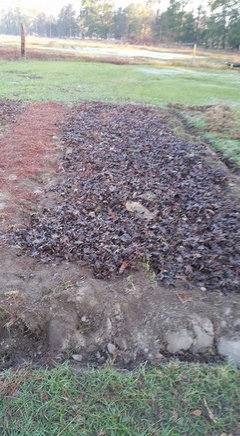
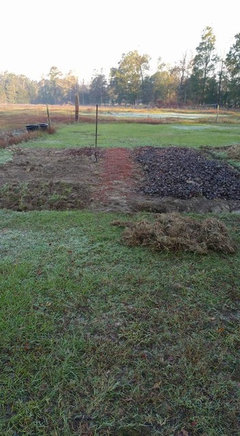
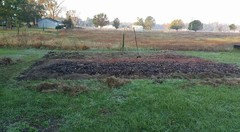
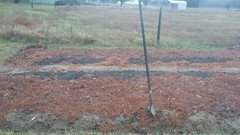
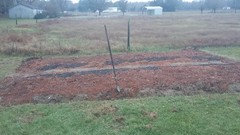
    Here are few picture of my graden-in-progress

    ... and

    On the right leaves are spread to be mixed in. On the left (lower picture) and front , you see some grass roots and newly dug/turned. That is final. No more digging.

    As up this post the bed(s) are put into bed to sleep/hibernate over the winter to digest all the amendments buried in.


    one more

    sey

  • 9 years ago

    Lookin good. Looks like you have room to expand if you needed to.

  • 9 years ago

    Hi there Janice,

    Yes I can expand as much as I can handle and need.

    I am not just very comfortable with so much sand. Some call it sandy loam. I have never gardened in a soil with so much sand. So I am amending it as much as I can. So far I have 500 sqr-ft. But some of that will be walk ways. But I will have no less than 400 sq-ft for planting. Probably I will plant about 30 tomato plants , few peppers, okra, eggplants ...

    sey

  • 9 years ago

    I think you will be pleased with the sand. The tomatoes here love it. You will get explosive growth in the spring. I have a mix of compost and top soil in my raised beds. I get better results in the sandy soil for some plants. In my mind (and I may be wrong), the sand is not a limiting factor. The roots can grow fast and the soil heats up early.

  • 9 years ago
    last modified: 9 years ago

    I don't think the sand will be a big issue in a place where there's plenty of rain as long as the plants get enough nutrients. I always was under the impression that, as long as there are no pH headaches, the real problem with growing tomatoes in sand on the East Coast is in places where there are RKN. I know that further south RKN can be a big problem in sandy soils, but not sure about NC where you are.

  • 9 years ago

    Thanks Gor,

    Yes technically you can even grow in pure sand. That is very much like hydroponics. But I want to grow in soil, traditional way. A good soil should have a balanced moisture retention an drainage. That is the direction I am moving. We know that with poor moisture retention there will be loss of nutrients and will require frequent fertilizing and watering.

    Yes, statistically, this area gets good rain in the summer. But I am the gardener who would not fully depend on rain. I will have my rain gauge and supplement the rain when necessary.

    Things are moving along fine. I am discovering more top soil in and around the wooded area. And there is more silt in the soil that I was estimating.

  • 9 years ago

    Hey Sey,

    Do you test your soil? When making a fresh garden do you add any fertilizer to the whole area (like a all purpose 10-10-10 or 5-5-5)?

  • 9 years ago

    Well I finally mowed the leaves on my sand patch, I've added lots of compost, tomorrow I will rent a tiller and get everything thoroughly mixed together. So far, so good. It's started to look like good soil.

  • 9 years ago

    Well done, Kevin.

    Once the leave are broken down and the compost worked in, you should get a good structure. I will wait until spring to till. Hopefully by then the leaves and pine needle will be broken down.

    Today I went to Tractor Supply and bough couple of bales of peat moss. At $4.99 for 2.2 cu-ft of compressed stuff was a good deal. Also went to Walmart and bought some Alaska Fish fertilizer (5-1-1 ). It was $3 per gallon container. I will keep them until spring time.

    Sey

  • 9 years ago

    SANDY OR NOT, GARDEN MUST BE!!

    It rained a bit last night, making the amendments wet. Hopefully this should help rotting the stuff buried. I,ve got time. Won't disturb anything until mid March. That is 4 months away. Then I will till to get a real mix. I will gather more fall leaves to make a compost pile.

    SANDY OR NOT, GOTTA HAVE A GARDEN. heh

    Sey

  • 9 years ago

    Little Update :

    I wanted to do some fall planting but could not do it for couple of reason : (1) I could not find seeds in BBS. (2) The garden was not quite ready. So here is what I did, just as an experiment.

    I had lots of Fenugreek, Mustard and Cilantro seeds ( as herbs / spices in my cupboard) . So I just broadcast some of those, raked in and covered lightly with pine straw. Guess what ? I see some sprouts showing up. That is just amazing.We might have some cool crop after all.

    I will share a picture when the sprouts can be seen by the camera's eye.

    sey

  • 9 years ago

    Sey, that is a good idea, later on you can eat them or use them as a cover crop.

    Silvia

  • 9 years ago

    You are right, Silvia.

    Those that I sowed are cool crops. Once the get their roots established can survive NC winter. I love mustard greens, cilantro. Fenugreek is a good nitrogen fixer, in addition to being edible.

    Right now temperatures are fine. And even with cool weather, the soil gets warm under the sun.We get plenty of sunshine.With a thin layer of pine straw, the soil won't cool off at nights.

    Sey

  • 9 years ago

    Last night the lows dropped to 30F and my green sprouts survived. Tonight and two more night will the same.

    Also I planted few experimental garlic, about 16 cloves. I like to plant more but my garden is not ready yet.

    sey