Software
Houzz Logo Print
vaporvac

How to fertilize link

wirosarian posted this wonderful link on the rose forum. I thought it could also help everyone here.

http://www.extension.umn.edu/garden/yard-garden/soils/soil-test-interpretations-and-fertilizer-management/

Comments (15)

  • 10 years ago
    last modified: 10 years ago

    Thanks, Vaporvac. U. of Minnesota link frequently showed up when I googled for info. That's a great link. Bluegirl recently visited San Antonia Botanical Garden with Roselee ... both are from zone 8b Texas, they took fantastic pics of rare plants & butterflies in that garden this past weekend Oct 22 .. see below link:

    http://forums.gardenweb.com/discussions/4241356/a-day-at-the-gardens

    Vaporvac Z6-OhioRiverValley thanked strawchicago z5
  • 10 years ago

    Vaporvac: That's a great link. Very comprehensive write up indeed. Thanks

    Vaporvac Z6-OhioRiverValley thanked Khalid Waleed (zone 9b Isb)
  • 10 years ago

    Thanks Straw. I learned something about pH:

    "The optimum pH range for plant growth in organic soils (peats and mucks – soils with an organic matter content greater than 19%) is lower than the optimum range in mineral soils. For many plants, the most favorable range in organic soils is pH 5.4 to 6.2."

    Maybe Is should stop worrying about my very low pH 5.5 of my amended soil.

    Vaporvac Z6-OhioRiverValley thanked totoro z7b Md
  • 10 years ago
    last modified: 10 years ago

    Totoro: That sentence refers to plants with slender leaves & cluster root, rather than roses and trees with chunky-woody roots.

    The tap-root system (Dr. Huey) does better in alkaline clay than the cluster-root system (multiflora). Tap root is solid & woody, there's more demand for calcium and potassium, which is more available in neutral to pH 8.

    Dandelion is a tap-root system and it's invasive in my alkaline clay, versus my last house with acidic clay: much less dandelions, esp. around tree-roots, which made the soil more acidic. Dandelion is in the "broad-leaf" weed category.

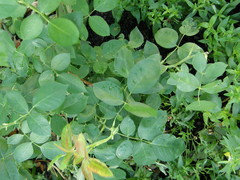
    The hard-woody roots like Dr. Huey & Centifolia do better in neutral to alkaline soil with more potassium and calcium available. Dr. Huey has leaves in set of 5. My own-roots that like it alkaline: Betty White, Dee-lish and Stephen Big Purple have LARGE & ROUND leaves in set of 5, plus woody-root.

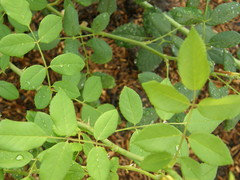
    The cluster-root like roses with multiflora parentage (slender & long leaves in set of 7) prefer acidic soil. I killed plenty of roses with putting cracked-corn (pH 4) to fix my alkaline clay, but the only 2 roses that like it are: Lady of Shallot and W.S. 2000, both have leaves in set of 7. Duchess of Rohan also has leaves in set of 7, and loves acidic rain (pH below 5).

    Marie Daly (polyantha) also has leaves in set of 7, but the last 2 are really tiny, so it's in between a 5-leaflet and a 7-leaflet, that one does very well in my alkaline clay, if there's acidic rain.

    Acid plants like azaleas and rhododendrons actually have shallow & hair-like cluster root, rather than chunky-woody roots like Romantica and Meilland roses. Many plants died in my zone 5a winter, so I dug them up and observe the root-system.

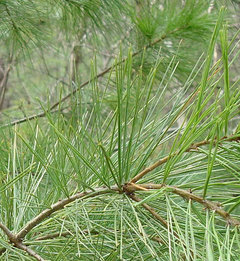
    For trees: the thin & slender leaves like white-pines have shallow & cluster roots and prefer acidic & loamy soil. My sister had a huge & dark-green white-pine tree in her sandy & acidic soil, while my 5 white-pines are pale and wimpy in alkaline clay. But my 7 Norway Spruce (thick & chunky leaves) are very vigorous in my alkaline clay, same with my 2 Black-Hill spruces.

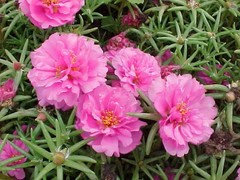
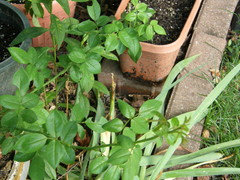
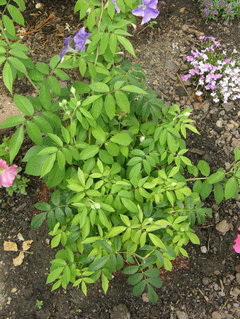
    Same with annual flowers: The large & round leaves annual-flowers like geraniums, petunias or the broad & lacy leaves like Marigolds really like my alkaline clay, but the annuals with skinny-leaves died in my clay, see below Internet pic. of moss-flowers, which died within a month in my clay. Note the slender leaves:

    Note the slender & multiple leaves in white-pine below, which prefer sandy/loamy and acidic soil:

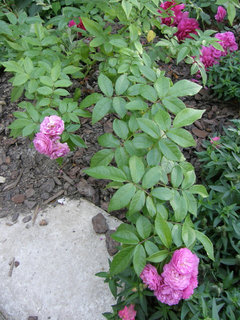
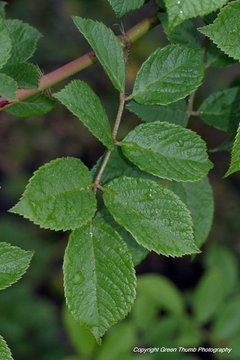
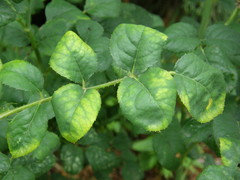
    Note the 7-leaflet skinny leaves of Excellenz von Schubert rose in my garden. I put a HUGE amount of sulfur, plus gypsum, plus pine bark (pH 4) so the leaves turn dark-green for my alkaline clay. It loves acidic rain-water, and I put the rain-spout directly on the bush, dumping tons of acidic rain water. It's always healthy, zero blackspots:

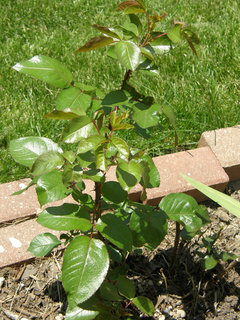
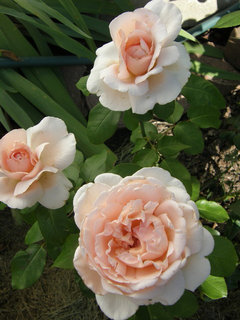
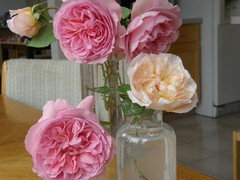
    Note the large & round & glossy leaves of Betty White (French Romantica) in set of 5 leaves. This one HATES alfalfa pellets (pH 5.8), did well with COMPLETELY DECOMPOSED crack corn (neutral pH), and even better with horse manure (pH 8). Glossy foliage means it has a higher-demand for minerals (magnesium), such as in alkaline clay. It's my best bloomer with 4 flushes per year. Pic. as a tiny own-root.

    Below is Betty White with FIRM & thick petals that last many days in the vase, compared to the thinner petals of moss-flower-annual, or Excellenz von Schubert. Thick & firm petals mean a higher demand for calcium and potassium, which is best through alkaline clay rich in minerals.

  • 10 years ago
    last modified: 10 years ago

    Just went out to check all my leaves. The disease-resistant roses with glossy foliage all have 7-leafets: Kordes Flower Carpet, Pat Austin and Tchaikovsky. Kordes Flower Carpet doesn't have mildew in shade, but Knock-out (5-leaflet) has mildew.

    Other DISEASE-RESISTANT with 7-leaflets: William Shakespeare 2000, Duchess de Rohan, Excellenz von Schubert, Annie L. McDowell, Blue Mist, Poseidon, Cloudert Soupert, and Crown Princess Mag. ... all have leaves in set of 7. These can take wet soil well, like multiflora rose thriving in wet lands.

    But the blackspot-prone roses: Comte de Chambord and hybrid teas have leaves in set of 5, and much larger & round leaves. These prefer well-drained soil, and tend to blackspot with prolonged wetness & acidic rain.

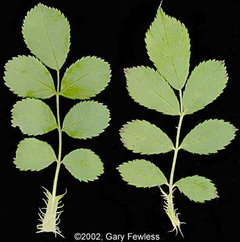
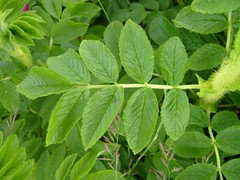
    Multiflora-leaves are clearly a set of 7, see below pic:

    http://na.fs.fed.us/spfo/invasiveplants/factsheets/pdf/multiflora-rose.pdf

    "Each multiflora leaf as 5 to 11 one inch-long oval leaflets with toothed margins. The undersides of the leaflets have tiny hairs and are paler than the upper surface.

    The base of each leaf stalk has a characteristic stipule (green, leafy structure) with hairs or a comb-like fringe along its margins. Flowers. As indicated by its scientific name Rosa multiflora, this plant has abundant, showy clusters of flowers which typically are white, though sometimes slightly pink."

    Below is Austin rose William Morris, which did terrible in slightly acidic wet & peaty potting soil, then finally died when I put in my wet clay made acidic with cracked corn. Note the leaves are in a set of 5, which means it prefer well-drained & loamy soil, and CANNOT take acid & wetness like those of set-7 leaves. Folks complain about WM being stingy and rust-fungal-prone.

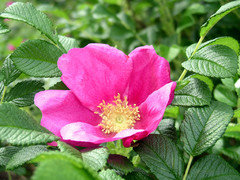
    The drought-tolerant & disease-resistant Rugosa has rounder leaves in set of 9, plus very bristly canes full of thistles, see below:

  • 10 years ago

    Straw: Very good information regarding 7 and 5 leaflet rose cultivars. Do all or bulk of 5 leaflet and 7 leaflet rose cultivar follow the same pattern, ie, 5 leaflet prefer loamy well drained soil that is not acidic and 7 leaflet can take wet soils and acidic conditions better?

    best regards

  • 10 years ago
    last modified: 10 years ago

    Khalid: That's a good conclusion. Take Paul Neyron which does well in your loamy & well-drained soil and has a blackspot reputation for acidic wet soil. It's a 5-leaf-system & very healthy in my fast-draining & alkaline soil:

    Below is Golden Celebration, the biggest water-hog in my garden, it's a 7-leaf system and does well right next to the rainspout.

    Below is Queen of Sweden (very disease resistant & low-thorn) with a mineral deficiency during hot June (due to compact clay) .. but that went away when we had tons of rain. It's a 7-leaflet system, and I gave that to a friend, since it's a stingy water-hog.

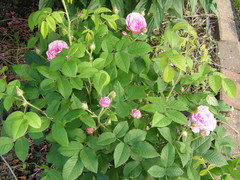
    Below VERY DROUGHT-TOLERANT Centifolia Le Rire Nias, which I killed due to dozen of suckers. Very vigorous in alkaline clay, with a 5-leaf system:

    Here's a different Centifolia which doesn't sucker, but drought-tolerant & very disease-resistant, it's a 7-leaflet system, very thorny. I notice that some 7+-leaves with many thistle can handle drought (such as 9-leaflet Rugosa),

    But the LOW-THORN 7-leaflets roses like it soaking wet & acidic (Golden Cel., Queen of Sweden, Excellenz von Schubert, Annie L. McDowell, Duchess de Rohan, Golden Celebration). Question for Khalid: Does your Shocking Blue (almost thornless) have 7-leaflets, or 5-leaflets? Thanks.

  • 10 years ago
    last modified: 10 years ago

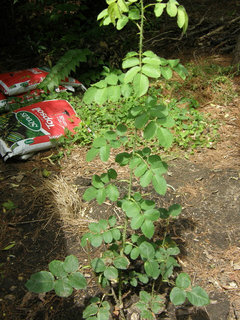
    Another water-hog in my garden, which doesn't bloom unless there's tons of rain, below is Duchess de Rohan with a 7-leaflet. Picture taken when it was in a "wet and shady" swamp. It's almost thornless. It bloomed well & healthy, except for leaf-cutter-bee damage, so I moved that to more sun.

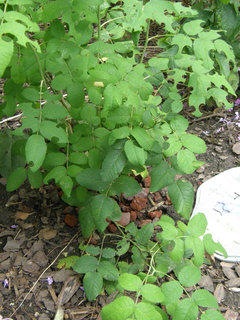
    Another water-hog & almost thornless rose with 7-leaflets: Annie L. McDowell. This one likes it wet & acidic just like my almost thornless Excellenz von Schubert.

    Annie died on my sister in dry & alkaline California, but does well for me since I put tons of acidic pine bark & gypsum in the planting hole, plus sulfate of potash/gypsum, plus lots of rain:

  • 10 years ago
    last modified: 10 years ago

    I'm going out to count leaves now, LOL! Most everything has five but Savannah has seven.

  • 9 years ago
    last modified: 9 years ago

    Lavenderlace: thank you for that info. The 7-leaflet needs lots of acidic rain to bloom & best in partial shade. Here's a comment on Savannah in HMF: " Nastarana

    It remains a mollycoddled, pampered spoilt baby, about 18" tall, which has not happened to feel up to blooming this year. In contrast, little "Benny Lopez", also at about 18", has produced three separate and spectacular flushes, despite being overshadowed by that thug, Duchess de Rohan."

    Benny Lopez was discovered by Ingrid Wapelhorst in alkaline clay soil, California ... where Rouge Royal (French Romantica) also does well for Ingrid. Ingrid is a fantastic lady, I exchanged info. with her before.

  • 9 years ago

    My experiences with Savannah are that she likes shade and hates clay! She's part of the "Sunbelt Series" so I was hoping that she would like the sun more though.


    The shade plants are loaded in blooms while the full sun ones look healthy but small with dramatically less blooms. I wanted small so that's fine but it will be interesting to see what next year holds when the temperatures hit 100 compared to this nice fall sun.


    I do have to defend her scent, as that was a very pleasant surprise!

  • 9 years ago
    last modified: 9 years ago

    Lavenderlace: Thank you for your valuable feedback on which roses bloom best in loamy soil like Jude and Savannah. Years ago I read a University of Hawaii Extension document on phosphorus, which stated that phosphorus release is best in sandy/loamy soil.

    True, the most-blooms garden in HMF is Kitty Belandez, in CA with alkaline sandy soil. Also GERDA in Russia posted the best blooms Austin Roses in HMF. I wrote to her: She has alkaline loamy soil with pink hydrangea.

    http://www.helpmefind.com/gardening/l.php?l=99.4875364

    Today I found there are 2 processes to obtain phosphorus for blooming: alkaline-phosphatase and acid-phosphatase. Personally I prefer alkaline-phosphatase: better blooms quality. That's when I posted my best blooms of Radio Times in Nov. 2011, achieved through fluffy horse manure (pH 8) & alkaline clay at pH near 8 plus alfalfa meal and rain-water. See below:

    Then I moved Radio Times and made the planting hole more acidic with cracked corn & gypsum, plus fertilize with sulfate of potash. It has more blooms, but the quality go down: less petals, less scent, and smaller blooms in Nov. 2016. See below:

    http://www.fs.fed.us/rm/pubs_rm/rm_gtr258/rm_gtr258_024_029.pdf

    "Acid and alkaline phosphatase activities (mg p-nitrophenol released g-1 soil h-1) were studied at two research sites in northern Arizona. In both juniper and interspace soils, alkaline phosphatase activities were significantly higher than acid phosphatase activities. The results indicate that soil microbes are the dominant producers of phosphatase in the studied pinon-juniper soils."

    There are more nitrogen-fixing bacteria at alkaline soil pH, thus my Radio Times were much healthier & more leaves when the soil pH is near 8. For roses that are good bloomers or efficient in getting phosphorus (Radio Times or Munstead Wood), alkaline-phosphatase definitely produce better blooms and healthier plants.

    I repeat my mistake again by making the planting hole of Munstead Wood acidic with cracked corn, it's very wimpy & not healthy and blooms are lousy.

  • 9 years ago

    Another abstract on acid & alklaine phosphatase & lime and the benefit of organic fertilizers using concurrently.

    http://www.sciencedirect.com/science/article/pii/S0038071700001668

    "We investigated the potential of using alkaline phosphatase (AlkP) and acid phosphatase (AcdP) activities, for determining the optimum soil pH for crop production and the amount of lime required to achieve this optimum.

    Five acid soils, which varied widely in selected properties, were treated with CaCO3 at rates of 0, 0.2, 0.5, 1.0 and 2.0× the soil's lime requirement needs ...

    However, incubation of the lime-treated soils for 67 days followed by treating the soils with organic amendments (which included finely ground chicken manure and alfalfa residues) increased the AlkP/AcdP ratios to approximately 3.0."

  • 7 years ago

    UPDATE: got 7 rain-barrels and water exclusively with rain-water (pH 4.5) here. BIG DECLINE in health. Roses lose leaves earlier than normal with more black-spots.

    Vaporvac Z6-OhioRiverValley thanked strawchicago z5