Software
Houzz Logo Print
carl_lockrem

Need Help with Retaining Wall

9 years ago
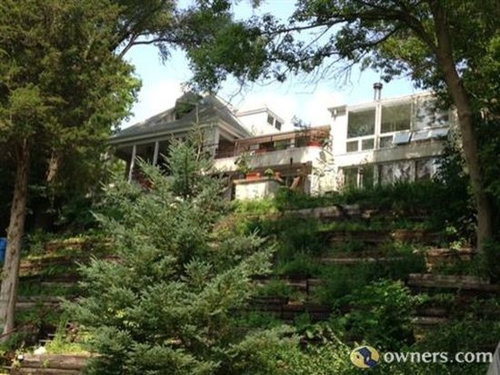
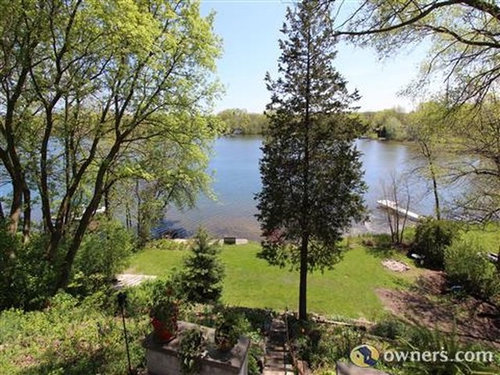
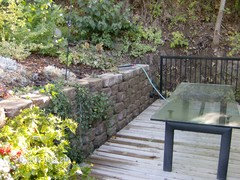
Just purchased this home on a small lake and one of the BIG projects is what to do with the 7 tiered railroad tie retaining walls that are starting to rot which extend 80 ft. with each tier being 2 1/2 ft. The slope is about 33 degrees with a run of 50 ft. There is minimal access from above (20 ft by side of house that is heavily trees and even a steeper slope. One contractor said it would cost $15,000 just to clear trees and build a temporary retaining wall to get equipment down to the site.) and there is the lake below which some said they would have to barge equipment in that would take money to get that set up as well.

The quotes I got for removing the ties and building new block walls has ranged from $100,000 to $140,000. Much higher than I would like pay. I priced out materials for DIY at $30,000 but I have several questions.

Is it possible to just regrade the slope bury the timbers as we don't actually use any of this hillside for gardening or anything else? This sounds like the cheapest and simplest to me.

Or can I just build new block walls in front of the ties and bury the them that way? I can carry 20 lb blocks down 41 steps instead of joining a gym or rig up a pulley and slide system. If I take this on in stages is it best to start at the bottom and work up? (I envision a 7 year DIY project versus a hundred thousand dollars in labor to get it done now.)

I know that a good footing and proper drainage with appropriate fill behind the wall is necessary for a good result. there is only about 4 feet at most between each wall segment. Would three ft. give me enough room for block and for back fill or do I worry about movement over time with the ties in front of each wall deteriorating (some settling would have to be expected)? I would hate to put 7 years or tens of thousands of dollars into something only to see it fail in 15 or 20.

I appreciate advice on how to tackle this beast.

Thanks. Carl


Comments (10)

  • PRO
    9 years ago

    if you're looking to DIY, hire a structural engineer to tell you what you need to do. I don't know your soil, don't know how stable the slope is/ would be without the timbers, don't know all the loading forces acting on the walls, don't know how water plays into this... basically it would be irresponsible to guess at a solution.

  • 9 years ago

    Thanks a good place to start but where would I look to find one? I did a quick web search in my area and most of the structural engineers list only "structures" as their services. Is a land surveyor the same thing?

  • 9 years ago

    Soils engineer can test the dirt and tell you what you need. Maybe crip walls?

  • PRO
    9 years ago

    where are you located?

    If the blocks you're referring to are the segmental wall blocks, I'd either ask the stoneyard selling them for a recommendation or contact the manufacturer directly and ask for an area rep to call you.

  • 9 years ago

    West Bend Wisconsin and yes I was referring to segmental wall blocks.

  • PRO
    9 years ago

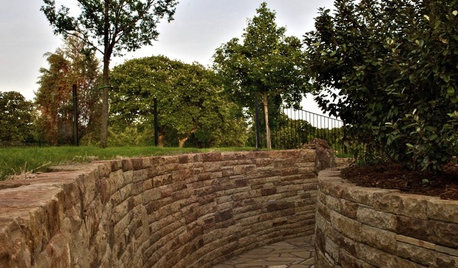
    We built this one with back fill and big ‘O” for drainage it is about 60’ long and 4’ high in one day with 3 people and asmall back hoe cost less that 6, 000. I would remove the ties they will rot and cause all kinds of problems down the road you might be able to do 4 tires with steps going down to the lakeinstead of the 7 you have now a lot of work and a ton of it by hand but can be done and well worth it at the end I would however pay for a consult with a pro in your area it will be worth every penny I think

    Carl L thanked Patricia Colwell Consulting
  • PRO
    9 years ago

    So there you have it:

    Step 1: Soil Engineer is your first call. Start there. Pay the consult/report fee.

    Before you think about a 7 year DIY event (I assume you are thinking 1 tier per year until you reach the top level by the house?) you need to find out if the beams, the soil and your home's foundation have 7 years to spend.

    This is some SERIOUS slope....with a big, lumbering, heavy, (and I'm assuming) expensive home at the top. And the top of the house sits in the middle of the hill (you mentioned there is some pretty heavy slope above and to the side of the house...wow). That is a lot of energy (kinetic energy) sitting up there just WAITING to slide down hill into the lake.

    You've sourced materials for $30K (we assume the permits and the Soil Engineer will cost a bit more). The question for me becomes: Are they the CORRECT materials for this job? We always have to assume there is something hidden. Something unforeseeable that will add another $10K or so onto this. That and the soil analysis and the permits will put you much closer to $50K....and you haven't thrown a shovel into the dirt yet.

    What heavy machinery will you need (yes...you need to assume you have to have some sort of machinery for this one)? How much will that cost? How will you get it onto the site? If something happens (to you or the soil/slope/build) what type of back up do you have that will come to help fix the issue? How quickly? How much will it cost to fix your work?

    If we assume you are already at $50K because of some "extras" and 7 years worth of work ahead of you, how would you feel if the equipment rentals+ transport put you into the $70K range? Is it worth it at that higher range to do it DIY?

    Soil analysis first and while you are waiting for the report, ask yourself some very heavy questions....where do you draw the line for costs of DIY+7 Years vs. $100K and done in one summer.

  • PRO
    9 years ago

    I'd talk to a soils engineer, one with pictures of jobs he did 30 years ago that haven't budged. Some real life to go with that cipherin'.

  • PRO
    9 years ago

    I don’t think that would really help since it is not your soil in your property when you speak to the engineer he will be a good source of pros and I do agree with DBGC you might be better off all the way Around to take out a loan and get it done with a warranty