Software
Houzz Logo Print
christacharlene

Container Grown Blueberries

9 years ago

I am looking for advice on growing blueberries in containers. I have these big pots that I can use

https://www.lowes.com/pd/Garden-Treasures-20-5-in-x-15-in-Blue-Plastic-Round-Planter/1000124675

Is it necessary for me to buy dwarf varieties since I am using such big containers? Also, I live in zone 6a and I do not have a garage to store them in during the winter. I read that I could dig a hole and drop the pots in the ground for overwintering but I really don't want to do that. I am wondering if I could surround and cover the pots with a big pile of leaves or straw instead during the winter months? Thanks for any help!

Comments (16)

  • 9 years ago

    People have successfully grown highbush blueberry plants in pots but watering is an issue since you do not want the fibrous roots to dry too much. Use the same planting criteria, ie. only cover upper root fibers with an inch of media. For the media I prefer 1/3 sand, 1/3 peat moss, 1/3 bark mulch. You could vary that mix.

    Leaves or straw are too light and bulky to cover pots IMO. I would basically bury pots in bark mulch for the winter.

    christacharlene thanked Barrie, (Central PA, zone 6a)
  • 9 years ago

    Pot soil freezing is not an issue but excessive root drying is and continuous freeze- thaw cycles are not desirable as it creates "Heaving" of the roots over time which can also dry them out.

    Also some varieties of highbush blueberries are not suited for colder zones. Check the hardiness of the varieties you intend to plant. In zone 6 There are dozens of choices.

    christacharlene thanked Barrie, (Central PA, zone 6a)
  • 9 years ago
    last modified: 9 years ago

    I only grow blueberries in containers for past 5yrs to control soil acidity and limited space in urban yard. Blueberries need cold to produce fruit and my winter with -20 wind chill has done nothing to them. You dont need to get fancy and protect them like other fruit, that's why they list as 4 season edible ornamental. Just look at some of the fall/winter color posts people have up, scarlet branches are beautiful coming up out of snow that leads to flowers, then green and fruit. If you're worried, check zone tag and go a level up like I did when first started. I bought more cold hardy Burgundy and Patriot first then expanded to Sunshine Blue, Top Hat and Premier.

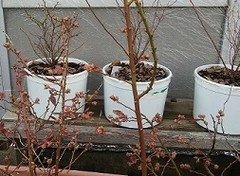
    You dont need to go for expensive containers either. As I learned to grow, the planters have gotten cheaper. I started with 14" homedepot planters outside exposed to all elements on cement patio mulched top 2-3", no problems. Now I'm brave enough to put Top Hat and Premier starter twigs 8-12" tall in 2 gallon pet food plastic bucket, overwintered on shelf and fruited. I do eventually up-pot to blue water storage barrels cut in half and leave on cement patio all year round. (bud break in spring see stem color change -T.H., Prem in back row, branch of Sunshines in front)

    Acidic loose soil mix, drainage holes and air holes on the side of containers and I haven't had any problems thru the seasons and delicious results.

    PM if you want more pix or info

    christacharlene thanked samsaraedu
  • 9 years ago

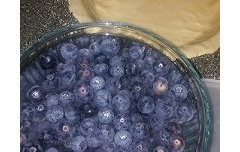
    Omg I want that pie

  • 9 years ago
    last modified: 9 years ago

    I am not sure I would be so cavalier about containerized blueberries remaining undamaged if left outside in colder climates without winter protection. The root system of most plants is far more vulnerable to cold damage than is the top growth and containerized plants are far more likely to be exposed to killing temperatures in a container than the same plant in the ground. Because the roots fill the pot, fine feeder roots abut the container edges and are exposed to much more severe ambient temperatures than they would if offered the insulating factors of the huge soil mass with inground plantings.

    This is a very well established horticultural concept and you can research it online easily. It is the concept behind that recommendation that any containerized plants left outdoors unprotected in winter be hardy to at least 2 zones below your zone.

    Not all blueberries are equally cold tolerant. Northern highbush and most half highs would be suitable for colder climates but I'd avoid Southern highbush. To be on the safe side, I'd provide winter protection to any woody containerized plant in zones 6 or below. Fatal root damage can occur at temperatures as 'high' as 25F.

  • 9 years ago

    No, you don't need to get only dwarf varieties, but get varieties hardy for your zone. I have 7 plants, various varieties (pink lemonade, patriot, rubel, 2 or 3 north-somethings), in various size pots. I do try to match the size of the plant to the size of the container for the first year or two. And I try to buy thicker wall pots for the final large pot, but that is not essential and not all the bushes are in one. Some are in recycled cat litter buckets.

    I am in zone 6b-5a (more 5a than the charts think!) and I do just mound up leaves or straw thickly around and between the pots for winter. I leave it there, it all decomposes by the next fall. They are in a corner of the yard that gets some wind protection from nearby evergreens. I have had no problems overwintering the bushes, haven't lost any.

    I plant mine in mostly peat with about 1/4 chopped leaves. Seems to keep them happy. I do give them some fertilizer now and again after the first year.

    Hope that helps


  • 9 years ago

    Thank you all for the help! Digging huge holes in my hard clay soil is not something that I want to do every winter so I will just make sure I get cold hardy varieties and protect them the best that I can with leaves and straw.

  • 9 years ago

    You misunderstood me. I'm not being cavalier at all and I have done my research. I only comment on blueberries growing in areas I'm very familiar with so as not to raise the expectations of the OP.

    I would never tell anyone to just" throw it in a bucket" and be done. I didnt elaborate on my technique before because I wanted to encourage to try, not discourage because its looks like too much trouble. The OP or anyone could PM if they want to and need more help or support while growing. I provided pix of the plants and their fruit as "proof" of my technique. I love blueberries, want to eat every day so I may be a bit more enthusiastic about growing than most and want others to join in the fun. I know Ohio and its winters well since I have family there and help them with their fruit trees all the time. I know there were a lot of deer and rabbits in Ohio last winter that
    stripped my cousins fruit and ate branches and bark, so its probably why they want containerized to
    keep near the house and protected.

    Blood, sweat and tears have gone into my containerizing since NYC dirt is bad and space limited. Yes, I'd love to have an orchard like my cousin in Ohio and thanks to containers I do. In ground I have grapes, pears, plums and peaches, but I love the flexibility of my miniature/dwarf cherry, apples and berries in containers to expand my food supply, all of which live outside year round not garage kept. There is a lot you can grow in containers and with new crosses and hybrids whether by nature or man happening all the time. We shouldn't limit ourselves to the "you cant grow that here or in that way" ideas anymore.

    Of course I did research for years before I even tried blueberries in the ground. 3 years in amended ph tested soil and they still died no matter what I did. No matter what you read in a book, a plant is alive and has a mind of its own.

    The northern lowbush and highbush I bought had difficulty in summer sun, heat and humidity which is not in the books, but they have since acclimated. I didn't expect to coddle them by putting umbrellas over their tops when it was too hot and then run back out getting soaking wet just to lower so the berries would get their rain.

    Mulch, frost blankets, bagged leaves, moving blankets, lights, unheated patio (depending on variety) I did it all the first 2 years of the blueberries, even in my bedroom for struggling whips and rooting twigs with humidifier mist. I admit I went overboard, but now I've learned.

    I custom mix the media I place them in and spare no expense in the
    initial planting which contributes to a strong root system. After that initial coddling, they have been so well acclimated that when I was hospitalized in Fall and could not care for them and were left with just bark mulch, the -20 wind chill and 8-13in of snow and more with drifts, did nothing to them and I got boatloads of berries the next season. I didnt want to, I HAD to leave them alone unprotected in the cold, snow, ice and 50mph winds and nothing happened, these babies are stronger than you think. For the future, I do want to provide a windbreak or frost blanket beyond the mulch but if something interferes, I'm not worried because in all this time I learned drainage is the key.

    Besides, the Brazelberry line is meant to be containerized all its life. I started mine way before they "invented/patented" them and it probably would have saved me a lot of trouble and time, but I'm happy with my struggles and what I learned from failures before successes. If my trial and error can help someone grow what they want or save time/money then I offer my assistance and I'm more than happy to discuss, and I only comment after I have replicated my growing by helping my friends duplicate my methods and results.

    As for size regular or dwarf, choose a blueberry by its natural height on how it will look in your landscape in all seasons and can you easily pick the fruit. There are 2 varieties I would love to have but at the higher end of 6ft and add the pot I'm not getting on a ladder to pick the fruit.

    OP if you havent started yet, I may have a local source for you. PM


  • 9 years ago

    samsaraedu, I'm not sure why you thought I was singling you out - I was not. My comment was a generalized observation on growing any kind of woody plants in containers long term. They ARE demonstratively less hardy to winter cold temperatures than they are in the ground - this is beyond argument.

    This is not to short change your experience and success with your plants, but there is a marked difference in overwintering container plants in zone 7 compared to zone 6. Even ground soil seldom freezes to any extent in zone 7. I would never encourage anyone to risk their plantings in zone 6 or lower by mistakingly think they will be fine without some sort of winter protection when it is so easy to provide.

  • 9 years ago

    I live close to the Ohio/Kentucky border. My zone is 6A but I am a 10-15 minute drive from some zone 6B areas. If raee_gw in zone 5b-6A can do it then I can do it too. :) I will be sure to purchase varieties that are hardy to zone 4 and I will be providing some minor protection (leaves and straw) during the winter.

    The reason I am choosing to grow in containers has mostly to do with my soil. It is bordering on being alkaline which is an issue. I know that I can add stuff to my soil to change the ph but potting them sounds like an easier solution to me. Plus I live in a clearing in a forested area with lots of birds, deer, and other wildlife so I like the idea of being able to move my pots as needed.

    Samsaraedu I am definitely interested in hearing about your possible local source.

    I really do appreciate all of the advice and the sharing of your personal experiences growing them! Thank you everyone.

  • 9 years ago
    last modified: 9 years ago

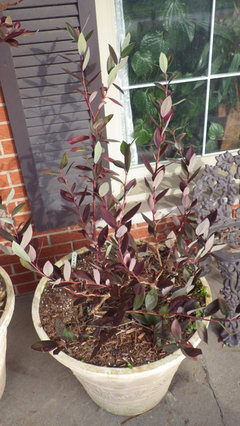
    I also grow blueberries in containers in zone 5b. Last year Legacy was in the garage and came out of dormancy early. As I'm still experimenting. I put it outside at that point. The flower buds started swelling, and growing! Yikes! It got down to 21F and the growing fruit buds froze solid! This happened to two other plants too. The other plants lost all fruit buds, but Legacy did not and produced ton's of fruit! What an impressive cultivar!! This year I'm going to overwinter on my porch with overhead protection. They got too warm in the garage. I also have blueberries in raised beds, and roots freeze solid every year, they are fine, no, they are thriving! For 5 years now. Here is my Legacy now, photo taken 5 minutes ago. I have no worries on this one. Even frozen while growing failed to stop this cultivar. My biggest complaint on this one is berries are tart till they hang for a week or so once blue. But it's hard to tell which berries just turned blue, and which are a week old as ripening of berries is continuous and uneven. Hang time is weeks and weeks though!

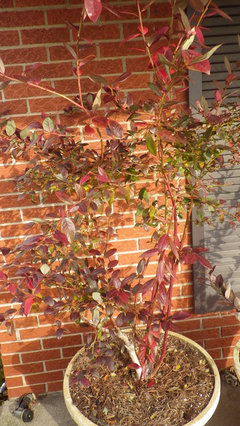
    Here is Cara's Choice, another like Legacy hand picked for release by M.K. Ehlenfeldt and other ARS breeders, originally bred by A.D. Draper, is by far the best tasting blueberry I ever had. A very complex flavor profile, absolutely excellent. My plant is young, here it is. A beautiful looking plant too, with blue-green leaves. Small compact plant, excellent for containers. Fall is here, so leaves are red.

  • 9 years ago
    last modified: 9 years ago

    Drew I enjoy all your blueberry experience . I have your same enjoyment and passion about blues.

    did you say Cara's choice was the best or did you say legacy. I must know, I must lol


    because I'm in the process of deciding on my SHB blues and I could use the advice.


    As as of right now my list looks like o'neil, legacy and Georgia gem.

    im near Greenville, sc

  • 9 years ago

    Sound like good choices. I did mean Cara's Choice as best tasting. Legacy is good too, I think because of the superior growth and fruiting of Legacy it is an excellent choice. I have heard O'Neil is a good choice too, but no experience with it. Georgia Gem is a new one to me.

    I need to grow SHB plants with some NHB in them, else it's hard to work here in Michigan. I gave up on Southmoon, as it kept coming out of dormancy early and was super sensitive to the cold. A big plant died, whereas Sweetcrisp lost fruit but did not die. I'm hoping keeping them outside with limited protection will work.

    On NHB another favorite is Toro. It is a soft fruit, but super sweet, prolific, beautiful, large leafed plant. Taste is excellent. Different looking because of the large somewhat oval leaves.

    I added Pink Popcorn this year, another pink to white fruited cultivar. Hardy to zone 3. It is more prolific, and hardier than Pink Lemonade, and less fussy about pollinators.

    Raz and Sweetheart were also released by the ARS group that produced Legacy, Cara's Choice, Hannah's Choice, and Pink Lemonade. I would like to try them at some point.


  • 9 years ago

    I want to get really good SHB this coming year and it will be my last time buying new ones...


    so I will study up hard over the next month or so.


    Oh oh I forgot to mention that I will also get at least 2 sweetcrisp if I can find them.


    thanks for replying

  • 9 years ago

    The best (besides Sweetcrisp) SHB I know about is Springhigh. I don't have any experience with it myself, it is too early fruiting to work here. Fruitnut whose opinion I respect, said this about it

    "Springhigh isn't firm but has the best flavor of any I've tried by a
    good margin. Berries are big, easy to pick, and good, not great, yield."


    Nothing is perfect.