Software
Houzz Logo Print
bkay2000

Dresden plate problem

9 years ago
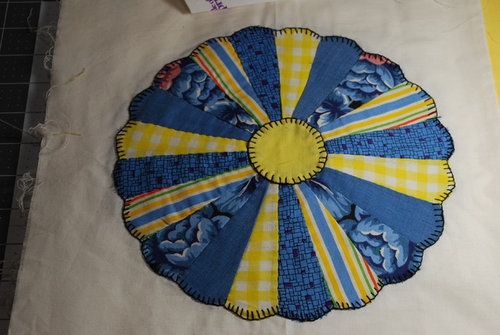
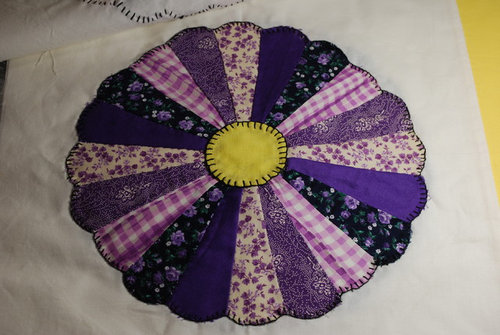
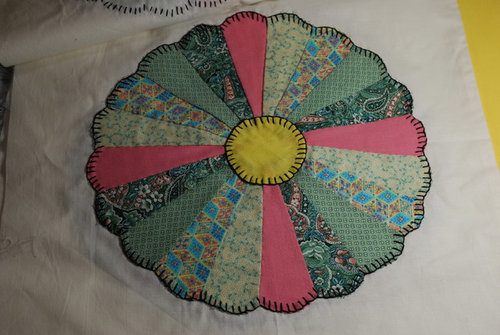
I posted a couple of weeks ago about a beautiful half finished Dresden plate quilt top I bought at an estate sale. My question then had to do with the edge not being turned under. You helpful ladies advised me to use fray block or sew the edge with mono filament thread. The thread didn't work, as it messed up the appearance of the blanket stitches.

So, this problem: Each square had yellow sashing sewn on two sides, that left a place for a cornerstone. The first three rows were assembled, leaving the cornerstone empty. (I wish I had taken photos.) I got a little baggie that contained the yellow cornerstones and a couple of extra pieces of sashing.

I took the whole thing over to a friend's house who has quilted for years. She said the cornerstone should be white. But whatever color, she didn't understand why it was assembled as it was. She suggested that I take it apart, buy new yellow fabric and make new sashing with white cornerstones. So, I bought the new fabric, finding very good color matches for both the white and yellow in Kona cotton.

Last night, I started taking it apart. I had not anticipated that the problems that I now see. The squares are not square and they are not the same size. It doesn't really matter at this point, but the sashing strips were off as much as a 1/2 inch.

So, my inclination is to press the squares, square them up and attach new sashing. Is there anything wrong with that plan? The squares are so beautiful, I hate to mess them up.

(I'm a newbie, having only finished one lap quilt, one top and an I spy mat. That's why I'm asking all the questions.)

bk

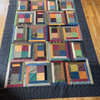
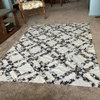
samples of the quilt squares


Comments (7)

  • 9 years ago
    last modified: 9 years ago

    Well, there are a few ways you can approach this.

    You could go with the blocks as is. You could add different size "frames" to get them all to the same size. The frames could be all yellow, or different colors to go with the Dresden colors. You wouldn't need sashing since the blocks would have colored frames. (I did this with a T shirt quilt that had different size motifs.) Or you could add white frames to get them all the same size and go with your yellow sashing. (I did this with a block exchange quilt and was happy with the result.)

    You could find the measurement of the smallest one and trim them all down to that size, then add your sashing.

    You could go with a "wonky" setting where the blocks are intentionally tilted at a slight angle and narrow triangles are added to get them back to square. This method makes different size blocks much less noticeable, but it would give a very modern look to your Dresden plates. Google "wonky quilt block" and you can see examples.

    Good luck!

    Donna

  • 9 years ago

    Oh, I'm sorry. I've misled by the way I wrote. The squares aren't off enough that normal squaring up wouldn't solve the problem. I haven't measured them all yet, but I think they are within 1/2" of each other.

    The question is, is there any reason not to do it? Had I made the blocks, I would do it in a heartbeat. Not having made the blocks, and not experienced, I'm reluctant to do it without asking for guidance.

    bkay

  • 9 years ago

    That's exactly what you should do. Start by squaring that smallest one and then do others to same size. Once trimmed, you can put sashings on each and it will come out just fine. It's not nearly as hard as it sounds. I often put 2 sashings and a cornerstone on each block so two sides are done and then they go together easier rather than trying to make a long sashing strip match up between rows.. It should be lovely when you get it done.

  • 9 years ago

    I'm not one to give advice on topics of this nature, but trimming to the smallest and adding sashes as previously suggested makes sense to me.

    Toolgranny...could you elaborate on your comment..."put 2 sashing and a cornerstone on each block...". I'm not understanding, brain cells are not firing after a long day in the office...thank you!

  • 9 years ago

    So, Helen, there are different ways to add sashing. Usually, you build a row across, adding short sashings vertically between the blocks. Then you add one really long sashing strip horizontally across the bottom of that row. Then repeat each new row the same way, finally putting the rows together. The problem with this is that it's sometimes hard to align all the blocks vertically, plus you have really long (horizontal) seams.

    What Linda was suggesting was not to build rows. You take your first block and add a vertical sashing on the right side, and a horizontal sashing and cornerstone across the bottom. This effectively builds a new block, so when you put your new blocks together across the horizontal row, you don't have any long seams. This helps to keep all the blocks properly aligned.

    I've also build sections rather than rows. If you have a quilt layout that is 6 x 6 blocks, you can build 3 x 3 block sections together, then you have a really large 4 patch to build at the end... if that makes sense.

  • 9 years ago

    After squaring I add sashing to each block.
    Top left block, only, on all four sides.
    Rest of top row on three sides.
    Rest of left column on three sides.
    All remaining blocks on two sides.


  • 9 years ago

    That's the way I made my "disappearing 9 patch" I spy quilt top. It was much easier to square it up and match the seams than cutting up the 9 patch.

    bk

Sponsored
AIS Renovations
Average rating: 4.5 out of 5 stars15 Reviews
Custom Craftsmanship & Construction Solutions in Franklin County, Ohio