Software
Houzz Logo Print
paul_dalach

Ravaged victorian doors!

9 years ago
last modified: 9 years ago
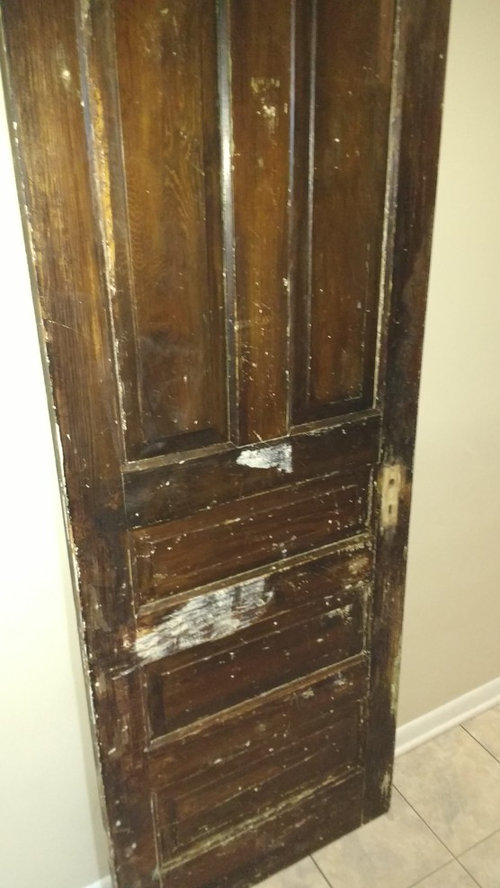
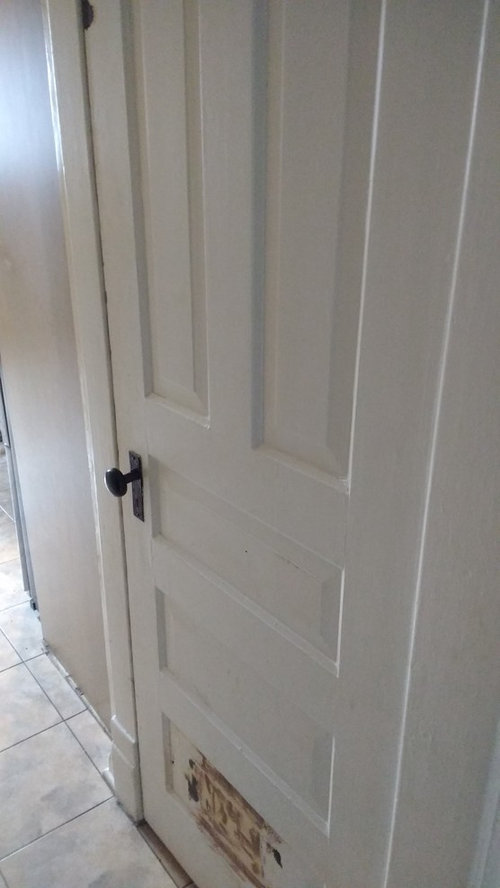
Almost all the doors in my 1890 Victorian house have been abused. Years of paint that was slopped on have made them chipping hulks of malformed potential.
I think they are original and don't want to replace them. I'd also be sad to strip and sand then only to repaint white. But I'm not sure I can get them to a state that I can stain them... too many nicks and gouges filled with putty. I can't afford to have all 10 doors professionally stripped. And one door in the mix is a new replacement for one a former dog destroyed.

Any ideas? I was thinking an translucent espresso paint?


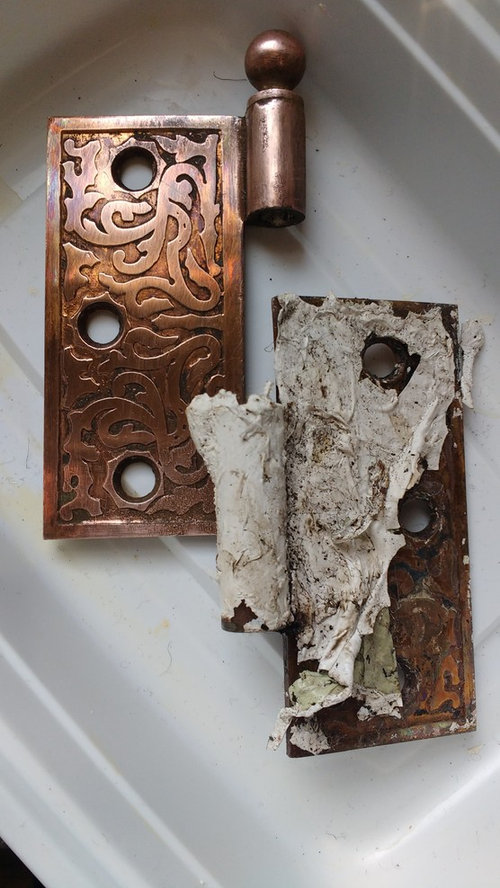
Pictures show before and after I heat-gunned/removed the peeling/chipping white and green layers of latex paint. They also show a hinge I restored this morning. Why did they paint over these?!

Comments (40)

  • PRO
    9 years ago

    Painting the hinges is just plain lazy the plus is they are easily stripped but not sure what you want from us as to the doors if you don’t want to strip and sand and stain then paint is your other option and espresso would not have been a color inthe original plan and IMO that color looks like a bunch of cheap Chinese furniture

  • 9 years ago

    Beautiful hinges and door woodwork. You might post on the gardenweb woodworking website http://ths.gardenweb.com/forums/wood for additional advice.

    Refinishing and restoring antique doors takes time and some practice to develop skills. For example, you can stain with something close to the original color, then paint each gouge's wood putty with matching paints and an artist's brush to mimic the original grain. It will take a while. Videos on the web.

  • 9 years ago

    transluscent espresso paint??? no. Those doors will take forever and a day to do properly. If you have want to do it, great! try sanding off the rest of the dark brown and see if you can get to raw wood. The putty marks? what apple pie said. There is too much damage to get them to look completely natural again. Pick out the best doors w/the least amount of damage and try to restore those. Look at salvage stores to see if you can find similar ones w/less damage, and restore those.

  • 9 years ago

    Do be careful of lead paint with old doors. I have had success in stripping pieces with Citristrip which is an environmentally safe stripper. I often paint it on thick the night before and then use a putty knife to scrape it and the finish off the next morning. Some old finishes will dissolve much faster than that. Zinsser makes a similar product.

    I have not stripped doors that old - and yes, talk to some woodworkers and restorers because the doors may require a different finish removal process depending on what is on them.

    I do know that stripping raised panels is a pain, though not difficult - just I can get all perfectionist and spend a lot of time with a straight pin getting gunk out of the crevices:) If I was working on an old door, I would not bother to fill in nicks and gouges if staining. The putty rarely takes the stain the same as the door and the repairs stick out. I would just strip and sand and live with any nicks - part of the history of the old door. You can fill in gouges if painting. Refinished, they could be lovely - and you can leave the trim in the home white if you want.


  • 9 years ago
    last modified: 9 years ago
    Unless the nicks and gouges are really deep they should sand out tolerably. Give it a try with the door you already have stripped and see how you like it. A matte finish will hide imperfections a bit better than a glossy one. If you put a clear coat over your stain it will help even out surface imperfections too.

    Also learn to love the quirks. I've spent many an hour refinishing painted over wood in my house - sometimes you just leave the story there. One panel in my dining room wainscot has a burn mark from long ago when there was a wood stove in the room for heat - someone put a wire handled kettle a little too close to the panel... I chose to not try to erase it. It tells a little tale.


    BTW - those are absolutely gorgeous hinges!

  • 9 years ago
    great advice, all. thanks
  • PRO
    9 years ago

    Those doors are original building fabric and should be saved at nearly all cost. They aren't all that bad either. Find a furniture stripper with a dunk tank, load 'em in the truck, and get a bulk price deal. Save the doors.

  • 9 years ago
    Has anyone tried soda blasting? I've started to research that option.
  • PRO
    9 years ago

    Low temp heat gun is my usual approach and I've also experimented with steam on old windows. Be very careful with stripper as it can turn paint into a gooey mess that fills every pore and dent. If these doors were originally stained and finished, the paint will often peel off the underlying finish with low heat and lots of patience. Just heat the paint until it starts to wrinkle and bubble and scrape before it cools. If you smell burning paint or see darkened areas of paint or wood, you are using too much heat.

    A reasonable amount of effort will remove 95% of the paint and then you can finish up with careful applications of stripper.

  • PRO
    9 years ago

    Paul:


    Any type of abrasion, soda, corncobs, whatever, is going to round sharp edges like those on the raised door panels. Not a recommended procedure.

  • 9 years ago

    That looks awesome!

  • 9 years ago
    thanks... lots of hours. Hoping it lasts another century
  • 9 years ago

    Those hinges alone are to drool over. The door looks great. Glad you are moving ahead with restoring them.

  • 9 years ago

    Looks beautiful. What techniques did you use?

  • 9 years ago

    very nice job. want a new career??

  • 9 years ago
    technique? I bought a bunch of power sanders and had my small boys sand the fine detail. their little fingers are so nimble. lol.

    Hours later, I patched the gouges with red oak putty, used wood conditioner, stain and poly.

    The door turned out to be part red and part white oak. Very pretty variation in the stained result.
  • 9 years ago

    They look fantastic! Way more character than the usual "paint them white".

  • 9 years ago

    What colour/stain brand did you use. You've inspired me to do my own doors!

  • 9 years ago
    minwax honey is the stain I used. I'm not sure if this stain matches the original in the house. Seems like I need a bit more orange like gunstock, but I'm happy how this door looks.
  • 9 years ago

    Don't worry about a perfect match - it is an old home, things don't match in old homes. The orange you see in the other woodwork is possibly the ambering that occurs with some finishes over time.

  • 9 years ago
    Wow! Having spent a small fortune to have our Victorian front doors stripped and refinished, I have to say that yours looks better :). Hope you have the patience to do the rest...
  • 9 years ago
    I did learn something that might be with passing on...

    If you are going to restain, I wonder if it doesn't make more sense to spend less time sanding the detail work... just enough to clean imperfections and, of course, remove the previous finish. I'm betting the stain work would have turned out about the same.
  • 9 years ago

    Simply gorgeous. Give yourself and those small boys a pat on the back :)

  • 9 years ago

    How did you get the paint off your hinges?

  • 9 years ago
    Soaked the metal pieces in just under boiling water and baking soda for about thirty minutes. Perfunctory warning about lead paint...

    While still mostly hot, I went at them with steel wool.

    The door knob (found at a reclaim shop) and knob plate were also coated in paint. Worked well.
  • 9 years ago
    Beautiful door and hardware. I heard get an old crockpot from Goodwill and cook the hardware. That should be online for directions.
  • 9 years ago
  • 9 years ago

    Did you use any stripper on the door at all, or just heat gun, sanding and little fingers. How long do you estimate it took you?

  • 9 years ago
    Yes...I very much used citristrip. Messy, but it worked very well.

    I don't know how long it took me. Things moved much faster after a bought a cheap orbital and belt sander from harbor freight... well worth the cost. And I discovered that steel wool was faster on the detail work. I actually learned a lot this project.
  • 9 years ago
    last modified: 9 years ago
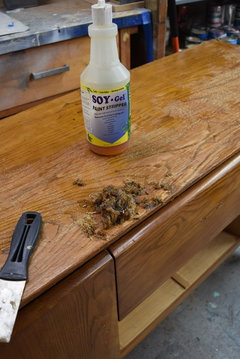
    paul, if you have any more doors (and I'm sure you do) try SoyGel instead of the citristrip. Especially if your young boys will be around it. I've been refinishing wood for years and use this stripper. It's all natural, works just as well as the chemical counterparts, and the best part is that it cleans up w/water! just wipe it off with a wet rag. you don't even need to wear gloves. it costs a bit more, but the convenience is so worth it.


  • 9 years ago

    Beth H. your workshop must be the most fascinating place...

    Also cute new profile pic :)

  • 9 years ago
    last modified: 9 years ago

    lindsey, you made me snort! fascinating is not a word that comes to mind when I go out there to work! lol

    and thx! last year w/my new purple ends.

  • 9 years ago
    I wanted soygel... but no go when I wanted it from my local big box. Good suggestion though...I kept going through rubber gloves.
  • 9 years ago

    Uline.com for rubber gloves. We go through them like crazy and find them both the most durable and the best value.

  • 9 years ago
    last modified: 9 years ago

    Paul amazon or The Real Milk Paint Co. has it. I've ordered from both. And I think Walmart also has it with free shipping. Now called BlueBear Soy Gel.

  • 9 years ago

    Thank you for all the great info

  • 9 years ago

    When your working with lead paint you should know that it can in fact be sealed and treated. In addition if you have children in the house the over coating that bonds with the lead now has a bitter additive which causes the child and or host to spew out the paint due to its bad taste. Ecobondlbp.com

  • 9 years ago

    The best I can tell on my doors and hardware is that somebody maintained the stained doors for most of the doors existence...the only layers of paint that I noted were latex and relatively recent.

    I might have poisoned my family a bit when I started cleaning up the hardware I bought from the reclaim store...it totally slipped my mind to do a lead test on those.

  • 9 years ago

    I poisoned mine too when years ago I stripped paint off my stairs...oops