

Struggling Pachyveria
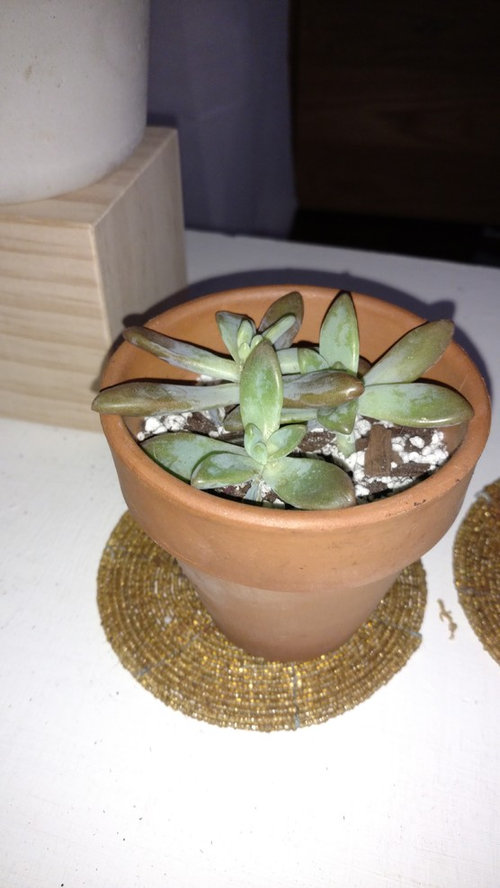
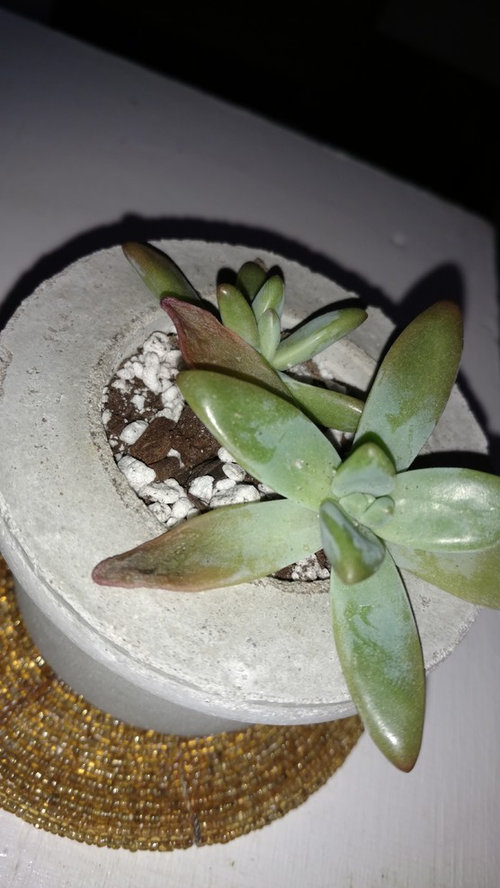
I didn't want to make a separate post for these pachyveria plants but they don't seem to be doing great. I bought them from Home Depot a little more than 2 weeks ago, and repotted them into a perlite mix when I got home. They were doing fine but started to lose turgidity after about a week. Some leaves were starting to shrivel. I withheld from watering until 3 days ago when I thoroughly soaked the two pachyveria plants - now some leaves are shriveling and dropping again. What's going on? They're on a south facing window in drainage hole pots and a decent soil mix. Also, does anyone have a link to some info on pachyveria? I haven't really found a good site with pachy info and have some questions, such as: are they winter dormant? Is a south facing window too much light?
Photos:
Comments (29)

K M
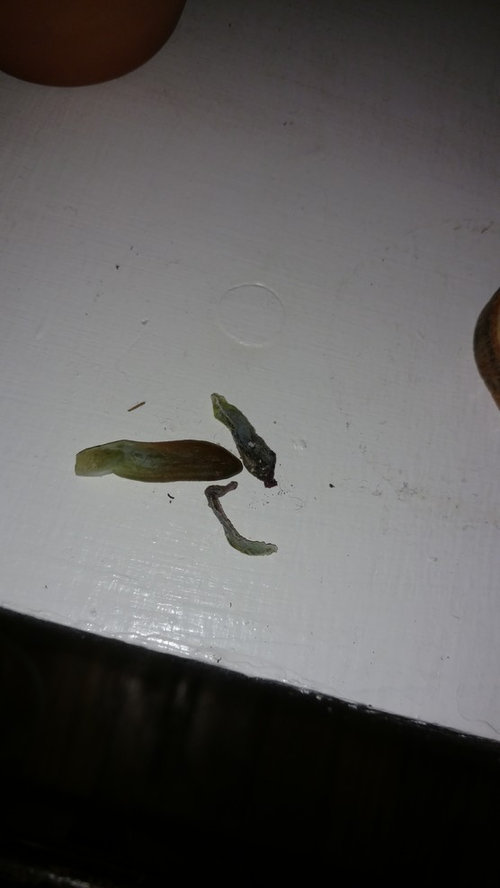
Original Author9 years agoAdded info: The leaves seem to be wrinkling from the outside to the inside, and they seem to "fold in" - as the picture shows - staying most turgid in the middle while the outside of the leaf slowly curls in.
Related Professionals
DeRidder Landscape Architects & Landscape Designers · Annapolis Landscape Architects & Landscape Designers · Elizabeth City Landscape Architects & Landscape Designers · College Station Landscape Architects & Landscape Designers · Davenport Landscape Architects & Landscape Designers · Flagstaff Landscape Architects & Landscape Designers · Salem Landscape Architects & Landscape Designers · Waycross Landscape Contractors · Elgin Landscape Contractors · London Landscape Contractors · Lake City General Contractors · Salisbury General Contractors · Fort Dodge General Contractors · Durango General Contractors · Pierre General Contractors 9 years agolast modified: 9 years ago
Sorry for delay. I think I would just let it adjust for a couple more weeks before becoming concerned. My guess would be nothing is wrong, it is just still adjusting.
I am saying this assuming the container has a drainage hole.
K M
Original Author9 years agoI hope that that is the case...the plants are wrinkling at such an alarming rate that I am at a loss for what could be wrong. The pots have drainage holes. Do these plants like less light than echeveria/other succulents? I noticed the tips on the wrinkling leaves becoming a little red. Was my watering sufficient? I made sure the soil was fully dry and then some.
- 9 years ago
I guess the short answer is you don't really know. You just have to experiment and see how the plants react to it. Don't put them back in full sun before a full week is up (at least). Remember to ease them back up to full light levels, and hopefully they will respond well.
 9 years ago
When you repotter, did you water immediately?
When we repot, small wounds are inflicted om the roots. This is unavoidable.
So we dont water for maybe 2 days to let these wounds harden off. If these wounds are open and become wet, they will rot.
K M
Original Author9 years agoI think I've lost the plants unfortunately. No idea what went wrong. The leaves shriveled so fast that in one hour when I was gone, I came back to 3 new shriveled leaves. So weird - don't understand what could be causing such rapid deterioration.
K M
Original Author9 years agoAt this point, should I just try to propagate it? I've read that pachys are not the easiest to propagate.
- 9 years ago
Pictures? I am really curious as to what happened. I suppose you could try to propagate if the plants are going to die anyways.
- 9 years ago
IMO, pachies are one very easy to propagate. But if leaves are not healthy enough, it may not work. You have nothing to loose by trying...
K M
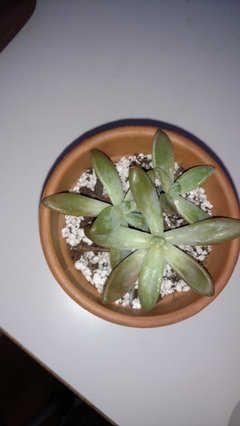
Original Author9 years agoPictures don't really do it justice, but all the remaining leaves are soft and wrinkly. In every case where that has begun happening, the leaves have eventually dropped :(. I'm confused because I really tried to learn from my last succulent (which I nearly killed). I repotted these as soon as I got them, got them acclimated to a bright south facing window, and did not water for 2 weeks (some wrinkling began even before that). I did the skewer test before watering and both soils were completely dry. The plants were so healthy when I got them, and now I've nearly killed them by doing what I thought was correct?
 9 years agolast modified: 9 years ago
I think at this point you should unpot them, carefully, use a pair of tweezers to gently hold onto the stem to avoid knocking more leaves off. Inspect the roots, if they are dark, soft, mushy, slimy or any combination of those things then you have a rot problem. If the roots are white then they are ok. If it is rot, remove anything that is mushy, this may include portions of the stem. It looks like there is a lot of perlite in your soil which is good, what is the rest of it? How long has it been now since you watered?
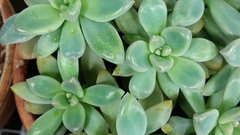
Also you should avoid, whenever humanly possible, touching the leaves, the powdery coating, the farina, on them acts as a natural sunscreen and works to repel water among other things. Someone feel free to correct me if I'm way off base here, but I think you may be causing the leaves to drop simply from wiping the farina off. You could also be clogging the leaves pores (stomata) with the natural oils from your skin. The stomata exchange carbon dioxide for oxygen, as well as water, from inside the leaf to the surrounding air, it is essentially how they "breathe". Here are mine for a comparison
- 9 years ago
Patrick, I beg to differ.
I would not unpot it at this point. I do not think it is a rot problem; it could be any number of things. That soil has a lot of perlite in it, enough to prevent rot. I think all unpotting would do at this point is just upset the plant more.
The plant doesn't look in immediate danger, rather, I think they look better than I thought they would.
K M,
You are doing the right thing. How long has it been since you last watered?
 9 years ago
I agree with Patrick wholeheartedly. You need to know if it's too dry or too wet, and whether the roots are healthy. Without knowing the condition of the roots, you're just guessing.
No no amount of perlite can prevent rot.
My guess, without more info to go on, is that it was not exposed to any natural sunlight at HD, and was likely alternately overwatered and underwatered, so the roots weren't healthy. Succulents can continue to look healthy for a long time when the roots are complete mush, or have been cut off, for that matter.
I suspect that you exposed this sun-starved plant with weak roots to more sun than it had ever seen in its life, and essentially cooked it. I don't have enough info to be sure though.
1. When you reported it, did you put the rootball and soil into the new mix, or did you remove all the old mix, and wash the roots before putting it in the new mix?
2. Was the soil it was already in wet or dry?
3. Did you examine the roots before transplanting it? What did they look like?
4. How did you go about acclimating it to that much sunshine?
5. How much sun is it getting in that window?
6. What's the day/night temperature in its current location.
I'm about 80% sure Pachyveria are supposed to be summer-dormant, but actually grow all year. I'll find a dormancy list for you. At any rate, it doesn't matter right now whether it's summer or winter dormant because moving it from HD where the lights are on for 12-15 hours a day, to your home where there's probably about 9 hours of daylight currently (if it's natural light), means the plant thinks it's autumn, so it'll be starting to grow regardless.
I'll find a dormancy list and post shortly.- 9 years agolast modified: 9 years ago
Correction: Pachyphytum and Pachyveria are summer-dormant. Echeveria are winter-dormant.
Heres a list:
http://succulents.us/dormancy.html
Many people get confused about dormancy, thinking it depends what hemishere the plant came from, or is native to. It doesn't. It only matters what light it gets now, and in the past few weeks. Fluorescent store light interferes with natural seasonal changes, so it takes most plants a few weeks to months to reset their clocks.
- 9 years ago
kwie,
Not true, not entirely anyways.
Echeveria will grow anytime that the conditions are right, so if it's warm and sunny, but not too warm, and there's moisture, they'll be growing.
Pachypodium namaquanum is a winter-grower.
- 9 years ago
I hate they way they care for, or I should say, don't care for their plants at the big box stores. It's always a gamble buying cacti and succulents there. Unfortunately for some, myself included, they are the only local place to find them. I unknowingly came home with two rotten ones over the last couple weeks. I should have returned them, but I'm too stubborn for that. I would rather fix them or propagate from them.
 9 years ago
Fully re-establishing roots after repotting can take 3+ weeks, especially if the plant wasn't in a very good mix originally.
After repotting, succulents usually look worse for a while before they look better. Changes aren't by the hour for these types - unless they are frying in the sun or rotting.
The leaves will wrinkle and sulk, this is normal as the new feeder roots are forming.
K M
Original Author9 years agoewwmayo - I really hope so. These plants looked really nice when I bought them and I hope they soon return that way. I'm struggling with the fact that some leaves are yellowing and becoming mushy (overwatering) while others are curling in and wrinkling (underwatering).
kwie - To answer your questions, I started by washing off all of the roots. The roots looked fine, perhaps a bit on the brittle/dry side, certainly not rotted. It was in poor soil that was still a bit damp on the bottom. After repotting, I put the plants on my dimly lit desk for a few days before moving them closer to the table by the south-facing window where they are now. I moved the plants a little each day until they were by the window. The window gets a good amount of sun every day - there are a few trees and a very sheer curtain that partially covers the window - but the light is still bright (I have other cacti and succulents doing well there). I live in NY, day temp in my house at this time of year is around 65 - 70 F, night time around 60 F.
Patrick - The soil is around 60% perlite, 40% cactus mix (had to use a little bit of african violet soil when I ran out of cactus soil but read that that was ok). Now it has been a week since I watered, 3 weeks since I repotted it. I am curious about your comment on the farina, but I have definitely not touched the small inner leaves that have shriveled as well.
Hope that answers the questions. Thanks for all the help!
- 9 years agolast modified: 9 years ago
I was just quoting from the dormancy table, Jeff (since I'd contradicted it in my previous post). I agree that Echeveria grow pretty well year-round, but my climate is mild.
I haven't found that dormancy table to be very helpful. Spring and fall seem to be peak growing seasons for most of my succulents. Few really go completely dormant. My Aeoniums and mesembs are all that come to mind.
- 9 years ago
Washing the roots is great, but the root hairs will have been destroyed so the plant can't take up water until it grows some new ones. I would hope it's done a bit of that by now, but it sets it back a little for a while.
Your statements are a bit vague for me yet to understand the amount of sun it's getting and how you did it. Is it direct sun, or filtered sun, and how many hours of direct sun? Direct is all that matters with regard to burning. It's isually safe to increase the direct sun by an hour every 4 days or so for succulents (that's VERY general), but you do need to turn them and be sure every surface is adjusting. Anything left shaded by other leaves is susceptible to burn. I pinched-off a Crassula last summer and burnt the crap out of the leaves beneath.
Apparently over-watered leaves on the same plant as under-watered leaves aren't as weird as you might think. Over-watering results in suffocation of roots, and root death. Dead roots mean a plant can't take up water, so leaves shrivel just as if it's completely dry.
I wouldn't expect shriveled leaves in just 3 weeks in 70 degrees even if it had no roots at all. I believe the conditions in that window are much more extreme than you think. Remember, this time of year the sun is very low, so it reaches further into windows and under awnings than at any other time of the year. Mine come 20' into my living room now, and about 8" in midsummer. That means plants that get little or no sun in a south-facing room in the summer because they're far enough from the window, might be getting 6 to 9 hours of direct sun right now.
I think your plant is being cooked. I'd move it to somewhere where you're sure it won't get over 1 hour of direct sun, water very sparingly, and slowly re-acclimate it over the next 6 weeks.
Checking the roots is still a good idea though. You can do it with minimal disturbance. Without knowing that, we're all still guessing. - 9 years ago
It's not a bad table, and it's mostly correct, but it should be reinforced that there are very few hard-and-fast rules in This Thing of Ours.
- 9 years ago
It's your plant, so it's up to you whether you want to know or wait and see. Personally, I like to know. I don't like guessing of instead I can know something. If it were my plant, I'd check. ypu might not be that way though.
 9 years ago
Hi KM,
I've been commenting on your other thread, the Echeveria one, about your soil & withholding water, etc.
Since no one has said it yet, I have to pls. disagree w/ Patrick (is it?) who suggested wiping the farina off causes the leaves to drop?
Sorry, I believe this is false. The Farina or Bloom is sort of like sunscreen, wiping it off, just leaves it bare of its sunscreen, more vulnerable to sunburn perhaps, but not cause for leaf drop.
There must be other things, bad roots, residual problems from bad drainage for there to be such leaf drop. Sometimes decline can be going on longer down below than is apparent up above the soil line. Someone else said this more clearly on the other thread.
As I suggested on the other thread & Rina agreed, dry, brittle roots tend to be dead. They don't need to be mushy or have rotted, they can be dead from drying out completely as those sound like they are. Those are / were to be removed, as they're just fodder for further decay.
Checking the roots is always the best & truest way to check what's really going on w/ the plant.
- 9 years ago
Kwie
wondering if you meant to refer to Pachyphytum? There's no Pachypodium in Pachyveria..
- 9 years ago
Sh*t! Thank you, Breton. I didn't mean to add to the confusion. I've corrected the post.
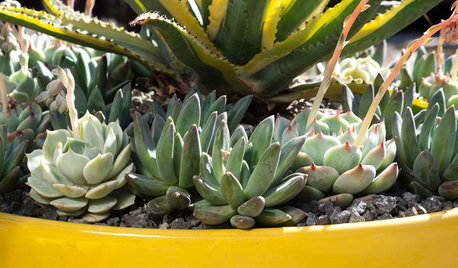


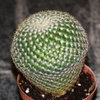

mesembs