Software
Houzz Logo Print
rikken66

Edible, evergreen hedge in zone 7b - Southeast - Full sun.

9 years ago

Hello, so I think I may be asking for a lot here. I'm looking
for a 6+ feet tall edible, evergreen hedge for zone 7. By edible, I
don't necessarily mean fruits. Just any parts, leaves for tea, needles,
fruit, etc.

Most things that I am finding are zone 8+ or not tall enough. I was
looking at camellia sasanqua. However, they sound like they take an
extremely long time to get to an appropriate height. Any suggestions
would be greatly appreciated. Thank you.


xposted from Landscape designs.

Comments (28)

  • 9 years ago

    when searching for plants .. look for the ANNUAL GROWTH RATE ... as close to your zone that you can ...


    most plants do NOT stop growing at some mystical height ... they just plug away.. year after year ... and keep going.. subject to your training.. or pruning ...


    many size estimates.. are just that.. estimates.. at a given time frame ...e.g. in conifers.. its the ten year size .... and being trees.. at 20 years.. they will be twice as big ...


    shrubs arent quite that aggressive ... but still dont stop ...


    i dont know your area .. so i cant offer suggestions ...


    one last thing.. give us a big city name .... SE is pretty diverse ....


    ken

  • 9 years ago

    Big city name: Charlotte.


    I'm currently looking at "Arbutus unedo" aka Strawberry tree. However, I'm not sure if it can be hedged. I'm not finding many results on hedging a strawberry tree. It is evergreen, produces fruit, and appears to get to a nice height.

  • 9 years ago

    How do you see this hedge? Formal or informal? Is it a clipped hedge or a loose row of natural growing trees?

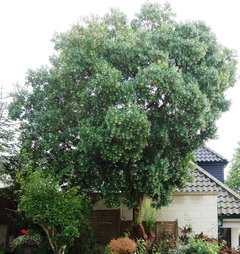
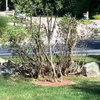
    This is Arbutus unedo:

    It is definitely a tree rather than a shrub. It can be cut to form a hedge but I think that would risk losing the flowers and fruit. However, the fruit are allegedly pretty tasteless.

    Is Laurus nobilis hardy outdoor in your area? That is easy to trim into a dense evergreen hedge.


  • 9 years ago

    Unfortunately it is not. It's 8+ but can be a patio plant in my zone. Sweetbay magnolia (Magnolia virginiana) is hardy to my zone. I'm not entirely sure if the leaves of Virginiana are useful in the same way.


    Unedo: That is a beautiful tree! I may have to find a place for that, just not as a hedge.

  • 9 years ago
    last modified: 9 years ago

    Camellia sinensis is the tea plant. Might not like full sun though but would otherwise do OK in your climate.

    Eleagnus as a vigorous hedge (I'm thinking more along the lines of E. x ebbingei 'Gilt Edge' or any of the variegated, less rambunctious plants do well in hedges. But need regular upkeep. These have edible fruit.

    Camellia oleifera can get quite large, but the 'apples' can be squeezed and processed for cooking oil.

    Laurus nobilis should do well for you in your zone.

    And I believe there might be some evergreen blueberries. Not sure about that.


  • 9 years ago

    Arbutus unedo 'Compacta' or 'Elfin King' would be more appropriately sized for a hedge, as they are truly shrubs, not trees :-) And are often used as a hedge or in a mixed planting hedge. But the arbutus is going to be of marginal hardiness in a zone 7 and would dislike the summer humidity of most of the southeast. These are Mediterranean plants and prefer cool dry summers and mild damp winters.

    There are evergreen - or least partially evergreen - blueberries but they remain quite compact.......no more than about 3 feet.

    My suggestion would be to developed a mixed shrub, informal hedge - more of a hedgerow - incorporating deciduous as well as evergreen species. You will encounter a lot more edibles in a deciduous format (viburnums, blueberries, quince, currants, various rubus, mulberries, etc.) and you can easily achieve the heights you want and mixed in with whatever evergreen species you can muster and that will work in your location, still provide a barrier or privacy screening.

    rikken66 thanked gardengal48 (PNW Z8/9)
  • 9 years ago

    >Camellia sinensis is the tea plant. Might not like full sun though but would otherwise do OK in your climate.


    Can you use Camellia Sasanqua or Japonica for a tea plant as well? Having a hard time finding info on that as they don't seem like that are generally used for tea. They're supposed to grow okay in full sun, however, I could arrange shade if needed.

  • 9 years ago

    Sorry, forgot to add, every place that I see that has Sinensis for sale says hardy to zone 8+, which is why I asked about the other two varieties.

  • 9 years ago

    Yes, you can make tea out of other camellia species but they tend not push the new growth as often as tea camellia (so less frequently harvestable) nor do they offer as good a flavor. But they can - and are - used for that purpose.

  • 9 years ago

    rikken66 check out my post scroll down to pic #5 and find Camellia sinensis growing and blooming happily near Annapolis.

    If you settle on something to produce berries realize that shearing will reduce flowering and thereby reduce berry production.

    rikken66 thanked sam_md
  • 9 years ago
    last modified: 9 years ago

    If any blueberries are possible on your site independent garden centers here have had a bunch of different new evergreen cultivars on display lately. Of course, none of them will be fast growing, even where well adapted.

    rikken66 thanked Embothrium
  • 9 years ago

    Your specs for something edible seems impractical to me. May I ask why that's important to you? Am genuinely interested.

    rikken66 thanked rhizo_1 (North AL) zone 7
  • 9 years ago

    There are a number of evergreen Viburnums which grow well in Charlotte that have edible fruit. A perfect shrub for your project. I am going to let you do the variety research which hopefully will allow you to find a supplier in your area. Search for 'evergreen viburnums with edible fruit'. This will provide necessary information. You should find some helpful information from Clemson included in your search. Edible Viburnum fruit is prized by Koreans and they can sometimes be spotted harvesting it in the fall in parks and along roadways.

    rikken66 thanked nandina
  • 9 years ago

    Maybe a clumping bamboo? Most clumping species are better for cool summer areas, but Plant Delights has a listing for Yushania confusa that says 6b.


    rikken66 thanked PNW-Transplant
  • 9 years ago

    rhizo_1:


    Short answer: I like to eat things I plant.

    Semi-long answer: I'm quite limited on space. The row that I'm hoping to do is 50ish feet long (there are other areas, but I'm focusing on one at a time for various different reasons) so it's a fair amount of space for me to not be able to get what I really want out of it. If I wasn't able to find something edible, I would manage. Being able to eat what I grow allows me more variety, and it's generally cheaper. For example, we love figs. I've found them once locally, and they were expensive and a longer drive than I would have liked. I like doing perennials because then I don't have to replant every year. And with variety, I'm trying to ensure that I have something that will produce. I don't expect most things to produce every single year, as great as that would be. So the more I have, the greater my chance of something to eat. And lots of edibles looks very pretty. Blueberries in the fall are gorgeous, etc.


  • 9 years ago

    nandina:

    You are wonderful! I believe I found what I was looking for. I'll be doing more digging around, but so far at least one Viburnum that I have found will work. AND to make it better, I've found if for sale for a reasonable price.

  • 9 years ago

    If you have 50 feet to play with does it really all have to be evergreen? If you could mix in a few deciduous bushes you would open up a whole extra realm of more 'mainstream' better cropping fruits.

  • 9 years ago
    last modified: 9 years ago

    I think the new evergreen blueberries Embo refers to are the best suggestion so far. Camellia sinensis next but really unless you drink A LOT of tea, I think you will find the blueberries more useful. I don't think growing in sun is an issue if they are watered when young - I'm pretty sure the video about tea growing at Cam. Forest shows plants out in sun: in East and South Asian they certainly are cultivated in open fields. I think it is more sun-tolerant than say, C. japonica. I wonder whether the Viburnums are actually that pleasant to eat, for someone with a western palate?

    I'm actually not so concerned with the hardiness of Arbutus unedo in Charlotte, which is a rather warm zone 7, but rather the possibility that a root rot causes the plants to go into decline. It wouldn't be the end of the world if you had a single plant keel over but you don't want a whole hedge dying. Arbutus unedo will grow in the south but is just uncommon enough to make me think it sometimes has adaptation issues. The better plants I know about are on sandy soil.

  • 9 years ago

    I like the blueberries. I think I'll put them on the other property line. Doesn't entirely solve my current issue, but it still helps. They're typically 3-4 feet, and tolerate a higher Ph than other blueberries. I would still like to do a raised bed for them. I could have 4-6 feet with a raised bed.


    I rarely drink tea, to be honest. I think you may be correct about the Viburnums. Some seem like they are tasty, but from my little bit of digging, most of those don't appear to be evergreen, however, they do work in my zone. There is V. Pragense, but I am unable to find a definitive answer if they are human edible. Some said it was, most said it was not. And even the ones that said it was edible said it was not...that tasty.


    Some people claimed that not even birds or deer would eat some of the Viburnum berries. It seems the further away you get from "normal" plants, the harder it is to find solid answers.


    I like Unedo. I think I will make a place somewhere, probably near the hedge, but not a row of them, if that makes sense.


    I have looked at Elaeagnus Ebbingei quite a bit. It has it's own set of issues, though. It's invasive in some states. Although, I did not see it as being invasive in mine. Additionally, it doesn't appear to fruit reliably. There is also a fairly large seed inside of it. Fortunately, it's supposed to edible as well, from my understanding.


    I wonder if I could plant something like Ebbingei since it will still fruit and is evergreen, and then maybe plant something like huckleberry (vaccinium ovatum, similar to a blueberry?) supposed to evergreen, but quite small, or maybe sea buckthorn (not evergreen) in front of it. Sea and Huckle are supposed to be smaller than Ebbingei, so it would not shade, and both could get sun. I'm not sure if that would work or not.


  • 9 years ago
    last modified: 9 years ago

    Since you don't appear to mind planting a mix, also consider Feijoa sellowiana. Way up here at the top of the Ches. Bay, they do die back in colder winters but quickly resprouted, after BOTH polar vortexes. Which is something many borderline plants could not manage: for example a large Rosemary was killed completely in the first 20 year winter. Edible Landscapes in VA, sells a strain that might be a little hardier than ones bought online from say, CA or the PNW. That's where I got mine. I grow them more as a curiosity; if we don't have a hard freeze this winter I expect them to finally bloom this year. Even without blooming, even if dying back periodically, they are attractive broadleaved evergreens in my opinion. I have them in a spot where I don't want anything big, so dying back once in a while is alright!

  • 9 years ago
    last modified: 9 years ago

    Elaeagnus umbellata is the obvious choice! If you are in charlotte NC they should grow wonderfully.

  • 9 years ago
    last modified: 9 years ago

    In a warm zone 7b, you could also include the hardy citrus hybrids Citrumelo or Citrandarin into the mix. Ultimately higher than 6 feet though. And they can be semi-evergreen.

    Feijoa sellowiana is a great suggestion!

  • 9 years ago
    last modified: 9 years ago

    Pineapple guava is from Brazil and though seen rather often now in Seattle (USDA 8) planting is apt to be singed there by temperatures below, say, 15 degrees F. In USDA 7 you probably would keep losing the top repeatedly - unless a form chosen was significantly hardier than usual. Something dying down and starting over off and on doesn't sound like what would be wanted as part of a hedge.

    rikken66 thanked Embothrium
  • 9 years ago

    Embothrium:

    It definitely does not! We do get to 15F and even less. I may could cover it and save it, but that would be a lot of work and costly. It won't work for a hedge, however, I wonder if I could plant a couple of them and still get fruit. Maybe potted, if not in ground. And perhaps keep them in a sunny window during the winter. Probably would not fruit very well, though. I'm so close to zone 8. I would have tons more options if I were only to be in zone 8.

  • 9 years ago

    I am borderline and I have had great success zone-pushing things like gardenias.

  • 9 years ago
    last modified: 9 years ago

    Garden Web has had past thread(s) about Pineapple Guava including photos of heavy fruiting in Oregon. Associated discussion brings out what can be involved with getting this kind to set and finishing the fruit afterward.

    Doesn't say anything about trying to grow it in your region but may be of interest anyway:

    Plant of the Month: December 2011

    http://arthurleej.com/p-o-m-Dec11.html

  • 9 years ago
    last modified: 9 years ago

    'NCSU Hardy'? Should be just fine in Charlotte! You can see from the provided height data that they were not top killed by the first polar vortex winter, when it hit about 7F in Raleigh. ( I saw the garden after that winter, there was plenty of damage to tender plants)

    I did not even know about this cultivar until running this search. I wonder why I have not seen it for sale at the usual suspects, e.g., Woodlanders or Camforest. David, at least, like many nursery owners has preferences, strong at times, for what he grows...and I think will not seek out something unless it fits into whatever his wider vision of the nursery is. Even if it is a noteworthy broad leaved evergreen selected to grow in the local area. Maybe this doesn't speak to him because it isn't from East Asia or something. Just guessing.

    https://jcra.ncsu.edu/horticulture/our-plants/results.php?search=guava

    And perhaps keep them in a sunny window during the winter.

    No. That's generally not a "fruitful" pursuit with many subtropical or hardy BLEs, no pun intended. And in your case, anyhow, isn't even called for if you want to grow these plants. I wouldn't rely on them for the whole hedge, true, but I don't think they are going to die back frequently in your climate at all.

    rikken66 thanked UpperBayGardener (zone 7)