Software
Houzz Logo Print
ontario_canada5a_usda4b

Shrubs that grow like a tree...

...perhaps with a little pruning to create a stubby base.

Are there others?

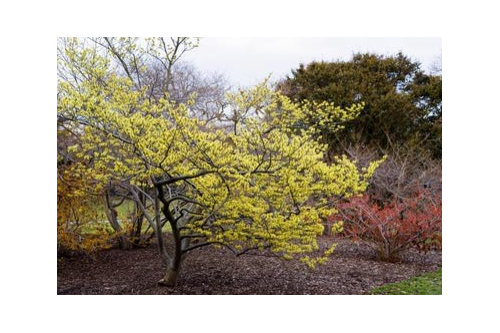
Hamamelis virginiana


Comments (76)

  • 9 years ago

    Re: suckering on Twisty Baby Locust - see this thread:

    http://forums2.gardenweb.com/discussions/4051550/black-locust-nightmare-what-to-do?n=6

    Re: "no vase shaped conifers" - what about Tanyosho Pine?

    https://selectree.calpoly.edu/tree-detail/pinus-densiflora-umbraculifera

  • 9 years ago

    Well that person had suckering. I haven't had any. One of my trees is in for 6-7 years, was planted as a #1 and is now about 15' tall. The others went in as #15s. FWIW.

  • 9 years ago

    Was just thinking some more about this. We only have rain Nov-Apr. I irrigate with drip tubing, which tends to underwater. So, I'm guessing that if others have had suckering problems and I have not, it's due to the fact that the tree only gets a lot of water when it's dormant. So the lack of suckering may be due solely to my climate.

  • 9 years ago

    Mmm, climate affecting plant behavior. Fascinating! ;)

  • 9 years ago

    Oh,
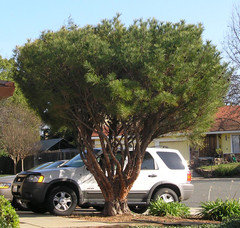
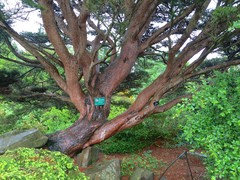
    wow, what a beautiful tree! The multi-stem appear to have fused to a single trunk at the base. The setting does not suggest any pruning either. At the same time, I wonder
    why the ACS does not mention the vase shape http://conifersociety.org/conifers/conifer-shapes/

    Tanyoso
    Pine Pinus densiflora 'Umbraculifera'

  • 9 years ago

    "...I wonder why the ACS does not mention the vase shape "

    Based on this one picture?

  • 9 years ago

    Oh and BTW the 'Red Majestic' leaves turn mostly green once they mature. It's only the new growth and catkins that are deep maroon.

    Ontario_Canada5a_USDA4b thanked Sara Malone (Zone 9b)
  • 9 years ago
    last modified: 9 years ago

    Anyone can comment
    on the hardiness of the Pinus densiflora
    'Umbraculifera' or its compact forms? I found the following data points.

    Missouri Botanical
    Garden lists the Pinus densiflora
    'Umbraculifera' USDA zone 3-7 small (10-20') x (15-25') tree, and mentions in passing the Pinus densiflora 'Umbriculifera Nana' small 6'
    tree without saying anything about hardiness.

    Iseli does not have
    the Pinus densiflora 'Umbraculifera',
    what's up?

    Monrovia has the Pinus densiflora 'Umbraculifera Compacta' USDA
    zone 5-7 small 12' x 18' tree.

  • 9 years ago

    I also grew Twisty Baby for about 10 years (in my old garden) and at no time during this period did it ever produce suckers (same with its bigger gold cousin 'Frisia', but that's another story). I have friend that has had one for going on 20 years (about 15' tall) and again, not a trace of suckering.

    My climate is somewhat similar to Sara's but not nearly as dry,

    byw, the Tanyosho pine is most typically described as "umbrella shaped" or an umbrella with a flat top or as "table-top pine".

  • 9 years ago

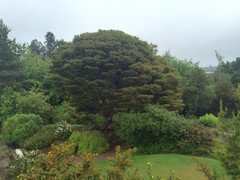
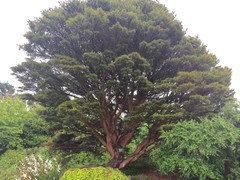
    I haven't tried Tanyosho pine, but I do see it now and again in the local nursery trade. I think z3 is overly optimistic, and even z4a might be a stretch, but z4b/5a would be worth a try. It makes for a gorgeous specimen if given time. This one is at the Royal Botanics in Edinburgh.

  • 9 years ago

    There is a local
    nursery that has (at least on its website) a Pinus densiflora 'Umbraculifera
    Compacta' and rates it Canadian zone 5b which is inadequate for me by half a zone.
    Then there is a non-local nursery but still in the same province of Ontario
    that has a Pinus densiflora 'Tanyosho' (the description suggests a compact
    cultivar) and rates it Canadian zone 4 which is wholly adequate.

    In other
    words, it's the same mixed messages as for USDA hardiness.

    These beautiful
    trees are slow growers and even a 3-4' specimen will likely cost a pretty penny.
    Wish there was a bit more certainty about hardiness.

    Others, please chime in
    :-)

  • 9 years ago

    Can't speak to specifics, but there is nothing in the genetics of the compact form versus the full sized form that should make for any significant difference in hardiness. IOW, the compact should be just as cold hardy as the full size.

    btw, Tanyosho is just a common name for this plant - the cultivar name is either 'Umbraculifera' or 'Umbracuifera Compacta'.

  • 9 years ago

    The Pinus densiflora
    'Tanyosho' as literally advertised on the nursery's website may be an (as yet?) unnamed
    cultivar. It is a very small 7'x8' tree which is only slightly larger than the
    Pinus densiflora 'Umbraculifera Nana' that MBG mentions as a 6' tree.

    If the genetics are
    the same, why is there such a big discrepancy (2 USDA zones) between MBG's USDA
    zone 3 for 'Umbraculifera' and
    Monrovia's USDA zone 5 for 'Umbraculifera Compacta'? Both are usually reliable
    sources of information. That's the mixed messages that I was talking about.

    And why does Iseli
    not have any offering at all for this conifer? Why does Monrovia only have that
    one 'Compacta' offering?

    Does Embo read this shrub forum? He is quite good in matters like this.

  • 9 years ago

    ACS lists the cultivar as 'Tanyosho'. In the US this is the most common cultivar name used. 'Umbraculifera' is a synonym. There are other names used, such as Tagyoushou (which some believe to be a closer translation of the Japanese, meaning 'many trunks'). Apologies for the pedanticism.

  • 9 years ago

    Oddly, most other sources (Hillier for example) list it as just the opposite - 'Umbraculifera' as the accepted cultivar name with Tanyosho being a synonym. Back in the day when I was learning plant ID (admittedly, a few bazillion years ago now), that was how it was presented, with Tanyosho being just the common name.

    Ontario, not all vendors will offer a full range of species and cultivars. Given that there are literally thousands of registered cultivars, most can only offer just a sampling of the more popular selections. Stanley and Sons lists it, as do a handful of other Oregon wholesale growers.


  • 9 years ago
    last modified: 9 years ago

    ACS lists the
    following:

    1) Pinus densiflora 'Tanyosho' USDA zone 4, 3-6' at 10 years http://conifersociety.org/conifers/conifer/pinus/densiflora/tanyosho/

    2) Pinus densiflora 'Tanyosho Compacta' USDA zone 4, 3-6' at 10 years http://conifersociety.org/conifers/conifer/pinus/densiflora/tanyosho-compacta/

    3) Pinus densiflora 'Tanyosho Nana' USDA zone 4, 3-6' at 10 years http://conifersociety.org/conifers/conifer/pinus/densiflora/tanyosho-nana/

    4) Pinus densiflora 'Tanyosho Special' USDA zone 4, 3-6' at 10 years http://conifersociety.org/conifers/conifer/pinus/densiflora/tanyosho-special/

    5) Pinus densiflora 'Umbraculifera' USDA zone 4, 6-15' at 10 years http://conifersociety.org/conifers/conifer/pinus/densiflora/umbraculifera/

    6) Pinus densiflora 'Umbraculifera Compacta' USDA zone 5, 3-6' at 10 years http://conifersociety.org/conifers/conifer/pinus/densiflora/umbraculifera-compacta/

    7) Pinus densiflora 'Umbraculifera Nana' USDA zone 5, 3-6' at 10 years http://conifersociety.org/conifers/conifer/pinus/densiflora/umbraculifera-nana/

    Edit: added numbers to the list

  • 9 years ago

    Ontario, please bring me up to speed: What are we trying to prove?

  • 9 years ago
    last modified: 9 years ago

    Well, my motivation
    for starting this thread was to grow trees that are significantly smaller than
    so called 'small' trees (that grow to 30' or so). My initial thought was to
    grow these significantly smaller trees from shrubs, see the thread title and the
    many examples in the above.

    Lo and behold, along
    came a real tree and a very beautiful one at that - the Tanyosho or whatever it
    may be called - and with it came the discussion on the somewhat conflicting
    hardiness data that are floating around the net ... and that's where we are at
    :-)

    (For me
    personally, the conflicting hardiness data straddles my zone, not sure yet
    whether I should be happy or sad, ouch)

  • 9 years ago

    I did some more reading and numbered the ACS list in the above.

    There appears to be
    naming and cultivation issues in the nursery trade, e.g. ACS list items #1 to
    #4 with 4 different names may not be significantly distinct. Both Iseli and
    Stanley don't have even a single one of the 7 named items on the ACS list.
    Monrovia has only one item that is named identical to #6 (a 'Compacta') but
    with a differing description (12'x18' size which is not a 'Compacta' on the ACS
    list, and there may be more discrepancies). Similarly, MBG (and Canadian
    sources) use a selection of the same names on the ACS list but with sometimes
    missing, sometimes differing and sometimes additional data points (the
    correlation between those data points is loose, to say the least)

    The practical upshot
    is that there are distinct chances, IMHO, of you buying an item with one of the
    7 ACS names printed on the attached label and yet bringing home a different one
    of the 7 ACS items. If you are in USDA zone 5 then at least you should be OK in
    terms of hardiness, but if you are in USDA zone 4, you may be out of luck.

  • 9 years ago

    Rose of sharon comes to mind. As do loropetalum, saucer magnolia, smokebush, rhododendron, and deciduous holly.

  • 9 years ago
    last modified: 9 years ago

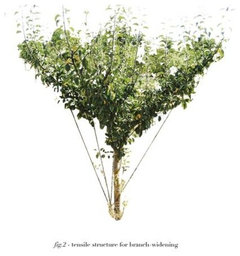
    Found this 'tensile structure' for urging an apple tree into a vase shape. May work for training other plants too. Looks like an easy device to construct.

    Edit: Pic from Pinterest won't show up :-( The device is simply an inverted cone of tensile wires that pushes horizontal branches up into a vase shape.

    Another edit: Pic does show up if I put it in an Ideabook first :-)

    Miscellaneous · More Info

  • 9 years ago

    Logan, Ontario is looking for Zone 4 or lower shrubs.

    Ontario_Canada5a_USDA4b thanked Mike McGarvey
  • PRO
    9 years ago

    wow.

    The ACS ConiferBase records for the Tanyosho pines were a bloody mess. They're all fixed now. Only 'Umbraculifera' and 'Umbraculifera' are valid cultivar names. All the rest are AKAs and reasonable common names. They are gone now.

    In addition, be aware that all of the really stunning Japanese pine specimens are systematically candled and shaped throughout the year. In reality, although most all sources state that Pinus densiflora 'Umbraculifera Nana' grows 3 to 4 inches (7.5 - 10 cm) per year, I'm looking at a specimen outside my office window that grows nearly 12 inches (30 cm) yearly.

  • 9 years ago

    Thanks, Dave! That was a lot of work. Much clearer. (And good call, Gardengal!)

  • 9 years ago
    last modified: 9 years ago

    glaciers - we assume you meant "Only 'Umbraculifera' and 'Umbraculifera Nana' are valid cultivar names" (2nd sentence).

    Based on its native range, Pinus densiflora (as well as its cultivars) should have good cold hardiness. Utah State rates the species to zone 3.

    http://extension.usu.edu/files/publications/publication/NR_FF_015pr.pdf

  • 9 years ago
    last modified: 9 years ago

    I checked again just now, the ACS website has now 2
    listings:

    1) Pinus densiflora
    'Umbraculifera' USDA zone 4 and USDA zone 5 are both listed, 6-15' at 10
    years http://conifersociety.org/conifers/conifer/pinus/densiflora/umbraculifera/

    2) Pinus densiflora
    'Umbraculifera Nana' USDA zone 5, 3-6' at 10 years http://conifersociety.org/conifers/conifer/pinus/densiflora/umbraculifera-nana/

    Notes:

    Item 1) has both
    USDA zone 4 and USDA zone 5 listed.

    MBG confirms Utah State's USDA zone 3-7 for item 1) directly and confirms USDA zone 3-7 for item 2) indirectly in the same article (vs ACS's USDA zone 5) http://www.missouribotanicalgarden.org/PlantFinder/PlantFinderDetails.aspx?kempercode=b441

    Item 1) 6-15' at 10 years vs MBG's 15' at 30 years (not necessarily inconsistent, but worth a second look)

    Monrovia (and others) will still have messed up naming http://www.monrovia.com/plant-catalog/plants/1987/compact-tanyosho-pine/ Perhaps this has lead to mix ups of dwarf and non-dwarf specimens in the past.

  • 9 years ago

    Returning
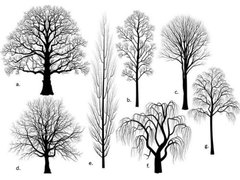
    to regular programming, what shrub can I train into a one-storey tall oak of figure a or a willow of figure f :-)

    Miscellaneous · More Info

  • 9 years ago

    As mentioned above, Hydrangea paniculata is a great shrub for this treatment. Because the stiffness of the branches and the size and density of the flowerheads vary from cultivar to cultivar, you can choose a cultivar to give a more upright appearance with something like Quickfire or a more weeping form with one that tends to bend its branches under the weight of the blooms like Vanilla strawberry. The cultivar sizes vary as well from something like 3' tall to over 15'. If you do a search for 'tree' on the hydrangea forum you will see a range of appearances.

    Ontario_Canada5a_USDA4b thanked NHBabs z4b-5a NH
  • PRO
    9 years ago

    regarding Monrovia and most other growers . . . their job is to grow and sell cool plants. When presented with nomenclature recommendations, they almost always respond by saying that their customers only know a particular plant by one name and it would confuse them (cost the grower money) to use correct cultivar names.

    Proper nomenclature for conifers is the domain of Coneheads.

    Regarding hardiness: zone 3 in Utah means something different entirely than zone 3 in Minnesota. Cold hardness never takes heat/humidity tolerance into consideration or the effect it has on winter hardiness. The best way to determine whether something will work in your particular area is to look around to see if anybody's growing it or, in the case of something new, experiment. If you kill it a few times, it probably won't work (for any number of reasons).

    Ontario_Canada5a_USDA4b thanked David Olszyk, President, American Conifer Society
  • 9 years ago

    Hydrangeas give so many great possibilities as NHBabs mentions. It all depends on your personal esthetics, but I find crabapples wonderful as well. They come in all shapes and sizes, including those you desire on the chart. 'Sargent' comes to mind as a compact version (by crabapple standards) for the (a) option. There are also weeping forms. If only I had more sun spots in my backyard area, I would have planted at least one crabapple without hesitation. Instead, we always make it a must stop on our neighborhood walks to see a couple of magnificent crabapples in all seasons, because they have a beautiful display in more than one season.

    Ontario_Canada5a_USDA4b thanked vesfl (zone 5b/6a, Western NY)
  • 9 years ago

    @ glaciers_end Yeah, Canadian plant hardiness (where I am) takes more growing conditions into account than USDA, and is usually a more reliable guide for home gardeners. As I posted further above, a local and a not-quite-local nursery rate the Tanyosho pine differing by half a Canadian zone.

    @ NHBabs I did not realize that there was a separate Hydrangea forum, thanks!

  • 9 years ago
    last modified: 9 years ago

    @ vesfl Sorry, we must have been posting at about the same time. Yes, I have been looking at crabapple tree shapes (indluding the shape of the 'Sargent') on this pdf https://www.jfschmidt.com/pdfs/JFS_CRAB_CHART.pdf

    Edit: The smallest crabapple tree of them all is the 'Sargent Tina' at 5' x 6' so you may be able to squeeze it in your backyard. It does sucker, though, at least from what I have been reading.

  • 9 years ago

    Also, remember that the USDA zones were developed for crops. That is a different situation entirely.

  • 9 years ago
    last modified: 9 years ago

    On personal aesthetics of plant shapes, I find a round-flat-pillow-on-a-straight-stick artificial looking. I much prefer a half-dome-on-a-squiggly-stick, maybe not so formal looking as figure a in the above, but perhaps like figure d.

    What is YOUR sense of personal aesthetics? I realize that it is all personal preference, but I am curious.

  • 9 years ago

    My personal preference is any natural shape the plant (tree or shrub) takes on. Dislike any top grafted specimens ('lollipops on a stick') or shrubs trained as a standard. They just look unnatural. Period.

  • 9 years ago

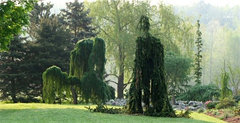
    Yeah, I don't like staked weeping conifers either, they look like supernatural witches to me :-)

    Miscellaneous · More Info

  • 9 years ago

    That's their attraction!


    creature feature

  • 9 years ago

    If dogs knew what witches are, I would plant a pendula hedge to ward them off, but I guess thorns would work better :-)

  • 9 years ago

    I did some reading
    and get the impression that the shape training of the Hydrangea paniculata is
    quite flexible.

    Say, that I bought an
    H.p. tree trained in an umbrella shape. I allow lower branches to grow and within 2 growing
    seasons, I get a vase-shaped branch structure.

    NHBabs or others can
    comment? Thanks!

  • 9 years ago
    last modified: 9 years ago

    Ontario_Canada5a_USDA4b Thank you for the 'Sargent Tina' idea. It 's lovely, but old garden roses and a lilac already reserved these sunny spots for themselves :-) The hydrangea forum is an excellent source. NHBabs and other folks there gave me excellent advice for the situation I thought was impossible to solve. I am very happy with 'Annabelle' they suggested and she has flowered wonderfully.

    Ontario_Canada5a_USDA4b thanked vesfl (zone 5b/6a, Western NY)
  • 9 years ago
    last modified: 9 years ago

    Tanyosho should be hardy at OP's location (USDA zone 4b). Here are a couple more links that claim USDA zone 3 hardiness (scroll to bottom of page on 1st link).

    http://www.hort.uconn.edu/plants/detail.php?pid=322

    http://www.canadaplants.ca/display.php?id=1748

    Ontario_Canada5a_USDA4b thanked arbordave (SE MI)
  • 9 years ago
    last modified: 9 years ago

    Yeah, this old thread has moved in every direction by now, it is time to move the Hydrangea over there for a more focussed discussion, thanks!

  • 9 years ago

    @ arbordave You may want to take the Tanyosho discussion to the conifer forum. I am sure that you are better equipped than I am to do so.

  • 9 years ago
    last modified: 9 years ago

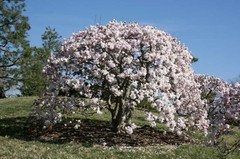
    I wonder how old the specimen below might be.

    Magnolia stellata at MBG

    Not sure what cultivar it is, a 'Royal Star' ? Or is it the straight species?

  • 9 years ago

    Since MOBOT has both these under the generic M. stellata, I imagine that's what they are rather than a particular selection.

  • 9 years ago
    last modified: 9 years ago

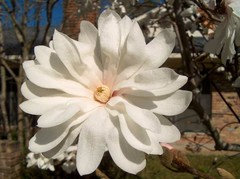
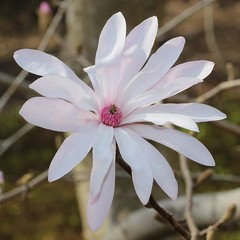
    Most Magnolia stellata flowers on Google Images are like in the photo below, a simple flower which may be consistent with the straight species. The lush flower in the above photo may be consistent with a selection or cultivar, I am not sure...

  • 9 years ago

    That's a pretty good guess - the species has flowers consisting of 12-18 tepals and is pretty much a pure white flower. Named forms like Royal Star or Waterlily have about twice as many tepals, if not more, and are often flushed with a pink hue.

  • 9 years ago

    Trivia:
    is there a hardy shrub that I can grow and train into a small tree with star-
    or sun-like flowers like a daisy or a sunflower?