Software
Houzz Logo Print
sqwib

Hugelkulture Advice needed

9 years ago
last modified: 9 years ago
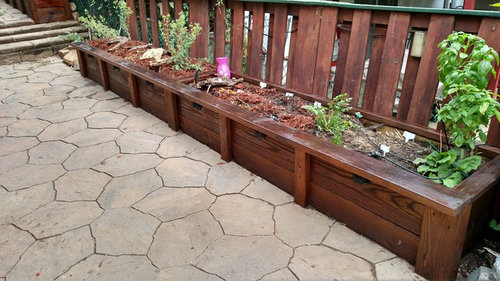
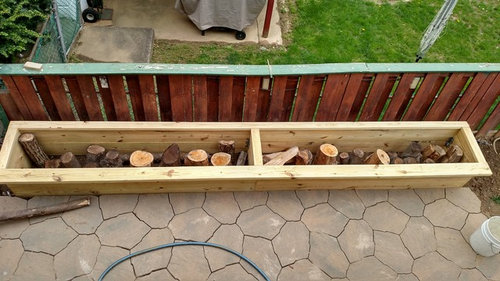
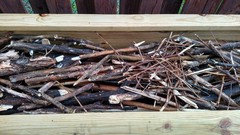
Last year I built a few Hugelkulture beds and in the fall planted some oregano and thyme for a perennial cover crop. I have a few questions

Should I also plant some kind of Nitrogen Fixers in the fall?

Can I plant some in the spring? And if so can I plant my regular veggies with the nitrogen fixers?


Comments (16)

  • 9 years ago

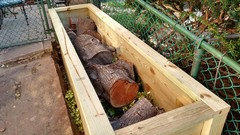
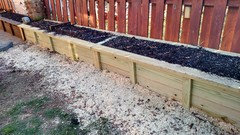
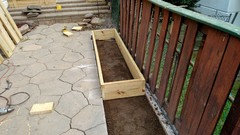
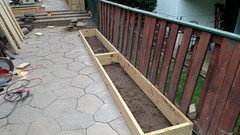
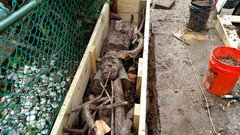
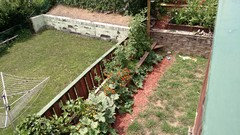
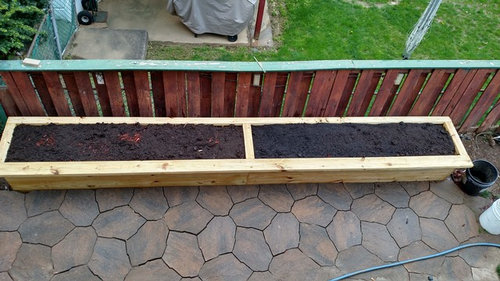
    Here is the other bed and I will be building one more 20' long.


  • 9 years ago

    @blueocean Thankyou

  • 9 years ago

    I agree. Those are beautiful beds. Your hugel beds will go a long way in retaining water for your plants especially in containers which are notorious for drying out too quickly.

    In my experience with smaller hugel-kulture applications and also those in small pots for my indoor plants, additions of nitrogen have been needed the following season. Otherwise, my plants seem to have all the nutrients they need for a very long time.

    Outdoors I plant half buried or fully buried hugel beds that only need nitrogen when I'm starting heavy nitro feeders like onions or corn. For those I like to use cover crops when necessary.

    Your best bet? Have occasional soil testing done to see how the nitro is standing up over time. If the nitro seems low, using nitro fixing cover crops would do well if you don't want a permanent nitrogen fixer hanging onto precious growing space.

    bon

  • 9 years ago

    Thank you everyone, here is the new bed.

  • 9 years ago

    Hi there,

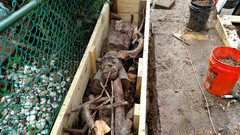
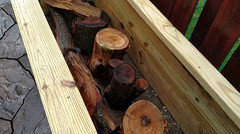
    I am slightly puzzled by all the wood in the planter.

    I know regular earthbound Huegelbeete.

    In your case I wonder if the space for plantroots to grow in isn`t terribly limited by all the solid bits of wood.

    And you do know that it takes all kind of soil organisms to break down wood that are not likely to hang round in planters? Did you use potting medium from a bag to fill them?

    Good luck with your project, I would love to hear how it worked out after a season.

    bye, Lin

  • 9 years ago
    last modified: 9 years ago
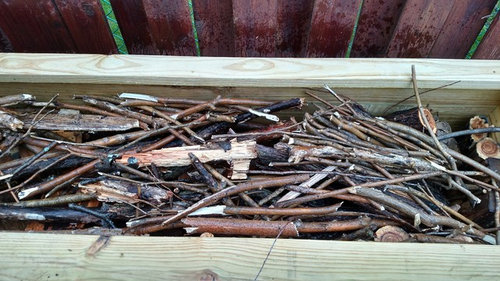
    Google "Hugelkultur"

    The wood does not hinder growth.

    Yes I am aware of soil organisms and this is more abundant in beneficials than my ground soil, these beds are bottomless.

    Beds are filled with any organic mater I can get my hands on, wood, mulch, hedge trimmings, leaves, logs, bio char, ashes, composted manure, compost, peat moss, top soil, clay soil from yard etc...

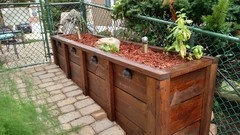
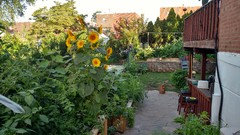
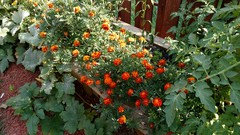
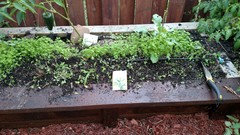
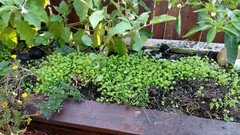
    The photo below is the first year of the beds, they were planted with a mish-mosh of plants and the plants were allowed to do whatever they wanted, at the end of the season everything was cut back, composted and the beds mulched, in the early spring, the beds are top dressed with composted manure and this will be the first real year of growing in them.

  • 9 years ago

    I'm kind of intrigued to try this out myself. I hope to add a 2'x2' open bottomed bed to the end of my existing garden, this spring. Using hugelkulture would mean having to haul a lot less garden soil up from the driveway.

  • 9 years ago

    @blueocean

    It definitely is something to try, I was amazed and a bit surprised at my first years growth. However, this year may be different, we will see!

    Mostly everything I have read about this type of gardening says the first year is usually a wash, the second year is better and by the third year it should be in full swing. I believe it has to do with the logs pulling nitrogen from the soil because of the decaying process and at about the third year, the wood starts releasing the stored nitrogen.

    When we did Moms bed, we built the beds, dug out about 12" of soil, buried huge logs, added a few cups of 10-10-10, covered with hay then put back her native soil, then topped with some leaves, a few bags of top soil and then a few bags of composted manure. I thought I was going to need dirt to fill it but we didn't need any dirt at all, her bed was 10' x 3' ax 18" high.

    This will be her first year with the bed, so time will tell.

    I used some native soil on my beds also, it is a clay soil and I have always been able to grow in it, even without amendments. I don't care what anyone says, reuse that clay soil if you have it, it is loaded with trace minerals, well at least mine is.

    And you are correct it would mean a lot less dirt hauling, I would rather haul grass clippings, leaves, hedge trimmings and some logs then dirt any day!

    My brother built one after seeing mine , what he did was build in the late summer, then through the fall and early winter, filled the beds with most of his garden waste, leaves, grass trimmings, tree trimmings some nasty old rotted firewood and a tree he had removed.


  • 9 years ago

    I built raised beds similar, though far less pretty, than yours. I never noticed any nitrogen deficiencies. I started with a trucked in soil (mine had lead) with 16% organic matter. I mulch heavily with grass clippings and leaves and apply compost when I have it. The oldest of the bed is on year four and producing great.

  • 9 years ago

    I wish I could comment! Just wanted to say that isn't it a matter of what you will plant? :D my mind is lost in home building, but I just wanted to voice that some are "heavy" and some are "light to mild" maybe try the mild needs soon? We have 5 huge hills. One for compost needs to be left alone soon. One above the orchard (leaching to orchard) we left alone and now a grape is making its place there, and a VA creeper, one circling a black berry is happy, making the berry go nuts! (Op, a berry perhaps?) and the others are being left for future orchard, herb and potatoe land. The only one that I feel would be a great use for a very live one might be corn right? What a needy plant!

  • 9 years ago
    last modified: 9 years ago
    Just a quick update, I have under planted some crimson clover, about 2 weeks ago, i'll be planting some broccoli in with it and chop and drop the crimson clover.

    Mid august, I'll replant some crimson clover and oats and turn it in after a killing frost.

    Everything seems to be thriving

    Pics are from last week

  • 8 years ago

    Nitrogen fixing plants don't release N until plant dies. I plant vetch and clover in the fall. It grow's slow until spring when it realy take's off. I mow then till intire plant into top 4"of soil and plant next day. The majority of N is on roots so I sometimes remove above ground part of plant for compost and plant without tilling or spading. Beans improve soil as well as anything.

  • 8 years ago

    Thank you, yes I am aware of the nitrogen nodules on the roots that release nitrogen when the plant dies back, my plan is for the oats and crimson clover to die back in the winter (Zone 7A) and do nothing but top dress with compost in the fall.

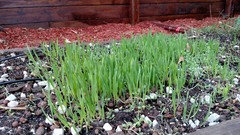
    Here's a few photos a few weeks ago.


    I'll try to get some recent photos to post.

    I just need to find somewhere to get Oats in bulk for next fall.

  • 8 years ago

    "my plan is for the oats and crimson clover to die back in the winter (Zone 7A) and do nothing but top dress with compost in the fall."

    I wasn't aware oats and clover could be grown that far South during summer but it sound's like you did so your plan should work. As an experiment this fall in a small bed, plant pure clover. Oats are only giving you green manure unless you need them for a trap crop. I believe you will be pleasantly surprised come spring. To grow N hungery crops,you will need more N than cover crops furnish. Horse,cow or chicken manure is good while building HK mounds.

  • 8 years ago

    "I wasn't aware oats and clover could be grown that far South during summer"

    I'm in Philadelphia PA.


    I have both planted together. From what I have read is that the two work well together.


    I'm thinking about adding radish to next years mix for a nutrient scavenger or mustards but the mustards should be planted as a monoculture.


    "you will need more N than cover crops furnish. Horse,cow or chicken manure is good while building HK mounds."

    I usually add a bag or two of black Kow composted manure, some 10-10-10 and compost to each bed come spring.

    I want to get away from the 10-10-10 due to salts and stick with the black kow compost and my compost, but we will see.

    I probably should have some soil testing done.


Sponsored